

Album Review: Time Will Tell by Devon Gilfillian
Cut live to tape in single takes, Gilfillian’s soul album bets on the voice over polish. From rock spiral to country-soul thank-you, he means every word.
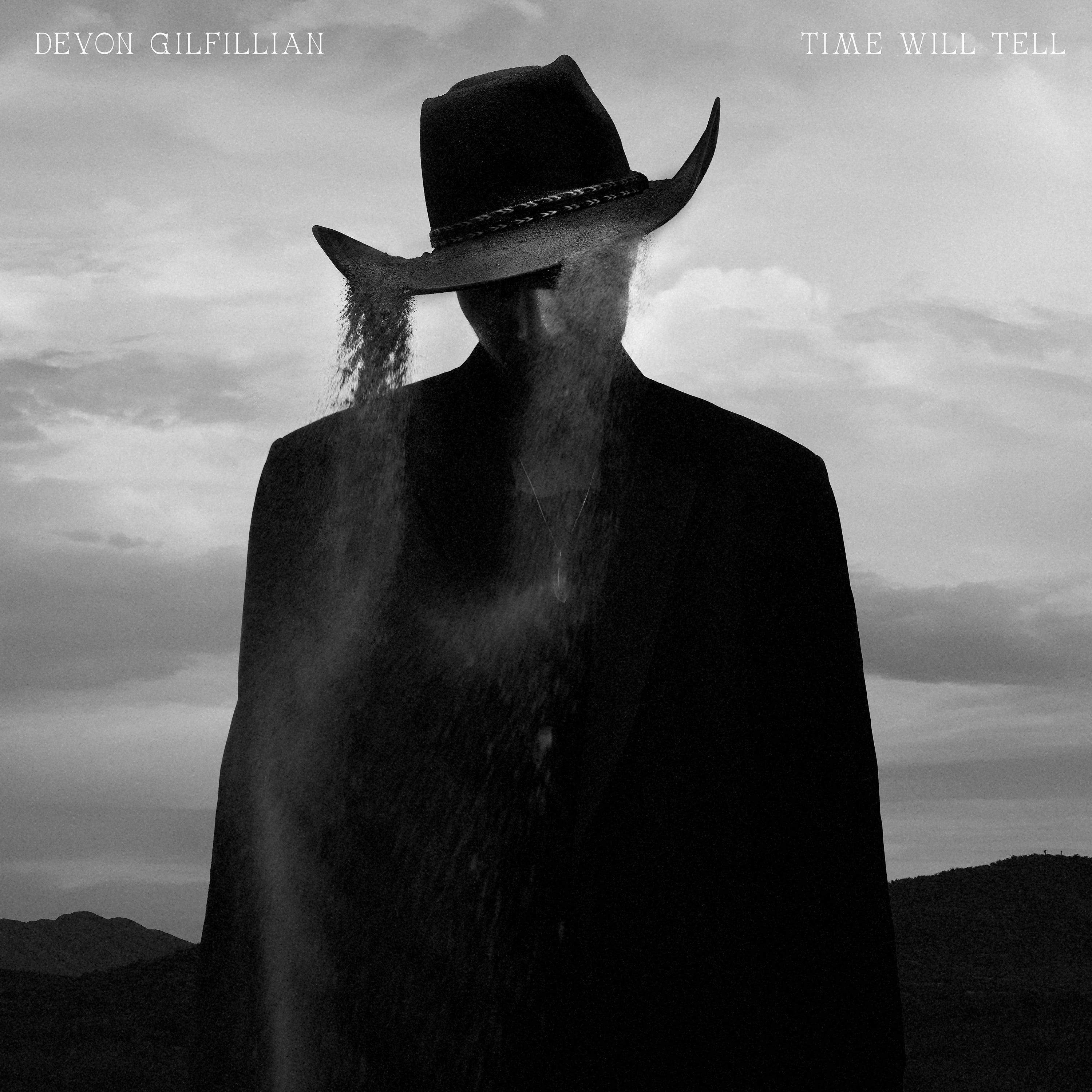
As for Devon Gilfillian, the former Philadelphia resident who decamped to Nashville to release his live-to-tape breakup album almost entirely in single takes, is essentially saying that a singer and the group in the same room trump anything a console will add later. He’s taking that bet and the word he keeps circling is time: he’s calling it the thing that corrodes a relationship, but it’s also all he has to fix it. So, with language available to anyone, he mourns a love falling apart and asks, endlessly, how much time will he get to collect the wreckage?
He pares the chorus of “Time” down to time and tears. “All we have is time to heal it,” he sings, and then a moment later, “I don’t wanna cry/But I gotta cry to feel it.” Nothing lies between him and the feeling—he is convincing himself to allow a cry deferred. What he may lack in surprise, he gains in unsparing frankness; and that same uncomplicated wanting courses through “IRL,” where the in-person body replaces the screen and slow replaces fast. “I want something good, not something fast.” “I want it in real life.” The boom-bap keeps him glued to the rhythm, part of a defense; organ lines add hip swivels.
He pushes his desire against an images of something out of reach—“An ocean in a vase, a black hole deep in space,” “A lesson I can’t learn, a page that just won’t turn”—on “Moonflower,” a love that feels as vast and unknowable as the cosmos but he wishes he could command like the sun and moon: “I’m jealous of the moon that gets to shine on you,” he sighs, a soft bottom notes under his languid melody, where, for once, the music swells rather than stomps. The reach gives the want an obstacle. He throws the same energy into the question of “Hold On (Hourglass),” “Am I holding on just to let you go?”, a country-tinged, hiccuping soul tune in which the sand keeps pouring.
Guitars are cranked and drums hit heavy on “Black Dog Rabbit Hole,” featuring a solo that shreds the middle while Gilfillian pitches a wispy falsetto to a bellow. It’s as loud as the band ever gets, and the noise isn’t so much ornamentation as it is a harder surface for the word’s surrender. The language sinks under with purpose, “Here I surrender, give in to the bad weather,” “I don’t wanna, I don’t wanna, but I’m gonna give in,” and the hook responds to the spiral with the pay-off, “’Cause baby it feels so good.” He sings the consequence as though he’s already accepted his underwater future: “If we come up too fast, baby, I’ma get the bends.” The same insistent force is then pointed at clarity on “Let’s Stop Fucking Around,” when avoidance slides away, “Wanna quit chasing/Wanna stop playing games,” and finally gets to its point, “Nothing like this I found, so let’s stop fucking around.” The band builds; the request does not.
Out amidst horses and cicadas, he slows it all on down on the country-soul “Glad To Be Here,” unhurried even to the vocal: “The breeze on my cheek tells me I’m still alive.” The album’s quiet, appreciative closer ends on a spoken exchange that never dips to vulnerability: “Where are you right now?... Just got done feeding the horses... just wanna say I’m glad to be alive, man.” These thank-you songs are not a respite; they carry just as much emotional weight as the breakup songs, as seen from the other side of things, through Gilfillian’s familiar plainness on “Some Days.” His worn and weighty body hums under his feet, the wind is warned, “It can lift you up or send you to your knees,” and the truth is laid out beneath it all, “Some days I feel like I’m a shell of a man,” sung over a grounding bottom.
Working all day, running, hustling for cash sums up most of the verse of “Keep On Movin’,” and the hook simply offers “We gonna keep on movin’, gonna get it done for you.” The funk pulls this thing along, but there’s almost nothing under it. “Shines In You” is built on the affirming reflex, “I just wanna live all the love that shines in you,” pretty, slightly weightless, and buoyed much more by the rhythm section than the lyrics.
Madeline Edwards gets to claim half of “You Can Hate Me Now,” transforming a potential solitary apology into a negotiation. The fact of a duet offers the wound a second physicality on-stage, giving the apology a person on whom it can land. Someone has to get out of the way, so the person leaving the premises vacates enough space for the anger that someone else would carry, each vocal Trading “You can hate me now/That’s alright, that’s okay,” on top of an arrangement softer and steadier than its title suggested, low and breathy where it might have blasted. He reaches the tiny kindness that he’d been seeking the entire way: “I see through the haze/More lighter days/Room for some grace.” Because Edwards matches his phrases exactly, goodbye feels something jointly made, rather than something inflicted on someone.
Great (★★★★☆)
Favorite Track(s): “Moonflower,” “Black Dog Rabbit Hole,” “You Can Hate Me Now”