

Album Review: Trapper’s Alley 3: Hell or High Water by Boldy James & Nicholas Craven
A murdered brother and ten killers loose before summer open the record, and the punchlines never outrun the grief. It’s the heaviest Boldy James and Craven have sounded together.
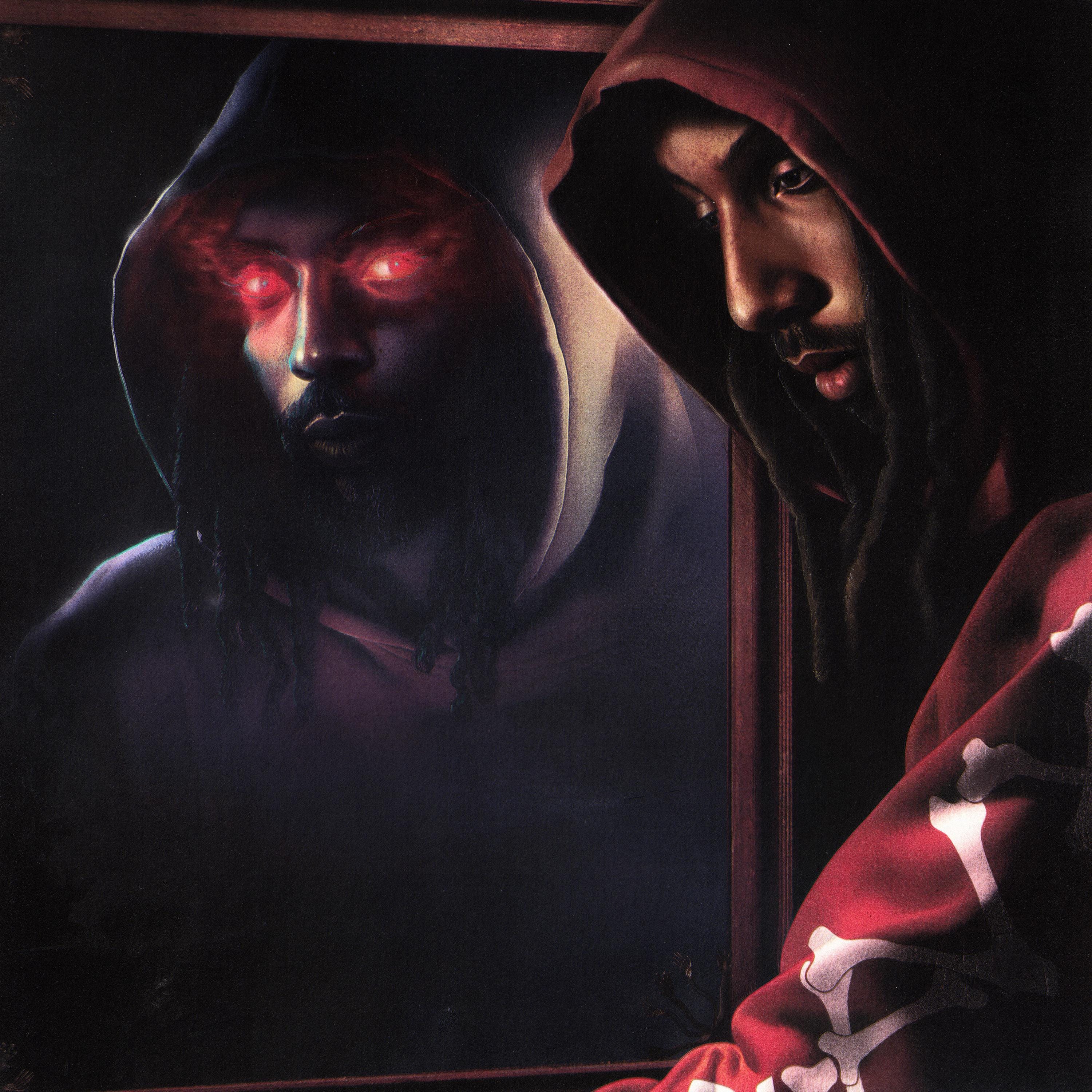
After three albums in as many years with the same producer, a lot of rappers settle into a comfortable groove, their bars smoothed over with the wear of familiar soul samples. But Nicholas Craven, Montreal beatsmith and Boldy James, is on a one-way trip to somewhere much colder. On Fair Exchange No Robbery, Penalty of Leadership, and many, many more albums in between, Boldy has treated Craven’s loops and beats less like a canvas and more like padded cells where the darkness he has encountered and is destined to confront can be safely put away without requiring a change of pace. With Trapper’s Alley 3: Hell or High Water, Boldy James continues the 2013 series with its most barren, icy season: one where the winter chill of Wayne County comes with a body count as quickly mounting as the sun descends, leaving behind cold earth and the knocking of blue lights at the door.
“I ain’t thinking ’bout no pussy, I got murder on my mind,” Boldy declared earlier on “Summer’s Eve” not just in a fit of rage but a deep-seated pain: “Them cowards killed my brother, that was my realest plug/Found my nigga dead, now my head more fucked up than it was.” “Mama Maxine,” goes a level deeper, pushing the raw trauma back a generation, with 218Bojay doing more than enough justice to a hook that will likely carry the weight of the album’s most devastating moment: “Grandma was my angel, but my mama raised a demon child,” and Boldy, “My little brother got shot right down the hall from Jessica, eight houses down from your door,” as calm, cool and ineffectual as ever—a coroner reading a death report from behind a veil of unexpressive monotone.
In the quiet, paced space that Boldy James’s laconic vocal performance allows him, Craven falls back into his usual tactic of throwing down a beat and getting out of the way. The formula is unwavering; samples flutter in and out without variation. As Chip$ puts most eloquently and comically on “Hamburger Helper” that Craven “drove nine hours just to produce a crime scene,” and the sentiment in that line applies across his output, at least to this specific album. Boldy’s freedom seems to embolden him; he offers the disarmingly casual“They thinking we the same, don’t know that I’m not even human” on “Death & Taxes,” delivered as though ordering food, and turns love into trade on“My Last Try”: “Can’t walk away ’cause I don’t think I got the heart to leave her,” he spits about a woman in language that could be misread as love balladry but instead translates as the tale of inescapable obligation.
On “Hamburger Helper,” Boldy James lays out a veritable parade of “Teddys”—Teddy Bundy for game domination, Teddy Ruxpin for snuffing a snitch, and Teddy Riley for the hitmaker image—before pivoting to“Sipping Barney with this Baby Bop, know we be Teletubbing,” and reimagining characters from a preschool show as a morbid, humorous headcount, in a way only Boldy can achieve. Still, there is something just a tad weightless even about the cartoon menace on the album; the all-pun-based verses, whilst incredibly enjoyable as individual nuggets of wordplay, and placed against the heartbreaks of“Summer’s Eve” and “Mama Maxine,” simply do not ask or demand the same level from Boldy as the narratives do. Nor does “Powerhouse,” which parades pun after pun after pun about “power,” starting memorably with clever lines, but eventually dissolving into sameness.
Chip$ begins “Beautiful Snow” by setting a gritty tone with a hook centered around half a brick and flickery cable before it shifts into the steady presence of Boldy James. The latter masterfully mixes the cocaine-and-snow metaphor all the way to a souvenir snow globe, making the same sort of lasting impact that can be found within each cut he touches. Instead of Punchlines he opts for stark brutality during his verse on “Powerhouse,” delivering “Keep on dumpin ‘til your top bustin,” and labeling the affair as “singing war.”Lethalias Grain appears with the album’s most energetic guest verse, also on the same track, brimming with energy and offering a Michael Jackson-themed verse, changing the musician’s story into one about zombies with “moonwalk on a woman with glitter on the jacket” hunting down snitches with “the stick like a Quidditch team.” Whereas Boldy paints with a monotonous scale of grayscale, the guests paint vivid portraits.
Backed by an exterior composed mostly of jokers, lie many alter egos, including the “big creature like the kraken,” Mr. 227, Mr. Price of Tea and even Creature Gang, which the MC also answers to. These masked personas are most evident on “Don’t Tell Me,” where he lays out an inflexible anti-snitch pact: “I don’t fuck with no snitches, so don’t tell me who tellin’.”It is when “False Accusations” comes into play, however, when the mask becomes permeable, and we have a list of his various charges, both justified and exaggerated, including everything from “felon-in-possession” to “cheating,” to the “bodies I didn’t catch.” These are spoken from inside the comfort of a prison cell with his face on every evening news. We have glimpses of this uncomfortable undertone on “Powerhouse,” where the hook questions the implications of physical beatings, then proceeds to brush them off with the same levity that every other punchline tossed out during the song comes with no weight.
The jests start wearing thin, however, on “Grinding My Gears,” where, for the first time since the album began, the persona hesitates before delivering the punchlines. What’s left after the punchline(s) fade away is bleak and exposed, detailing a life in crime that Boldy insists he has never treated as an intended lifestyle, the days he has lost and forgotten about his prayers and unanswered questions as to why he remains breathing while others did not. “Father always promised me I would have to face the music one day, but not today,” he says—a promise deferred which may well be the only true thing offered in the entire track. Everything else—the Kraken references, the allusions to being a powerhouse, the bodies—he jokes with an all-around air of careless neglect, and is likely simply part of an extended postponement.
Great (★★★★☆)
Favorite Track(s): “Summer’s Eve,” “Mama Maxine,” “Grinding My Gears”