

Album Review: Trippin from the West by Shloob
A Louisville West End rapper pays out of pocket for his own music and says exactly where he’s at. No cosign saves him, but he makes the case that the most specific music outlasts the loudest.
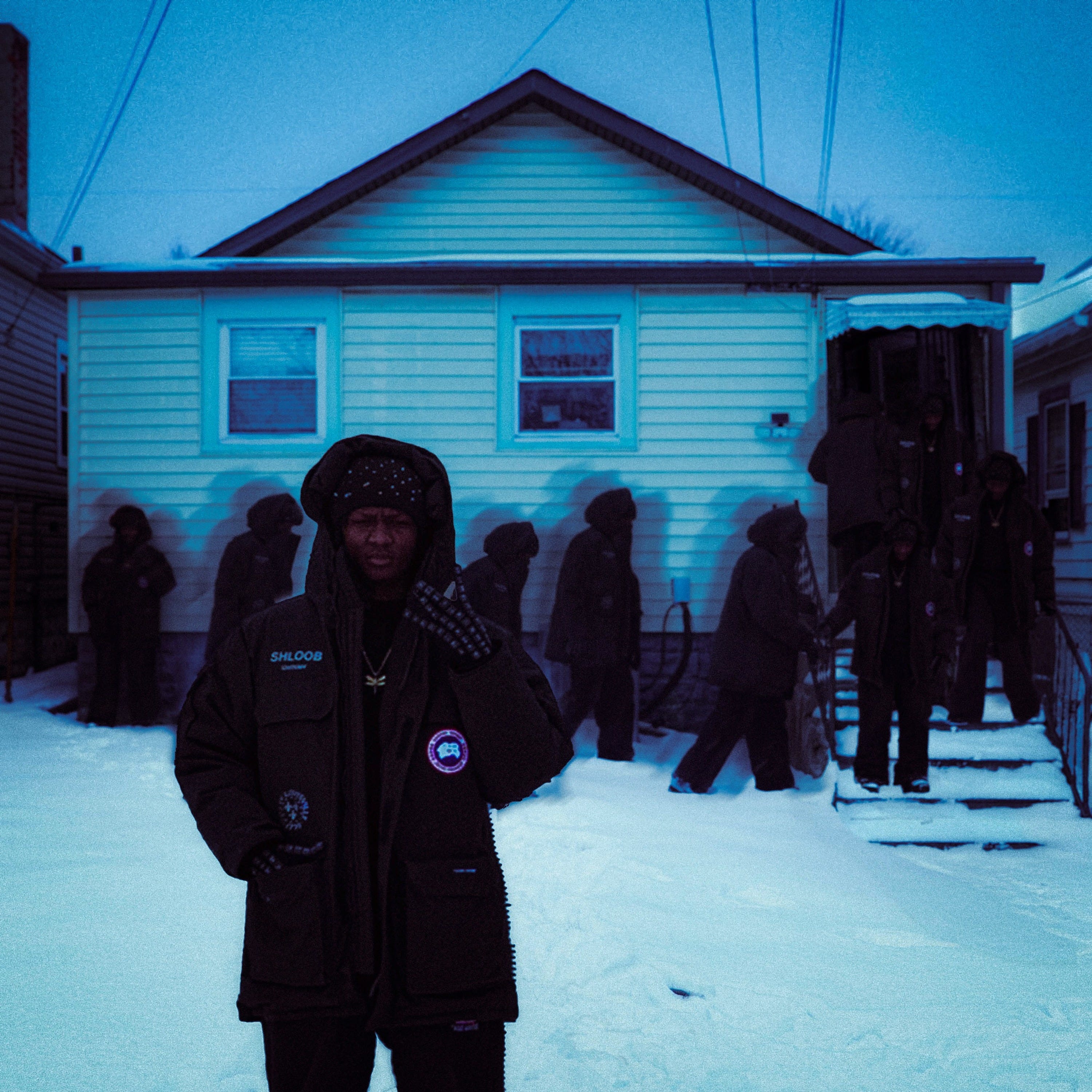
Louisville’s West End sits below 9th Street, nine neighborhoods carved up by redlining and rebuilt with more than a billion dollars in redevelopment money that longtime residents suspect will price them out of their own zip code. The 502 produced Jack Harlow and Bryson Tiller, two artists who cleared the city limits and never really came back for the infrastructure. DaEndre “Shloob” Lawson, thirty years old and still working forty hours a week, stayed. He is one-fifth of The Homies, the rap group under Harlow’s Private Garden umbrella, and the fraternal twin of DaWoyne “2forwOyNE” Lawson, who produces and engineers most of what the crew puts out. Shloob opened for Harlow on two tours. He has described himself as a relatable artist who doesn’t talk about anything too unattainable. Trippin from the West is his most complete solo record, spending almost every minute proving that statement right in ways he probably didn’t intend.
On “joe frazier,” he recounts a conversation with a label. They told him two or three bands a month for ads, a Spotify fan-building campaign. His answer, delivered flat:
“Dog, I’m working 40 hours, and I’m paying out of pocket.”
That exchange sits near the middle of the album’s longest and most plainspoken stretch, and it does more work than any boast on the record. Shloob is not delusional about his commercial standing. On “listen, decent!” the hook amounts to the most accurate self-review a rapper has offered in recent memory, repeating “Yeah, we decent, still working, still grinding” until it stops sounding motivational and starts sounding tired. He calls himself decent, means it, and keeps rapping. On “back to the stu,” he drags himself into the booth sick and coughing, illegally parked, not paying for promo clicks, and concedes outright that he’s not where he wants to be. The intro is him telling himself to get back to the studio no matter what. “Really That” splits the difference between confidence and plain accounting, bragging about being in a mosh pit throwing jabs while admitting he’s in a recession. He puts both claims in the same breath and doesn’t blink.
The West End is the LP’s heaviest subject and its least negotiable one. On “Trip Out,” Shloob opens a verse with “Free Palestine, tell them motherfuckers get out/Nigga, fuck ICE, tell them motherfuckers chill out” and goes straight to Louisville without a transition, because for him the global and the local occupy the same nervous system. A few bars later he’s praying to make it home safely, asking God not to replace him, and laying down a line about Kentucky that lands harder than most state-of-the-city addresses:
“Scary Movie in Kentucky, shit like Get Out
You a hater or you racist, nigga, which route?”
He doesn’t gloss it. “Boot Up” is the one party song here, and even there the night curdles. He’s bumping Beyoncé, hair down, calling an Uber because he’s smart enough not to drive. By the second verse the club erupts. Sirens, bullets, the party is over, and the hook’s breezy “don’t worry I got it” suddenly registers as a man lying to himself in real time. “duckin” strips the social circle even further. He’s walking around Louisville in all black, ducking everybody, wanting sweet love and getting nothing but demons. His city, he insists, is full of demons and full of evil. He says both lines back to back, same cadence, and means every word.
Shloob quit smoking and it made everything worse. On “miss the ganja,” the intro is someone telling him he needs to loosen up and hit it once. His response fills the entire song. Sobriety took away his last coping mechanism, left him too clear-eyed and too mean to keep his mouth shut. He watches other rappers fizzle out, go the Christian route or the fiscal route, and dismisses them both as performance. He calls Louisville “scary hours” and gets specific about why. Parents raising kids while terrified, young demons circling with devil eyes. He used to smoke with Smooth and stop by his mama’s house. Now he’s sober at Central Station waiting on carryout, eating good, thinking he should cut the dairy out. It presents sobriety as a problem he hasn’t figured out, and then somebody in the outro tells him he needs to smoke again. “Guilty Conscience” covers the same ground from the money side. He wants to leave the country, go on tour, touch six figures, and he was hopeful for the future but doesn’t know anymore. He’s wondering if he’s doing all he can before his time ends, and the answer keeps coming back as “I can’t find a shortcut, so I been grindin’”—which by the second verse has stopped being a boast and started being the problem.
Thirty years old, and his parents have started moving slower. His twin brother keeps grinding at the same pace. These facts appear across the record without ceremony. On “Android 18,” the longest and most conversational cut, he mentions he’s not having a baby, that he’s naturally lazy, that he broke up right before Valentine’s Day and showed his ass two weeks later. He namedrops Dead Rose and Wendy’s and Indy’s and Central, all Louisville landmarks that mean nothing to outsiders and everything to him. He figures young rappers talking about killing are going to make their families sad and old rappers trying to preach have bad music, and that he’s stuck between the two camps sharing his feelings. The financial math is blunt. Touch a million, go ghost with fifty, pay all his bills, support his brother, make sure mama is straight, check on pops. On “joe frazier,” the hook circles back to the line that pins the whole record down:
“I remember barely passing an open-book test
Had me feeling like a threat to myself.”
Nobody told him what’s best for himself, and he still doesn’t know. He lays it out flat. On “Grape,” where Lady Laveaux sings a seduction over 2forwOyNE’s production, Shloob’s verse undercuts the mood completely. He’s tried to stay positive, but everything is about to fall down. He’s traveled the country and nobody remembers him. He’s watching his parents age and running the numbers in his head. A lot of artists die before they get respected, but then he flattens it. Everybody is acting like they’re winning and everybody isn’t, and everything is fucked up, and they just won’t admit it.
Kill handles six of the twelve beats and keeps the mid-album stretch consistent without calling attention to himself. shy!!!’s production on the bookends and on “Android 18” gives Shloob open space to ramble, and he fills it well. 2forwOyNE’s work on “Grape” and “Trip End” has a warmer grain that suits the features. The production never fights the words, which is the right call for an album that lives or dies on what’s being said. A couple of cuts slither more than they earn. “listen, decent!” spends its first two verses cataloging rapper-who’s-grinding tropes before the third verse opens up into a Black Modelo and extra lime sketch that’s far more interesting. “Boot Up” is a strong idea, a party song that dissolves into violence, but the first verse is mostly vibes and proper nouns. Horace Gaither is featuered on “Trip End” with a verse that could belong to Shloob himself:
“I often wonder if this finish line can cover the loss.”
Great (★★★★☆)
Favorite Track(s): “Grape,” “miss the ganja,” “joe frazier”