

Album Review: What Does It Take to Bloom? by Somi
Somi wrote and starred in a musical about Miriam Makeba before making this, and her own songs here put grief, blame, and leaving in plain, hard terms.
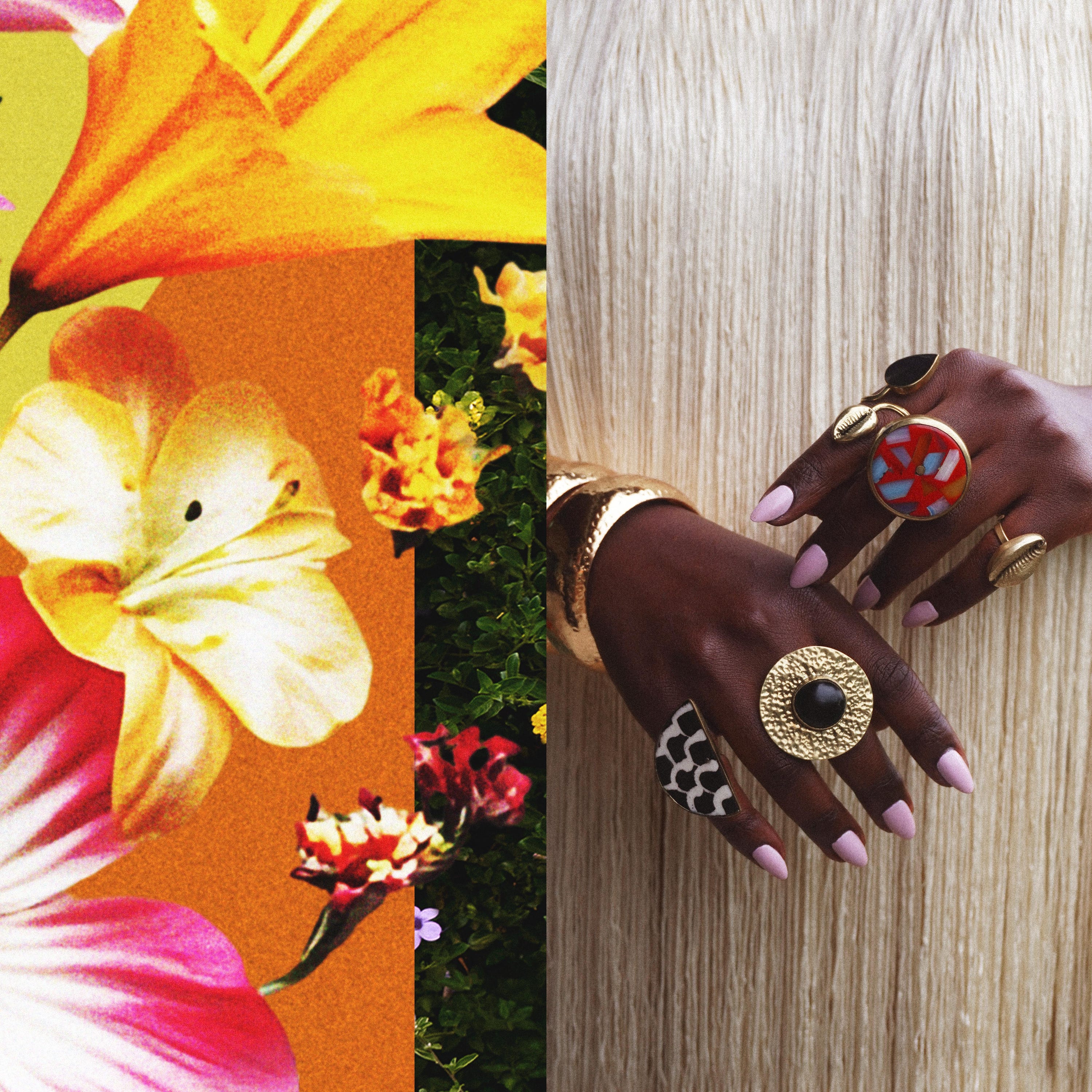
At Salon Africana, Somi Kakoma established what is at once a cultural agency and a record label for her own albums. The Illinois native was born to a Rwandan and Ugandan couple who had emigrated; she made her home in Zambia as well as there and had Hugh Masekela as a mentor. She also has a hand in writing and performing in plays.
Kakoma and Benjamin James produced What Does It Make to Bloom?, Aaron Marcellus co-producing the title track; they put it down on tape in New York, Paris, Dakar, and Lagos. James, of course, is one half of the Nigerian pair The Cavemen., and they crossed paths in Lagos. One hears jazz, soul, highlife, and spoken word in the music.
Somi will make a statement of condition and then let the rest of it follow. Her lists get long enough to be amusing. There is a woman who puts everyone on notice that she is done with it, stomping and sulking and making a wreck of things and kicking the door. On “Throw Something,” she comes back with a host of impossibilities: the winter usurps the summer, clouds are weeping, an ocean ceases to drink its rain, deserts start to cry, flowers have no mind to bloom. In the second verse, she has more where that came from. Then the chorus is unadorned and small, “If you decide to look away/It’s a lonely fight either way,” and one can hear some honest feet putting in their work. The title track is more insistent on the same subject: What is required to bloom? The answer is in the weather and the labor of it, all the sun and soil and wild thorns and weeds and worms, how many winters and rainstorms, how much dirt and rough hands. The second verse is like a supply list: a palm of seeds and water every day, some faith and hard praying, care and pruning, plenty of love and air, and a word or two about hurt and plans gone to weather. “Tell me what the flowerbeds know,” she wants to know.
Her mother is the better writer of the two. In “Mama on Blooming,” she talks of her fondness for flowers and of coming upon a full open bloom one morning, making the distinction between a child and a plant. With the latter, you put in the seed and see it; with a child, you are left to wonder at the bloom. “Mama on Tradition” has her singing a phrase in another tongue, and from that, Somi has made “Ngayaya,” two verses and a few words with mama in them at the end.
She is most at ease with instructions and takes them as far as she can in a song for a girl growing up. Put her in the fire, and your choir is silenced, and they give you crowns of sacrifice. Do the nation’s nursing, and they will cast their sticks and stones and put pen to paper in the history books without so much as a mention of your name. Lakecia Benjamin and her saxophone are on “So You Want to Be a Woman,” and the question is put to her four times over with a different answer each time, the refrain in between: “Raise her when you need her/Erase her when you’re done/The burden and the miracle/The daughter and the gun.” Two of those nouns are what a country makes of a woman, and two are what it will call her. The gun does double duty. It is what she is made into and what is leveled at her, coming at the end of a line on daughters in a song that has already seen to the distribution of crowns and the like. The verses are straightforward enough, letting her know they will make a stage of her body and use her womb for their politics before they anoint her matriarch and see to it she never ages. And that any protest of hers should be in pearls while her rage has a ribbon on it. It is the third verse that puts the onus of the hunger, the war, and the empire at the door on her.
On “Aiwah,” Omar is telling her he will love her in every way for all his days; she, in turn, says she will put it to the test if he is ready to remain. A laugh from him, an averted gaze; he puts his word on it that he would not treat her so, but she has the upper hand and upped the ante to being ready for the work. The same sort of thing happens with “Sugar,” only from the vantage of the loser; perhaps with some honey in hand he could hold her, or with sweetness on his tongue see her as he should. She makes to look away, but the truth has other ideas. When she musters the courage to go, the chorus is left to wonder if baby is a name she can give him yet.
Somi’s 2022 album Zenzile was built on Miriam Makeba’s material. In 2020 she was the first African woman to be put forward in any of the Grammys’ jazz categories, courtesy of Holy Room, a live session with the Frankfurt Radio Big Band that earned a Best Jazz Vocal Album nod. She put pen to paper for Dreaming Zenzile, a musical on Makeba in which she also performed, at New York Theatre Workshop and the Repertory Theatre of St. Louis.
Then there are times one of her compositions comes to a dead end. “Sometimes Love” is allotted an hour by her, morning and evening, noon and dawn, winter and the eve of summer; the chorus will have it is always true, and The Cavemen. come in to make short work of the hour, the day, and the season. There is nothing more to the song, and it is the thinnest of her writing here. One is better off with the outro and the two voices exchanging the hours until she concedes to losing control.
She is alone in a house, twice over. Her youth is looking back at her from quicksand and memory while she is too winded to count. “Lay It Down” has the pain saying hello like an old friend, the daylight calling, the bed a balm, and no strength left in her for tears. “Call me by my childhood name/When innocence felt like a game,” is her request, in hopes of making her way home. The other house has the blinds up. On “Love Could Be Anywhere,” she opens the doors, tells herself she is alright, wants some sun for the clouds, puts out a name in an empty room, and goes down to the sea and back again. She will have her shadow watching her and insists it is not wearing her feet.
Fear makes her count the hurt and then the blessings, day after day until she is through. Somebody ought to be praying for grace and time. “We’re All Falling” is picture perfect for the greedy and their stories, an overwhelming grind, and she is at a loss as to what she is selling these days; the final verse is a question of whether her palms will show the scars of a life well lived or the memories will be unforgiving in her absence. “Interlude: Skin to Skin” is full of un- words, a puzzle of her making: uncast the spells, unguard your secrets, undress your heart and unveil our past lives, come close and tell me it is you, do it twice. And “Old lover, old familiar,” a person and the finest line in the piece.
Great (★★★★☆)
Favorite Track(s): “So You Want to Be a Woman,” “Sugar,” “We’re All Falling”