

Album Review: What I Didn’t Say by Nija
The behind-the-scenes hitmaker’s sophomore effort documents modern love as mutual surveillance, trading vulnerability for the upper hand.
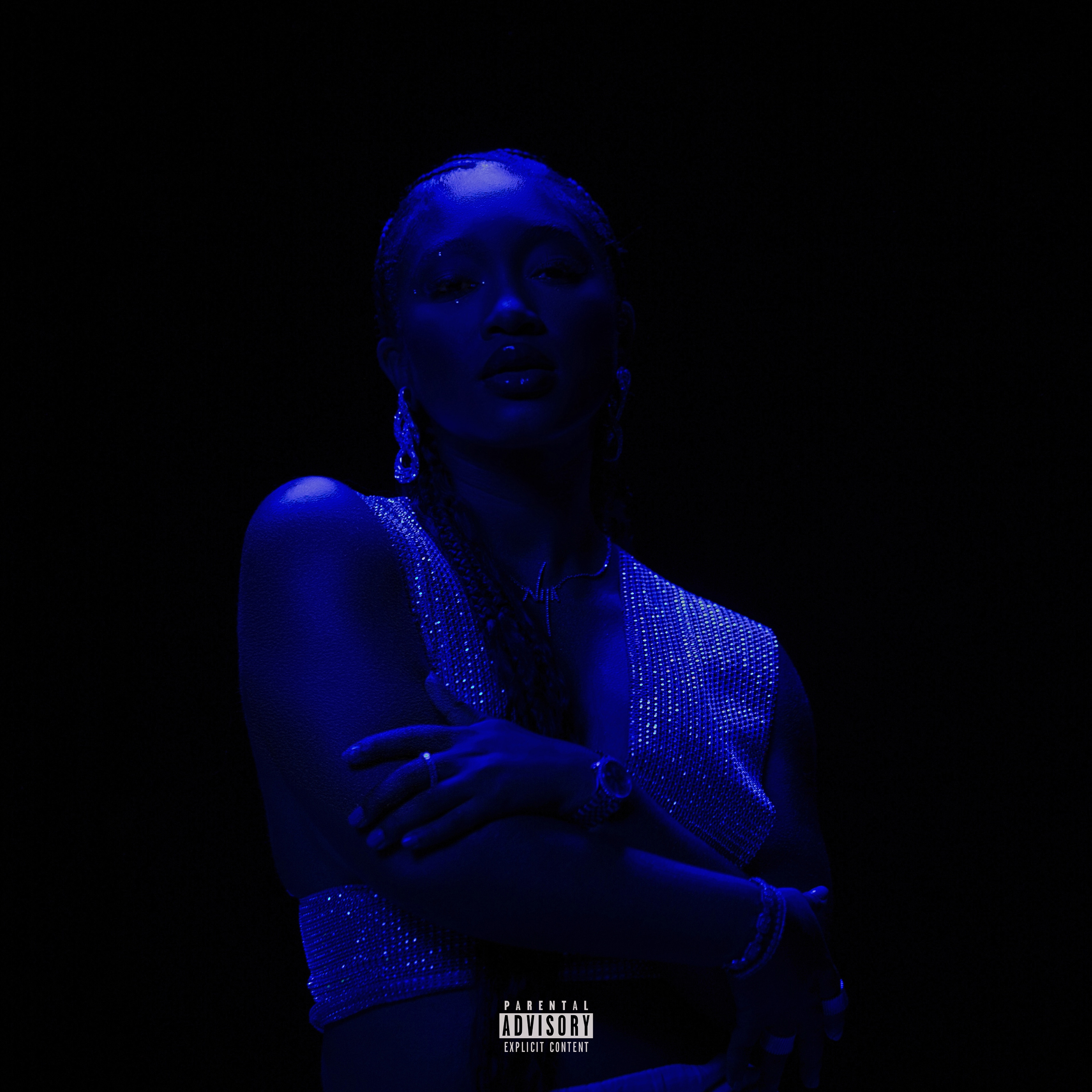
There’s a specific kind of quiet that happens when two people are about to ruin something. The phone call nobody wants to make, the text that sits unsent, and of course, the thing you almost say that would change everything, except you know better, or you’re too proud, or you want to see if they’ll say it first. That silence hangs over every song here. What gets held back, and why. What gets said anyway, out of spite or desperation or something dressed up as honesty.
Nija Charles spent years writing the kinds of songs other artists needed. In repertoire, we have Lady Gaga and Ariana Grande’s “Rain On Me,” Ariana’s “Positions,” Summer Walker’s “Come Thru,” and that’s just the tip of the iceberg. The hits where someone else’s voice delivered the feeling. Her 2022 debut Don’t Say I Didn’t Warn You arrived via Capitol Records with ten tracks of scorched-earth confidence, a songwriter announcing she wasn’t giving away all her good lines anymore. Now she’s independent, releasing through her own Amnija LLC, and What I Didn’t Say carries the weight of that shift. The album doesn’t ask you to root for her, but instead, documents what she’s doing and dares you to look away.
Across these songs, Nija does a lot of watching. She checks phones, tracks movement, knows exactly who he’s been around and wants to know why. On “I Just Called,” featuring Blxst, she opens by performing the breakup she doesn’t believe in—screaming “Real ass bitch, give a fuck about a nigga” like the City Hirls, scrolling Instagram and deleting photos before her cover blows and she admits she misses him and needs him home. That reversal is the album’s engine. Over and over, the posture of strength cracks into something more honest, and then she overcorrects, gets territorial, gets mean.
The writing moves between registers with a songwriter’s ear for how people actually talk when they’re cornered. When she’s bluffing, she sounds casual, magnanimous even, offering to “give you right back to the streets” on “Back Outside” like she’s doing a favor. When she’s wounded, the language sharpens into accusation: “Is it ‘cause my best days are your worst days? Is it ‘cause you see me living my best life that just make you wanna do shit out of spite?” That’s from “Hurt,” which turns retaliation into ritual, two people taking turns inflicting damage until she finally asks, “Are we even?” like it’s a math problem they can solve.
The best moments find her admitting things she’d rather not. “Can’t Be Friends” opens with a friendship dissolved by one drunk night (“Kissing the past goodbye soon as you slip inside”) and watches her try to negotiate her way back to innocence while knowing that’s impossible. The spoken outro hits harder than any sung verse: “I’m not saying men and women can’t be friends, but I ain’t never had no guy friend that I wouldn’t smash if I gave him the chance.” It’s the kind of line that gets remembered because it refuses to perform discretion.
But the record falters when it stays on the surface. Several songs lean on the same move: I’m hot, you know I’m hot, you’d be stupid to leave me, and you’re probably cheating, so don’t cheat. “Things We Do” repeats that cycle without finding an angle on it, dropping a spoken tag at the end that namedrops people she’s attracted to like the whole song was just a bit. The possessiveness of “In Between” is meant to feel powerful, but it reads as thin jealousy dressed up as intensity. The problem is that the writing doesn’t seem to know she is.
What works is when the album lets its subject sit in discomfort without resolving it. “32nd Floor” keeps an affair locked in a hotel room, hidden from everybody downstairs, “keep it on the thirty-second floor, privacy note outside my door,” and the secrecy becomes its own kind of intimacy, which is a darker observation than the song lets on. The last track in the lyric set takes that possessiveness somewhere stranger: “Your scent is way too loud,” she accuses, which sounds like paranoia. Who else can smell him? Who else has been close enough?
Nija writes clean hooks and knows how to build a verse that moves. The songwriting craft is there; however, what’s missing is the willingness to follow the complications all the way down. When she admits “I can’t take what I dish out,” that’s the album at its best—someone catching herself in the act. When she tells a lover, “Act like you know me, better not flirt with nobody,” that’s the album at its most predictable. A record this invested in control should understand that the need for it reveals more than it conceals.
Solid (★★★½☆)
Favorite Track(s): “Hurt,” “I Just Called,” “Can’t Be Friends”