

Album Review: WHO ASKED? by DOMi & JD BECK
Composing every part between them, DOMi Louna and JD BECK build their bravest songs out of clocks, weather, and animals, and play them without a wasted motion.
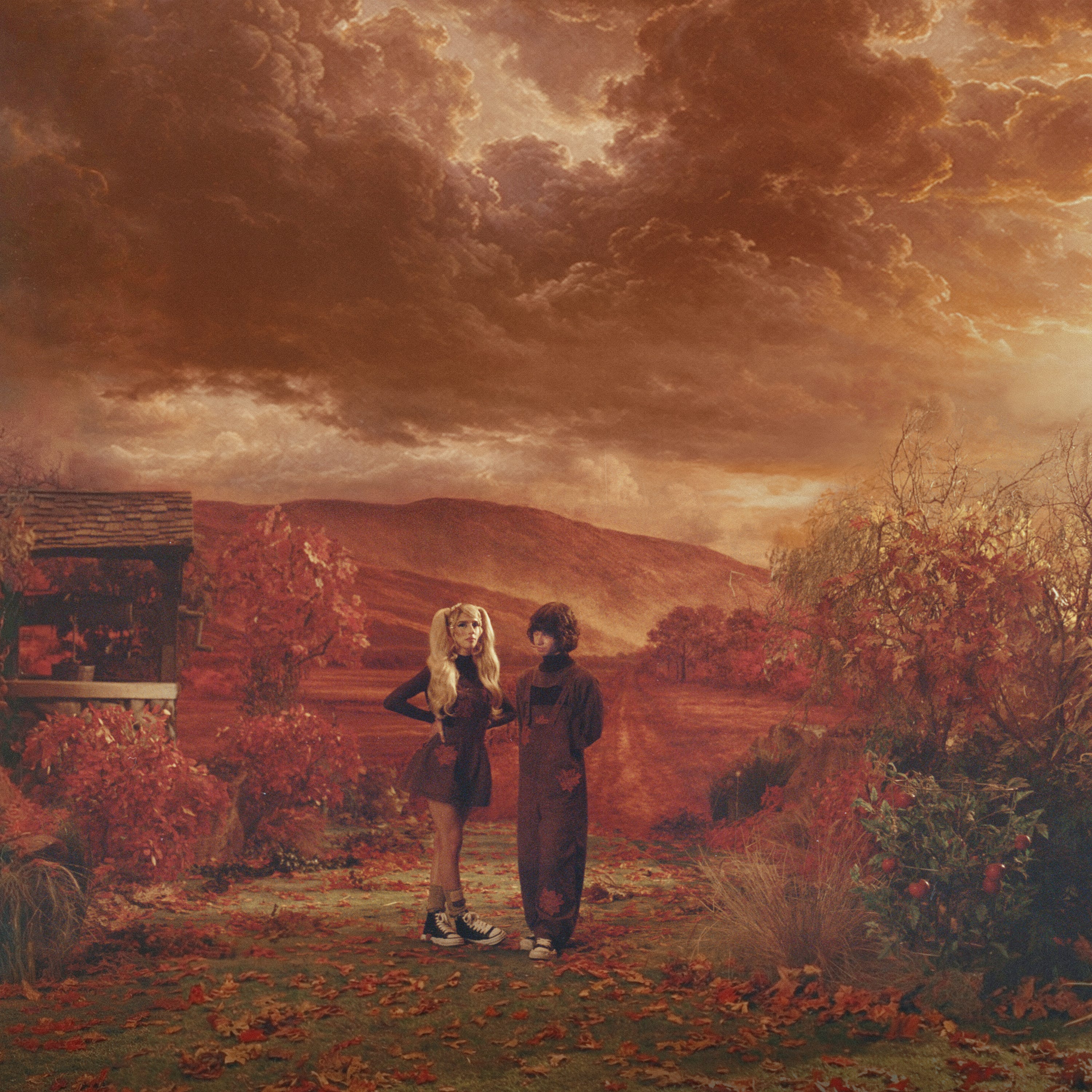
Everything on these songs sounds like a result of the work of just two artists and the little orchestra of string instruments; nothing is delegated to anyone else. DOMi Louna performs piano and keyboard tracks, JD BECK provides drums, and the process of writing, arranging, and producing the tracks was done by them. On most of the tracks, they are also singing. Leads are doubled and harmonized; voices are smooth and effortless. It is in singing where the quality of writing has to stand up to hands that never slip.
None of the tracks on “ÉPiPHANiE” is performed using lyrics. Quick arpeggios alternate between harps and woodwinds, and are clear enough to let every tiny hit ring out behind the chords, and a violin keeps the bottom stable enough to allow the top to move as fast as possible. “HAD ENOUGH” plays a more bouncing melody line, hard-paced drums jump over synth bass, and smooth singing tops it. The lyrics are written by Anderson .Paak. Light is drawn on the wall, traces of what was left behind show up, memories keep sustaining, and the canvas becomes grey today. The chorus gives the promise of something new despite the tomorrow being potentially the same. Each of them is a visual element, and they provide the track with a tangible background to play on.
It is where such a background appears. “SOME THiNGS NEVER CHANGE” plays rocks shaking, the earth humming, stones decomposing, and smooth singing above it. “Eyes dilated/Burning pain inside,” the second verse goes, and the chorus responds by being separated and faced with the madness, waiting calmly for the end of sadness. The weather performs the same role on “RAiN,” which opens on tears like feathers emerging through a glass door and wings flying free. Ice steps slip, drops talk in Morse code, pulse cuts like a knife, and the fog covers the way home. And the chorus confines everyone to stay indoors and divided anyway. Underneath, the kick and snare remain syncopated while woodwind-like accents stab from the top, and it keeps the track from being turned into the ballad it could easily become otherwise.
On “SMALL EYES,” the images are presented one after another. Paws resting, ears pointed up as a satellite, scents hidden in the moss, footprints left behind in a garden, and the chorus reports about the lifespan being too short yet so bright. Acoustic guitar, walking bass, and brushes take care of it all without pushing.
Where the images are fewer, the hands of the artists have less to hold onto. On “SiLHOUETTE,” a form emerges, is cultivated gently, flourishes elegantly, and the chorus concludes that all things are often shifted softly and will never make any difference. Nothing of that can be pictured. In the second verse, an attempt is made to create an image using the alphabet and the manuscript of soil, which is even worse. “GROWiNG OLDER” runs into the same problem across a longer distance, moving from senses being shown and wisdom growing to seasons changing as we grow older, which is a sentiment anyone with a calendar could state, though the melodies and the soft bass underneath it are beautiful enough to make it worthwhile. “EXiT” combines both and provides a decent report about being unfazed, mundane, and stuck in place, and the chorus talks about leaping through no other predicaments.
The single idea held throughout fixes most of the issues. “OUT OF SYNC” disassembles a clock and keeps with it, moving from seconds passing and an hourglass slowing to unstable motion, pendulum swinging, watch face lying and disobedient, twisting gears and growing frustration. Woodwind arpeggios and the clean, unhurried drum part keep the time lost by the words. “PHANTOM THREAD” constructs a maze in the first verse and walks out of it in the second, following the anchor, the clue, the spiral, and then finding the center and getting the heartbeat steadied, over the drums punching harder than anything around. “LOVELY MASQUERADE” builds a party where puppets dance blind, the dull conversations fuel the charade, and nobody attending is the trusting kind. Chords underneath that chorus drop like someone elbowing you in the middle of the sentence.
The pep talk on “CLiMBiNG HiGH” is delivered learning the rules, writing your own script, and choosing your role every day, over the syncopated drum loop and addicting chords, and finishes with a bubble inside and a flame starting to ignite. Most of it is greeting-card material. Then the chorus reverses the course and tells that the stars do not reply to you, which is the only hard thing about it, and the outro breaks down to facing the open-ended questions, answers. “CONCERTiNO (FOR PiANO, DRUMS & ORCHESTRA)” has the piano and strings sustain the solemn melody line throughout its duration while the drums color it without driving it. The piano uses chords rather than runs, and the strings stay low behind it the whole way, which leaves the drums with the task of providing the shape. “ÉPiLOGUE” places both voices back in the room where they have nothing to say, over the walking bass, strings, and more woodwinds free.
Over the fingerpicked celesta, buzzing synth bass, and more fast-paced drums, the verses on “PUZZLE PiECES” promise to be somebody’s missing outline, to fit in and change your perspective, and the pre-chorus admits that sometimes it will not make much sense, but it is alright that pieces fall apart for no reason. The second verse catches you by the hand, not as it was intended, and follows all the signs sent. The chorus then separates and puts them back together again one by one, parts falling apart, parts turning to one. The backing layers remain soft throughout. It is the sturdiest thing they wrote.
Great (★★★★☆)
Favorite Track(s): “SOME THiNGS NEVER CHANGE,” “SMALL EYES,” “OUT OF SYNC”