

Album Review: WHY EQUALS SELF by Raz Fresco
The Toronto rapper-producer turns Five-Percent lessons and a family split by borders into the deepest album of his career.
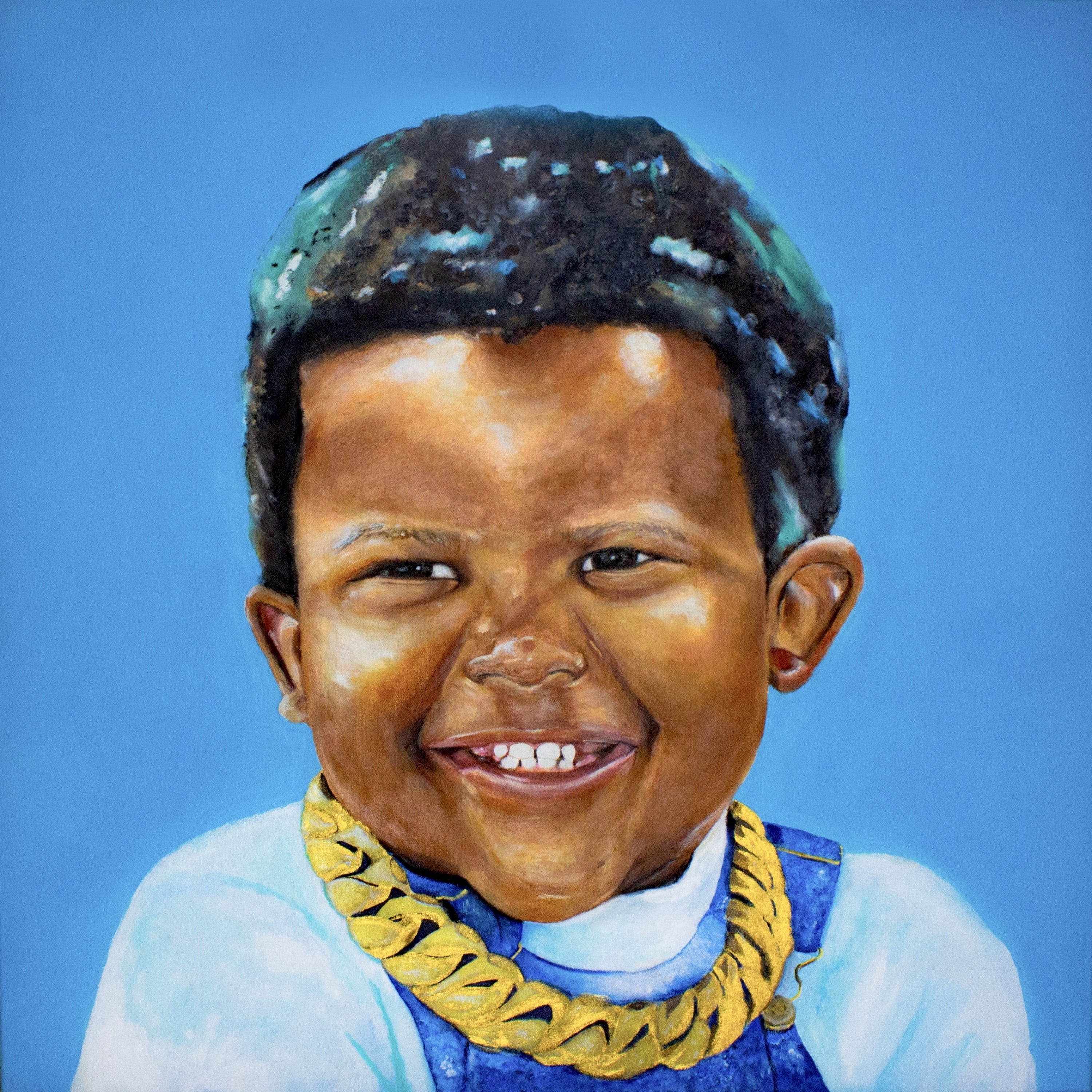
In the Nation of Gods and Earths, Y plays both the question and its answer simultaneously, the cause and effect, the seeker and the thing sought. Every number is endowed with a degree in Supreme Mathematics, and every degree has a lesson; and the student, the one who solves the whole cipher, ends up looking at his reflection. For over a decade, Raz Fresco has been solving the cipher in public, chopping tracks in a studio which he calls The Bakery, feeding the BKRSCLB crew which he created, releasing tapes at a rate which made him a fixture in the Canadian underground as his lyrics became increasingly knowledge-packed every year. On WHY EQUALS SELF, he solves the equation in the open, one degree after another, and the classroom is Toronto.
Fresco introduces himself through “IT DONT STOP,” spelled R-the-A-the-Z, the G-the-O-the-D, and then the autobiography begins to accumulate, bars about mixtapes in the DatPiff era, about his show in Brooklyn, about hearing KRS-One say “Peace God” in front of the same stage. “If I ain’t a legend, every map needs a remake,” he concludes, but immediately backs down from his boasting because “actual facts ain’t for debate.” “THE LIVING LIGHT” strings “DoorDash format, the war path on the forecast” into a sprint and calls artificial intelligence music “online artistic homicide,” insisting “there is no algorithm to be fly as the I-N-I.” The same assonance engine runs hotter on “SPECIALIZE,” from Goku to sudoku to tofu to Nobu, from sodium to Soviets, and the punchlines start blurring together as the ear starts searching for a message to catch.
According to his account on “CROSSING BORDERS,” he last saw his father in the flesh in 2015, and the meeting he scheduled around his biggest show failed in an airport. He tells of DJ Muggs inviting him to Los Angeles, followed quickly by a call from Westside Gunn, and then the phone call home: “I called my pops, he like, ‘You here?’/I said, ‘They say I can’t go.’” Then he drags the borders through the family court, “Separated from my kids,” a lie told on the stand, “all out war” to get them back, and then within himself, “Too much borders, now you borderline schizo,” “borders around the mind that make the heart an igloo.” He concedes: “I’m older now, so I can see it from a father’s vantage point.” On “THE DEAF” his mother leaves Kingston to come to North America “to look for change,” his father “got caught up with the things,” and, he says, “now my daughters feel the same sometimes.” Here, three generations fit into a single verse, Kingston to Toronto to two girls waiting for a call.
The old lessons define the masses deaf, dumb, and blind, the 85 percent deprived of knowledge of self, and he takes the ailment one sense at a time. On “THE BLIND,” the sickness is spectacle, murder marketed as content: “You can act blind to it like your eyes don’t witness/Matter of fact, put it in your car, ride with it,” and he spits the kicker himself: “It’s entertainment, right?” On “THE DUMB,” he tells the performers “cooling for the viewers” that all they lack is “a watermelon,” then he turns the camera away from rap music altogether, a séance of pens, a kid who “killed the wrong person over nothing.” The broadcast he leaves at the end of “THE DUMB” reports the death of Javay Roy, an eight-year-old Toronto boy shot in his bed by a stray bullet.
He calls out “lesson number seven” at the beginning of “WHATS REALLY REAL?” and, over one of the lighter beats, asks “How many broke soldiers? How many rich politicians?” and goes on to burn his peers “trapped in a record advance” selling false stories about their criminal pasts. He develops the teaching to its fullest extent on “L.I.F.E.,” where “You either judged by twelve or you carried by six,” where a kid he questioned about heroes “said King Von/Then I heard he shot him, now he dead, he won’t get prom,” and where he gives the last minutes of the track to a spoken lecture on trades, board licenses, and self-preservation: “You can’t save nobody until you save you.” He confesses how weary the study makes him on “EUPHORIA’S FORMULA,” wakes up “like, ‘Here we go again,’” a face that “smiles as your soul pretends,” and, over the calmest drum beat in earshot, the question “Is it 99 problems or is self the only one?” He aims that one at himself first.
The one and only production here belongs to Gritfall, who contributes to “CANT LET GO,” a minimal beat where a movie character is talked down from a gun with Raz tying up all that won’t release him. Streets with “no loading system, it’s no forgiveness,” a woman who wouldn’t let him go, and two girls asking “Daddy, is you famous? That’s so cool/But how come you can’t pick us up from school?” He goes the opposite direction with “MAYDAY!,” the hardest low end he gives himself, “Surface to air missile rhymes,” Lucifer “running the music business,” a birthday toast at the end calling him “most consistent in Toronto.” He brings the drums back to the foreground on “CENSORSHIP,” where a man “spoke the truth to teen ears” and by the next day the block “had the scene cleared dead,” and on “PLZTLLME” he reduces election hope to “frogs in the water as the temperature rise slow,” the cruelest imagery on a beat meant to attack.
Grief takes the most generous pocket on “MEMORIES,” and the one and only guest, The 6th Letter, uses it to reminisce about Fox Kids and Teletoon on Saturday mornings and how he “used to wanna be AI before my pops left.” Raz looks further back in his own lyrics, an aunt burning his CDs to sell in the park, a boy who “cried and played ‘I’m Missing You’ in the dark” when his father was deported, a man he claims he saw “at his own funeral,” the reason “I started producing on computers though.” On the hook, he condenses the whole syllabus in one line: “Never seen a man count the dough on his deathbed.” He paid that tuition the hard way and taught it better than any lesson he knows.
Great (★★★★☆)
Favorite Track(s): “BORDERS,” “CANT LET GO,” “MEMORIES”