

Album Review: You Can’t Kill God with Bullets by Conway the Machine
The Buffalo rapper navigates survival, betrayal, and spiritual reckoning across eighteen tracks that map the distance between five Grammy nominations and the friends who didn't make it out.
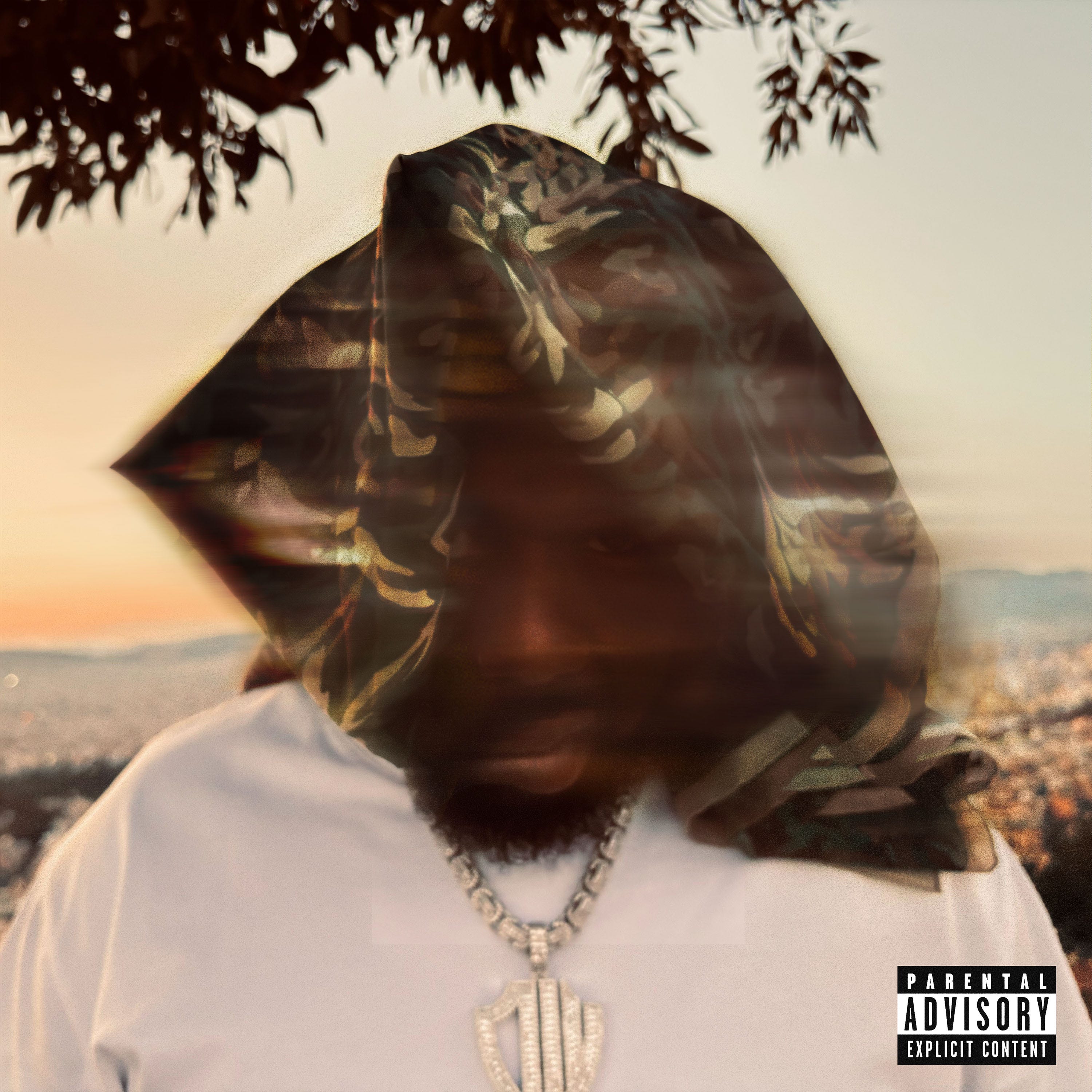
Demond Price leans into the word “Machine” like he’s reminding himself it’s still true. The rasp hasn’t smoothed out—if anything, Bell’s palsy turned his voice into a tool for emphasis, each syllable forcing its way past damaged nerves to land with more weight than intention alone could deliver. You Can’t Kill God with Bullets opens with H. Rap Brown’s 1968 rally speech about gunpowder and power, the kind of archival audio that signals ambition, but Conway isn’t trying to position himself as a movement. He’s just making it clear that the title isn’t an allegory. He was shot in the head in 2012 and kept rapping. He calls himself blessed and threatens to backhand someone’s boss two bars later. That’s the tightrope—gratitude that he’s alive, rage that he still has to prove it, and the knowledge that both feelings are operating simultaneously without resolving into coherence.
The songs keep returning to the shooting, but Conway doesn’t cast it as the defining origin story the way a different rapper might. On “The Lightning Above the Adriatic Sea,” he stacks a line about being hit with bullets next to a flex about quarter-million-dollar cars and infinity pools, then moves into a critique of how people close to him acted jealous when he made it. There’s no pause for reflection between the trauma and the money talk, no signaling that one caused the other or that surviving made him wiser. He’s just listing what’s true: someone tried to kill him, he has property now, some people are weird about it. Others pivot from “the Black man is God” to a threat about shooting up a windshield without treating the spiritual claim and the violence as contradictory, which’ll circle back later.
He’s not interested in reconciling them—he’s interested in using both, depending on what the moment requires. “Se7enteen5ive” brings it back to the money and the dope, cycling through images of bricks and TEC-22s and mothers selling plates to pay for wakes, all delivered in the same unbothered monotone he uses to talk about his Patek. The writing isn’t trying to teach a lesson or build to catharsis. It’s structured like memory: jagged, recursive, refusing to stay in one emotional register long enough to become sentimental. “Parisian Nights” is one of the few songs where Conway sounds like he’s actually enjoying the luxury he’s describing. The beat is smooth, but hard-hitting (courtesy of the underrated Jamla producer, E. Jones), a rap hook from KNDRX about time zones and champagne, and Conway rapping about smoking reefer in Paris, cleaning up his sins, wearing Creed on his skin. He’s talking about connections in Medellin, linen pants in France, transactions in London, but the tone is more relaxed than the usual wealth talk (then he’s back to talking about knife work, gun work, desperado with a guitar case, and the moment passes).
“The Lightning Above the Adriatic Sea” works as it doesn’t try to do too much. The beat is spare—drums that hit like footsteps in a stairwell, a bass loop that sounds like it’s vibrating through a car door. Conway comes in talking about Central Booking and Coachella bookings in the same breath, moving from the concrete (a quarter-million-dollar car, the Mercedes Concept) to the abstract (God’s got him, the devil’s looking) without changing his delivery. He keeps saying he took things where other rappers couldn’t, and the specifics bear that out: KD courtside in Brooklyn, shooting locations in France, five Grammy nominations. But he’s also saying people close to him got jealous of the position he’s in, that they expected him to bounce back after the bullets and didn’t fight fair when he did. “Mahogany Walls” does something adjacent, mixing drug-era nostalgia (eighteen for the coke, breaking a kilo for the leather) with present-day excess (five-kilo chains, Ferrari SUVs, FN bullets hitting sideburns). The production is denser here, thanks to Conductor Williams, but Conway’s still moving between time periods without transition.
The songs about success and resentment are where the record gets most specific and most evasive at the same time. “Crazy Avery” has a Timbaland shoutout (whether he made this on Suno is yet to be determined) and drums that snap with the kind of frantic energy that doesn’t leave room for nuance. Conway comes out swinging—ice changing seasons, winning like Tebow, PlayStation 6 brain while everyone else is on ColecoVision. He’s saying he built an ecosystem, that he paid for artists’ flights and hotels and studio time and stages at Coachella, Rolling Loud, shows in Vegas. Then he pivots: nobody sees the Machine, people are streaming-obsessed, and he gave more than he received. The tone doesn’t change—he’s still flexing about twenty million and puffing cigars worth a quarter-million—but there’s a shift in what he’s defending. He’s not just saying he’s rich, he’s saying he deserves to be rich because of what he put other people on, and the fact that he has to make that case feels like the real injury.
“I Never Sleep” makes that resentment more explicit without naming names. He talks about people not calling when they come to town, about feeling tension from his brothers, and about the business relationship being ruined, even though everything else is cool. He says a right-hand man blocked him for not sharing a post, that the internet got to him, and that he thought they were locked in. The song just catalogs the small betrayals and moves on. Conway keeps saying he’s in his own bubble, changing his phone number, staying out the way, but the verses are full of people: the friend who got woken up by a narcotic sweep, the homie who might’ve played NFL football, the ones who only want to join him because they can’t stop him.
“Don’t Even Feel Real (Dreams)” is the most direct he gets about feeling used. He’s saying he put artists on stages, paid for studio time, covered hotels and flights for tours, brought people to Coachella and Rolling Loud and Vegas, and got nothing in return. When he signed his deal, he didn’t get a chain or a penny. People didn’t call when he had a breakdown, when he broke his leg in three places, and almost lost it. The production on this one is warmer, more melodic, with Heather Victoria singing about living dreams in the hook, but Conway’s verses are cold inventory. He’s listing what he gave and what he didn’t get back, not to guilt anyone but to make it clear that the math doesn’t add up. The specificity is the point—he’s not saying people were generally unsupportive, he’s saying nobody called during specific crises, and the silence meant something. “Organized Mess” deals with this narrative about dirty lawyers, broken friendships, people who tell quicker than time will, fiends hitting clean face, oversized Balenciagas.
The grief songs don’t lean on performance the way the flex songs do. “Hold Back Tears” is just Conway listing names, from his grandmother to his homies, and saying he has to hold back tears when he thinks about them. He says someone told him he sounds depressed in his songs now, and he confirms it: he lost a child, the love doesn’t feel real anymore, he’s fucked up. The production from Beat Bucha is minimal, just enough space for his voice to sit in. He hopes that when it’s over, he’ll be worthy of Allah’s mercy. “The Undying” touches on the same territory without naming names, talking about dark nights on corners, warm liquor on cold mornings, narcotic sweeps, friends getting handcuffed in their drawers for everyone to see. He says the funny vibes from his brothers make it hard to sleep, that they don’t call when they come to town, and it hurts deep.
“Yeah, somebody said I sounded depressed in a lot of my songs now.
Shit, hell yeah, I’m depressed, I lost a child, nigga.
You know the love don’t feel real no more, homie.
I’m fucked up, for real.” — Conway the Machine on “Hold Back Tears”
The conflation of grief for the dead and resentment toward the living is what makes the song work—he’s mourning people who are gone and mourning relationships that are still technically alive but functionally over. When he’s back with his braggy bars, “Attached” splits the difference between luxury and longing, Conway, saying he gets to the money for real, that his expenses are vintage, that he’s still hitting someone’s phone even though they’re acting like they don’t see his number. He calls it toxic dick and toxic vagina, says they’re forever locked in, that no matter what city she’s in, he’s got to come find her. Lady London’s verse flips the script—she’s saying if he does it with another woman, she won’t give names, but he’ll try his luck again anyway, that he can stay in his place for one single chance.
The album runs long. Eighteen songs are too many when several of them are saying the same thing in slightly different configurations. The writing on “Hell Let Loose” doesn’t add much that “Crazy Avery” (and others) didn’t already cover. “Otis Driftwood” and “Nu Devils” with G Herbo are both about money and violence and people doubting him, but they occupy similar tonal space without enough differentiation in the production or the writing to justify both. The G Herbo verse is strong—he’s talking about being sixteen with six figures, trapping since he was little, getting paid until he dies with no pension—but Conway’s already said most of this elsewhere on the record. “Diamonds” is one of the better songs that Roc brings a different energy, that detached menace that makes even the ugliest bars sound like he’s observing his own behavior from a distance. Conway saying “spit in the face of a nigga daughter that I slaughtered” and Roc responding with “knocked the baby out the walker” is the kind of one-upmanship that justifies the feature.
“BMG” is the closest thing to a thesis statement, Conway cycling through the idea that the Black man is God and using it as a spiritual anchor and a threat. He’s saying people want to see creases in his recent design, that he’s been looking for peace of mind, but they want pieces of his, that when it’s demon time, the heathens will slide. He says Eminem told people Machine was that guy, that he’s a God, but when it’s demon time, he becomes something else, that he went pyro on beats with no big features and fucked up careers that were starting to spiral. “The Painter” picks up that thread, Conway saying he tosses supermodels and petite women lust after him, that he’s got twenty million on the brink, that he might keep something tucked if people breach his trust. The imagery is vivid—shooting someone and their grill still being on their teeth, half a billion on his vision board, something other people don’t have the vision for. He’s saying his name doesn’t ring bells in a prison yard, that none of these rappers are hard, and the conviction in his voice makes you believe him even if you don’t know the people he’s talking about.
Conway runs his own label now, Drumwork, and this album feels like the sound of someone who doesn’t have to answer to anyone but also doesn’t have the infrastructure to edit himself. The sequencing is loose—songs bleed into each other without much regard for momentum or dynamics. Some of that works in the album’s favor, making it feel like a document of where his head is rather than a curated statement, but it also means the record sags in the middle and never finds a strong closing beat. The self-mythology is earned—the Grammy nominations, acclaim without going viral, respect from peers who actually matter. There’s no clear exit—the album just stops. That might be intentional, a refusal to wrap things up neatly, but it leaves us with the sense that Conway had more to say and ran out of ways to say it.
Solid (★★★½☆)
Favorite Track(s): “The Lightning Above the Adriatic Sea,” “BMG,” “Hold Back Tears”