

Album Review: Z by Skrilla
Skrilla's Capitol debut is an hour of uncut Kensington: lean, Orishas, and walk-downs.
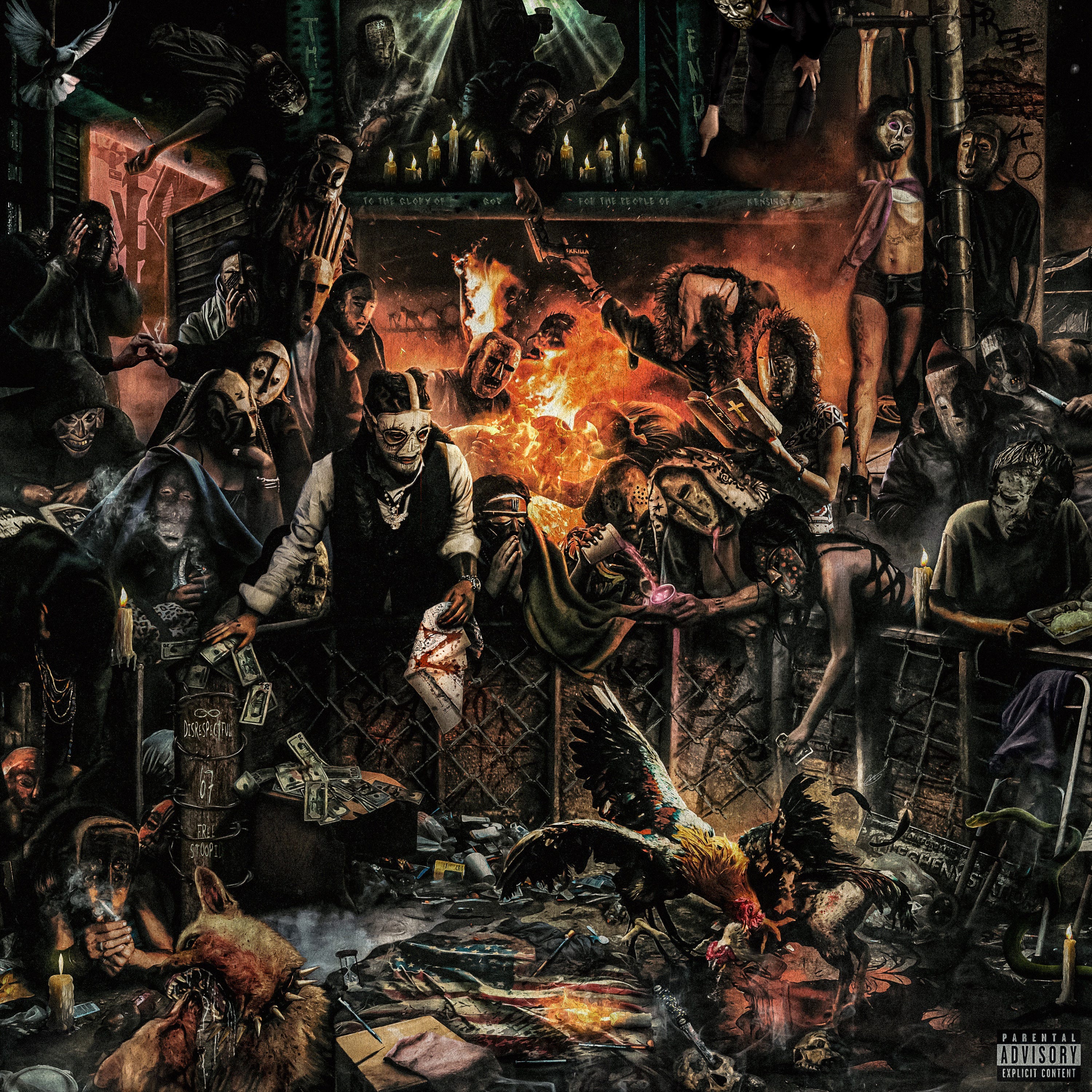
Everybody knows what Wockhardt is now. Not because they’ve held a bottle, but rap has done the pharmaceutical industry’s marketing for free: Wock’, Tris, promethazine, codeine, ten milligrams from a bean. Skrilla didn’t start this, but he might be the first rapper who raps about lean the way a sommelier talks about wine. He has preferences between brands, and he’s annoyed when he scores the wrong one. He is from Kensington, the neighborhood in north Philadelphia that is the largest open-air drug market on the East Coast, and he has been selling, using, and naming drugs by brand since his first recording, which was titled after the street name for heroin. Z, his Capitol Records debut, was recorded, by his own admission, while he was high on most of the substances he names on it.
Jemille Edwards was born in 1999 to a Mexican mother from Texas and an African-American father from Philadelphia who met in college. He started dealing around age twelve and accumulated enough arrests to spend two and a half years on house arrest during high school. He played AAU basketball and ran cross country before quitting both to focus on selling. The bone tattoo next to his eye stands for dog food. His childhood friend RecoHavoc, who features on the album, pushed him toward rapping. Skrilla practices Santería, an Afro-Cuban religion rooted in Yoruba tradition, and has discussed animal sacrifice in interviews. He keeps a pet alligator named Tranq (after Xylazine, Kensington’s street drug of choice) and has been filmed administering Narcan to people slumped on the sidewalk outside his apartment.
Z opens with the voice of a man who introduced himself as Black Jesus. Skrilla found him by walking through Kensington the day he went to the studio, looking for someone from the neighborhood to put on his major label debut. “In Kensington, you never really know if you’re ever going to see somebody again,” he told the FADER. Black Jesus addresses Zombie Nation, Skrilla’s name for his crew and his block, and offers a prosperity gospel for the corner: “If you hate three times, we gon’ grind six times harder—it’s called fuck you, pay me.” Then Skrilla takes over on “Black Jesus (Intro),” rapping about Glocks without safeties, cops pulling his shooters off the field, and watching 12 Years a Slave and thinking about his Orishas.
YBC Dul is already dead when his voice opens “Roger Dat.” He’s talking about how someone is dying right now, right this second, and if the cops get to you first, they’ll still get you in jail. Skrilla follows: “We caught a nigga on the porch, the Draco rocked him out the chair.” On “Blood Bath,” a friend’s fentanyl overdose and a bullet hitting an artery share the same chorus. “Brother bleedin’, bullet hit an artery, it wouldn’t stop/Cuddy fiendin’, fentanyl and tranq, he OD’d, wouldn’t stop.” The shooting and the overdose share the same verb and the same refusal to stop. On “DOA,” Skrilla asks a question that sounds rhetorical until you realize it isn’t: “How your dog get whacked, you ain’t get back?” Moskino, his feature, describes starting from his brother’s couch and walking through rain. The songs report these things with the matter-of-factness of someone describing weather.
He restarts bars. On “Religion”: “Pull up Usain—pull up Usain Bolt, two-twenty on the dash, I’m drivin’ wild.” The first attempt trails off. The second catches. On “Mr. Clean,” he rat-a-tats through weapon attachments (”Baldhead, stuff magazine, attach the switch, rat-tatted-tatted”) and the Draco turns into a percussion instrument. “Forty-orty” for his friend Forty on “Free 40,” “sevennnnn” on the hook that went viral—and interrupts himself with gun sounds (”brrt,” “frr,” “pfft”) where another rapper would just say “yeah.” On “Bazin,” the chorus (”Bitch, I’m bleedin’, brother”) comes back with a different slur each pass. On “Checkmate,” he drops “six, seven” into a verse about a friend with six or seven bodies and calls the count angel numbers, and the phrase carries none of the playground energy it had on TikTok (which, for the record, is the version your parents know). He raps like his brain is running on a two-second delay, thoughts arriving and drifting and catching themselves before they dissolve.
“Astaghfirullah, Allahu Akbar, can you help me make it far?” Skrilla asks on “Die 4 Me.” Two bars later: “Havin’ talks with Elegua, he told me he not never far, bitch, he right here.” An Islamic prayer and a conversation with the Orisha of crossroads, two lines apart, no signal that he’s switching systems. On “Mr. Clean,” he shouts out Ogun, the Orisha of iron and war, and says, “Put him to the test, a nigga die, wasn’t from homicide/Shouts out my Orishas, nice to meet you in the afterlife.” On “Soul Snatchin,” Elegua lives through Skrilla and Ogun lives through his weapon. On “Blood Bath,” after a verse about shootings and dismissed charges, the last word is “Aṣẹ,” a Yoruba affirmation meaning roughly “so be it.” And on “Bazin,” he asks a Babalawo for a reading. The album is named after Zombieland, and the man who bookends it calls himself Black Jesus. Skrilla does not present these as contradictions. They sit in the same bars the way Wock’ and Tris sit in the same cup: different sources, same purpose, both going down.
Leviano, the Brazilian rapper who features on “The Box,” raps his entire verse in Portuguese. He talks about walking into Louis Vuitton like he never left home, stacking racks high enough to need a ladder, and his daughter telling people nobody is as rich as her dad. If he goes broke, he’ll call old contacts and go back to stealing. His rifle is so oiled it looks like a pastry. Skrilla went to São Paulo and found the favelas weren’t much different from Kensington (“The favellos are just like Kensington but bigger,” he told the FADER), and the collaboration comes from that recognition. Ola Runt on “glockboyz” says a priest told him to be proud of his sins, references riding MARTA, and threatens to shoot someone in the face. YoungBoy on “Free 40” fires a .308 and announces that “bro got zombies and I got all the slimes.” None of the guests change the temperature. They arrive inside Skrilla’s world and rap like the weather there is normal.
“I’m from the bottom, Bikini Bottom, who knew Patrick be a star?/Five-star restaurants, a bad bitch eatin’ caviar” shows up on both “Rich Sinners” and “Free 40.” “I done pulled up presidential, all-black truck like Donald” appears on at least three songs. The repeat bars are what recording while high produces, as you circle back to the same image without realizing you already used it. But the recycling goes deeper than individual lines. Stretches of Z blur into one long song about designer brands, modified Glocks, and bounce-outs. The album loses momentum by its midpoint and doesn’t recover it until “Die 4 Me” at track nineteen.
The beats on “Roger Dat” and “Blood Bath” sound like they were recorded inside a condemned building: organ tones, minor-key strings, bass that thuds once and drops out. The hi-hats on “Blood Bath” patter quick and thin while the bass holds one low note like a held breath. On “Free 40,” a string sample curls through the track, and Skrilla rides it with the urgency of someone who knows this is his best song and still can’t keep from slurring. The production across Z rarely builds to a moment. It loops and frays, and Skrilla’s delivery does the same thing: both sound like they’re about to fall apart and don’t.
But Skrilla also says he’s finished. On “Free 40,” YoungBoy is rapping about built-in full-auto triggers and stuffing molly into Louis Vuitton, and Skrilla is in the middle of it promising to get clean once the album drops. “Codeine, mix promethazine, I hate when I run out/On the deen, I’m gettin’ clean once my new album Z come out.” What’s on the record is sixty-five minutes of a man who raps high, prays to Orishas and Allah, walks his block looking for voices to put on tape, and keeps a pet alligator named after the drug that’s killing his neighbors. He told the FADER why he grabbed Black Jesus off the street that day: “In Kensington, you never really know if you’re ever going to see somebody again.”
Solid (★★★½☆)
Favorite Track(s): “Bazin,” “Blood Bath,” “Die 4 Me”