

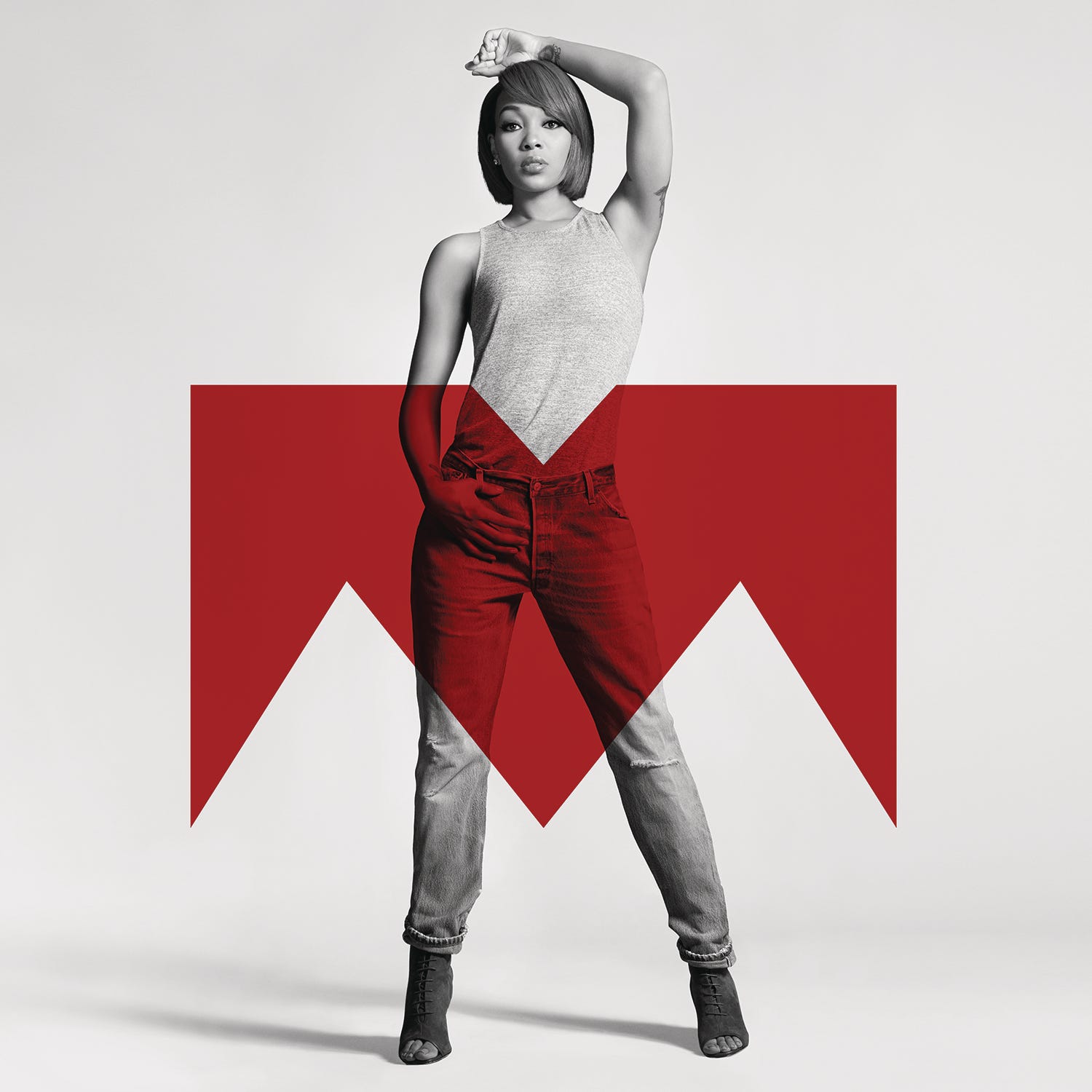
Monica arrived with sirens blaring—literally and figuratively. Rather than indulge in an easy celebration of the 20th anniversary of her 1995 debut, the Atlanta-born singer declared a “code red” on the state of contemporary R&B, sounding an alarm about how soul music was being pushed out of the mainstream. She felt R&B was in a “state of emergency,” and as she explained on Hoodrich Radio at the time, “Right now for R&B music, there’s a state of emergency. Myself being one person, one artist, I can’t change that on my own. No one is that powerful, but all of us together, I think we can make huge strides, allowing this generation to enjoy what this music embodies, which is a lot of love, passion, soul.” Code Red was her rallying cry to “get back to the soul of R&B music,” and it wears that mission on its sleeve. From its opening moments, the album lays out a defiant challenge to business-as-usual on the airwaves, to rethink what “real” R&B means in the 21st century.
Fittingly, the title track “Code Red” opens the album like an emergency broadcast. It’s an aggressive uptempo dance cut produced by Monica’s cousin Polow da Don (who co-executive produced the project) and inspired by the bass-heavy Atlanta club sound she grew up with. Over a churning beat, Monica teams up with her longtime friend and collaborator Missy Elliott—whose lively chants and background shouts give the song a throwback ‘90s party vibe—and together they issue a bold proclamation. “Turn off the radio, damn right, we don’t hear real shit no mo’,” Monica declares bluntly, a call to switch off the formulaic playlists (please, get rid of them) dominating mainstream radio and make room for the authentic, soulful R&B that Monica feels has been sidelined. Yet immediately after Monica’s rallying cry to kill the noise on the radio, Code Red presents an interesting contrast.
The very next voice we hear is that of Lil Wayne, one of the most ubiquitous hip-hop hitmakers of that era. He kicks off the album’s first proper song, “Just Right for Me,” with his signature style—a reminder that Monica wasn’t entirely abandoning the mainstream formula. In fact, “Just Right for Me” (the album’s lead single) is produced by Polow da Don as well and cleverly loops a warm soul sample under Monica’s confident vocals. With its throwback vibe, sampling Smokey Robinson (who is currently facing a troubling case), and a sweet, lovey-dovey chorus, the song is classic Monica: feel-good mid-tempo R&B anchored by her rich alto. Lil Wayne’s guest verse adds a dash of contemporary radio appeal, bridging Monica’s traditionalist leanings with hip-hop’s commercial might. This juxtaposition—protesting radio blandness on one track, then featuring one of radio’s biggest stars on the next—could seem jarring. One can’t be faulted for feeling a bit confused by Monica’s perspective here. She is essentially trying to have it both ways—turning off the radio, yet still aiming to be heard on it.
That tightrope walk defines much of Code Red’s journey. On one hand, Monica sounds determined to give R&B purists what they’ve been missing. On the other hand, she knows the realities of the 2015 music landscape—that even a veteran soul star might need a Lil Wayne or an Akon to get a foot in the door of mainstream playlists. Indeed, along with Wayne’s cameo, the album enlists pop-savvy guests like Akon (on the duet “Hustler’s Ambition”) and even producer-turned-rapper Timbaland, who features on two tracks (we’ll get to him later). These appearances can be seen as commercial concessions, but Monica integrates them into her vision rather than simply chasing trends. “Hustler’s Ambition,” for instance, pairs Monica with Akon in a tale of long-distance love and loyalty, set to a slinky, Latin-tinged groove. It’s radio-friendly, sure—Akon was known for massive pop hits—yet the song’s theme of devotion despite hardship is vintage Monica, recalling the earnest storytelling of ‘90s R&B. Timbaland’s contributions come on “Love Just Ain’t Enough” and “All Men Lie,” where his eccentric production touches (imagine booming horns and stuttered beats) meet Monica’s soulful scolding of no-good men.
There’s a playful throwback to Monica’s 2006 The Makings of Me era in these cuts; she even drops a few candid expletives as she calls out lying lovers, channeling the attitude of a fed-up Southern woman in song. It’s an acquired taste—hearing Monica croon and curse in the same breath—but it adds a dose of real-life grit to the album’s glossy surfaces. Suppose Code Red sometimes sends mixed messages by critiquing the mainstream while employing its tactics. An interesting subplot of Code Red is the face-off between the album’s new wave of producers and one of its old guard contributors. Polow da Don, Danja, Pop & Oak, and others on the production team were all younger than or contemporaries of Monica, bringing in modern R&B and hip-hop sensibilities. In that case, that paradox also feels true to Monica’s experience: she’s a 20-year industry survivor trying to push R&B forward without disowning the world she inhabits.
Nowhere is Monica’s passion for R&B’s classic era more apparent than on the ballad “I Miss Music.” Over a gentle, wistful melody, she literally names her inspirations in the lyrics, pouring out nostalgia for the legends she grew up with. “I miss Michael and Whitney and Tina and James/And the Fugees and Lauryn, I miss Kurt Cobain/I miss Stevie, I wonder would things be the same?” she sings, invoking Michael Jackson, Whitney Houston, Tina Turner, James Brown, Stevie Wonder, and more in a heartfelt roll call. She reminisces about the days of watching music video countdowns on TV, when “purple still rained” (a nod to Prince) and groups like TLC and the Fugees ruled the charts. The song is deliberately old-fashioned in feel—blending mid-‘90s adult contemporary polish with a Babyface-style R&B melody. Its chorus poses the aching question: “Ooh, what am I gonna sing to?” as if Monica fears that the well of real music has run dry. Coming from an artist only in her mid-30s at the time, this plaintive nostalgia is both touching and, admittedly, a little odd. By 2015, Monica herself was still a relatively young veteran, and many of the artists she “misses” were not only alive but actively making music. In fact, a fair number of them—folks like the late D’Angelo, Jazmine Sullivan, Miguel—were her own contemporaries and even label mates at RCA, still creating the kind of soulful music she longs for. So why does Monica sing as if that era has passed?
Other songs on Code Red find her skillfully balancing past and present. Take “Deep,” one of the album’s standout tracks. Co-produced by Polow and Timbaland protégé Danja, “Deep” is a slow-burning, sensual R&B ballad that glows with a kind of lush, modern sheen even as it channels classic slow-jam vibes. Monica wrote “Deep” as an ode to her husband, former NBA player Shannon Brown, and the lyrics overflow with the intimacy and trust of a woman profoundly in love. “Deep” starts off delicate and atmospheric—Monica’s voice almost humming over moody chords—then gradually swells with intensity, adding an edgy undercurrent as she delves into just how engulfing true love can be. In much the same way, “Alone in Your Heart” seamlessly merges eras. This pop-soul belter is another highlight, with Monica’s vocal fireworks taking center stage. Built on a sample of Harold Melvin & the Blue Notes’ 1977 hit “Stay Together,” the song carries a touch of Philadelphia soul DNA in its musical backdrop, but the execution is sleek and contemporary.
Before munching with AI, we have Timbaland, who famously helped redefine R&B in the late ‘90s and early 2000s, who appears here almost as a legacy figure trying to re-sync with Monica’s groove. Strikingly, the tracks Timbaland co-wrote and guested on (“Love Just Ain’t Enough” and “All Men Lie”) are among the album’s more experimental but also more polarizing moments. “All Men Lie” in particular has Tim’s fingerprints: quirky rhythmic breaks, blaring synth-horn stabs, and even his voice interjecting alongside Monica’s. The song’s theme, with Monica sardonically insisting “all men are the same” while Timbaland playfully eggs her on, creates a kind of dramatic mini-soap opera in music. It’s bold and interesting, yet one could argue it slightly upsets the album’s cohesion—the track’s off-kilter vibe stands out against the smoother flow of the surrounding songs. It seems the younger producers better captured the essence of what Monica wanted to achieve by curating an album that nods to classic R&B without feeling dated. But it also marks the coming-out party for Jocelyn “Jozzy” Donald, who contributed six songs.
In fact, the most defining aspect of Code Red might be Monica’s level of personal investment. For the first time in her career, Monica has a co-writing credit on every single track of the album. This was a point of pride for her and a notable shift; whereas earlier in her career, Monica often interpreted songs from the pens of others (albeit always making them her own), here she is firmly in the driver’s seat creatively. The result is an album that feels intimately hers. Lyrically, whether she’s expressing frustration, desire, devotion, or nostalgia, there’s a consistency of voice across the record. You can sense Monica’s hand in shaping these stories and messages—and it makes a difference. She sounds completely connected to each song, unsurprisingly so given her deeper involvement in the songwriting. When she chastises a lover for dishonesty, it resonates as hard-won wisdom. When she glorifies the love of her life, it radiates genuine joy cropping. When she laments the state of music, it carries the weight of someone who’s been in the game long enough to have earned that opinion. Monica’s emotional investment elevates the material, even when the material itself isn’t groundbreaking.
Code Red is an album driven by Monica’s love for her craft and her history. Its title might imply an emergency, but the music itself isn’t panicked—it’s confident, often joyful, and deeply rooted. Monica sounds, throughout these songs, like a woman rejuvenated by reconnecting with the music that shaped her. Whether she’s luxuriating in a romantic slow jam or firing off a missive about the state of the genre, she does it with conviction, despite being her last release as of today. By turning off the radio, Monica turned up the volume on her true self. In doing so, she delivered a collection that bridges generations of R&B and asserts that the past and present can harmonize—all through the voice of a singer who’s never lost faith in the music she loves. Code Red may not have sparked a radio revolution, but it remains a soulful testament that real R&B never went away, word to Shatter the Standards. Sometimes you just have to tune out the noise to hear it. And in Monica’s case, when you do listen, you hear an artist passionately fighting for the heart of her genre, one song at a time.