

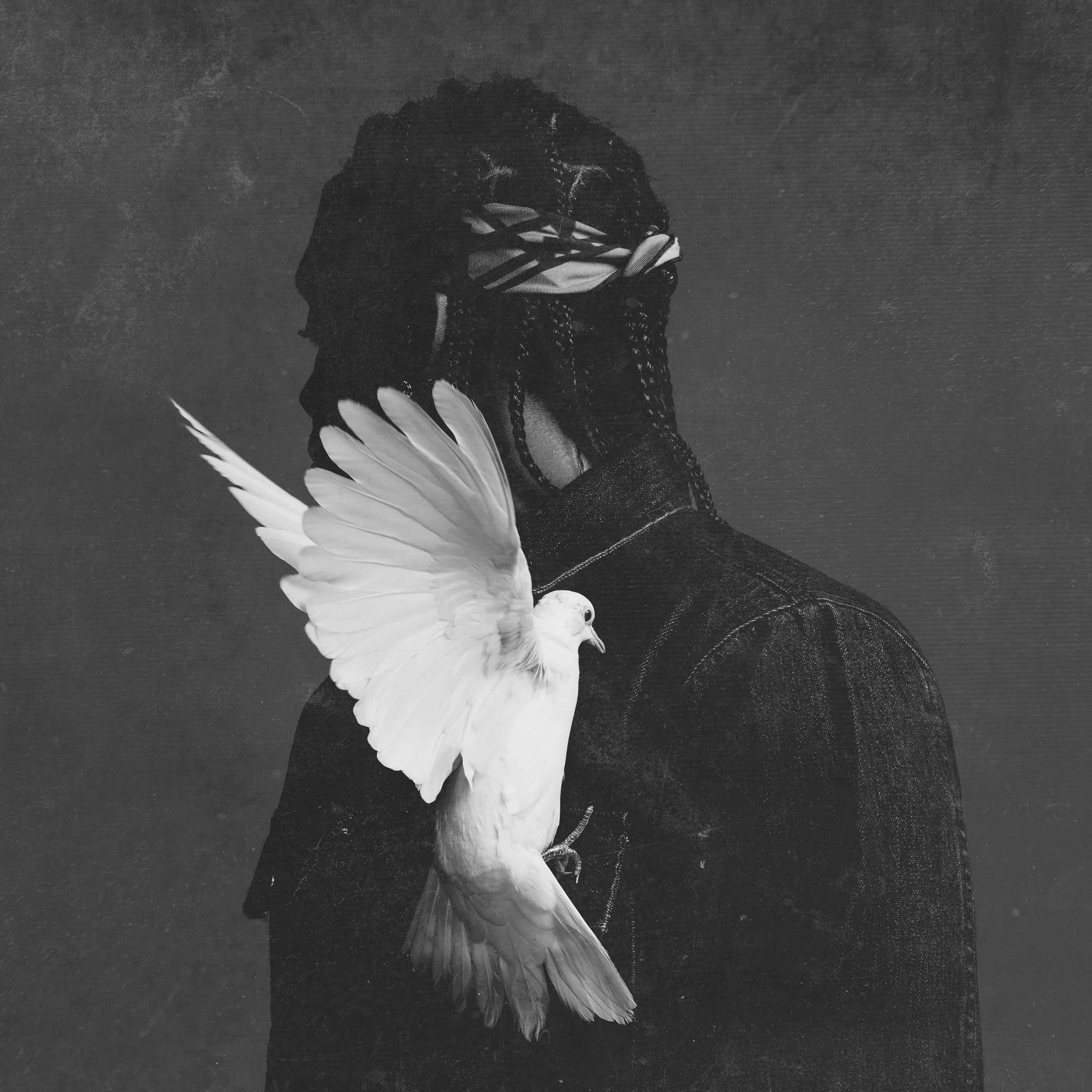
In one of the album’s most cutting moments, Pusha T sneers, “You’d rather be more famous than rich,” firing a warning shot at the rap world’s priorities. It’s a barb delivered by an emcee who would know: by 2015, Pusha T had spent nearly two decades navigating—and outwitting—the major-label rap machine. As one half of Clipse, he came up in an era of million-dollar videos and label politics that often left artists trapped in smoke-and-mirrors illusions of success. Pusha learned the hard way how fame and wealth can diverge sharply in the music industry. Early on, Clipse scored critical and commercial success with gritty Neptunes-produced hits (“Grindin’” was the soundtrack of 2002’s summer) even as they battled behind the scenes for creative control. A notorious dispute with their record label stalled the release of Clipse’s 2006 masterpiece Hell Hath No Fury, a delay that only hardened Pusha’s resolve and pen.
And when the group’s longtime manager was exposed and sentenced in 2010 for running a multimillion-dollar drug ring, real life collided violently with the coke-dealing narratives in Clipse’s music. Gene “Malice” Thornton (Pusha’s brother and other half of Clipse) found religion and stepped back from the drug-rap game, effectively halting the group’s output. Yet Pusha T refused to fold. Instead, he forged a solo path, determined to play the industry on his terms. As Darkest Before Dawn arrived in late 2015, Pusha had not only signed with Kanye West’s G.O.O.D. Music but risen to its presidency—a seasoned survivor now positioned to dictate his own vision. The second project was billed pointedly as a prelude—a dark little brother to the long-delayed King Push album—but it stands on its own as a mission statement. Running a lean 33 minutes, the record is lush with menace. Pusha enlisted a murderer’s row of producers—Kanye West, Timbaland, Puff Daddy, Q-Tip, among others—names that scream “big budget.” But instead of radio-friendly anthems, he had them craft eerie, hard-hitting soundscapes that match his unforgiving verses.
In the studio, Pusha T basically pulled a power move on his label: he knew the suits would be excited seeing hitmakers on the tracklist, but he instructed those super-producers to go as dark and unconventional as possible. “It’s what you call a reverse troll,” he later said of this cunning strategy. The result is an album that sounds expensive and cinematic—yet uncompromisingly grim. From the opening “Intro,” which explodes out of an ominous haze of synths into a thunderous drum break, the tone is set: foreboding, opulent, and cold. Kanye West’s contribution “M.P.A.” brings a momentary sheen of soulful swank with its rich instrumentation and a hook crooned by The-Dream, but even that track’s title (“Money, Pussy, Alcohol”) reveals the hollow pursuits Pusha is dissecting. Mostly, Darkest Before Dawn lives in shadow. Timbaland laces “Untouchable” with a distorted Biggie sample as if summoning a ghost; the beat skips and lurches, all the better for Pusha to bulldoze through with bars. Q-Tip’s production on “F.I.F.A.” flips a quirky soul sample into a sparse, trunk-rattling knock, while the Hitmen team gives “Crutches, Crosses, Caskets” a gothic sheen—organs, skeletal snare hits, and an atmosphere of looming threat. Every song feels like the soundtrack to a midnight drug deal under flickering streetlights.
Pusha’s lyricism is the dagger flashing in its dark alleys. At 38 years old, he delivered verses with the controlled fury of a man fully comfortable in his villain role. His cadence is deliberately unhurried, steely and composed even as he spits venom—a flow honed in the ‘90s that hasn’t bent to contemporary rap’s sing-song trends. And his words hit like haymakers. Over the album’s ten tracks, Pusha takes a scalpel to the rap industry’s jugular, exposing what he sees as an ecosystem built on fragile facades. He has little patience for the new breed of rappers “dancing” for fame, nor for the older icons resting on past laurels. “Rappers is victimized at an all-time high/But not I,” he declares on “Crutches, Crosses, Caskets,” his voice dripping contempt at those falling prey to their own gimmicks. In that song’s most talked-about line, he asks with a scornful shrug: “Is there shame when a platinum rapper’s mother lives in squalor?” With one rhetorical punch, Pusha calls out the hollowness behind so many glossy success stories—the platinum plaques and Instagram flexing mean nothing if you can’t even lift your own family out of poverty.
Throughout Darkest Before Dawn, Pusha T positions himself as the ultimate rap anti-hero—equal parts wealthy kingpin and truth-teller, the last man standing after the smoke clears. “I’m aiming for the moguls, why y’all niggas aiming at the locals?” he snarls on “Untouchable.” Pusha casts himself as a big-picture hustler surrounded by short-sighted clout-chasers. The track flips a Notorious B.I.G. sample into a stomping, off-kilter anthem for Pusha’s promulgation. In one verse, he alludes to the notorious fallout between Lil Wayne and Cash Money Records’ CEO Bryan “Baby” Williams: “Rap niggas broke like them, they’re mere hopeful/Still wishing on a star/The last one to find out that Baby owns the cars.” The reference is thinly veiled—Baby owns the cars—calling back the much-publicized fact that some artists don’t even own the Maybachs and Bentleys they parade, that their “boss” can repossess the toys at any time. Pusha has been needling Cash Money’s facade since his 2012 diss track “Exodus 23:1,” and here he effectively tells us: I warned y’all. It’s a cautionary couplet about reading the fine print of the industry—delivered by someone who watched that very saga unfold from a front-row seat.
Those cautionary finance lessons continue in the second verse of “Untouchable,” where Pusha pivots from industry tales to his own business acumen. He recounts a conversation with a friend fresh out of prison who advises him to chase “club money”—the quick bag many rappers get for hosting nightclub parties. Pusha pointedly rejects that low-hanging fruit: “He tells me I miss out on all that club money, I don’t bounce/Adidas gave me a million and that don’t bounce.” In just one line, he sums up the difference between himself and the average rapper hustling for appearance fees. Why scramble for a few thousand in cash (that might even bounce like a bad check) when you can sign a million-dollar sneaker deal with Adidas? Pusha had inked a lucrative deal designing sneakers, and as he boasts, those checks clear. “The president of G.O.O.D. Music has been announced/A quarter million a year and that don’t bounce,” he continues, referencing his own 2015 appointment to the helm of Kanye’s label. Pusha T is showing younger artists how to play the long game. He’s leveraged his brand into executive positions and corporate partnerships—real wealth and stability over flash-in-the-pan fame. Coming from someone who once rapped about “grindin’” in the streets, it’s a striking evolution.
Pusha is unmasking hip-hop’s “fragile make-believe.” Nowhere is that clearer than “M.F.T.R.”, short for “More Famous Than Rich,” the album’s blistering centerpiece. Over a looming Boi-1da beat accented by The-Dream’s ghostly vocals, Pusha unloads on the celebrity-first mentality he despises. The opening line is a mantra he spits twice for emphasis: “You’d rather be more famous than rich.” He compares wannabe kingpins to actors “playing roles,” invokes the real-life drug dealer legend Rich Porter (as opposed to Mitch, the fictionalized version from Paid in Full), and basically calls out the entire culture of fame over finances. At one point, Pusha aims directly at those who fake it till they make it: “Niggas talkin’ it but ain’t livin’ it/Two years later they admittin’ it, all them niggas is rentin’ shit.” It’s a vicious takedown of the rented Ferraris, leased mansions, and counterfeit luxury that populate rap videos and Instagram feeds. “The biggest rappers in the game broke—voilà,” he quips, conjuring an image of dismayed fans realizing their idols are one bill away from bankruptcy. Pusha anticipates the backlash to such harsh truth-telling—they’ll call it hate, he says—but counters that he’s simply describing the snakes he sees slithering in designer clothing.
Yet for all the sermonizing about industry fakery, Pusha T hasn’t gone clean—he’s still speaking the language of the streets in rich detail, mythologizing the hustler life even as he deconstructs rap stardom. The album’s latter half indulges in the pure coke-rap theater that Pusha helped popularize. “Keep Dealing,” featuring a gravel-voiced comeback cameo from Beanie Sigel, is a sinister slow-burn that plays like a gangster saga epilogue. It’s a reunion of two veterans who’ve cheated death and jail enough times to earn their kingpins’ stripes. Sigel, once a Roc-A-Fella star who fell on hard times (including a near-fatal shooting in 2014), adds gravitas with his scarred voice; when he growls about loyalty and street codes, you feel the weight of lived experience. Pusha’s verses here are packed with his signature dealer tales—prices and product moving coast to coast, but there’s an undercurrent of rebirth in his tone. This is Pusha reaffirming that, despite Clipse’s hiatus and all the turmoil, he never really left the game; he just leveled up.
On “F.I.F.A.”, one of the album’s most swaggering bangers, Pusha’s braggadocio reaches peak vividness. The title nods to the global sport of soccer, and Pusha riffs on the metaphor of kicking around illicit profits like a football. “Drug money kicked around like it’s FIFA,” he repeats with a gleeful yuugh, depicting cash being tossed and juggled in the hustle. Over Q-Tip’s minimalist, knocking beat, Pusha launches into a breathless stream of underworld imagery. “They been trying to tie me to the BALCO,” he begins (a sly comparison of his operation to the infamous steroid scandal), before planting his flag: “I’m my city’s Willy Falcon.” With that name-drop, Pusha aligns himself with one of Miami’s most notorious cocaine kingpins, Willie Falcon—a nod that in the coke-rap pantheon carries serious weight. It’s him saying: I am the don of my town. But just as quickly, he contrasts that self-mythologizing with a scornful reality check: “How you niggas celebrating Alpo? I’m disgusted.” His mercenary lyricism has only grown sharper since his Clipse days. Where the younger Pusha sliced foes apart with punchlines and coke metaphors, the older Pusha opts for guillotine blades of truth. He doesn’t just stunt on rivals with wealth; he questions whether they even understand it.
Pusha T does all this while enjoying himself as the villain. There’s a palpable glee in his rhymes when he’s twisting the knife—a showman’s flair in how he drops a phrase like “voilà” after exposing rappers’ brokenness, or the laughter in his voice as he imagines old rappers slapping young rappers out of frustration. The album ends with “Sunshine,” a track featuring Jill Scott’s soulful croon that touches on police brutality and social ills—a rare moment when Pusha widens his lens beyond the spoils of the game. It’s a brief glimpse of daylight, a hint that dawn is indeed coming. But even there, he sounds unapologetically himself, threading messages of empowerment through his own hustler’s lexicon. In the years since, Pusha T indeed delivered on the promise of his prelude—from the platinum-selling, Kanye-produced Daytona to 2022’s chart-topping It’s Almost Dry, he solidified his status as an elder statesman who hasn’t lost an ounce of edge. The fame, as always, is just a byproduct. In a hip-hop world of smoke and mirrors, Pusha T remains crystal clear—and that, perhaps, is the real dawn after all the darkness.