

Anniversaries: Lasers by Lupe Fiasco
Atlantic held a rapper hostage, and the ransom note became a platinum record. Lupe Fiasco smuggled protest songs inside a pop album his label demanded.
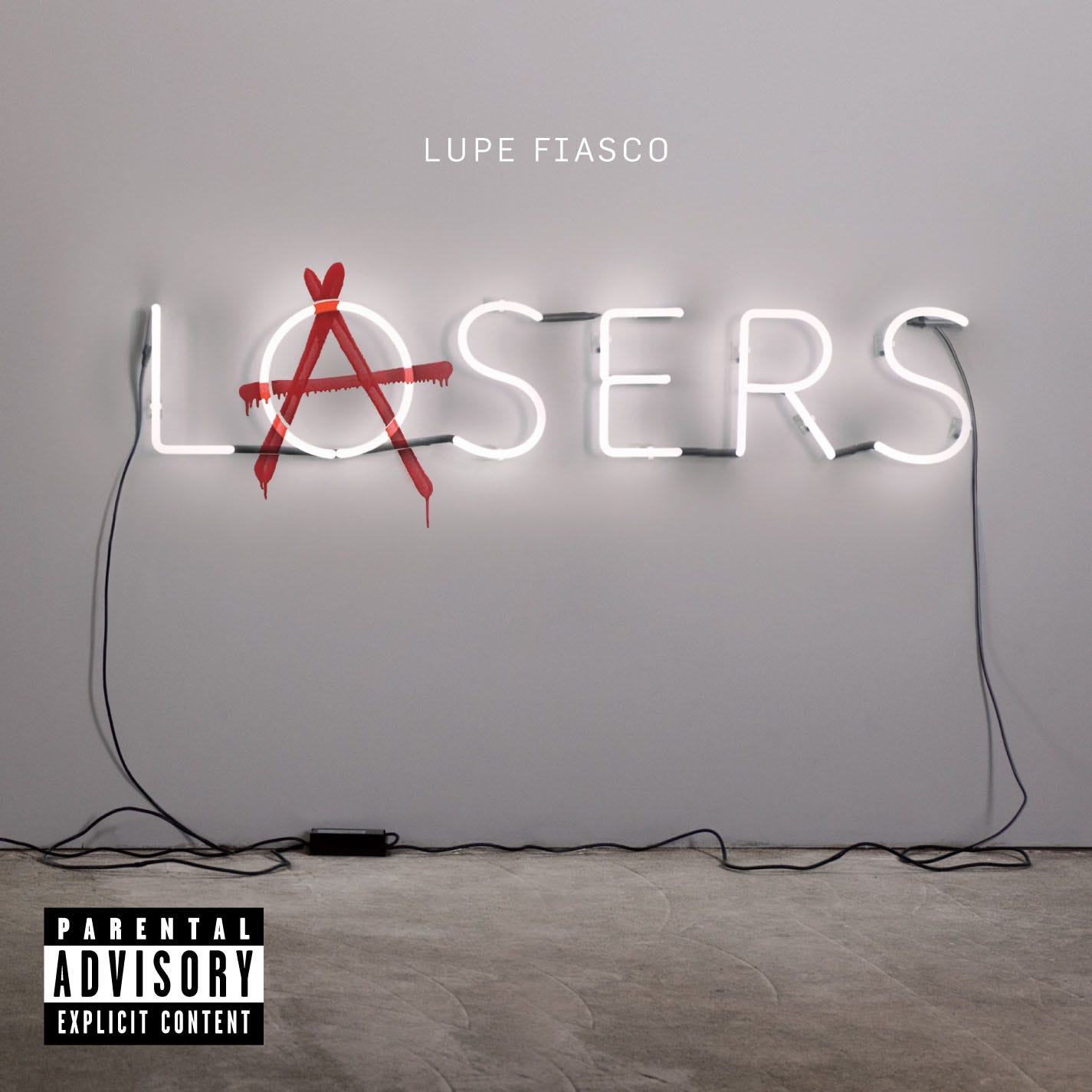
By 2009, major labels were bleeding. Digital sales hadn’t replaced the physical revenue they’d lost, and executives at places like Atlantic Records responded the way executives always do when numbers drop: they squeezed their artists harder. The 360 deal became the default contract pitch, giving the label a cut of touring, merch, and publishing on top of record sales. Artists who’d signed traditional deals suddenly found themselves pressured to renegotiate or watch their albums sit in a vault. For rappers who’d made their names on lyrical density and conceptual records, the new demand was blunt: give us something for radio, or we’ll shelve you.
Lupe Fiasco got caught in exactly that vise. His first two records, Food & Liquor in 2006 and The Cool in 2007, had earned Grammy nominations and healthy sales, but Atlantic craved bigger. They expected Lupe to compete with the Drake and B.o.B. singles dominating pop radio in 2009 and 2010. When they offered him “Airplanes” and “Nothin’ on You,” both built to be crossover smashes, he passed because the ownership splits were garbage. Both songs went to B.o.B. and became massive hits. Atlantic took that as confirmation that Lupe was a liability. What followed was a three-year standoff during which the label repeatedly rejected his recordings, demanded he write simpler lyrics, handed him pre-made beats, and threatened to shelve the project entirely unless he signed a 360 deal. Lupe told The Guardian that the process left him “super-depressed, lightly suicidal, at moments medium suicidal.” Fans organized a petition that pulled over 30,000 signatures. In October 2010, more than 200 of them gathered outside Atlantic’s New York offices for “Fiasco Friday,” a protest that was supposed to demand the album’s release but turned into a celebration when the label finally caved and announced a date. The photo Lupe posted that day, thumbs up with Atlantic COO Julie Greenwald, looked like a truce. It was a surrender.
Lasers came out on March 8, 2011, debuted at number one on the Billboard 200 with 204,000 copies sold in its first week, and Lupe spent most of the press cycle telling anyone who’d listen that he hated it. In a Complex interview published the week before release, the headline read “Lupe Fiasco Hates His Own Album.” He described the lead single, “The Show Goes On,” as a record he “had nothing to do with.” Kane Beatz produced it. The beat interpolates Modest Mouse’s “Float On,” a mid-2000s indie rock staple, with the original vocal melody re-sung in a way that multiple critics compared to a Kidz Bop cover. Atlantic told Lupe that if he didn’t record it, the album wouldn’t come out. So he did, and he buried his resentment in the lyrics themselves.
The opening lines address kids sleeping on dirty mattresses, and the song builds into a motivational anthem about perseverance, which is a strange position for a rapper who was being forced to record it. In a radio interview, Lupe spelled out the game. He packed the verses with jabs at the label so that every time Atlantic promoted the song, they’d be paying to broadcast his complaints about them. That specific pettiness—the willingness to weaponize a hit song against the people who demanded it—is the most interesting thing about “The Show Goes On,” and it’s the kind of detail that gets lost when you only hear it on a workout playlist.
The songs where Atlantic let Lupe do what he wanted are the ones that justify the whole ugly saga. “Words I Never Said,” produced by Alex da Kid, started as a Skylar Grey track about regret in a relationship. Lupe gutted the original concept and turned it into a broadside against American political complacency. He calls the War on Terror fraudulent, names Rush Limbaugh and Glenn Beck as racists, criticizes Obama for silence during the bombing of Gaza, questions the collapse of World Trade Center Building 7, and blames media consolidation for keeping the public stupid, cramming all of it into three dense stanzas. He goes after diet soda companies and crooked banks in the same breath. Grey’s chorus, about drowning in the regret of things left unsaid, still works, but it was written about a breakup, and the gap between her sung hook and Lupe’s rapped fury gives the track a split personality. Alex da Kid’s drums pound with the same bombastic weight he brought to Eminem’s “Love the Way You Lie,” and whether or not that sledgehammer approach suits a song this wordy is a fair question. The rapping says something. The beat says something else. They coexist, sometimes awkwardly, and the fact that Lupe pulled off anything this pointed on a major-label pop-rap album in 2011 counts for plenty.
“All Black Everything” is the album’s most fully realized song, and it’s no coincidence that Lupe later confirmed Atlantic “didn’t interfere” with it. Built on a sample of Jimmy Durante’s “I’ll Be Seeing You,” the beat has a warmth and a swing that nothing else on the record matches. The conceit is a dream sequence. Lupe imagines American history without slavery or racism. In this version, Africans were paid workers. W.E.B. Du Bois writes the Constitution. Malcolm X dies an old man, and Martin Luther King delivers his eulogy, a quiet acknowledgment that the two civil rights leaders, who clashed bitterly in life, might have been friends given different circumstances. Little Black Sambo grows up to become a lawyer. There are no projects, no crack epidemic, no prison-industrial complex. The song ends with Lupe conceding that it’s a fantasy, then asking why it has to be. That question lands harder than anything else on Lasers because it doesn’t demand agreement or preach at you; it just paints a picture and lets the loss speak for itself. The final verse pivots to address complexion and colorism within Black communities, and then Lupe closes his eyes. The song fades on the word “everything.”
The rest of the album is where the Atlantic deal makes itself felt, and it’s rough. “I Don’t Wanna Care Right Now” features MDMA, a vocalist who appears on three tracks and leaves almost no impression on any of them, singing a hook designed for arenas. Lupe raps well enough over it, but the song says nothing that a hundred motivational-poster rap tracks didn’t already say. “Break the Chain,” featuring Eric Turner and UK rapper Sway, wraps a message about generational cycles of poverty in a Europop chorus so overwrought that the words disappear into the noise. “Out of My Head” puts Trey Songz on the hook, presumably because someone at the label thought it would attract women listeners, and the pairing has all the chemistry of a forced blind date. “Coming Up” pairs Lupe with MDMA yet again, recycling the same formula: forgettable chorus, capable Lupe rapping over a bed that doesn’t deserve the effort. “State Run Radio” aims at media consolidation with guitars that sound like they were pulled from a 2005 Linkin Park B-side. Even “Beautiful Lasers (2 Ways),” which has a stronger concept about mental health and suicidal ideation, gets swallowed by a beat that won’t get out of the way long enough for the rhymes to breathe.
The pattern runs through the whole tracklist. Lupe writes rhymes with something on his mind, and the beats and guest hooks dilute them into mush. The album never sounds cheap or thin (there was money behind this, clearly) but it sounds like it was made by committee, because it was. Lupe confirmed in interviews that several songs were handed to him fully produced with instructions to rap over them, and the friction between his specific, political, occasionally conspiratorial bars and the anonymous club-pop beds they’re resting on creates a kind of whiplash that makes Lasers exhausting to listen to front-to-back. You keep hearing a good rapper trapped in songs that don’t belong to him.
“Never Forget You,” the John Legend-featuring closer, is one more track Lupe said he had “nothing to do with.” Legend already had it recorded. Atlantic brought it in as a bargaining chip. The song is inoffensive and forgettable, a respectful memorial about loss that could have come from any adult-contemporary playlist. As a final statement from a rapper who’d spent three years fighting for control of his own music, it’s deflating.
Lasers proved two things. First, that Lupe Fiasco could write substantive, confrontational music even when his label actively worked against him. “Words I Never Said” and “All Black Everything” are legitimately good songs that say things most mainstream rappers in 2011 wouldn’t touch. Second, that a label can win the battle and lose the artist. Lupe told Vulture after the album dropped that he’d never put his full effort into an Atlantic project again, and he meant it. Well, we got a sequel to Food & Liquor, and ultimately got the best album from him in the 2010s with the lyrically dense Tetsuo & Youth, which was final effort for the company, as he had full creative control. The label got their number-one debut. Lupe got depression, a public breakdown, and the knowledge that 204,000 people bought an album he’d already disowned.