

Anniversaries: Smiling With No Teeth by Genesis Owusu
A Ghanaian-Australian introvert splits depression and racism into twin beasts, then dances on their necks. Five years later, the teeth still bite.
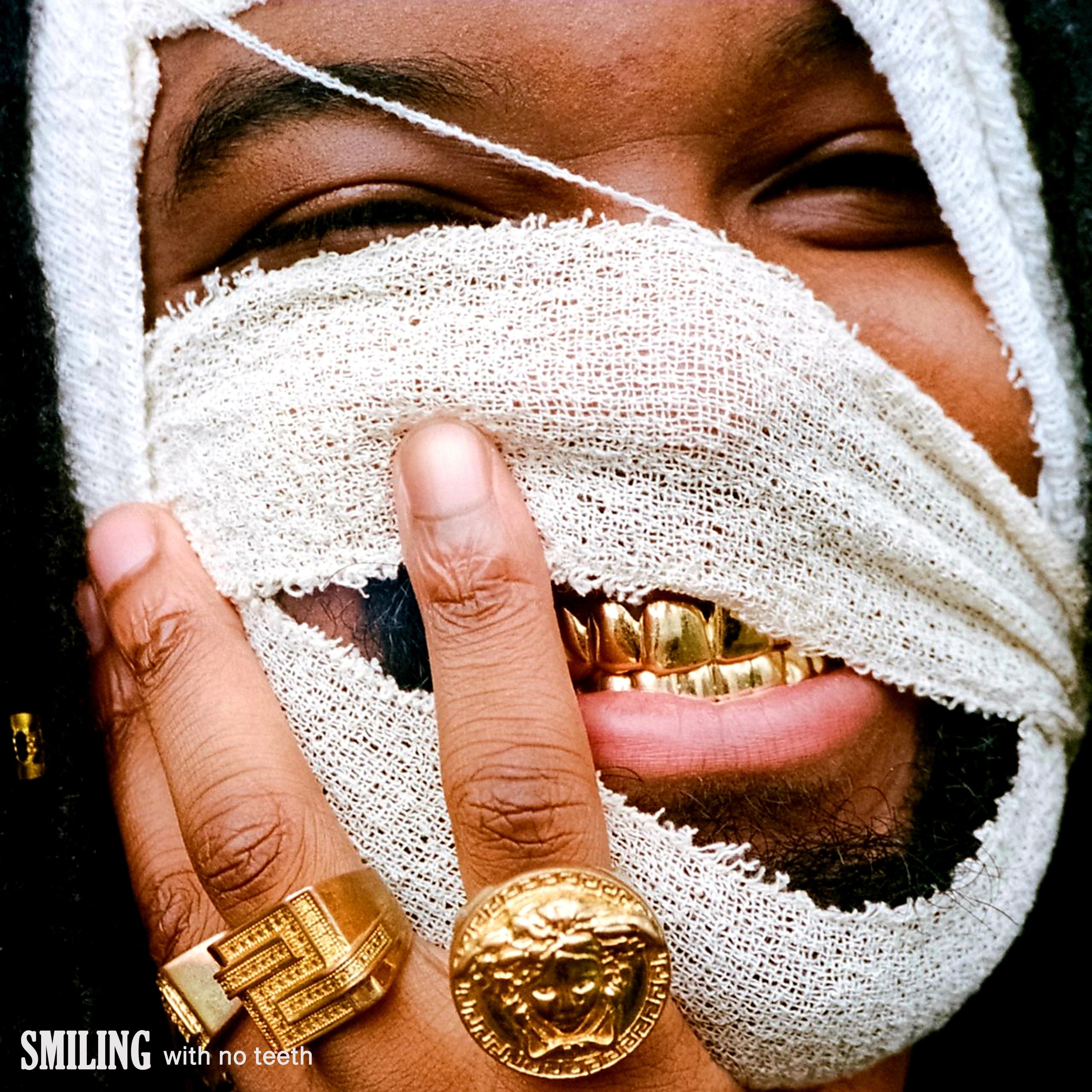
In April and November of 2019, five musicians who had never played together got crammed into a bedroom-sized studio in Bondi, Sydney, during some of the most punishing heat of the Australian summer. The guitarist came from synth-pop, the bassist worked in dance music, the drummer played in rock bands, and the keyboardist ran the label. For six days, they jammed ten hours at a stretch, sweating through their clothes, stumbling over each other’s habits and tastes while a 21-year-old kid from Canberra, born Kofi Owusu-Ansah in Koforidua, Ghana, and emigrated to Australia at two, sat in the middle of it trying to steer the wreckage toward material he could sing over. That kid was Genesis Owusu, and from those fifty-plus hours of blind, overheated improvisation, he and producer Dave Hammer carved Smiling With No Teeth, a debut album that landed in March 2021 and immediately threw every assumption about what Australian hip-hop could sound like into serious doubt.
Owusu had spent his adolescence as one of the only Black kids in Canberra, a city of four hundred thousand that, as he put it to NME, forced him to choose between assimilation and full-blown outcast status. He chose the latter. His older brother, the rapper Citizen Kay, was five years ahead of him in school and gone before Owusu could follow his lead. The records on the bedroom wall (Kanye’s My Beautiful Dark Twisted Fantasy, Kendrick’s To Pimp a Butterfly, Miles Davis’s Kind of Blue, Hendrix’s Axis: Bold as Love) became proxies for mentorship. When he finally got to making his own record, he had a central idea he couldn’t shake: the phrase “black dog.” He’d known it as the common euphemism for depression. He’d also been called it as a racial slur, growing up in white Canberra. Two meanings, one phrase, both following him. He told Atwood Magazine, “I was writing these songs about depression, and the black dog is a commonly used euphemism for depression, but then I realized I’ve been called a black dog, in a racial context, as a racial slur.” So he split the record in half. The first side chases the internal black dog—depression dressed in seduction, wanting to lure you in, wanting to be your only companion. The second side goes after the external one. Racism, sharper and louder and angrier, with its teeth fully showing.
The first half of Smiling With No Teeth is a party thrown by a person on the edge of falling apart. “Centrefold” rides a silky R&B pocket, Owusu crooning about the black dogs being back with another one, his voice dripping fake calm while the bass bounces underneath. “Waitin’ On Ya” runs a vocoded, ‘90s-indebted groove that could score a slow dance at a Canberra house party, but his vocal is pleading with a presence he can’t outrun. When he described himself to DIY as an introvert—“I don’t talk that much; a lot of the time I’m just in my room”—you hear it in these songs. Every song on the first side is performing happiness while cracking apart underneath. He wanted the first half to sound sexy and danceable so you’d miss, at first, that you were being told about a man going under. That gambit works more often than it doesn’t.
“Don’t Need You” is the record’s most ferocious single and the song that holds up best four years on. Owusu wrote it as a breakup letter to depression itself, treating the illness like a possessive ex-partner who’s been told to leave and keeps showing up. The guitar is scuzzy and urgent, the hook barbed and immediate, and Owusu’s delivery splits the difference between a taunt and a declaration of independence. The whole track has the momentum of a door getting kicked open. The production, cobbled together from those frantic jam sessions, lurches between funk strut and punk snarl in a way that shouldn’t hold together and does. When Owusu mentioned to the Daily Star that the recording sessions could very easily have turned into a trainwreck, “Don’t Need You” is the proof that they didn’t. The accidental spark of five musicians from different planets landing on the same groove at the same second is all over this track.
The funk on “Gold Chains” is sneakier. The hook flips the image of rap wealth into a complaint about confinement, about feeling trapped inside the ambitions you chose for yourself. Owusu explained to Apple Music that the song plays with how people see rappers versus how rappers actually live: the years of touring in vans to empty rooms, the gap between the gold-chain fantasy and the reality of being overworked and commodified. The track glides on a vintage funk riff, Owusu’s flow measured and liquid, and the tension sits in the distance between how good the song sounds and how grim the subject is. The subject is sacrificing a gentle life for goals that terrify him, praying none of it kills him, and the music is smooth enough that you could dance to it at a barbecue. That contrast—the smiling-with-no-teeth trick—works best here, because the writing is precise enough to earn it. He’s not performing sadness. He’s describing a specific, mundane dread: the cost of chasing a career that eats people whole.
When the record turns to race, Owusu stops playing coy. “I Don’t See Colour” is the album’s angriest, most pointed track, built around the phrase white Australians and Americans repeat as though it’s a kindness. Owusu turns it inside out. He raps about the burning of a bush telling him he was great and the burning of a cross telling him to play it safe, a switchback that condenses centuries of Black experience into two lines. He’s talking about the weight of representing your entire race through your individual actions, about triggers being pulled on your brother, about how hard it is to move differently when your face is everyone’s face. The song barks. It’s blunt. It doesn’t bother to be charming, which is the right call, because by this point in the record the seductive half is over and the album wants you to know it’s been lying to you about how fine everything is. “Whip Cracker” follows with similar fury, a punk-funk outburst where Owusu flips the image of racial stereotypes into satire, spitting about outdated bigots who haven’t noticed the century changed. The song detonates midway through into a Prince-channeling funk-rock explosion, and it’s the closest the album gets to sounding genuinely dangerous.
The quietest song is also the strangest origin story. “A Song About Fishing” started as a joke. Kirin J Callinan, mid-jam, dared Owusu to sing a song about fishing, and his voice appears at the top of the track saying exactly that. Owusu freestyled the whole thing, and later adjusted a few words, but the bones stayed improvised. It’s a folk song built on bright piano and strings, and the parable is about a fisherman who returns every morning to a lake with no fish and casts his net anyway. Owusu sings about waking at dawn to cast into a fishless lake, and the metaphor is blunt (keep going even when nothing bites) but the gentleness of the delivery, coming after the aggression of the second half, hits differently than it would anywhere else on the record. It earns its simplicity because everything before it has been so relentless.
Not everything on the album clears its own ambition. “On the Move!” opens the record with glitchy, industrial percussion and a chant-like vocal that builds atmosphere without landing on a memorable idea. It’s a mood-setter that promises more than it delivers. “Easy” and “No Looking Back,” both fine grooves, blur together in the album’s back half, their ideas sketchier than the songs that surround them. Fifteen tracks is a lot to sustain, and Smiling With No Teeth sags at the points where the concept outruns the songwriting. Owusu’s voice carries tremendous personality, but his pen isn’t always as distinct as his performances. There are stretches where energy substitutes for specificity, where the funk is locked in but the lyrics fall back on sentiment rather than the sharp observations that power his best tracks. These aren’t fatal problems. They’re the gaps you’d expect from a 22-year-old attempting something this sprawling on a debut, and they’re honest indicators of where his writing could still sharpen.
The album swept the 2021 ARIA Awards (Album of the Year, Best Hip Hop Release, Best Independent Release), making Owusu the first Black hip-hop artist to win Australia’s top album prize. He followed it with 2023’s Struggler, written deeper inside depression than the debut had been. Looking back, Smiling With No Teeth catches its maker at a specific, unrepeatable moment: old enough to name what had been following him since childhood, young enough to still be shocked that naming it worked. Owusu said to SBS that winning those awards felt like a real shift—he’d never seen people who looked like him recognized on that stage, had never expected to be validated there himself. After the ceremony, back in his room in Canberra with the album covers of his heroes still plastered on the walls, he added a new one.