

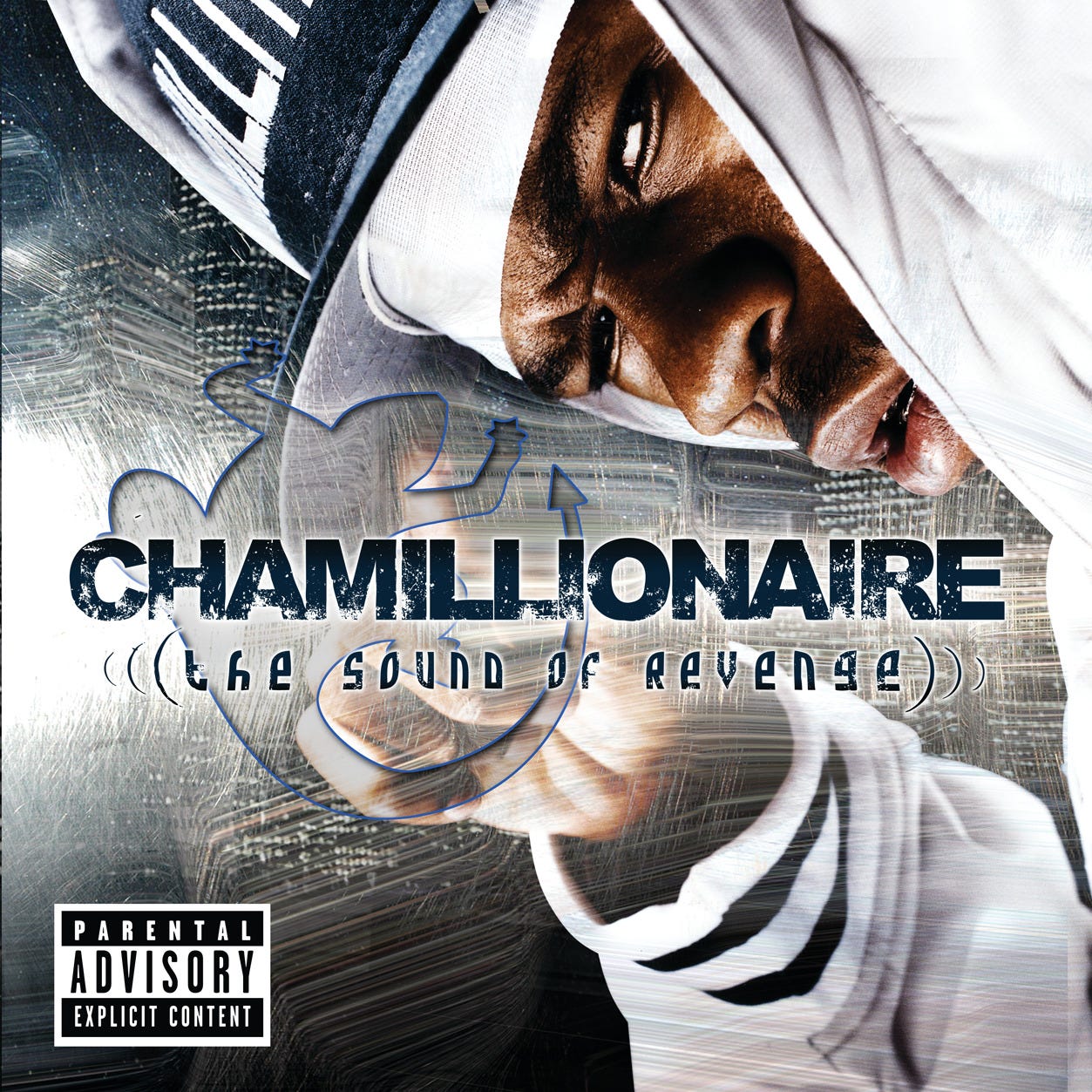
Houston’s hip-hop scene exploded into the national spotlight in the mid-2000s. Rapper Chamillionaire—a fixture of the city’s underground mixtape circuit—suddenly found himself sharing mainstream stage space with hometown peers like Mike Jones, Slim Thug, and Paul Wall. Yet Chamillionaire’s journey differed sharply from his contemporaries. Before scoring a platinum plaque and a Grammy on his 2005 major-label debut The Sound of Revenge, he had earned his stripes grinding out mixtapes and group albums in the Texas underground. As one half of The Color Changin’ Click alongside Paul Wall, Chamillionaire (a.k.a. Hakeem Seriki) built a rep as a hungry lyricist with a quick tongue and a playful wit. Their 2002 independent release Get Ya Mind Correct became a regional classic, full of goofy-sharp jokes and gleeful H-town swagger—a southern hip-hop landmark that showcased Chamillionaire’s irresistible liquid flow and knack for crooning hooks.
While Paul Wall contributed a laid-back, diamond-grilled charm, it was Chamillionaire’s sly, rapid-fire delivery and punchlines that truly drove the duo’s chemistry. That early success (even drawing comparisons to a young Eminem for his lithe flow and mischievous punchlines) set high expectations. But soon the duo split amid quiet feuding, and Chamillionaire struck out solo just as the national rap world discovered Houston in 2004. Houston’s moment had arrived: Mike Jones was shouting his phone number on hit singles, Slim Thug was crowned “Already Platinum,” and Paul Wall was sitting sideways in people’s speakers. Chamillionaire, however, was determined not to be lost in the mix. He signed a deal with Universal Records (establishing his own Chamillitary Entertainment imprint). He prepped his debut album as a statement of intent—and, true to its title, an act of revenge against all doubters.
When his debut hit shelves, Chamillionaire had already earned the nickname “Mixtape Messiah” for flooding the streets with acclaimed underground tapes. In an era when Houston rap’s mainstream rise was built on catchy simplicity—Mike Jones’ repetitive hooks and marketing gimmicks, Slim Thug’s deep-voiced boss talk, Paul Wall’s smooth, jokey braggadocio—Chamillionaire brought a different level of lyrical grit. Where Mike Jones’s skills often took a backseat to his outsized persona, Chamillionaire prided himself on sharp wordplay and rapid delivery. Where Slim Thug’s slow drawl exuded cool command, Chamillionaire attacked beats with agility and precision. And while Paul Wall’s charm lay in his easygoing flow, Chamillionaire’s charisma came from technical finesse and hunger. He was one of the biggest rappers on the planet at the time of release, sly and quick-tongued with perfect timing and punchlines, plus a decent singing voice that nails hooks. In Houston’s booming rap scene, Chamillionaire positioned himself as the versatile lyricist of the bunch—an MC who could spit with battle-ready intensity and sing his own hooks to boot. That dual threat set him apart and broadened his appeal beyond the hardcore southern rap aficionados.
Chamillionaire’s intent is clear: this is vindication on wax. Over the machine-gun beats of the opening title track, his deep, assertive voice establishes a fierce, restless mood—as if announcing that Houston’s mixtape king is here to collect debts and settle scores. Throughout the album, Chamillionaire toggles between an almost crusader-like aggression and a shrewd sense of mainstream songcraft. The revenge of the title is mostly metaphorical—revenge against naysayers, against industry doubters, against anyone who said the South ain’t got no lyricists. On “In the Trunk,” one of the album’s early bangers, Chamillionaire fires off a salvo at hip-hop gatekeepers: “I heard somebody say that the South ain’t got no lyricists/Well ‘bang bang’ at the game… You lookin’ for the truth, then look no further, here it is.” Over a pounding Harley Davidson beat, he boasts that “Universal sent me to bring some realness to the industry… ain’t nobody real but me”, daring any rapper to challenge his throne: “Tell your favorite rapper he should diss me if he disagree… me verse me, the only battle that y’all gonna get to see.”
Yet, what makes the album more than just a 74-minute chip on the shoulder is Chamillionaire’s balance of raw vengeance with melodic hooks and broad-reaching songwriting. Unlike some debut rappers who stick to one formula, Chamillionaire was intent on showing range—perhaps to a fault. The Sound of Revenge consciously touches all the bases, offering something for every corner of the rap audience. For the clubs and radio, he serves up glossy, infectious jams like “Turn It Up,” a collaboration with fellow Houstonian Lil’ Flip that became an early single. Propelled by Scott Storch’s signature chiming keyboard production, it’s pure 2005 club energy—all shiny synth riffs and trunk-rattling bass—with Chamillionaire deftly riding the beat and commanding, “Give me that million dollar beat and let me show you what to do with it… put the truth in Texas with Scott Storch and you got you a hit.” He wasn’t wrong; the track’s catchy hook (a simple, chanted “turn it up!”) and Cham’s flurry of boasts made it a regional hit and a party staple. In the same commercial vein, “Grown and Sexy” finds Chamillionaire catering to the ladies and radio playlists, smoothing out his flow over a slinky Beat Bullies groove. The song’s R&B-tinged vibe, complete with seductive crooning, showed Cham could play the suave hitmaker—a calculated move that landed the track on the charts in mid-2006.
On the flip side, Chamillionaire makes room for gritty street anthems that honor his core fan base and Houston’s code. “No Snitchin’,” produced by Miami duo Cool & Dre, thumps with a dark, menacing energy as Cham and veteran Bun B trade bars affirming the street oath of silence. It’s a direct nod to the underground ethos and connects the new Houston wave back to its UGK lineage (Bun B’s presence essentially passing the torch). On “Frontin’,” Chamillionaire teams with Lil Scrappy over a beat by Houston’s own Happy Perez to call out the fakers and studio gangsters; he warns that perpetrating an image in rap can have real consequences. Even as he was poised for crossover success, Cham wasn’t about to abandon the code of the streets—tracks like these kept his credibility intact. Meanwhile, with “Southern Takeover,” he explicitly frames himself as part of a larger movement. Backed by a triumphant Beat Bullies track, Chamillionaire enlists ATL all-star Killer Mike and crunk king Pastor Troy for a rowdy cross-state show of Southern pride. The title says it all—mid-2000s hip-hop was a Southern takeover, and Chamillionaire placed himself squarely in the vanguard.
For all the album’s flexing and aggression, its heart truly lies in the more introspective, melodic cuts. In these moments, Chamillionaire lets his guard down a bit and broadens the emotional scope. “Rain,” nestled in the final third of the album, stands out as an emotional centerpiece. Over a gorgeous, piano-laced beat by Sol Messiah, Chamillionaire teams up with Houston legend Scarface to reflect on hardship and perseverance. The track’s soulful hook, delivered by singer Billy Cook, sets a somber tone as rain becomes a metaphor for life’s struggles. Chamillionaire’s verses are vivid and inspirational, detailing scenes of poverty and frustration that many listeners can relate to. “Tired of being poor, trying to leave the rats,” he raps, painting the picture of scraping by only to walk outside and find “three of your tires would be on flat.” Yet he flips the narrative from despair to hope: “That one tire left’s a sign of hope, that helps you keep on grinding when you kinda broke.” Equally compelling is “Void in My Life,” the album’s most introspective and somber song. Over a moody, mid-tempo beat (courtesy of producers the Twinz), Chamillionaire explores the emptiness that lingers even after achieving success. He searches for deeper meaning in life, openly grappling with spiritual questions—even referencing the personal conflict of being raised by a Muslim father and a Christian mother.
Not that Chamillionaire ever abandoned storytelling or concept records, either. One of the album’s fan-favorite deep cuts is “Think I’m Crazy,” featuring singer Natalie on the hook. It’s structured as a narrative: Chamillionaire finds himself in a bar, listening to a woman recount a harrowing personal tale that grows more intense and frantic as the song progresses. The record builds to a twist ending—without spoiling it, the story isn’t what it first appears to be. This versatility—oscillating between street bravado, chart-ready hooks, and genuine introspection—defined The Sound of Revenge. In attempting to cover all angles, Chamillionaire diluted the unique, quirky humor and regional rawness that made his mixtape work special. The album does, admittedly, follow the template of many mid-2000s rap debuts: a bit of everything jammed into an extended tracklist (the standard edition runs 16 tracks, and a deluxe adds bonus cuts). There are the obligatory club bangers, the ladies’ track, the rowdy posse cut, the reflective outro—the familiar template into which major labels often slot even the most distinctive rappers. In Chamillionaire’s case, the label polish did smooth out some of his rougher edges.
And yet, Chamillionaire’s sheer charisma and skill manage to transcend the rigid formatting. Play-N-Skillz, the Texas-based duo, provided the beat for “Ridin’,” the album’s biggest song and Chamillionaire’s signature hit. With its creepy-crawly synth melody and hypnotic midtempo knock, “Ridin’” perfectly captured the sound of Houston’s streets—part cruising anthem, part protest song—and when paired with Chamillionaire’s hook up with Bone Thugs-N-Harmony’s Krayzie Bone for the rapid-fire, melodic chorus, it became lightning in a bottle. The song about avoiding police harassment while ridin’ dirty struck a chord nationally, topping the Billboard Hot 100 and eventually winning Chamillionaire and Krayzie Bone a Grammy in 2007. To this day, “Ridin’” remains one of the era’s defining tracks—a reminder of how Chamillionaire could fuse an irresistibly catchy refrain with a socially conscious undercurrent. The Sound of Revenge deserves its flowers. It may not be a flawless album, but it remains a potent time capsule of Houston's time when it had something to prove—and did so with style and substance.