

Black Girls in Pop Groups Deserve More Than Survival
Manon, Normani, and Leigh-Anne earned their spots and still had to fight for basic respect inside their own groups. Black girls in pop groups keep getting the same raw deal. A new day, same script.
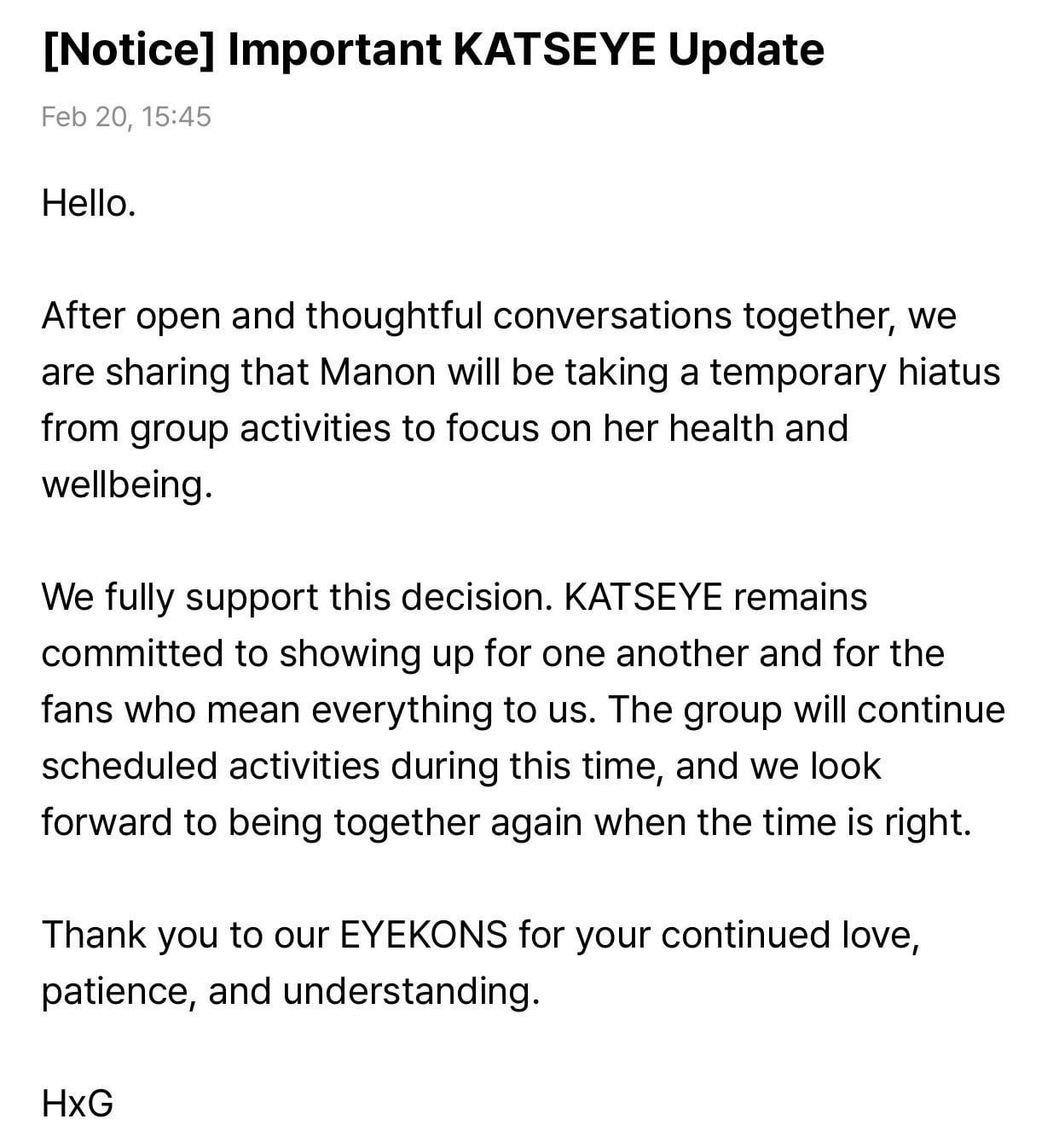
On February 20, a black-background notice appeared on KATSEYE’s official Twitter account. The Swiss-Ghanaian singer Manon Bannerman, 23, would be stepping away from the Grammy-nominated girl group to attend to her health. The post, signed “HxG” for HYBE x Geffen, came two weeks after KATSEYE performed at the Grammys. Manon’s bandmates expressed full support. The wording read like every managed-hiatus press release before it. Fans who had followed KATSEYE since its formation on the Netflix docuseries Pop Star Academy recognized the announcement for what it also was—another Black girl in a pop group being worn down until she had to leave.
During the Dream Academy competition in 2023, the other trainees froze Manon out of their group chat after she ranked high in early evaluations. Fellow contestants complained on camera that she drew attention without matching their effort. The program manager, Missy, said flatly she would not have selected Manon based on her attitude. When Manon missed non-mandatory rehearsals—absences later attributed to illness—the word that stuck was “lazy.” A white trainee named Adéla, who did not make the final cut, griped that Manon was favored purely for her looks. Nobody called Adéla lazy when she checked out. The vocabulary gets deployed selectively, and the selection criteria are obvious.
The Netflix documentary aired in August 2024 and confirmed what fans had tracked in real time. By July 2025, supporters had compiled evidence that Manon had been scrubbed from promotional materials—missing from a Glossier billboard, her face blocked by another member in group photos, absent from a Hypebae feature. Fans compared her treatment to two women who had endured the same machinery: Normani in Fifth Harmony and Leigh-Anne Pinnock in Little Mix. During a November 2025 BBC Radio 1 interview, the host confused Manon with Samara, another contestant from the Dream Academy show. The two women share a skin tone and nothing else. The segment was quietly deleted from YouTube and BBC’s channels.
Normani spent five years inside Fifth Harmony absorbing a version of this that cut deeper than being left off a billboard. She was the group’s only Black member. In the studio, she sang background while Cabello recorded leads, and during the sessions for “No Way,” she cried. She told Billboard in 2019 that the relegation corroded her from the inside, wondering whether the hierarchy came down to talent, to skin, or to something she could not name. When a subset of fans decided Normani had disrespected Cabello by calling her “quirky” in an interview, the retaliation was medieval. Trolls Photoshopped images of Normani’s face onto bodies being lynched. They sent death threats. Cabello took days to publicly acknowledge what was happening. Her racist Tumblr posts—the n-word used casually, anti-Black memes reblogged as a teenager—resurfaced in December 2019. Normani penned a careful email to Rolling Stone: “It was devastating that this came from a place that was supposed to be a safe haven and a sisterhood.” She chose written words because she knew hers would be dissected in ways Cabello’s never were.
Across the Atlantic, Leigh-Anne Pinnock weathered the British edition. When Little Mix filmed the video for “Wings,” choreographer Frank Gatson pulled her aside and told her bluntly that as the Black girl, she would need to work ten times harder than everyone else. She was a teenager. Nobody sat down the other three and told them the same thing. For the first three years in the group, Leigh-Anne broke down regularly to her manager, unable to locate the reason she felt surplus. At fan signings, people walked past her to reach Perrie Edwards, Jade Thirlwall, and Jesy Nelson. In a 2020 Instagram video, she recalled the accumulation: “I never in my life had someone told me I would need to work harder because of my race.” Her 2021 BBC documentary, Race, Pop & Power, aired the receipts, including a roundtable with singer Alexandra Burke, who said she was told after winning The X Factor in 2008 that she needed to bleach her skin because she wouldn’t sell records otherwise. Keisha Buchanan, a founding member of the Sugababes, described being branded a bully and pushed out of the group she cofounded in 2009 after the label needed someone to blame for a flopped album. She spent a decade in therapy.
The accusations shift by country and decade, but they pull from the same depleted phrasebook. Manon is “lazy.” Normani is “not talented enough” to lead. Leigh-Anne is “invisible.” Keisha is “aggressive.” Burke is “too dark to sell.” Each label arrives to shrink the Black girl’s claim on a position she earned through identical auditions, identical training, and the same grueling schedule as her groupmates. The industry loves casting Black women in these ensembles because diversity photographs well. What the industry does not love is treating them as full members once the cameras shift to daily operations. Normani was the group’s strongest dancer and barely sang. Leigh-Anne possessed a voice that matched anyone in Little Mix and still felt like an afterthought at her own meet-and-greets. Manon drew the most viral attention from the Dream Academy series and then vanished from brand partnerships.
The professional wreckage compounds. Normani’s debut solo album, Dopamine, did not arrive until June 2024, six years after Fifth Harmony’s hiatus and a full career cycle behind Cabello, who parlayed her preferential treatment into an immediate deal and the smash “Havana.” Leigh-Anne released her debut solo album, My Ego Told Me To, this month—nearly four years after Little Mix went on hiatus, rebuilding at 34 while Perrie Edwards had already charted a solo path with industry wind at her back. Normani told The Cut in 2024 that being in Fifth Harmony felt like “a prison sentence ordered and duly served.” Leigh-Anne admitted in her documentary that the experience “ruined a lot of” what should have been the best years of her life. These are women describing robbery—of confidence, vocal time, fan affection, career momentum—committed on the same stage where their groupmates collected the benefits.
Manon is 23 and has already cycled through the accusation gauntlet, the promotional erasure, the BBC interviewer who could not bother learning her face, and now a health-related hiatus the public will frame as proof she was never committed. The group will continue scheduled activities during her absence. KATSEYE remains a Grammy-nominated act climbing the Billboard 200. Whether Manon returns to the same footing she left, or to a smaller chair with fewer solo lines and the quiet understanding that her spot was held but not protected, depends on a set of decisions that labels and management companies have been making the same way for twenty-five years. Keisha Buchanan cofounded the Sugababes at fourteen. She lost the name, the group, and a decade of her mental health before she got any of it back. Nobody involved has ever called that a failure of the system. They called it a lineup change.
Thank you for spotlighting this long-overdue conversation. I’d love to retweet this (@JADEtearoom) if you shared it on Twitter.
Another example is Naturi Naugton who got maliciously kicked out of the early 2000s girl group 3LW. Though she was not the only black girl, the other members were light skinned and Latina. She was cute, talented, and dark skinned. Naturi stood out more during 3LW’s first album cycle, then she was relegated to the background and dismissed by their second album run. The light skinned member bullied her. Naturi took a while to heal, yet she persevered and became a successful actress years later.