

Eels, Cakewalks, and the King of Pop
Though his genius was singular, Michael Jackson belonged to the long tradition of American entertainment, fed by African sources. He managed to honor and elevate that heritage.
Michael Jackson’s funeral on September 3, 2009, at Forest Lawn Memorial Park in Glendale, California, had clearly not put the matter to rest. Beyond the circumstances of his death, responsibility still had to be established, a guilty party found in the person of Dr. Murray. As always happens when fame exceeds the norm to such a degree, the coroner’s report did not seem capable of answering every question. It could not satisfy the expectations of a collective imagination naturally inclined toward incandescence. Had there been conspiracy and homicide, as Michael’s sister La Toya and his father Joe Jackson had suggested? No more than Marilyn Monroe or Elvis Presley could have succumbed to a mundane abuse—barbiturates for one, a powerful sedative for the other—it was now accepted that, for legend’s sake, the star could not have been the victim of his medical missteps alone.
Meanwhile, the other controversy was almost forgotten—the one that surfaced in every editorial, that reappeared like a cold sore on the lips of certain commentators: Michael Jackson had supposedly betrayed his race by changing his skin color! This trial for racial betrayal fed another that never stopped being prosecuted, often by the same people: his music was nothing authentic, it peaked in artifice. It was the height of a deplorable process of bleaching. Many, since his death, have set themselves up as defenders of “real Black music,” denouncing left and right the “fraud” or even the “musical schizophrenia” of the King of Pop. But do these purists actually know what river they’re navigating? Do they have the slightest idea of the strength of its current, or of the eddies that churn it? Wouldn’t it be wiser to simply skip stones with pretty pebbles on its surface or fish from its banks?
This river does not spring from a single source, does not follow a single course, though it empties into a single estuary. This delta—vast, branching, fertile—let us call it… Michael Jackson, since it is indeed toward the frail performer of “Billie Jean” that the waters of this long and fascinating musical history converge. In his book Raising Cain: Blackface Performance from Jim Crow to Hip Hop, William T. Lhamon Jr. describes a daily scene at the Catherine Market, one of the main trading posts in Manhattan and likely one of the very first cultural crossroads of the young American nation.
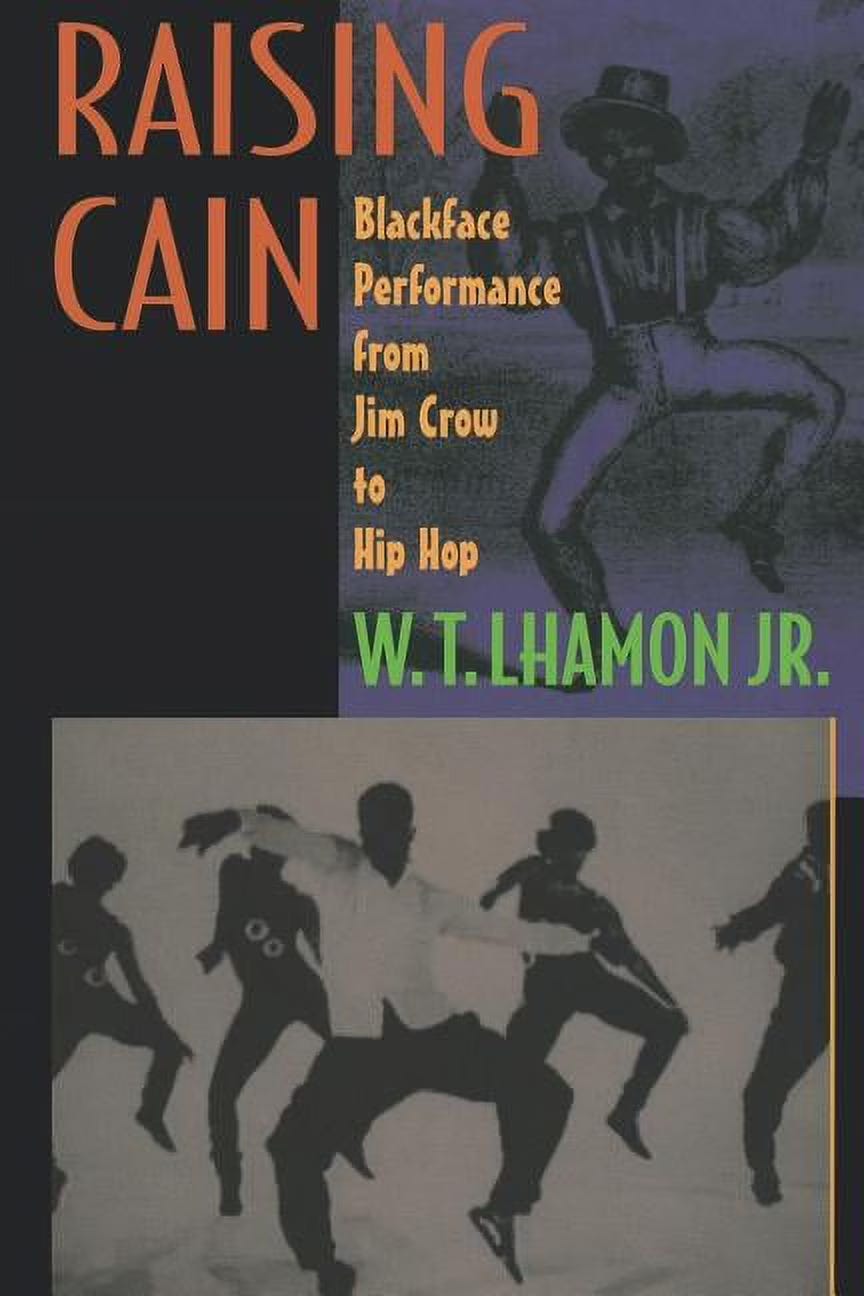
We are in the eighteenth century, and amid the fish stalls, freed slaves set up a small wooden platform called a shingle, on which they dance to entertain the locals. When the show is good, the dancers are paid in eels. These dances all share African origins. They crossed the Atlantic in the holds of ships carrying forced labor to the plantations. They probably lost some of their meaning along the way, but none of their essence. All of them seek to make light of an unstable condition, to transcend the despair it produces.
These dances are far more than dances: they are prayers, symbolic acts of deliverance. One is called the market step: legs apart, you raise one foot then the other while waving your arms. Another is called the wheel step: one foot stays nailed to the ground while the other advances so that the body makes a full rotation. A third is called the run step, and it is rich with instruction. The dancer runs in place while creating the illusion of moving forward. Reading Lhamon’s description, it is clear that the run step is none other than the ancestor of the moonwalk that Michael Jackson made world-famous.
In 1820, these dances begin their real career in the shows of troupes that crisscross the country under the name of minstrels. The most famous troupe in 1843 is the Virginia Minstrels. The run step is known at this time as the Virginia essence. Dancer Cholly Atkins would recover this step in the mid-1960s and pass it on to one of the first groups signed by Tamla Motown, the Temptations, for whom he served as choreographer. And it was probably by watching the Temptations onstage or on television that Michael Jackson—a fan—picked up the basic elements and later exploited their potential, bringing them to that dizzying perfection, that improbable fluidity we know. Nothing is entirely new under the sun. And rivers never flow without return.
The 1820s and 1830s, from which the first accounts of these dances come, are also when an astonishing tradition begins to take shape in the United States: blackface, whose offspring is the minstrel show. In his biography of singer Emmett Mille—a star of the genre in the early twentieth century—writer Nick Tosches describes the phenomenon: “A form of entertainment in which (white) men blackened their faces, mocked the attitudes and behavior of Southern Blacks, and performed what was presented as the songs and music of those Blacks.” Blackface performers used burnt cork for their makeup, though walnut stain and even shoe polish are also mentioned. The mouth was drawn with chalk, the outline of the lips exaggerated.
Initially confined to Manhattan, these shows were quickly embraced across the entire country. The famous run step was one of their staples. So were coon songs—comic songs performed in broken dialect—and ragtime, a musical style with a choppy rhythm. All of this entered the theaters of major cities by the end of the nineteenth century, often accompanied by other attractions, such as pickaninny acts. Pickaninnies were Black children who tap-danced on sidewalks to earn pocket change. They were rewarded with cakes rather than money—hence the name cakewalk given to certain dance steps. Children don’t like eels, as everyone knows.
The dancer Bill “Bojangles” Robinson, who began his career at age 5 on the streets of Richmond, Virginia, would become the most famous of them all. He would go on to headline the Apollo Theater in Harlem and, in 1938, share the screen with Shirley Temple in Rebecca of Sunnybrook Farm. Shirley Temple had started her career at age 3; Judy Garland at 2. Michael had no trouble identifying with these child performers. He started at 5, like Bojangles Robinson. During the Jackson 5’s first filmed audition in 1966, he was 7 years old and tap-dancing like a real “pick” (short for pickaninny) from Harlem or Chicago. In Moonwalk, his autobiography, he does not tell us whether his father, Joe, gave him cakes when he danced well. We do know, however, that he received belt lashings if he had the misfortune of making a mistake.
Minstrels, coon songs, blackface, ragtime, pickaninnies—all of these attractions would become the marrow feeding the skeleton of American entertainment. Into them would flow the lament of the blues rising from the cotton fields, the choral singing of gospel from Baptist churches, and the polyrhythm of jazz from the speakeasies of New Orleans. Out of it all would come the crooner style first popularized by Bing Crosby and Rudy Vallée, then by Frank Sinatra after the Second World War. In 1927, director Alan Crosland brought The Jazz Singer to the screen—the story of a cantor’s son who becomes a jazz singer, played by Al Jolson in blackface. It was the first feature-length talking picture.
In turn, vaudeville, Tin Pan Alley (the mecca of songwriters and music publishers in New York at the end of the nineteenth century and the beginning of the twentieth), music hall, and Hollywood musicals—particularly those featuring dancers Ginger Rogers and Fred Astaire, Michael’s idols—would recycle the blackface tradition by adapting it to mainstream taste and new forms of mass media. Though elevated to the rank of institutional entertainment, distanced from its source, corrupted and recast, this transposed tradition nonetheless retained the attributes of Black genres.
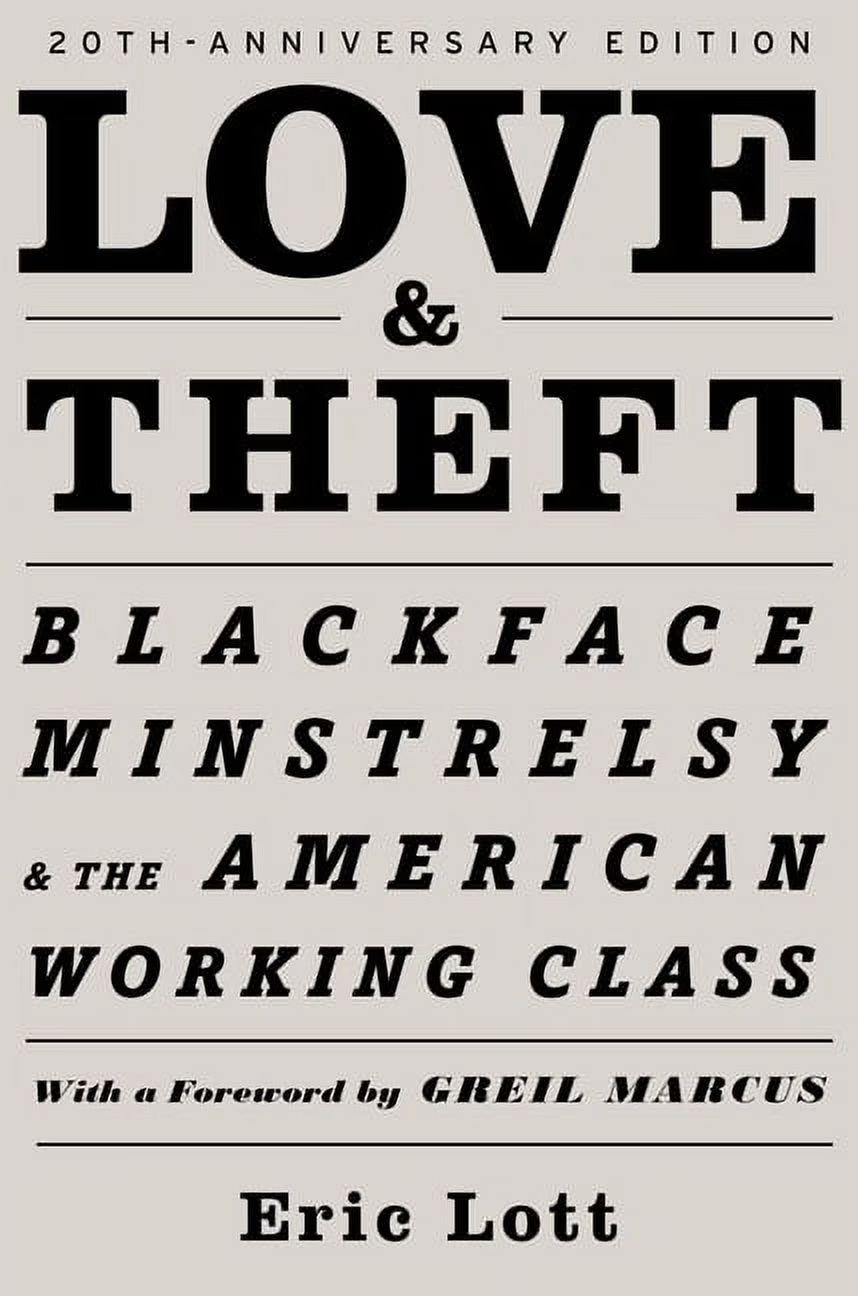
The blackface show would later be denounced as a racist burlesque by the African-American intelligentsia and the country’s progressive minds. This was the era of the Civil Rights Movement, of James Brown’s “I’m Black and I’m Proud,” of the Black Panthers. Yet as Nick Tosches reminds us, the blackface minstrels were not all white: “Many of those who caricaturally blackened their faces were Black.” The Black performer had begun to imitate the white performer who was imitating the Black performer, in a reversible gesture mixing parody and fascination. Here lies the origin of all crossovers. The identity of American entertainment would thus play endlessly, tirelessly, right up to the present day, on this permutation of Black and white identities. In another book, Love & Theft—Blackface Minstrelsy & the American Working Class, Eric Lott, professor of English at the University of Virginia, sees in blackface the emblem of a “transracial desire” and “less a sign of absolute white control and power than a sign of panic, anxiety, terror, and pleasure.”
This elusive, serpentine movement running through the history of American entertainment—passing from Black to white and back to Black—evokes that of an eel, like those used to pay the dancers at the Catherine Market. It resembles in every way the irresistible manner in which Michael Jackson undulates onstage during the moonwalk, as though fleeing downstream, frightened. “Must one always flee to survive?” Lhamon wonders, echoing Richard Wright’s novel Native Son, in which Bigger Thomas, the young Black protagonist, has no option but to flee a society where no place seems meant for him.
Michael Jackson would have to literally invent his own place in a world for which he had become, far too early, a lucrative attraction. He holds himself in balance there, on the tips of his toes, the way he punctuates a sequence of moonwalk steps. He maintains himself between different worlds as hostile to each other as they are drawn to one another: Black and white, childhood and adulthood. He stands still, a tightrope walker on the wire of time, at the crest of genres and races: that is his true kingdom. This gesture combining assertion and indecision conveys everything precarious about him, just as it illustrates the uncertain nature of relations between communities. As long as he maintained himself this way, on the tips of his toes, Michael would remain untouchable, beyond sanction. It was when he broke that balance that the troubles would begin.
After the astronomical success of Thriller, he would lock himself away in an impossible elsewhere, turning an amusement park—Neverland—into his home. Little by little, his face would freeze irreversibly into a pathetic and grotesque expression that was no longer that of a blackface mask, or a whiteface mask, but the surgical realization of a fantasy at once childlike and Promethean: the desire to belong to a species other than the human one. His betrayal, then, was never racial. In a definitive wink, in the video for “Say Say Say”—his duet with Paul McCartney—he appears in blackface makeup, proving “the undeniable cultural lineage in which he belongs,” as sociologist Sylvie Laurent writes.
A lineage that is definitively mixed. In the July 25, 1926, issue of the Miami Herald, a review of the concert given by Emmett Miller at the Capitol Theater is published alongside a photo showing the singer in blackface, dressed in a black suit and black tie, a white shirt, white gloves, a white hat with a black band. More or less the outfit Michael wears in the “Smooth Criminal” video sixty-two years later.
There are countless stories where you can no longer tell who is Black and who is white. In 1928, Miller performs in Evansville, Indiana. The city council sends an employee to meet him at the train station. But this man, convinced that Miller is Black, cannot find him. In November 1955, Elvis Presley goes to the Apollo in Harlem to see Bo Diddley, Etta James, and Howlin’ Wolf perform. When he steps out of the taxi, despite his greased pompadour, his tight black pants, and his pink shirt, nobody recognizes him. For the Harlem crowd waiting in line at the entrance, there can be no doubt: the man singing “That’s All Right (Mama)” on the radio—a hillbilly cover of bluesman Arthur “Big Boy” Crudup—can only be Black. His voice is that of a Black man. And as Michael Jackson sings in “Black or White”: “It don’t matter if you’re Black or white.” When you see him rise up on the tips of his toes in the “Billie Jean” video, you can’t help but think of Elvis in one of the iconic scenes from the 1957 film Jailhouse Rock, where he, in a convict’s costume, swivels his hips before freezing—knees turned inward, arms spread wide.
Michael would absorb all of this, just as he would absorb Little Richard’s hysterical singing—the high-pitch voice at the end of “Wanna Be Startin’ Somethin’” or “Man in the Mirror,” for instance—Sam Cooke’s velvet voice, and James Brown’s acrobatics, which he studied hidden behind the stage curtain at the Apollo Theater when the Jackson 5 were opening for the Godfather of Soul. As Quincy Jones put it: “Michael is a sponge.” His luck was to have grown up and evolved in a milieu of inexhaustible resources, where every treasure was within reach; to have been immersed very young in an extraordinary melting pot and to have fed on it. His strength is that he denied himself nothing.
From the Jackson 5’s earliest days, he operated in multiple registers at once. On “I Want You Back” and “ABC”—their first hits in 1969 and 1970—he is the offspring of the Temptations and Sly & the Family Stone, themselves the heirs of Ray Charles and James Brown, and this at a crucial moment when soul was transforming into funk. After the group signed with Motown, Berry Gordy immediately threw him and his brothers into the deep end. The Jacksons toured with the Temptations and the Supremes. With the former, they perfected synchronized choreography and layered harmonies. That Michael insisted on paying the funeral expenses when David Ruffin died in 1991 and Eddie Kendricks in 1992—the group’s two principal singers—proves how much he remained indebted to them.
The debt to Diana Ross and the Supremes is of a different nature. Appointed godmother of the Jackson 5—even though Bobby Taylor, formerly of the Vancouvers, was the one who discovered them—Ross would house Michael at her home in Los Angeles after Motown left Detroit to set up offices in California. In his autobiography Moonwalk, Michael describes Diana as “my mother, my lover, and my sister all combined in one amazing person,” which would fuel no shortage of speculation. When he recorded “Dirty Diana” for the Bad album in 1988, Diana’s supposed role became even murkier. What remains is that for this child—then about ten years old, from a poor and provincial background—the proximity of this established star would have a considerable impact, both musical and psychological.
Diana Ross was not merely a star at the peak of her popularity when she took little Michael under her wing. She was the most glamorous of them all, the one Berry Gordy had predicted would be his “secret weapon.” Diana Ross personified down to her fingernails and false eyelashes the crossover philosophy dear to Motown’s boss. Softer than Aretha Franklin, prettier than Nina Simone, she embodied Black seduction placed in the field of vision and hearing of white audiences. With flawless songs—“Stop! In the Name of Love,” “I Hear a Symphony,” “You Can’t Hurry Love,” all produced by the songwriting trio Holland-Dozier-Holland—the Supremes helped break Black music out of its enclave. It would no longer have to pass through the tired subterfuge of white artists covering soul and rhythm & blues hits. With the Supremes, soul now rivaled pop and rock, the Beatles and the Stones. The sound of this music may have changed, the way it was presented too, but certainly not its soul. The Jackson 5 would not only confirm the advance but push that advantage even further.
Entrusted to a collective of songwriter-producers (The Corporation), they would become the perfect antidote to the rise of Black radicalism at the end of the 1960s. Cute, funny, irresistible, they quickly changed status—from young wolves riding in the wake of the Supremes and the Temptations to full-fledged stars, regularly invited onto television sets. Soon they would even become a cartoon. All of this arrived in a maelstrom where everything was ripe for blending: the sounds, the costumes, and the modes of communication.
In 1970, during a television special devoted to her, Diana Ross invites the Jackson 5 as their godmother. During this appearance, the group would literally crash the phone lines. Michael, 12 years old, opens with their hit “ABC”—fitting, since the network shared the same name. Then, having secured his traditional audience, he runs through a string of songs popularized by Frank Sinatra: “Night & Day,” “I’ve Got You Under My Skin,” and “Young at Heart.” The smoothness of his voice is such that he wins over the adults. Little girls now want him for a sweetheart, little boys for a best friend. Mothers want to adopt him. From that point on, he would be and remain this little master of crossroads and confluences, this sorcerer’s apprentice turned magician who, for thirty years, would circulate every sound around him, from the most charming to the most aggressive.
This perfect young man who suddenly transforms into a demon in Thriller—a romantic crooner mutating into a rocker crawled out of the crypt—is his best projection. Less for the hidden side of his personality that the film might reveal than for the symbol it offers of his exceptional ability to harmonize everything and its opposite in his music. His voice, like nectar, could seduce the darkest soul. It did not fail to pierce the steel of the hardest heart. As Berry Gordy summed it up: “He studied the greatest to become greater still.” Michael Jackson is indeed the King of Pop. Who would say otherwise?