

EP Review: Lady Luck by Olympia Vitalis
A painting about money on her producer’s wall became a song about fire. On her second EP, West London’s Olympia Vitalis writes want as the habit that keeps her narrators broke.
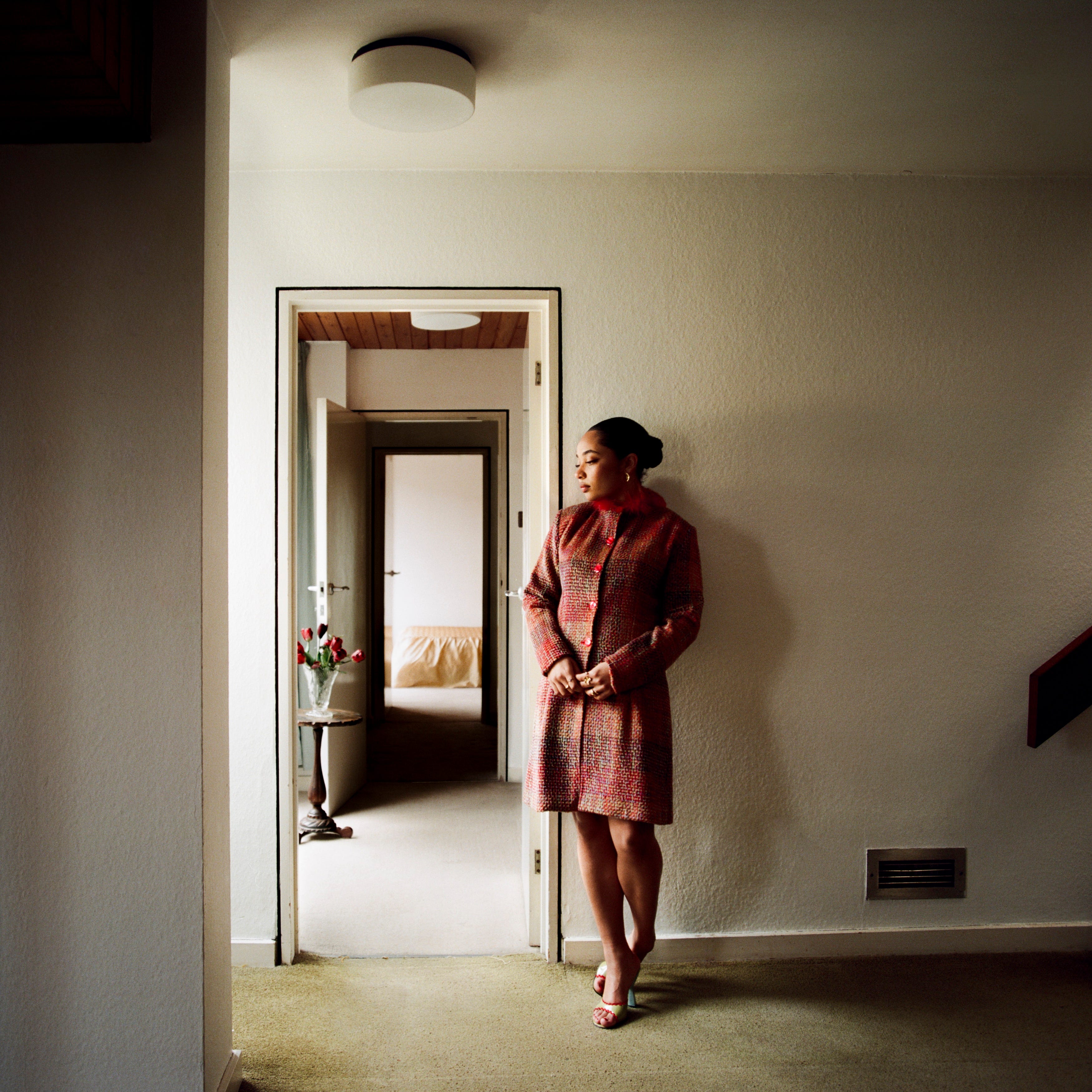
There was a painting of a tree in her producer’s place that depicted money and materialism, which turned into a song about fire. According to Olympia Vitalis, a West London-based artist, she wanted “Money Tree” to have imagery involving fire and smoke closing in, and they have all made it to the track. A woman walking to the sun as the notes of joy turn to dust, the wind sweeping away dollars, the coins melting away like steel and no dollar bills waiting for anyone in the grave. Vitalis paints wants as a dangerous commodity. Whatever it may be—the money, the man or the luck—whatever her characters are going for costs them, and she makes the price clear in direct first-person language.
On “Daze” she returns to a man who had been rejected before: “I did it again, I fell back to you.” She is embarrassed of her actions. It all started because of the lows; she held on to him and loved it, and the “see you soon” he left her with drives everything. Her good sense gets a word in towards the end of the track, saying that she doesn’t need it to make herself whole, but it doesn’t change a thing as she still asks why he cannot stop doing it now and getting out of her mind. The pull is the same on “Lady Luck,” focused on a lady who won’t stay, a temptress not your common one who holds on tight as hell when something goes wrong and praying that she’ll come even though she knows what the terms are: “Lady Luck don’t give out anything free/She kept me broke.” It leaves her with suits and their two cents, a fella, a place at her mama’s place and a stomach that is all knotted up as everyone else sails by.
There is a woman walking on a motorway trying to get away from somewhere. The “Baby Blues” opens up on the road with her, with a mother who overnight became without her flame, no light on her face anymore, voices filling up her space until she finally broke. Olympia Vitalis has said she wrote this track after witnessing someone close to her experience this situation. The halfway point is when the mother speaks out for herself, saying that anyone listening should go and take her pain, as she sees only the rain among the clouds and that they would be better without her. Nobody warned her that it was just a phase, and the cruelest part of it is the practical one: “Few words left her in the days/Only way’s to medicate.”
The city in “Don’t Cry” doesn’t know what love is. Every person wears a mask on their face to avoid hurting someone else’s pride, and for most of the song, the only advice given is to not cry, baby. Maverick Sabre joins the track, making it a message to all men and their sorrow. There is one of them who feels that he is “back to just me and myself” after having “looked out for everyone else,” asking whether it was all in his head, and confessing that he hardly hears when someone is caring. But the advice is flipped: “Go cry, oh baby/I know you wanna cry.” A boy is told that some people will pray for him and others stay, and in time, he’ll find his peace in the madness. It is a modest promise, but the right one for the city without any love in it.
If you or someone you love is struggling emotionally during or after pregnancy, the National Maternal Mental Health Hotline offers free, confidential support 24 hours a day at 1-833-TLC-MAMA (1-833-852-6262), by call or text. If you are in crisis, call or text 988.
Favorite Track(s): “Money Tree,” “Baby Blues,” “Lady Luck”