

EP Review: Miss Michigan by Momo Boyd
On her solo debut, Momo Boyd works from inside the well-behaved-girl archetype, with songs that praise her for the same compliance the verses then expose. She has stopped apologizing.
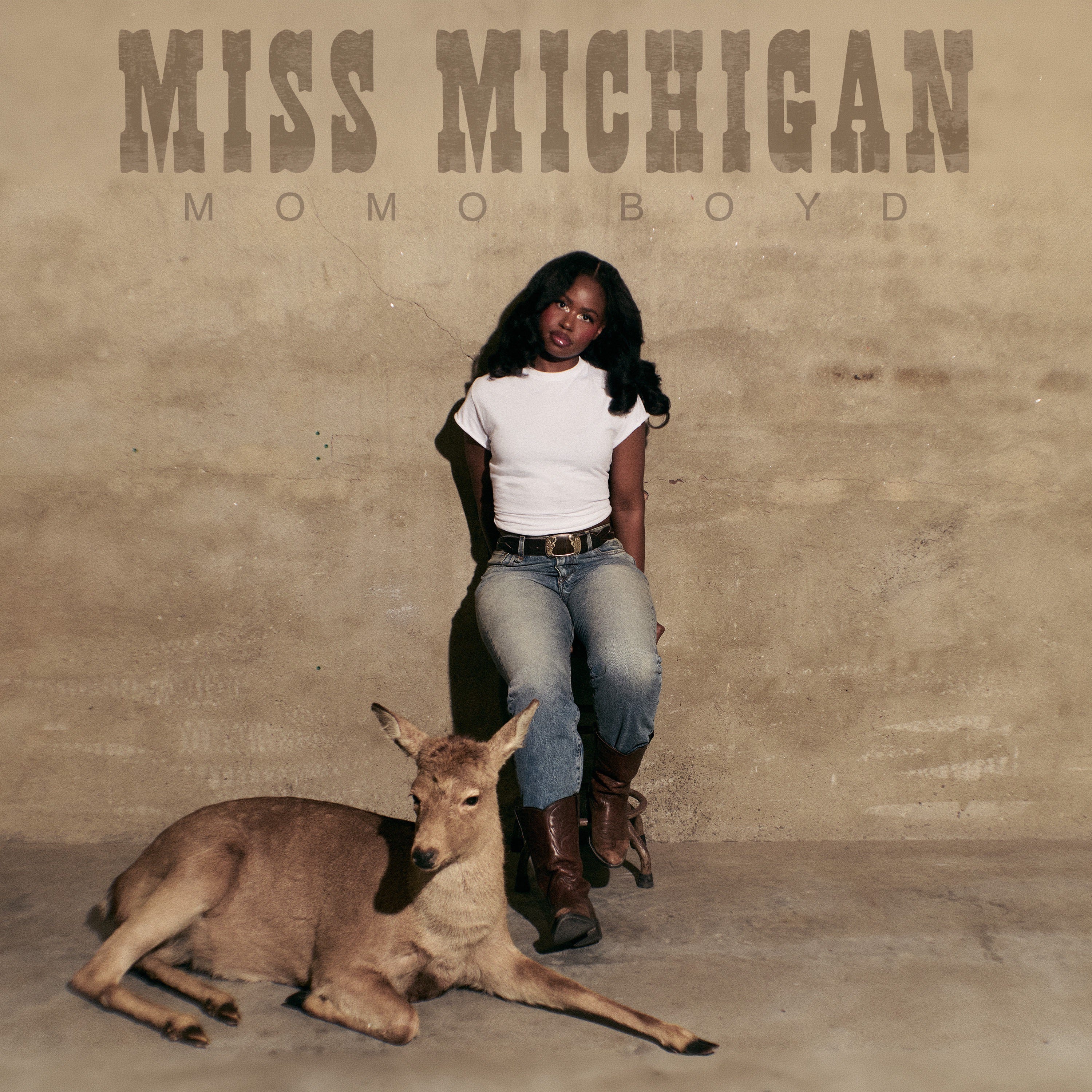
The Boyd children grew up in Detroit and got homeschooled by parents who founded the Boys & Girls Choirs there. Their father John, a working choir director, moved nine of his kids from Michigan to New York City in 2006 so the four most musically inclined could try to make a living singing. They busked Bethesda Terrace, the steps of the Met, the platforms under Times Square, for almost a decade before Jeymes Samuel passed JAŸ-Z a clip from Central Park in 2016 and Roc Nation signed the four siblings as Infinity Song. Their first album in 2020 ran R&B-leaning. Their 2023 EP Metamorphosis found the soft-rock harmony sound that broke them, and a single called “Hater’s Anthem” went viral on TikTok and pushed the family group out of the park onto a sold-out international tour through 2024. Momo Boyd, 27, is the youngest of the four touring siblings and the one who wrote “Hater’s Anthem” alone. Miss Michigan belongs to her without them, recorded in the month after Baby Keem’s “Good Flirts” put her on a hook between his verse and Kendrick Lamar’s, and a different audience suddenly knew her name.
Half joke and half diagnosis, Miss Michigan points at the pageant archetype, the smiling Midwestern girl with the right answers and the trophy at the back of the parade, and Boyd writes most of the EP from inside it. On “She’s a Sweetheart,” she opens on the short end of the stick and accepts it with grace and class. The chorus stacks the compliments she has been hearing her whole life:
“She’s a sweetheart, she’s an angel
Miss perfect princess with a big smile
She’s a lover, people pleaser
She gives it all, that’s why we love her.”
Those compliments become evidence in the verses.
“If you want her, you can have her
All it takes is an empty promise
She’ll be here regardless
Giving you access just because you’re asking.”
Sweetheart becomes try-hard by the outro, angel becomes martyr, and what looked like a self-portrait is a receipt for how she gets used. “Second Best” runs the same case from inside an active relationship. She trims herself on demand to keep someone who would rather she care less, laying the math out on the bridge. “I’d rather have a piece of you than my own peace of mind.”
The flip side of all that compliance is the refusal to be available at all. On “Cold Hands,” Boyd names the case in the opening verse.
“I’m a child of divorce, I’ve seen the war I’ve seen it end.”
The worst way to die, she has decided, is alone, and alone is what she has trained herself for. “I’m not afraid anymore,” the bridge promises, “to watch you walk out that door,” and the track ends there. Read against “She’s a Sweetheart” and “Second Best,” it’s the same girl from a different angle. The people-pleaser and the woman who can’t commit to anything are two routes out of the same door, not opposing positions.
The one love song on the EP is built around the search and not the find. “Big Country” has Boyd cycling through every shabby American place she has hunted the right person, the chorus a rolling catalog of the trip:
“I walked for miles and miles in broke-down high heels looking for you
I searched in bathroom stalls and motel rooms, and supermalls
I drove from state to state, gas stations and small-time diners
I walked through parking lots, and vintage shops, and Oklahoma.”
She prays for rain, almost doesn’t make it back alive, and nobody arrives. “American Love Song,” which she produced solo, uses those words as her grounds for not making herself smaller for her boyfriend.
“But giving up my independence
Goes against my core.”
She loops the chorus around “home of the brave, land of the free” as a private stake, not a flag. Boyd told Complex the Baby Keem call arrived while she was running a fever on tour with Infinity Song, and she sent takes between rehearsals with the chance feeling “like life or death.” That kind of pressure is in Miss Michigan. Boyd has been waiting a long time to use the first person singular, and she is unwilling to waste the air.
Brandon Shoop owns the middle of the EP. He produces or co-produces most of the tracks where Boyd makes her case about being praised for the wrong things, and the consistency lets her voice do the moving around. She has the range you would expect from a choir-director’s daughter, and she keeps almost all of it tucked away. On “Strong,” produced by Mikey Freedom Hart (the only outside-the-house production besides “Oops”), Boyd stretches the title syllable into a long tail of “ong-ong-ong-ong”s that look comic written down and arrive impatient in the vocal, nearly mocking. By the second verse she has clocked that her affection is being recycled as her boyfriend’s self-esteem, and the chorus says it out loud, “You just want me there to make you feel strong.” Her question back, “If I say I love you, is that so wrong?”, shows up without any of the runs or belts she usually reaches for. She talks the line more than she sings it.
But Boyd is willing to be the villain in her own story, too. “Oops” is the one track here she sings from the leaver’s side, and the whole performance shrugs. “Yikes,” she opens, “I think I’m in love again. This time I really mean it.” Then she walks it back in the next breath. She should have called it off before the start; she had been selling dreams. The setup is the one “Strong” was about, only with Boyd in the role of the user, and she is unbothered by the asymmetry. The girl who walks into the trap she names in “She’s a Sweetheart” and trims herself in “Second Best” is also the one breezing past the wreckage of someone she had stopped meaning it with. Boyd refuses to arrange these positions into a hierarchy or assign them to different speakers. Both live in one woman, and on Miss Michigan Boyd has stopped pretending otherwise.
Favorite Track(s): “Cold Hands,” “She’s a Sweetheart,” “American Love Song”