

EP Review: Sugar Girl by Little Simz
On a four-track EP with Jakwob, Little Simz takes a different approach to her sound that is just in time for the summer.
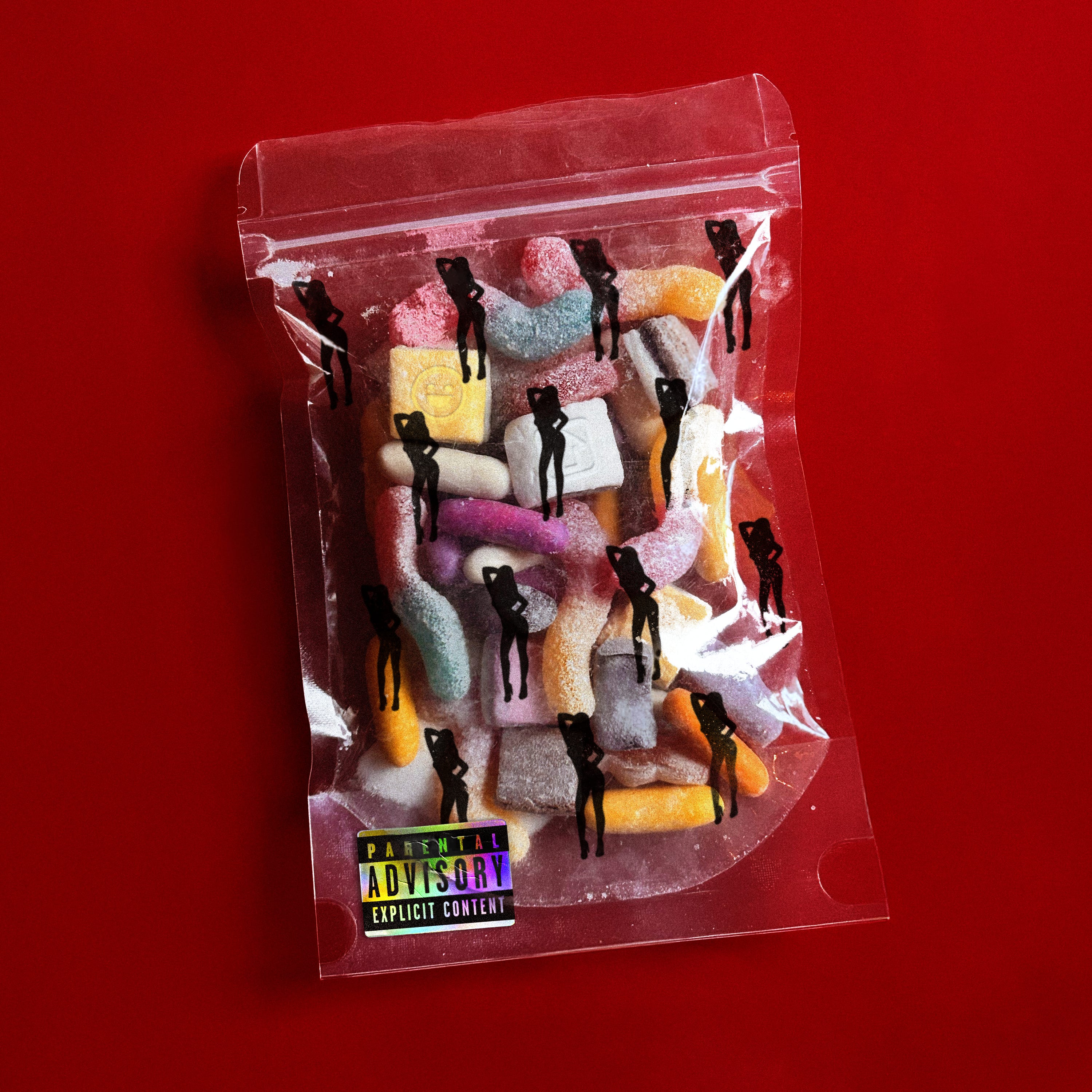
Around two-thirds of the way through “That’s a No No,” the song splits in two, and Part II goes meaner than Part I. A march cadence under it, a chorus shrunk to “Day in, day out,” bars about lining up troops and sending a barber boy running. That happens to be Little Simz, who has been writing this kind of verse since at least GREY Area, and Part II of “That’s a No No” is Sugar Girl‘s most concentrated dose of it. The four-track EP, her second full pairing with producer Jakwob, also brings in a list of women artists across the next three songs. Part II runs the EP’s most familiar plays. Yohji Yamamoto, snake metaphors, a left brain asking a right brain who the killer is. The threats hit, but none of it sounds particularly new.
In lower contrast, “Game On” has the same problem. Simz’s chorus repeats before sliding into a YSL-and-Silhouette name-check, and her second verse comes in shorter than the hook itself: “Can a bitch get an Ayy?/New crib, new car, new bae/Can’t give you my time or space.” Then JT shows up. Opening with “Sexy black girl and I’m it,” she takes a few bars on the catwalk, then turns in the song’s only sustained piece of writing: “Catwalk this pain, high fashion/Life hard but my ass still assin’/...Do Black lives still matter to these brands?” Eight lines hold queerness, brand politics, and a recruitment metaphor at once.
Then there’s “Telephone,” the queer love song. Direct about whether she should be saying it—Simz writes her verse similar to a person who has decided: “It was me you were made for/You got it, everything paid for.” The chorus pickup line comes in lighter, closer to a sketch than a hook: “You wanna talk dirty, you wanna kiki?/Get what you wish for, I’ll be the genie.” What saves it is the post-chorus, where the workaholic apology is built into the seduction: “I was workin’ till late, shorty.” Then 070 Shake takes the bridge. Rather than fight Simz for space, she enters a different mode underneath her, a half-spoken piece about heaven and highways and rainfall that widens the song for a stretch. Unguarded, in a way she has not always allowed herself to be on her own albums.
The track that actually moves the EP is “Open Arms.” DEELA opens with a refrain in mixed English and Yoruba: “You don’t ask, you don’t get/Ẹ má worry, no stress/Don’t cry, don’t beg/I might forgive, but I no forget.” Her interlude is one Yoruba command repeated five times, “Ó yá, dìde, dìde, dìde,” a get-up-and-rise. Switching fully into Yoruba sentences, her chorus does real work in the song with each line: “Orí ẹ ti lọ” (your head has gone, you’ve lost your mind), “àbí you dey craze?” (are you crazy?), “Pay me my respect.” Simz contributes mostly through pitch-shifted melodic vocals and a pre-chorus that reaches for the same conversational mode without quite getting there: “Please just remember that I’m just a baby girl/Stay sharper than a thorn, don’t play with anyone/Me self, I’m coming, so just dey your dey.” Simz, who has spoken about her Yoruba heritage across her career but has never put it this far up in the mix, sounds more engaged inside DEELA’s lead than alone in her own. On the pre-chorus, she pitches her voice up and meets DEELA halfway in the language the song is actually in.
Favorite Track(s): “Game On,” “Open Arms,” “Telephone”