

EP Review: Sundiata by Vic Mensa
Mensa’s first fully independent project sidesteps streaming, questions whether Black art can exist outside extraction, and whether the man asking can keep his hands clean long enough to find out.
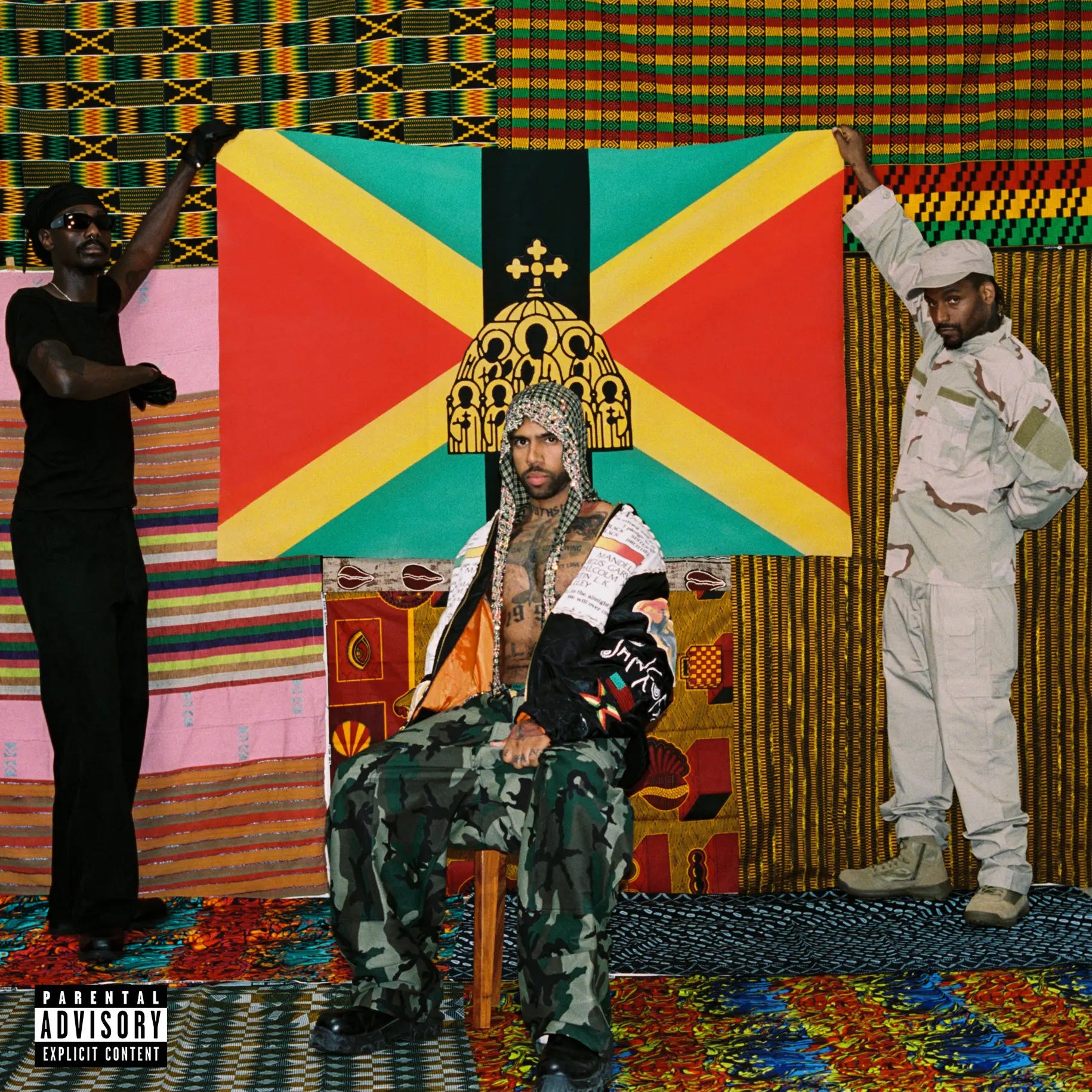
Vic Mensa wants to know how you quantify scripture. “How could you quantify with Spotify, the value?/Nigga scripter was the verse,” he iterates on “The Word,” stacking an argument about artistic worth on top of theological weight. He’s claiming divine authority for his pen while questioning whether algorithms should price revelation, and that friction—between spiritual inheritance and economic reality, between violence and moral accounting, between fatherhood as mythology and fatherhood as diaper changes runs through all six tracks.
The independence talk stays welded to the music. Mensa rhymes about “run[ning] off on the masters” and invokes Harriet Tubman in the same breath he calls label executives vultures who “want you encircled like the usher chain.” When he says, “Making indie moves like Jagger, that’s a shoutout to my brother Mick,” the punchline perches only as Mick Jenkins shows up three bars later with his own verse about penmanship that “don’t move the needle like singer” and industry types who “want all the lima beans from the go.” Jenkins pushes Mensa’s argument further than Mensa pushes it himself, rapping about roses through cracked concrete and patterns that don’t follow the scissors. Two Chicago writers building the same brief from different angles. By “What We Doin,” Mensa’s condensed the whole critique into a single image: “First they lift you from poverty on your IP and perpetuity, so now you property.”
The Mali references are load-bearing. The spoken-word outro on “The Word” finds Mensa addressing his son directly, explaining the boy is “named after the Emperor of Mali, Mansa Musa” and that “before Mansa Musa came Sundiata or soon-ja-ta, the Lion King.” He invokes Dogon astronomy and Timbuktu’s universities, framing inheritance as spiritual armor. In “Prayed 4,” fatherhood becomes present-tense—“Changin’ my son’s diapers while I shit on y’all/I’m dill Allah/My baby in Dakar, we on a pilgrimage to Senegal”—and the boast and the devotion collapse into each other. Mensa stacks kings until the references feel like talismans, names he reaches for when verses need protection. The strategy works when grounded in fatherhood. It wobbles sliding into geopolitics. Lines about “a Gaza child swept under the rug by the carpet bombs” gesture at solidarity without earning the comparison.
Then there’s the violence, which Mensa refuses to renounce even as he complicates it. “Still with the Smoke” is clipped and confrontational, full of crowns snatched and necks aimed at. But even there, Mensa catches himself mid-threat: “As a kid, I was Ready to Die, I would ‘Kick in the Door’/Gripping a pole/My lil’ niggas, they ready to slide, could give them the go/That’s not my M.O.” The Biggie references age the violence into nostalgia while the pivot sounds like a man negotiating with his own instincts. He forgave but never forgot, he says, and he’s still with the smoke.
“Eye 4 an Eye” stretches that negotiation into philosophy. The first verse opens on a rapper “sentenced to murder charges,” following up with this next line, “Revenge killing of a young beloved emerging artist,” and Mensa traces the feedback loop—fans typing online about sliding on enemies, Netflix documentaries turning death into content, Spotify and Apple and Amazon collecting their piece of the grief. “Peace don’t pay, they send artillery to Tel Aviv and still say ‘Peace’ in the Middle East.” The hook pledges loyalty—“Your beef is mine”—but the verses keep asking what that loyalty costs.
“I never known a Black man to die of old age/It’s all gun violence and heart disease.”
“Prayed 4” stretches longest, nearly five minutes of confession that refuses to smooth its edges. Mensa talks about putting fifty thousand into an artist who went back to prison, about waking up on a flight to Milan with everything covered after years of dues. The specifics accumulate (Bushwick Dumbo flow, spending peso to look the part, going OD when he got his first check) until “God brought me down to my knees just to give me everything I prayed for” earns its weight.
Audially, Sundiata stays lean. “The Word” moves like a statement of belief with room to breathe, the Musical Youth sample framing the argument as generational inheritance. “Still with the Smoke” tightens into something harder and more claustrophobic. “Applebum” pivots into flirtation and luxury (Miu Miu heels, kaleidoscope diamonds) and sits oddly against the record’s moral stakes. Fun enough on its own terms, but disconnected from the harder questions Mensa asks elsewhere. He’s independent but still asking whether independence is survival or just isolation. He’s naming kings but still changing diapers. He’s still with the smoke but searching for peace from his past actions. The contradictions are the argument.
Favorite Track(s): “The Word,” “Eye 4 an Eye,” “Prayed 4”
 | A guest post by
|