

EP Spotlight: Table for Two by Lucky Daye
Lucky Daye built his career writing for other singers. Table for Two tests whether that instinct holds when he finally shares the mic.
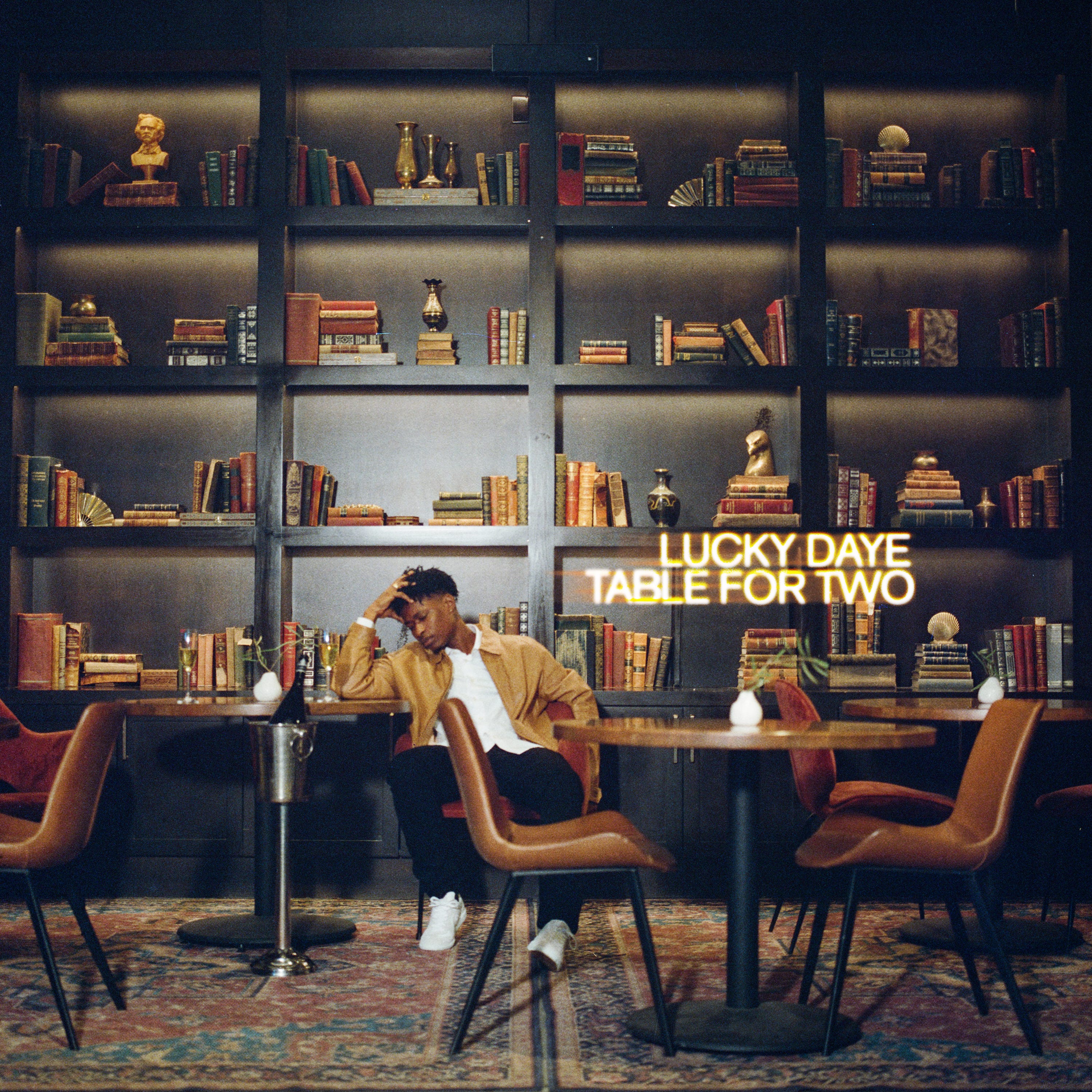
Before Lucky Daye sang lead on anything with his name attached, he spent years feeding melodies to other people. He grew up in New Orleans, moved from city to city, and stacked songwriting credits for artists who needed hooks and bridges he could build in a session and leave behind. That kind of work trains a specific reflex. You learn to write toward someone else’s mouth, to shape a phrase so another voice can carry it. You also learn to disappear, and disappearing becomes its own skill, one that sticks even after you decide to step forward. When Daye released Painted in 2019, both instincts were still clashing. He wanted to be seen, but he kept writing songs where the charm worked best if you suspected he might vanish before the last chorus. “Roll Some Mo” ran on that exact friction. He sang about staying, about wanting another hour and another drink, and he sold every syllable of that promise with the loose phrasing of someone who had practiced being temporary.
Table for Two is built almost entirely on duets. Six of its seven tracks pair Daye with a different vocalist. Yebba, Ari Lennox, Tiana Major9, Mahalia, Queen Naija, and Joyce Wrice each take a seat across from him, and every conversation tilts somewhere different. The Valentine’s-adjacent release date hinted at easy and sweet. The actual record is stranger and more hesitant. Most of these songs sit with the part of a relationship that nobody puts on a playlist for date night. They live in the silence after a question gets dodged, in the gap between sending a message and watching the minutes stack up with no reply. Daye wrote and co-produced most of this material with D’Mile, and the two of them kept the arrangements spare enough to leave room for two voices to crowd each other or pull apart.
Yebba is the first guest to sit down, and “How Much Can a Heart Take” asks a question neither of them can close. They trade stanzas about the weight of disappointment without ever locking into a clean harmony. Where Yebba pushes into a line with force, Daye retreats. When he reaches for a high note, she drops into her lower register and lets the gap between them do the talking. Both of them agree on the hurt, and the disagreement is quieter than that, buried in what each of them thinks should happen next.
An unanswered text is a small thing, barely worth mentioning out loud. “On Read,” with Tiana Major9, treats it as the trigger for a much larger unraveling. Daye rereads his own words, second-guesses whether he said too much, and the annoyance curdles fast into actual doubt. Major9 shows up with her own tangled version of the same worry instead of anything resembling comfort, and the two of them sit in that dead air together, waiting for a reply that the song never delivers.
Ann Peebles wrote “I Can’t Stand the Rain” about a sound that dragged her back to someone she wanted to forget. “My Window,” with Mahalia, borrows the tapping percussion and its humid, restless mood from that record and then shifts the target. Daye and Mahalia are not grieving a person who left. They grieve the closeness they once had with a person who is technically still around, and rain taps at the glass again, reduced from a dramatic force to the dull repetition of wanting someone visible and unreachable. Mahalia holds low and steady against the sample while Daye drifts above her, and the vertical distance between their registers carries the weight that no lyric about longing could.
“Access Denied” is the loosest thing on the EP, and Daye and Ari Lennox sound like they are having a genuinely good time inside it. The track runs on a Curtis Mayfield sample, “Give Me Your Love (Love Song),” all soft bass and easy drums, and that borrowed warmth sets up a standoff that neither singer wants to win. Lennox keeps the door firmly closed. Daye stays charming about it. The flirtation stays visible the whole time, and so does the resistance, and the pleasure of the track lives entirely in two people who enjoy the push of persuasion too much to let it end with a yes. “Dream” pairs him with Queen Naija, while Joyce Wrice shows up. on the MegaMan-inspired “Falling in Love.”
Across these pairings, Daye does something that fewer male R&B singers attempt than you might expect. He does not try to dominate the conversation, and he adjusts readily when the guest needs more room. On some tracks he contributes less than his counterpart. On others he hands over the bridge or the final word. He writes duets where the point is not who sings louder, but where two people stand when the song fades. That instinct traces back to the years he spent writing for voices that were not his own, and he has not shaken it. He probably should not.
 | A guest post by
|