

Twenty-five years later, the year 2000 feels like a hinge—R&B standing between analog luxury and digital precision, between the old A&R era and the algorithm’s rise. Five 2000 R&B Albums revisits that crossover moment, when singers, producers, and labels were still negotiating how grown-up soul could live inside a pop machine. The series looks back at that moment through the projects that defined its balance, where records caught between slow jams and singles culture, between the sound of human touch and the pull of technology (even if specific albums aren’t rated highly or are forgotten amid competition).
Next, Welcome II Nextasy
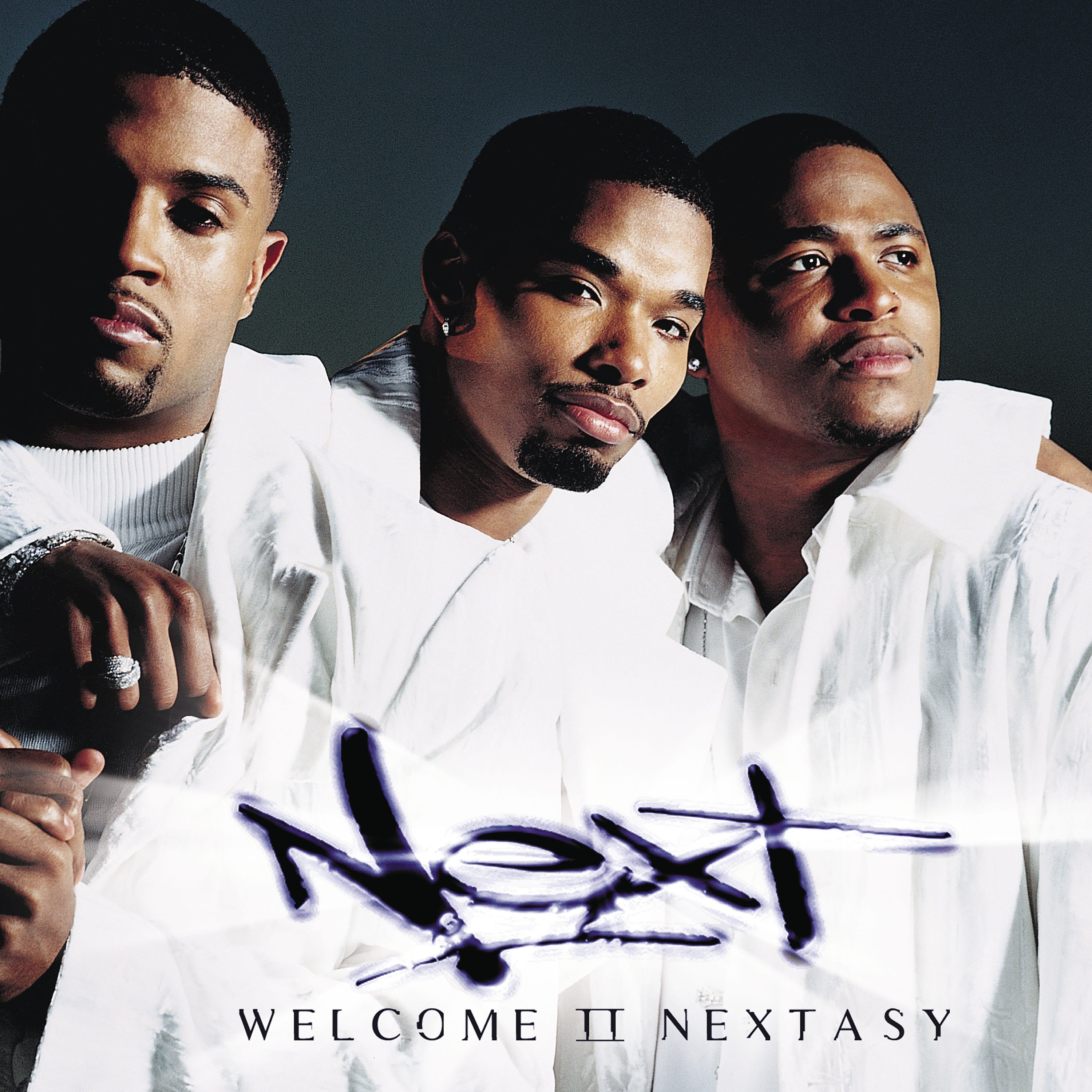
The debut album went triple platinum and pushed Next straight into the front pack of the brutal male vocal-group race. Their new album, released after roughly two careful years with no lineup changes, carries all that expectation on its back. It’s no surprise that the partnership with Naughty by Nature’s KayGee—the man behind “Too Close,” the track that drove their sales—remains intact; out of the 16 cuts, he produces 10, either alone or together with Darren Lighty and Eddie Berkeley. What’s harder to figure out is why their original minders from Lo-Key?, Professor T, and Lance Alexander, have vanished from the credits without a trace. The way they were cut loose feels pretty drastic. In their place, you get a new bench: Allstar on “What U Want,” Darrell “Delite” Allamby on “When We Kiss,” Chad Elliott on the hidden track “Freak In Me” (treated as a secret bonus), and Shannon Sanders & Andrew Ramsey on “Call On Me.” But purely from how many tracks he touches, the center of gravity still leans heavily toward KayGee. And given how much shine R.L. picked up from his hit duet “We Can’t Be Friends” with Deborah Cox, you’d almost expect that song’s producer-writer Shep Crawford to show up here too, but that didn’t happen.
For the streets, the first pick was “Jerk,” with its dry beat and smart use of an Ultramagnetic MC’s sample, but the proper single was “Wifey,” which follows the “Too Close” blueprint almost to the letter. That’s a standard move, and as listeners we might as well enjoy it, but there’s a sense that “Wifey” doesn’t quite have the same flash as “Too Close” did. In fact, that slight letdown hangs over most of the uptempo tracks: outside of “Jerk,” the dance cuts all feel just a notch short of fully alive. It’s hard to tell whether anything here can really chase a hit on the level of “Too Close.” The ballads are another story. Those songs are cleanly written, and the group’s harmonies—now noticeably more technically polished—are a real pleasure. From “Shorty” onward, the sequence gets dense and satisfying, and folding in “Splash,” the song they’d already placed on the Why Do Fools Fall in Love soundtrack, only makes that late-album stretch feel stronger. “Splash” is about as powerful as this group gets, and the track that effectively closes the record, the hidden “Freak In Me,” is superb as well. At this rate, it feels like the next single after “Wifey” is going to come from this cluster of ballads. For vocal-group fans, Welcome II Nextasy is basically mandatory. — Brandon O’Sullivan
Avant, My Thoughts
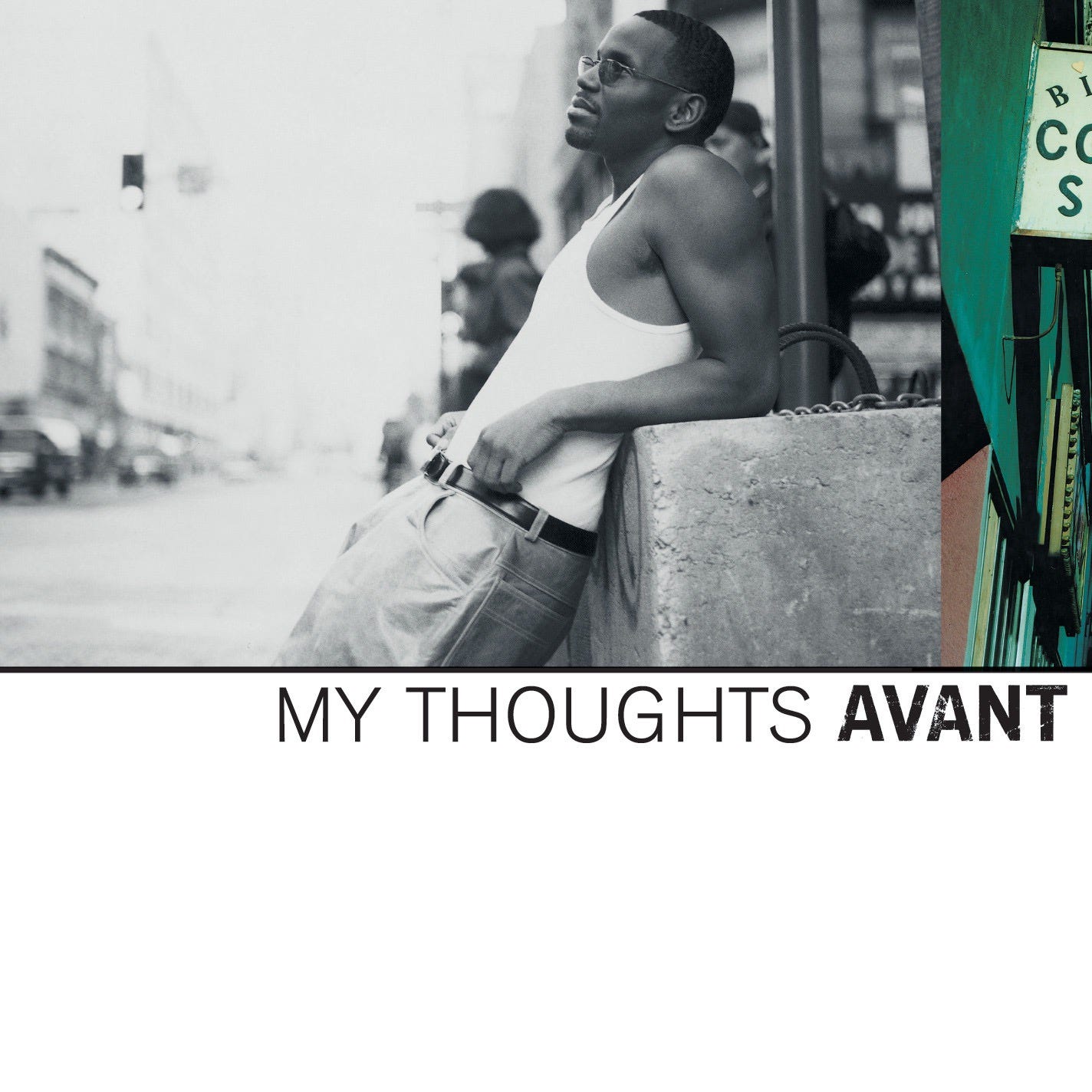
During the release week, Avant’s debut single “Separated” climbed as high as No. 2 on the R&B chart, and the first impression it gives is, “Whoa, here we go again—very Arrruh Kelly-ish…” The way he works those hummed “mm-mm” phrases is almost identical. On top of that, his old go-to engineer, Peter Mokran, handled the mix, and once you find out this is the first release on Magic Johnson’s label, the Chicago connection kind of makes the whole thing click in your head. But that’s a slightly paranoid way of hearing it. Even on “Separated,” the similarity comes from the phrasing he leans into when he digs into a line; his actual tone is different, so that Voldemort’s feeling really comes down to the way Steve “Stone” Huff arranged the record, since Huff produced the entire album.
Huff had been backing Avant since earlier one-off tracks on Summer Heat and My Christmas Album, and he’s also the guy who had Joe singing “Treat Her Like a Lady” on Joe’s last record. Here, Huff’s production keeps a smooth, classic R&B surface while sneaking little quirks into the low end, and those tics sit perfectly under Avant’s delicate vocals, leaving the album packed with solid songs. The debut single “Separated” may echo the man’s in its vocal turns, but once you notice that, you also notice how Avant’s actual voice and emotional shading are his own. The René & Angela cover of “My First Love” is framed by Tom Tom 2000’s strings, and the clean melodic line of “Get Away” shows how well he can work with a more straightforward song. You get a bass-heavy, Huff-style twist on “Destiny,” the bounce of “Reaction,” which rides the attack and scratches of Boogie Down Productions’ “South Bronx,” and a full choir behind him on “Why,” where he just belts. Whatever the style, something subtle seeps out of his singing and sticks with you.
Personally, the peak is “This Time,” where the way the guitar weaves around the other parts is quietly incredible. Avant isn’t overwhelming or showy, but once you tune into that particular flavor in his voice, it’s easy to sink into My Thoughts from front to back. — DeShawn Ellis
The Temptations, Ear-Resistible
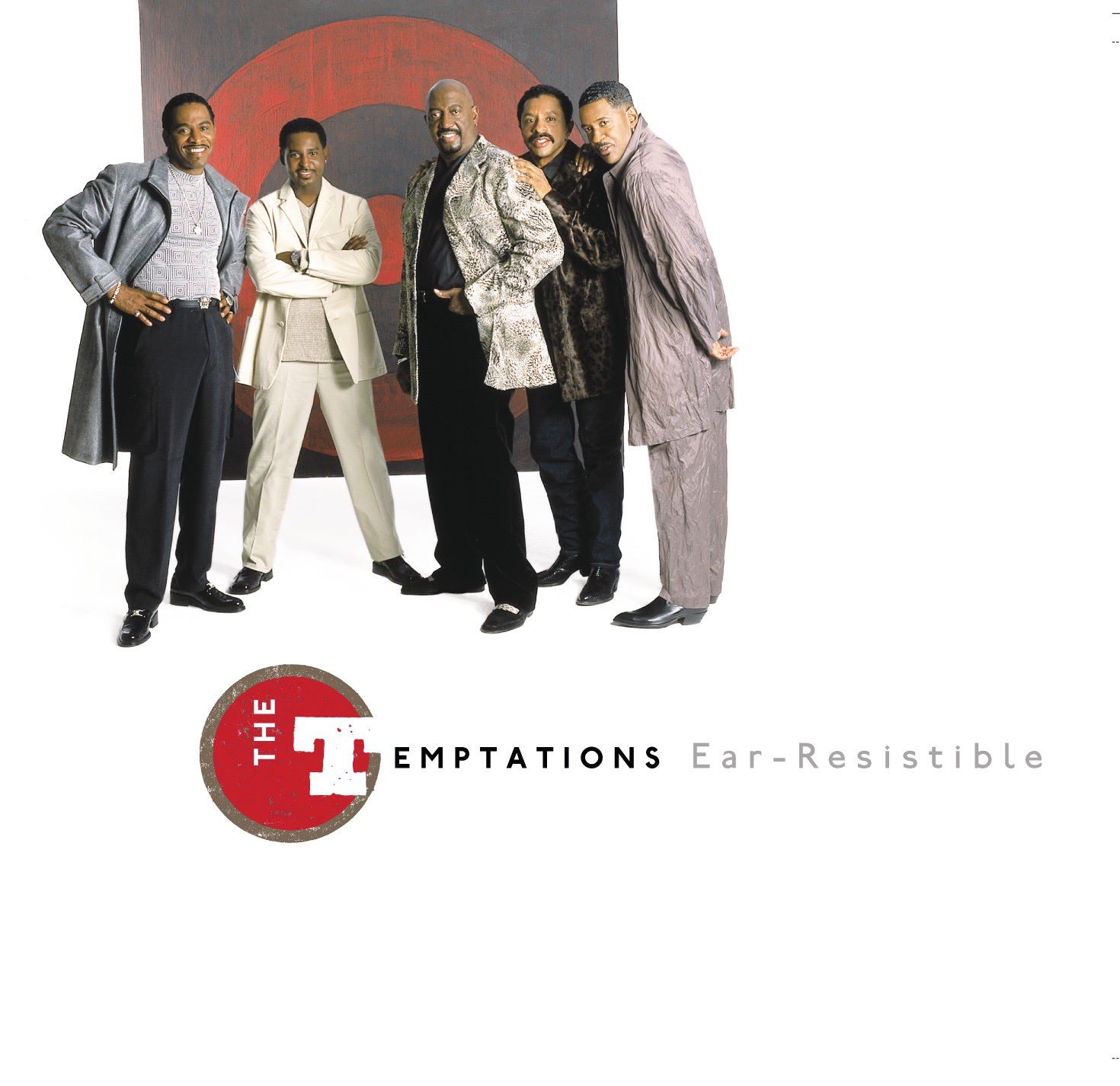
In an era where even veterans struggle to get second or third albums out—and newer singers and groups get stalled waiting on their follow-ups—the Temptations’ previous album Phoenix Rising still went platinum. Losing Ali-Ollie Woodson was a blow, but as a group they’d pulled off a revival through smart member changes. That momentum only grows on their 57th album, Ear-Resistible. With Harry McGilberry Jr., Barrington Henderson, and Terry Weeks all singing with real confidence, the group feels younger and more refreshed than they have in a long time. The first single is “I’m Here,” produced by Joe, and it’s a thick, romantic slow jam that sounds exactly like his touch; the following “Your Love” is a fully contemporary ballad, and “Selfish Reasons” and “Proven & True,” handled by Gerald Levert and Joe Little III, are clear showpieces this time around. On “Proven & True,” Gerald’s voice pulls the group into a wide, rolling groove, and the doo-wop-style backing vocals bring out a flavor only the Tempts can hit.
They don’t lean on the kind of nostalgia tricks they used last time, and Otis Williams hangs back rather than playing the elder statesman out front; they’re committed to competing as a current group. Because that stance is so firm, even the songs from returning producers like Narada Michael Walden feel different this round: “Kiss Me Like You Miss Me” and “Party” don’t come off as throwbacks so much as updated spins that fit this lineup. A more straight-ahead midtempo cut like “Elevator Eyes” is still very satisfying; Ron Tyson’s falsetto gives it that classic Tempts shimmer, while the new formation puts a slightly tense, interesting edge on the harmonies. If you want to nitpick, it still feels like they could really use another true bass singer to replace Melvin Franklin fully, but in this day and age, that might be asking too much. — Kendra Vale
Various Artists, Shaft (Music from and Inspired By)
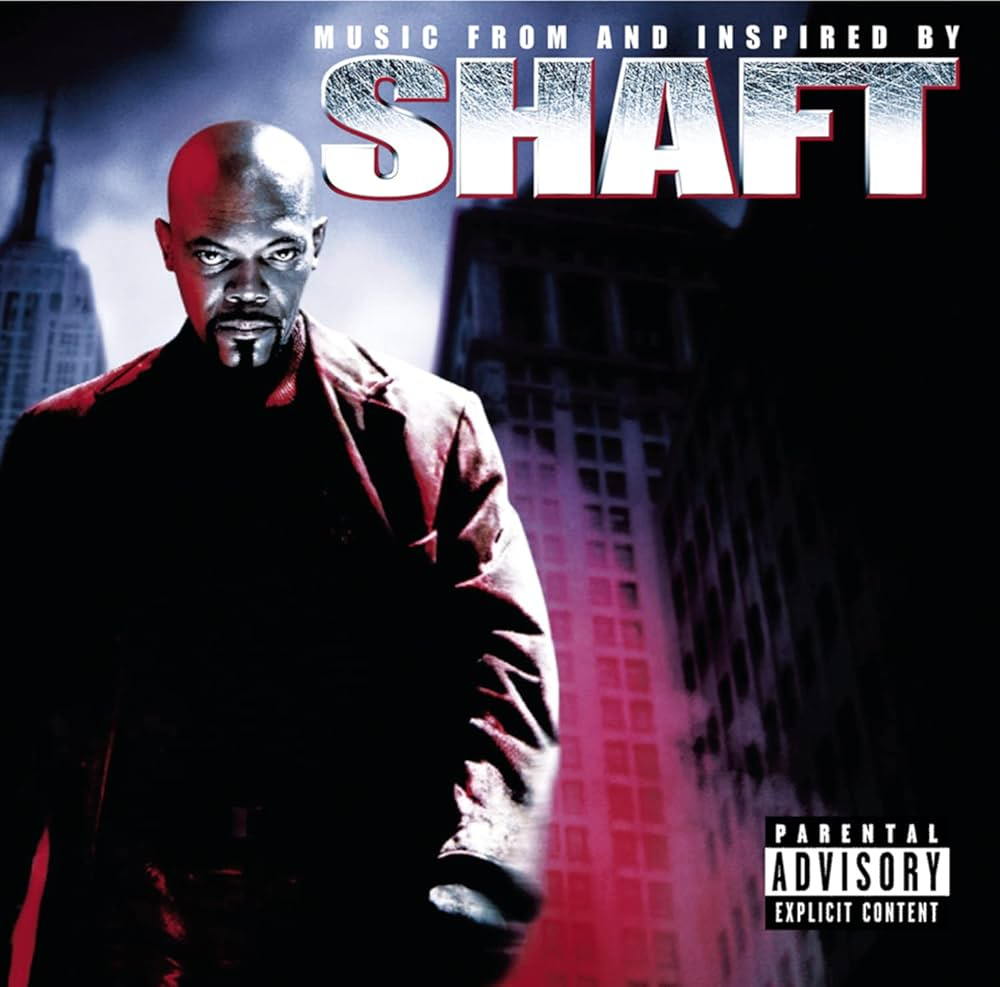
This is the soundtrack to John Singleton’s revival of Shaft, starring Samuel L. Jackson. Busta Rhymes and Vanessa Williams show up in the film, and Busta’s role in particular is the one you keep looking for. The album opens with Isaac Hayes himself remaking “Theme from Shaft.” With Lester Snell conducting the orchestra and playing keys, the performance sticks so closely to the original that it’s almost disarming, but as you move deeper into the record, that choice starts to make sense. A lot of these songs feel welded to the movie—built to lock into specific scenes. Hayes does the string arrangement for Alicia Keys’ “Rock Wit U,” for instance, and that’s just one of several cuts that clearly seem to exist in conversation with the images onscreen.
Even when the tracks are hip-hop or very ‘90s R&B in feel, the overall mood of the album lands close to a 1970s Black movie soundtrack. Nasty Man’s “Bad Man” and “Up and Outta Here,” and Donell Jones’s “Do What I Gotta Do,” are slightly subdued as standalone songs, but they do exactly what they need to do as soundtrack cuts and leave a good impression. The loop-heavy “We Servin’” from Big Gipp is full of tension, “Tough Guy” from OutKast hits even harder, and Sleepy Brown’s “Automatic” is another Atlanta-side highlight. That South-West Atlanta haze is addictive; on “Automatic,” the flute played by his father, Jimmy Brown of Brick, slips in just right and really stings. Angie Stone’s “My Lovin’ Will Give You Something” is another track that feels tailor-made for film, and the closing Spanish-language cut “Serenata Negra” by Fulanito is a complete curveball—mysterious enough that it makes you want to see the movie just to find out where it lands. — Murffey Zavier
Various Artists, Big Momma’s House (Music from the Motion Picture)
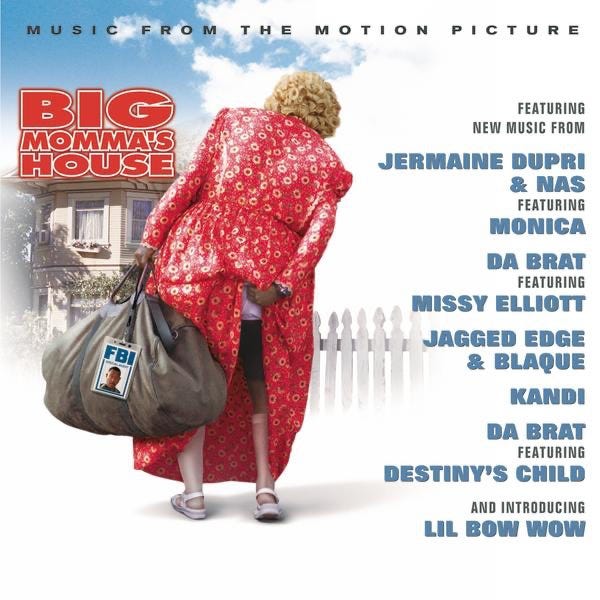
The soundtrack to the Martin Lawrence/Nia Long comedy Big Momma’s House arrives under what’s basically full supervision from Jermaine Dupri. The first single, “I’ve Got to Have It” by JD, Nas, and Monica, is already getting attention, but the whole soundtrack is packed tightly enough that you can just dive straight in. Da Brat’s track from her own new album, “That’s What I’m Looking For (Mr. Dupri’s Remix),” is a version with a delightfully off-center key feel that sticks in your ear. “I’ve Got to Have It” rides the beat from Peter Gabriel’s “Sledgehammer,” layered with bouncy top-lines in a way that feels like old-school Bad Boy at their most sample-happy, and Dupri’s verse hits nicely. Then, as you’d expect, a former Xscape member steps in: Kandi’s solo debut “What I’m Gon’ Do to You,” made with She’kspere—the same combo behind Destiny’s Child’s “Bills, Bills, Bills”—is pure trend-aware R&B with the kind of presence you’d expect from the source.
Dupri mirrors that energy on “Bounce With Me,” where Lil Bow Wow’s kid-voice verses run up against Xscape’s group vocals (from an older session, judging by the sound), and it just works as a bright, obvious single. A song in the same lane, “Big Momma’s Theme,” pairs Da Brat’s authority with Vita’s lighter touch and lands as another standout. Bryan-Michael Cox is involved in most of these records, but the one song he handles alone, “You Can Always Go,” is relatively middle-of-the-road. The real peak, at least for me, is “Radio,” where Warren G ditches the laid-back G-funk glide and lays down a hard, no-nonsense beat. G-funk affiliate Jessica also shows up on “Get Up,” built on a sinuous groove that flips N.W.A’s “Prelude” in a way that sounds great and carries Keith Andes’ producer stamp clearly.
And of course, when you say Atlanta in this context, you’re talking about Lil Jon. The bass-heavy club tracks “I Like Dem Girlz” and “Ooh Big Momma” never quite rise above their role as noisy party fuel, but the song he builds in “I Want to Kiss You,” built around a Cyndi Lauper sample, is a shamelessly poppy vocal cut. Devin’s slightly Mariah-like runs, and the very ‘80s synth phrases make it ridiculously cute. — Asa McKenzie
This is so iconic!!! That shaft soundtrack was golden.