


2010 is remembered for the obvious landmarks—blockbuster debuts, canonized “classics,” the albums everyone has already argued to death—but rap that year was way messier and more interesting than the usual shortlist suggests. This series on Five 2010 Rap Albums dives into the records that sat just outside the spotlight: a locked‑up superstar testing his fanbase, a posthumous Texas soul sermon, an OG West Coast veteran redefining what “I am the West” even means, a trap kingpin turning court dates into concept, and an indie/underground project quietly sketching out a different future. Taken together, they show how much of the decade’s sound was already taking shape in these so‑called side notes. They’re not the albums that dominated the charts or the thinkpieces—but they’re the ones that still feel strangely alive when you put them on now.
Ghostface Killah, Apollo Kids
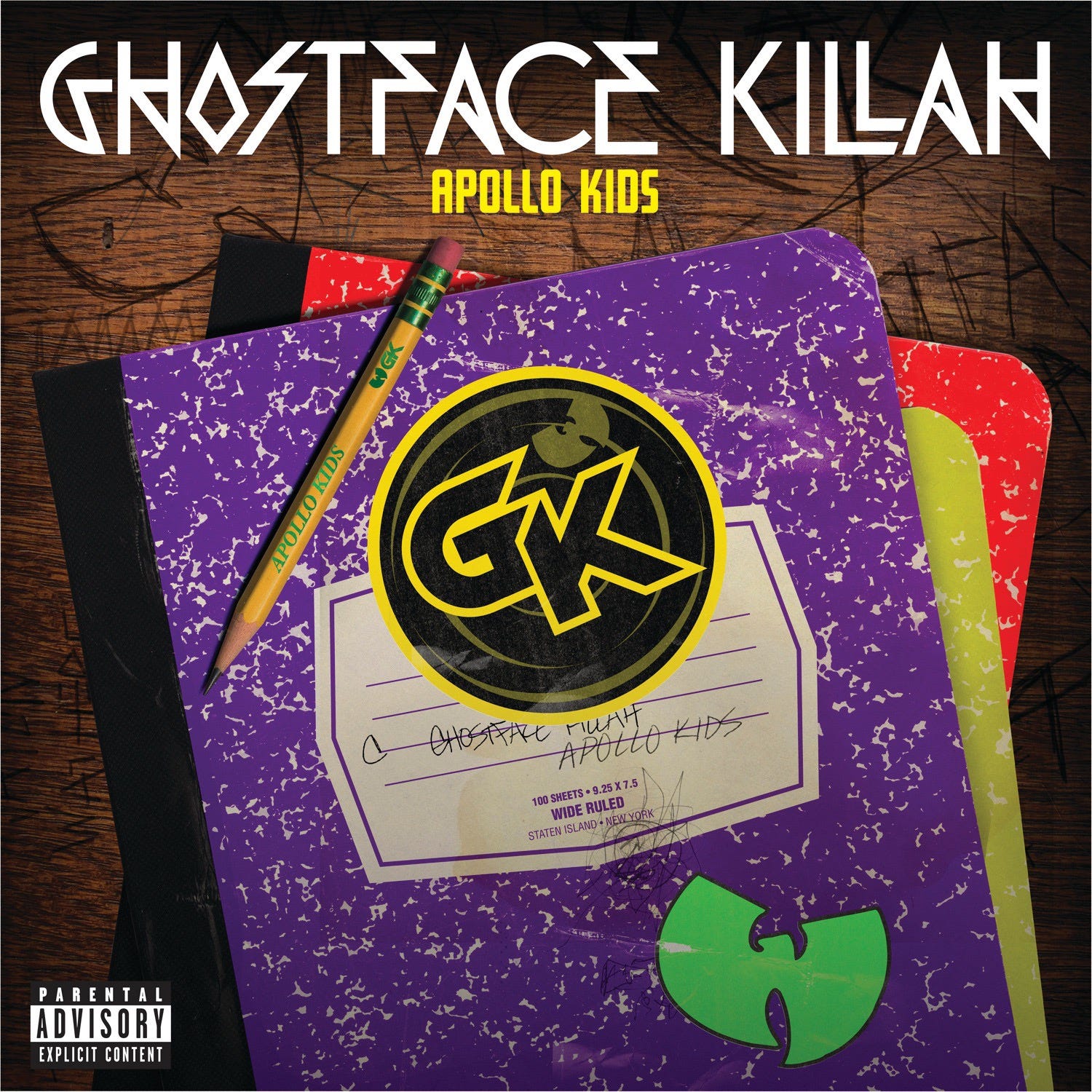
Even if the collaboration with Method Man and Raekwon, Wu-Massacre, had a vibe that was close to a mixtape album, there probably isn’t another artist who, while protecting sampling-based sound production, keeps putting out major-label projects at this consistent a pace. It’s been about a year since the previous work, Ghostdini: Wizard of Poetry, but this is the ninth album with Wu-Massacre in between. Ghostdini, which half-stepped toward R&B in a semi-experimental form, was unusual considering the career up to that point, but this one can be said to clearly sit on the line that runs up through The Big Doe Rehab.
Starting with “2getha Baby,” which uses the Intruders’ “Together” without leaving anything behind, there’s “How You Like Me Baby,” a Pete Rock track that uses Syl Johnson’s “Different Strokes” as an accent in the hook, and “Ghetto,” which boldly uses Marlena Shaw’s “Woman of the Ghetto” with the chorus intact, and “Street Bullies,” which uses J. Barnes’ “You Are Just a Living Doll,” so Ghostface’s soul tastes are still wide open as ever. And in the middle of that, he suddenly uses the Indian song Asha Bhosle’s “Jogan Ban Gayu,” and the way it brings in a curveball like “Black Tequila,” staging that early Wu-Tang-style sketchiness so well, is skillful. “Superstar,” where he and Busta Rhymes trade a thrilling mic relay over a beat using Roy Ayers’ “He’s a Superstar,” and “Starkology,” which tangles David Matthews’ “Theme from Star Wars” with Tears for Fears’ “Shout,” are big-sample moves (can you call them that?) that don’t feel obnoxious at all, and “In tha Park” quotes the line “The Bridge”: “Hip-hop was set out in the park. They used to do it out in the dark,” and on “Street Bullies” he casually slips in familiar phrases from classics like ATCQ “Can I Kick It?,” Eric B. & Rakim “My Melody,” and BDP “The Bridge Is Over,” so those veteran tricks are really clever too.
The balance of guests is also good: Raekwon and Method Man, who you can call a continuation from the above Wu-Massacre, plus GZA, U-God, Cappadonna, and Wu-Tang people and close members like Trife, Sun God, and Killah Priest, along with Redman, Busta, Jim Jones (they later put out the collab “Wu-Block,” apparently), Sheek (The LOX), and Joell Ortiz, pulling in a New York-centered spread from veterans to mid-level and younger names. Maybe as a reaction to the previous album, which could feel a little flavorless to longtime fans, even though its sales weren’t that bad, this one might be a project that answered (or tried to answer) as much as possible the “Ghostface the fans want him to be” image. It’s probably not only the writer who can’t help but grin just imagining it (in fact, this album has a lot of moments that feel like they intentionally make you expect what’s coming next). Anyway, I think it’s an album that couldn’t be more “Ghostface-like.”
As an aside, if he’s doing “Troublemakers” with Raekwon and Method Man at this time, it feels like that “Redman becomes an official Wu-Tang member” theory suddenly starts to sound more realistic. On this, there’s nothing to do but wait for follow-up news, but what’s the truth? — Brandon O’Sullivan
Lloyd Banks, H.F.M. 2 (The Hunger for More 2)
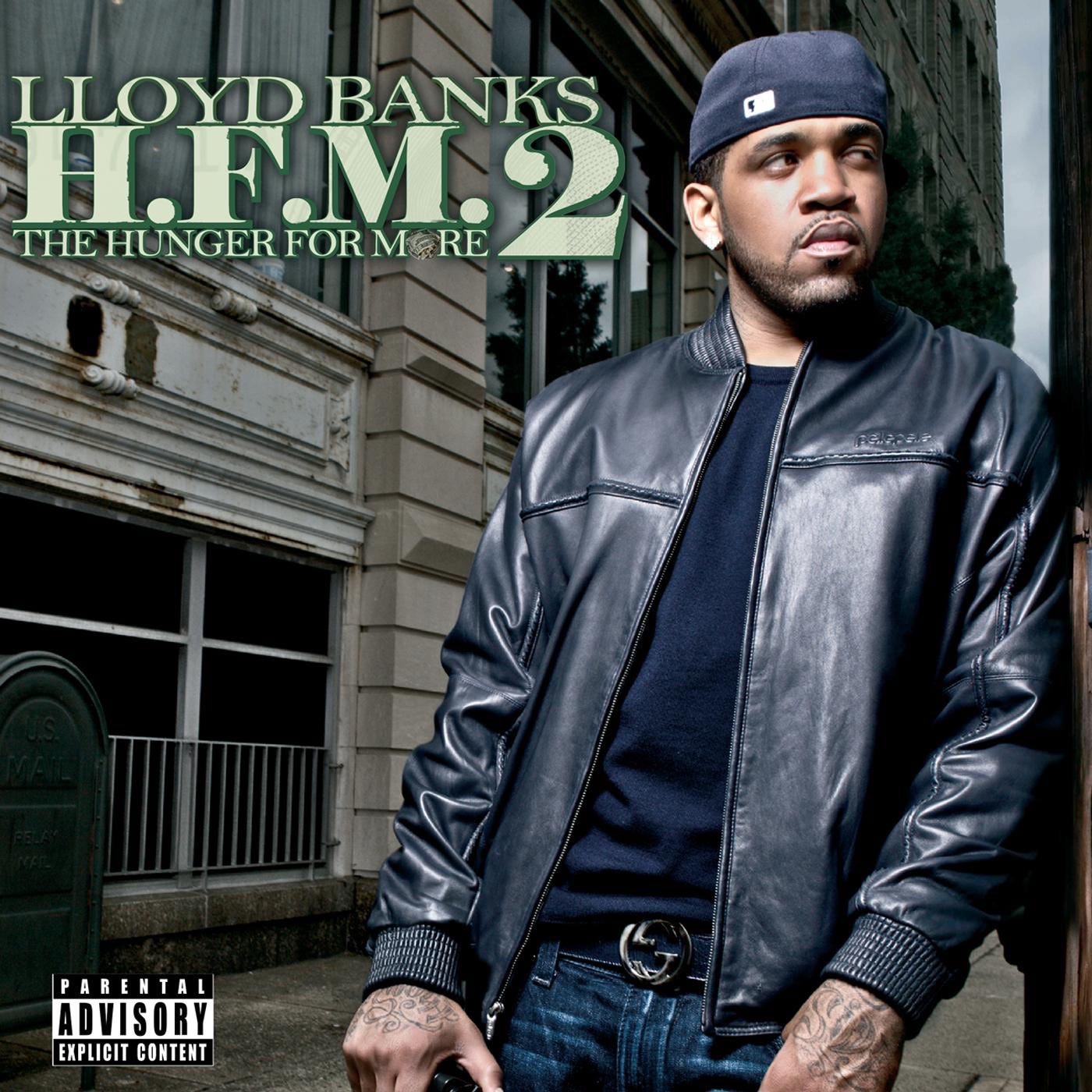
In 2010, who could have predicted Lloyd Banks’s flashy comeback that seemed to lead the East Coast scene? …That might be a bit exaggerated, but after putting out the second album, Rotten Apple, with sluggish sales plus the problem of discord between G-Unit and the record company piled on, Banks was notified of being dropped from Interscope in 2009. After that, right as he was trying to refresh his career as an indie artist, the single “Beamer, Benz, or Bentley” featuring Juelz Santana became a huge hit. It even turned into a situation where Interscope, who had once thrown Banks away, had to bow their head, but he cleanly cut off that old home and signed a new contract with EMI, leading to the safe release of this work.
What makes “Beamer, Benz, or Bentley” different from a regular single hit is that this one song played the role of a stimulant that greatly kicked up MCs’ freestyle spirit around the world. Remixes came out in a “are you serious?” volume, like Joe Budden and Royce da 5’9”’s “New York, Jersey, Phily,” Maino’s “Trina, Kim or Nicki,” and Jae Mills’ “Polo, Louie, Gucci,” and the phenomenon became a 2010 trending topic. Even overseas, SIMON and Y’s “Tequila, Gin or Henny” became a hit, and it even got played on New York radio station HOT 97 by DJ Cast One, which was a rare incident. That this single hit crossed boundaries and brought a sense of unity to the scene probably had a pretty big meaning for Banks, who had gotten drastically more “low-key” compared with the peak G-Unit days.
After that, he dropped “Any Girl,” with the catchy hook of (a different person) Lloyd’s whiny voice, and “Start It Up,” which lines up an unquestionably strong set of names: Swizz Beatz & Kanye West & Fabolous & Ryan Leslie. With the “Beamer, Benz, or Bentley” boom pushing him along, he stacked hit after hit. Released at the perfect time, this work is a spiritual sequel to the debut album Hunger for More, just as the title and jacket show directly. Sure enough, the aggressive momentum on “Take ‘Em to War” with fellow Tony Yayo and on “Unexplainable,” where he trades back-and-forth with Styles P, doesn’t change at all from the “Hunger For More” days, and he’s showing even more polished rhyming. His compatibility with the young key-track producer Cardiak is also outstanding.
Also, on “Home Sweet Home,” where with Pusha T he compares his own career to a “journey” and “home (hometown),” and on “Sooner or Later (Die 1 Day),” where he talks rap life with Raekwon, Banks’s verses shine with heavy persuasion from someone who’s tasted both the bitter and the sweet of the scene. The self that shows that most clearly might be “Father Time,” where he lays out his own style to the haters at length. The number of tracks is a somewhat tight 13, and overall, it’s put together in a balanced way. It’s good enough to show Lloyd Banks’s underlying strength. — LeMarcus
David Banner & 9th Wonder, Death of a Pop Star

If you deliberately grab David Banner with a cheap, surface-level image, it might be something like: a rough, stocky, manly Southern guy, just like that thick body. Certainly, from the early Like a Pimp” up through the latest solo work, The Greatest Story Ever Told (2008) and the big hit “Get Like Me,” what sits at his base is thick, crank-style songs (there were also dance tracks like “Pay”). Even his wide range of guest appearances, from DJ Shadow to Kid Sister to SEEDA, must be products of people wanting that kind of presence. Meanwhile, Banner, as a beat craftsman, has also been producing in recent years for Young Money, Pimp C, 8Ball & MJG, and others, but because the impression of him rapping is so strong, it feels like his versatility, like doing gospel for artists such as Ramiyah and Mary Mary, isn’t being recognized that much. He lowers the ratio of self-produced tracks in his own work, too, and maybe he’s intentionally presenting his two sides separately. In fact, it seems Madlib and Just Blaze were also floated as collaboration candidates at first, so you can understand that Banner was aiming at a project with a tone different from his breakout image.
So then, 9th Wonder, who ended up being chosen as the partner this time, has been on a collaboration run in recent years, putting out work energetically not only with Buckshot and Murs (a tag team he was doing even before leaving Little Brother) but also with Skyzoo and Jean Grae. While leaving memorable work like Erykah Badu’s “Honey,” he also set up his indie label IWWMG (It’s a Wonderful World Music Group) and has sent out showcase comps (listed elsewhere) and Big Remo’s “Entrapment.” Banner also appears on “Wonderbread” from that album, and with that kind of background, this Death of a Pop Star showed up.
Except for one track, all the beats are handled by 9th. Even the jacket, which could make you imagine an electronic inside, probably suggests a kind of wishful sci-fi sense that also connects to artists like Sir L. “No Denying (Channel 3),” the lead cut that pushes soul sampling, pulls a new richness out of Banner’s way of talking, and a Southern flavor spills out that resembles the back half of Rick Ross’s Teflon Don and Scarface’s The Fix In that sense, if you force the comparison, “Be With You,” bringing in Marsha Ambrosius and Ludacris, might also start to sound like “Guess Who’s Back.” Other songs that make use of guest singing stand out too, like Heather Victoria and Anthony Hamilton who Banner is familiar with, and especially “Silly,” where Erykah Badu controls the magnetic field with that voice, and “Something Is Wrong,” where Lisa Ivey’s compassionate singing is fragile, are a finish that’s too beautiful: the dense-mouth rap is wrapped up by the thick, short-breath vibe that’s specific to 9th.
“The Light,” handled by E. Jones (known for work with Talib Kweli and a member of 9th’s Soul Council) builds Banner-style crank feeling with an organ-centered, rich pseudo-band sound, and this is good too. It also works that Jones, Warryn Campbell, and THX add live playing here and there and smooth out the overall feel, and this work will probably bring Banner a new image. Maybe I keep replaying it because it’s a short album of about 30 minutes, but it’s a pretty comfortable atmosphere, and I like it a lot. — Harry Brown
Sheek Louch, Donnie G: Don Gorilla
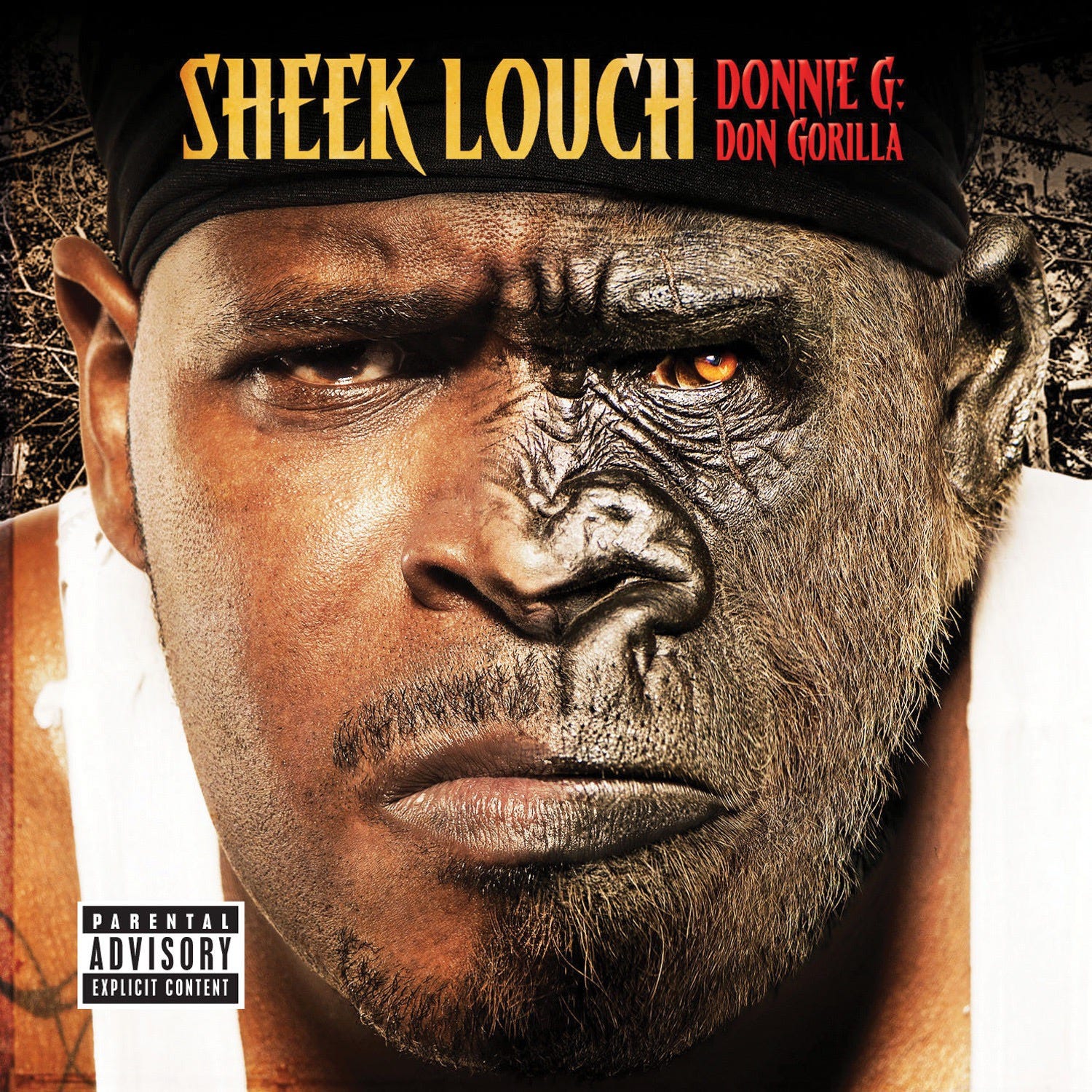
A fifth solo album by Sheek, opening with “Rhyme Animal (Intro),” which uses a standard Public Enemy reference. Compared with the other LOX members, his plainness stands out no matter what, but last year he signed with Def Jam, chasing after Jadakiss. On this work, where L.A. Reid is also listed as an executive producer, he raps more cut-loose than ever, like a gorilla spitting as it goes. On “Get It Poppin” after the intro, he spits hot as if he zipped-locked his current momentum as-is, and on “Make Some Noise” bringing in Fabolous, he goes on with rap like a local tough-guy brag, “What block you from?,” putting the scene on blast. On “Nite Falls” over a Statik Selektah track, there’s also a bitter, hardboiled atmosphere. On “Dinner Guest,” a sequel-like track to his signature “Mighty D-Block,” he passes the mic with the two LOX guys plus his junior Bully. The eccentric, ragga-leaning Red Spyda track boosts the addictiveness and throws off a distinctive charm. “Clip Up (Reloaded),” where he and Styles P roll out ironic wordplay, is also interesting, and while keeping the gorilla face, he raps lines like “I’m a wolf, a black Twilight” (“We ain’t even talk about Twitter,” too). It made me notice Sheek’s appeal again as a solo MC, but at the same time, it also raised my expectations for a new LOX project. — Reginald Marcel
Redman, Redman Presents… Reggie

This 7th had a concept that feels like it was aiming to “make it in a modern style of beat,” and it was originally supposed to come out as “Reggie Noble 9 1/2.” But in the sense that it’s a work crowned with Reggie Noble, his alter ego, or rather his real name, the original idea remains, and because it’s conceptual content, there might be parts where people expecting the usual Redman flavor get a bit of a letdown, but still, the kind of sarcastic idea that makes his own guy Saukrates use Auto-Tune, like on “Full Nelson” where the hook uses Auto-Tune, is something only a veteran would do, and on “Lemme Get 2” and “All I Do,” you even get Michael Jackson’s name shouted out, and above all, the rap skill that makes you fall in love is still there. It also doesn’t seem like he swapped everything out from the original plan. “Nowadays’…” — Nehemiah