

Five Records That Ignore the Game on Purpose
A year that argue with each other about what “hip-hop pleasant” even means. These picks move from barroom funk DJs to block-level grit without changing the rules of the groove.
This is a five-entry series built around one year and one constraint, keep it focused and keep it readable. Each piece stays with what’s on the record and what the writing and beat choices actually do, without rankings, trend talk, or outside quotes. In 2026, twenty-five years after 2001, the series is a straight listen for what still hits on its own terms.
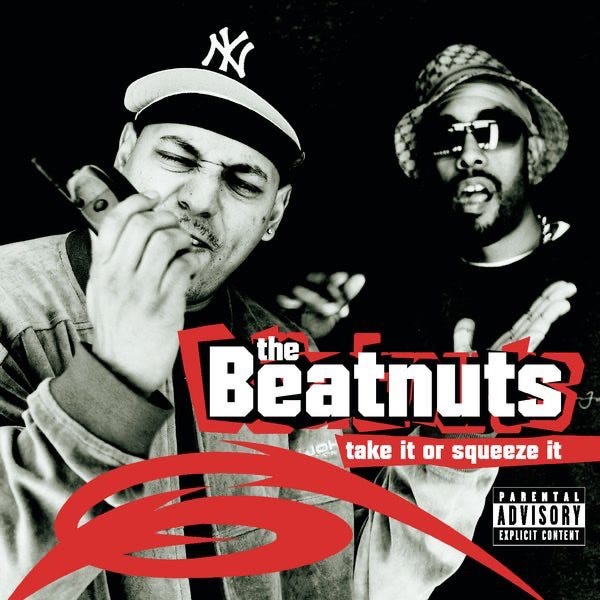
The Beatnuts, Take It or Squeeze It
Almost two years after it was released, in clubs the included tracks such as“The Next Episode” and “Still D.R.E.” are still getting spun nonstop since the incident (and you know what I’m talking about), and it’s already said to have logged five million in sales, a monster album you don’t see much these days: Dr. Dre’s 2001. That it’s an album that represents the movement of the scene at a certain time, like A Tribe Called Quest’s The Low End Theory and Dre’s own The Chronic, and that it’s the kind of album that goes on to lead hip-hop production afterward, you can tell from the way beat-makers have been raving about 2001 in this magazine’s interviews at the time. With diversification moving ahead, and with gear becoming more advanced and more expensive, now there are skill gaps between producers that would have been unthinkable before, and not everyone can make “2001”-style beats, so it won’t be like how everybody turned G-funk after The Chronic, but you can already hear 2001’s influence on a lot of records.
So what did 2001 present to the scene? One example of the latest version of “hip-hop-pleasant sound and acoustics,” which keeps changing subtly every day in a way even people who aren’t always listening hard to hip-hop wouldn’t notice, but after a long time has totally changed, and a re-recognition of hip-hop itself, meaning the feel-goodness of breakbeats and loops, isn’t that what it is? And especially loops. When I thought about why I like 2001 this much and realized, “ah, I was getting taken out by how good this loop feels,” it was a real eye-opener. The feel-goodness of loops is basically hip-hop’s foundation, isn’t it! So seeing how strongly 2001 is supported made me re-recognize hip-hop, like, damn, everyone really does love that feel-goodness of something going around and around.
That was a ridiculously long preface, but speaking of loops, yeah, The Beatnuts. When they first came out they were mainstream, but starting with the second, Stone Crazy, they began shifting toward production that pushed their Hispanic roots to the front. And when “Off the Books,” with that memorable top-line looped, became a small hit. They probably re-recognized it too, like, “it’s the feel-goodness of the loop, right.” So the third, A Musical Massacre, was also a work where the feel-goodness of loops was emphasized more than ever, but now with the added 2001 effect, The Beatnuts’ fourth record Take It or Sqeeze It, where they’d already gotten out ahead and like a monkey had been chasing nothing but the feel-goodness of loops, feels like it’s become an album that’s back on the front line of the scene again.
It’s already decided just from the hit first single “No Escapin’ This” c/w “It’s da Nuts.” “No Escapin’ This,” the party tune with Greg Nice, like a sequel to “Turn It Up” from the previous album, is great too, but anyway “It’s da Nuts” takes me out. It’s a super tight beat: post-Timbaland drums with the kick going crazy, and just this rockabilly-style, insanely memorable bass. But these drums are a rework of Head Hunters’ “God Make Me Funky,” right? That way of slipping a standard classic sample in as a hidden flavor and making fans grin, they’re really good at it.
“Prendelo (Light It Up),” with Tony Touch on the rap, “Yo Yo Yo,” where Greg Nice hypes again, “Let’s Git Doe,” where Fatman Scoop yells, and “Se Acabo (Remix),” where Method Man jumps on a previous-album track that had been floating around as a promo single, and the other songs too, that feel-goodness of loops works its way in slowly, like, ziiiing. Compared to the previous album they loosened their shoulders and made what they wanted, a nice-feeling adult hip-hop. Psycho Les and JuJu are beat craftsmen to begin with, so their rap, their voices, their lyrics, their skill, are plain (sorry), so it wasn’t a huge break. — Nia Lattimore
Fredro Starr, Firestarr
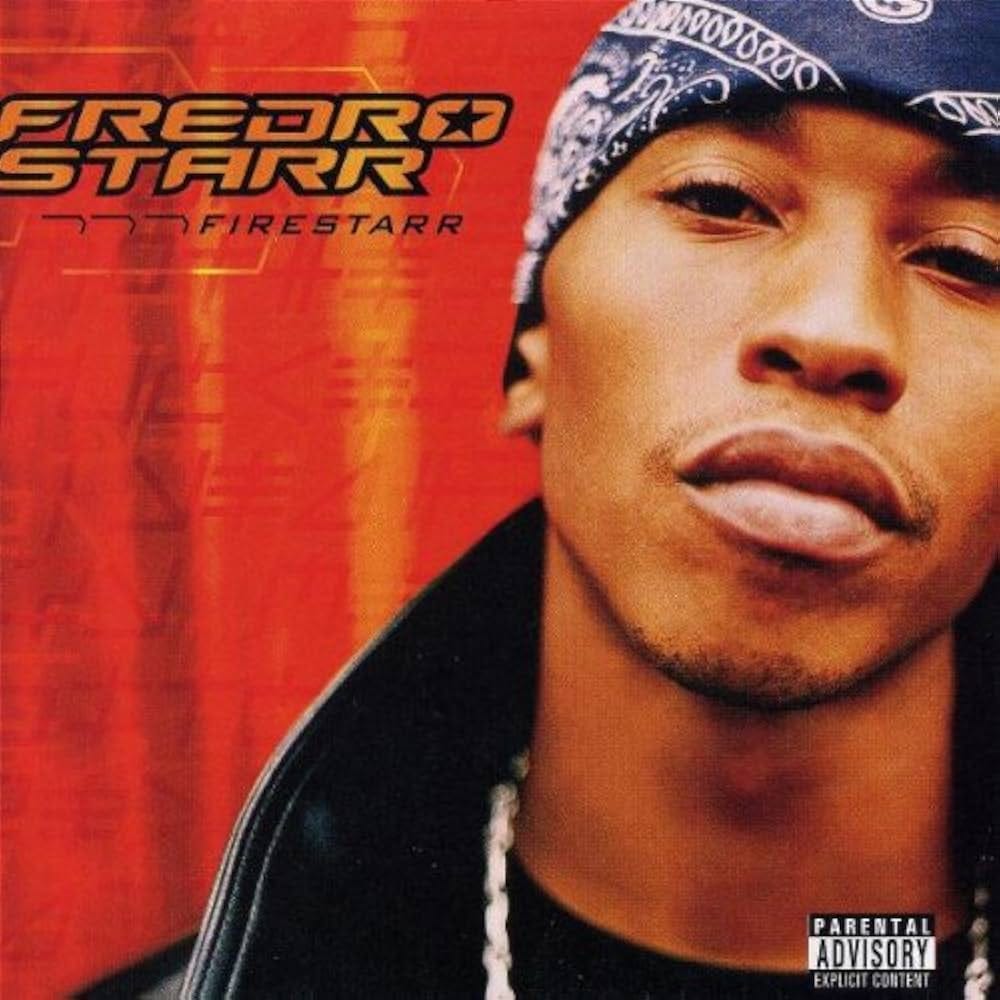
In Vibe magazine’s first issue of 1999, Sticky Fingaz was already written up as “ex-Onyx,” so it’s been quite a while since Onyx stopped moving. In Onyx, Sticky was the one who stood out overwhelmingly as a character through his name, face, and muscles, and he did stand out, but compared to him, who centers that anything-goes irregular flow, this Fredro can be evaluated as an MC in a straight, orthodox line.
On this record, his solo debut after doing acting, you can fully enjoy that low, raspy voice. The advance single that became a hit, “Dyin’ 4 Rap,” is good. Over rhythmic strings in the DMX “What’s My Name” line, he explodes into a hot delivery like spit’s about to fly. Even if it doesn’t have a hook that feels like a hook, you get forced down by rap power. Also, “Soldierz,” where he goes at it with his ally Sticky and X1 over a Rough Ryders-type sound, is dope, and at the same time it’s a song that lets you breathe easier like, thank god they didn’t split in a bad way. And “Thug Warz,” with Sticky (the one doing the “throw ya gunz up” call) and the Outlawz, is also in that dramatic & hard lane.
On the other hand, on “What If,” the dried-out lane, he gives you a flat, matter-of-fact narration, and on “Perfect B!tch” he humorously talks through picturing a “perfect woman” made by combining Tamia, Aaliyah, Jennifer, Beyoncé, and others… and he also shows sides that step one or two steps beyond the Onyx-era act that was heavy on the tough-guy color. There are a lot of good songs, and the lead has more than enough ability, a solid, full work. — Yara Blake
Jigmastas, Infectious
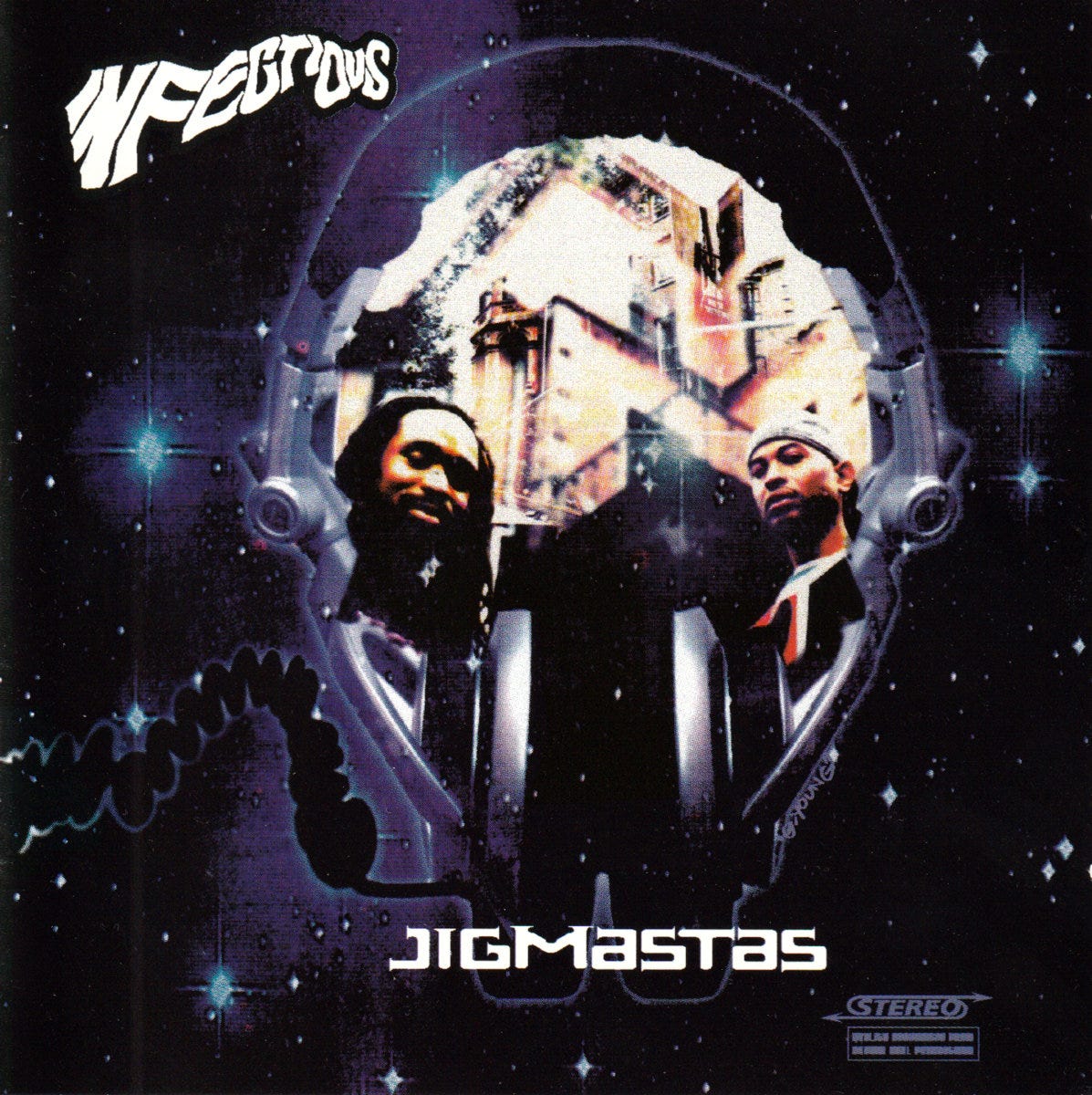
Starting with tasteful, well-picked hip-hop, gradually moving into a breakbeats corner. From there taking it into house, and after that, staying mellow until morning. Spinna’s DJing is really the kind my people would enjoy. He apparently spins nothing but soul and funk at bars too. But that’s kind of like free soul. It’s the most fun DJing, but it also made me feel lonely, like, this guy has completely turned his back on the hip-hop game, this must feel comfortable for him. And then, the first full album from his base group Jigmastas shows up. It surprised me, but this is a wonderful work.
Overall the drums step away from the value system of “dope,” and have a jazzy sound like club-jazz-type down-tempo stuff. On top of that, the complex texture of the interweaving top parts unfolds. Especially the beauty of “Apology Not Accepted (featuring Apani B. Fly),” with his ally Apani from Polyrhythm Addicts, is this album’s climax. There are also songs with sung choruses that underground fans might hate (I said it lightly), like “Elevate (featuring Angela Johnson),” “Hollar (featuring James Ramsey and Vernon Reid),” and “Nocturnal Jam (featuring Lorenda Robinson),” and there are also a lot of spiky productions like “Don’t Get It Twisted (featuring Sadat X),” where the beat develops over a field recording from a tap dance classroom too.
As expected, it floats away from every movement in the current hip-hop scene, but it has that taut, stretched beauty unique to someone who voluntarily stepped outside the game. — Alexandria Elise
J-Live, The Best Part
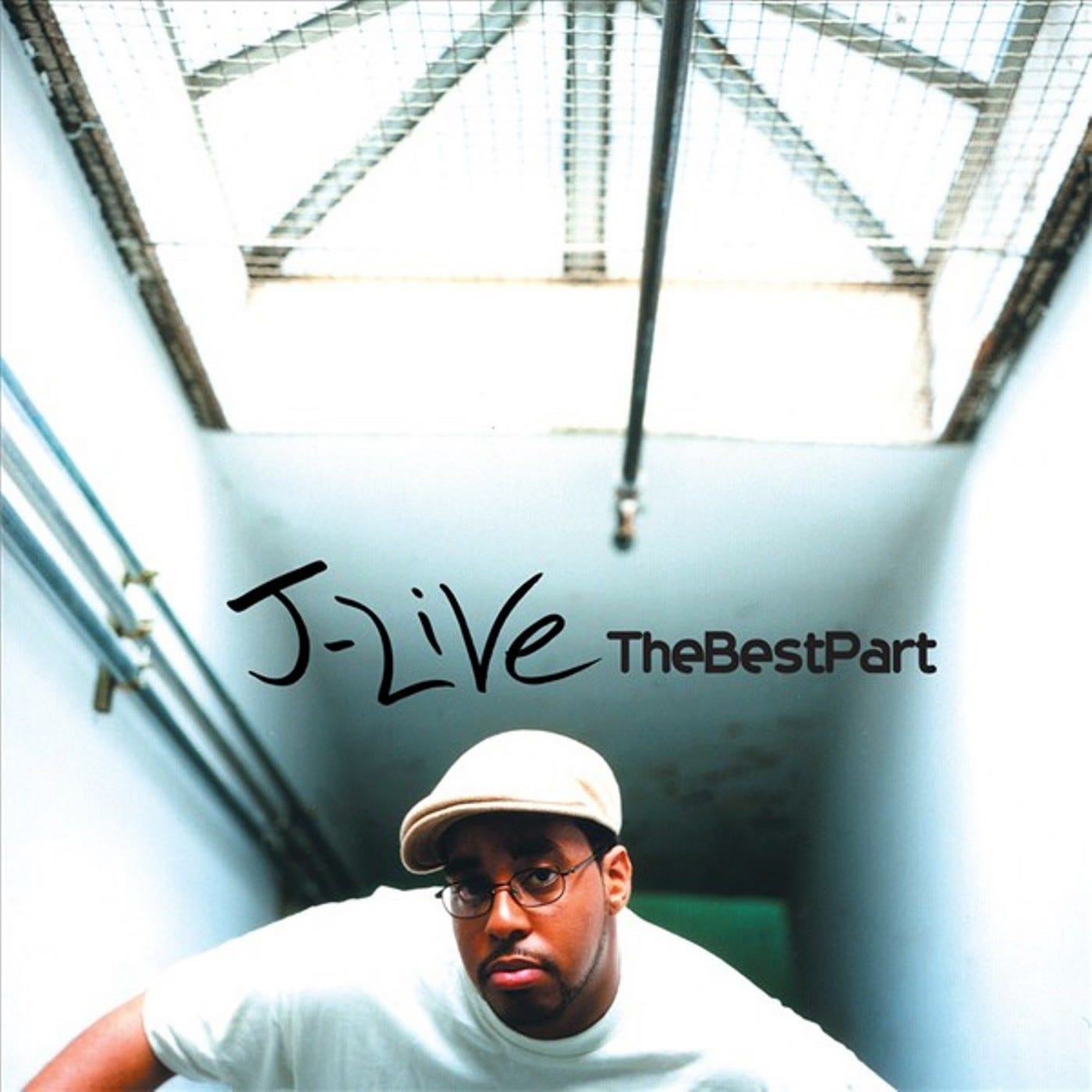
The info that J-Live became a free agent from London Records and his catalog was up for sale is read about years ago. So I thought this was what finally got a buyer and came out, but according to his management, 7 Heads, this is a boot, which is a problem (in fact, there are tracks leaking online that aren’t included here, and “Play” is the instrumental of “Don’t Play”). Because like he argues on “True School Anthem,” produced by DJ Spinna, if you’re a “true school” believer this is a must-hear.
In other words, it’s a sound full of adventurous creativity (it’s especially clear in “Don’t Play,” a samba-ish thing produced by 88 Keys where J-Live responds as if to Astrud Gilberto’s voice, and in “Yes!,” which used swing jazz earlier than Jurassic 5, who seem like they’d share a hip-hop view), and words that only he can spit are always running through it. For example, on “Wax Paper,” produced by Prince Paul, turntablism terms are used perfectly as metaphors for a criminal society.
And since this record is titled after the DJ Premier-produced track, you can also interpret it as a documentary-style story of J-Live (born in 1978, real name Jean-Jacques Cadet) becoming a great MC (the fact that his ‘95 debut track, famous for strong battle rhymes, sits right before the last track is probably because of that), and it becomes even more worth listening to. So if this had come out properly in complete form in 1998 or 1999, there’s no question it would have been one of the records representing that year. — Danica Ford
Various Artists, Oz: The Soundtrack
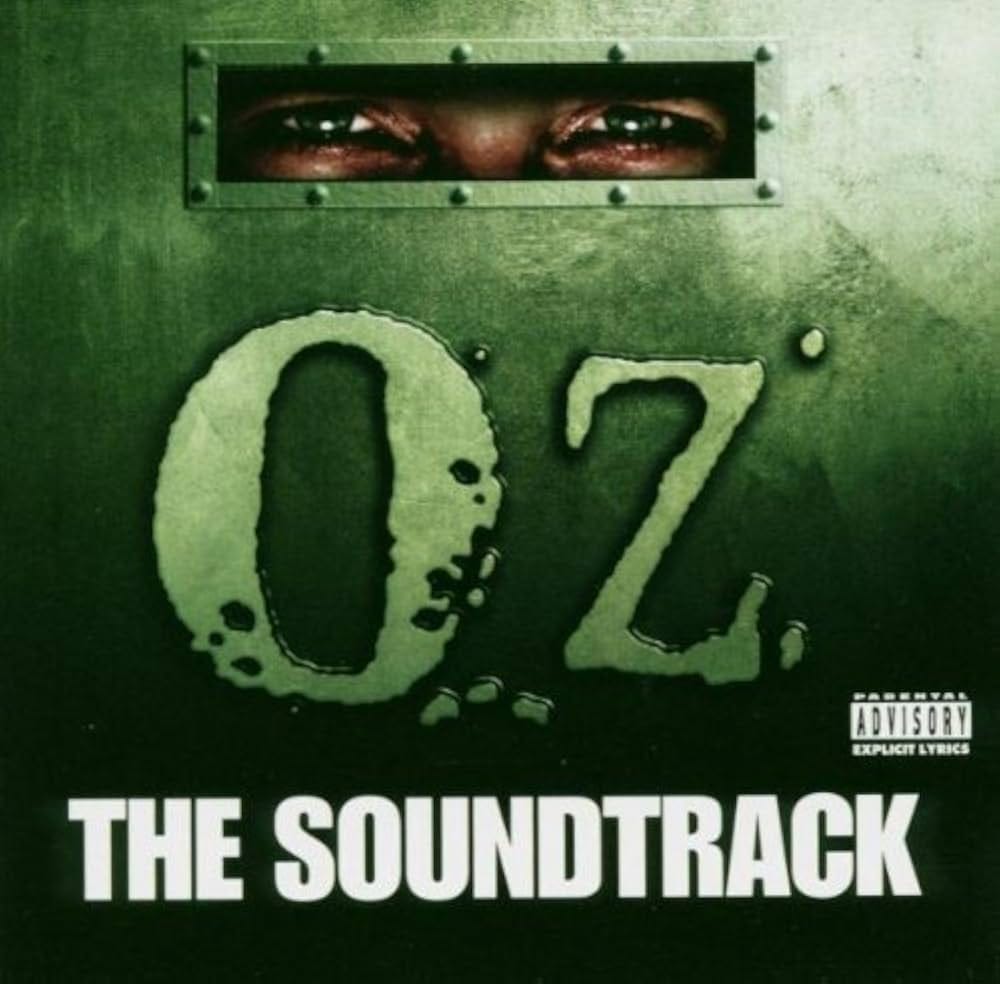
As usual, details are unclear, but it’s a soundtrack for an HBO broadcast drama series. Most of the participants don’t step outside their own lanes, so as a concept compilation its “interestingness” is average, but that’s a separate matter from how the songs are individually. First, it’s a shame that Kurupt and Nate Dogg and Wu-Tang aren’t more than expected. The following Snoop track, “Land of Oz,” is funk that’s way too square, but the chorus hook with Kokane, like always, is full-on P-funk and an irresistible comfort.
The relatively plain Krayzie Bone track “Shackled Up” is good too. The horns and keys fall in little bits, and Krayzie’s talking, starting kind of song-like and gradually increasing the word count, is an atmosphere thing. Def Jef, back on the front line, is doing good work. And Devin, who made a name with Dre’s “Fuck You,” on “Can’t Wait,” rides a simple, commercial-beat sound from T-Mix with sing-rap, a wimpy-soul. On the drama theme, “Oz Theme 2000,” Kool G Rap is by far the best. Cypress Hill’s “Can I Live” is a fine song with an atmosphere really similar to their own “Highlife.” Trick Daddy’s “Thug Niggas Don’t Live That Long” is an absurdly laid-back, refreshing up (when everyone does this, why does everyone turn into 2Pac?). Drag-On’s “Tonight” feels like Swizz Beatz part 1.
The highlights of the second half are either Magic’s “Incarcerated,” still continuing to transform, or… with so many strong-character people, there are a lot of song-level dramatic things that stand out, which is soundtrack-like, maybe? — L. Ari James