


It is late autumn in New York, and there is a feeling in the air that doesn’t quite match the season. This is not the chill that sweeps through the avenues or the rush of tourists to Rockefeller Center. It’s the hum of elders stepping back into the studio with a steady stream of announcements and listening sessions rippling through social media feeds. You can walk past a comic‑book convention and glimpse Nas standing alongside Marvel artists, smiling under a logo that looks as if it were pulled from a Wu‑Tang album cover. You might scroll past a video of Slick Rick thanking Nas for giving him a stage at the Tribeca Festival, or catch a clip of Havoc of Mobb Deep explaining why he finally agreed to unearth Prodigy’s unreleased vocals. It feels like living in a city that is both returning to the 1990s and creating something that has never existed before.
From June through December 2025, Mass Appeal’s Legend Has It… series slowly unfolded, one record at a time. It began with Slick Rick’s Victory, his first album in 26 years. Then came Raekwon’s The Emperor’s New Clothes, Ghostface Killah’s Supreme Clientele II, Mobb Deep’s Infinite, Big L’s Harlem’s Finest: Return of the King, and De La Soul’s Cabin in the Sky. Each project carried its own weight: Big L’s record stitched together a 1990s freestyle with new contributions from Nas and Method Man; Infinite transformed Prodigy’s unreleased verses into songs that sound as if he and Havoc never left the studio; Cabin in the Sky turned grief for the late Trugoy into a meditation on the passing of time. The label said the mission as “preserving the past, celebrating the present, and pushing hip-hop into the future.” Watching these records arrive month after month created the sense of a shared universe—one that honors the Bronx and Harlem as much as it caters to a global audience.
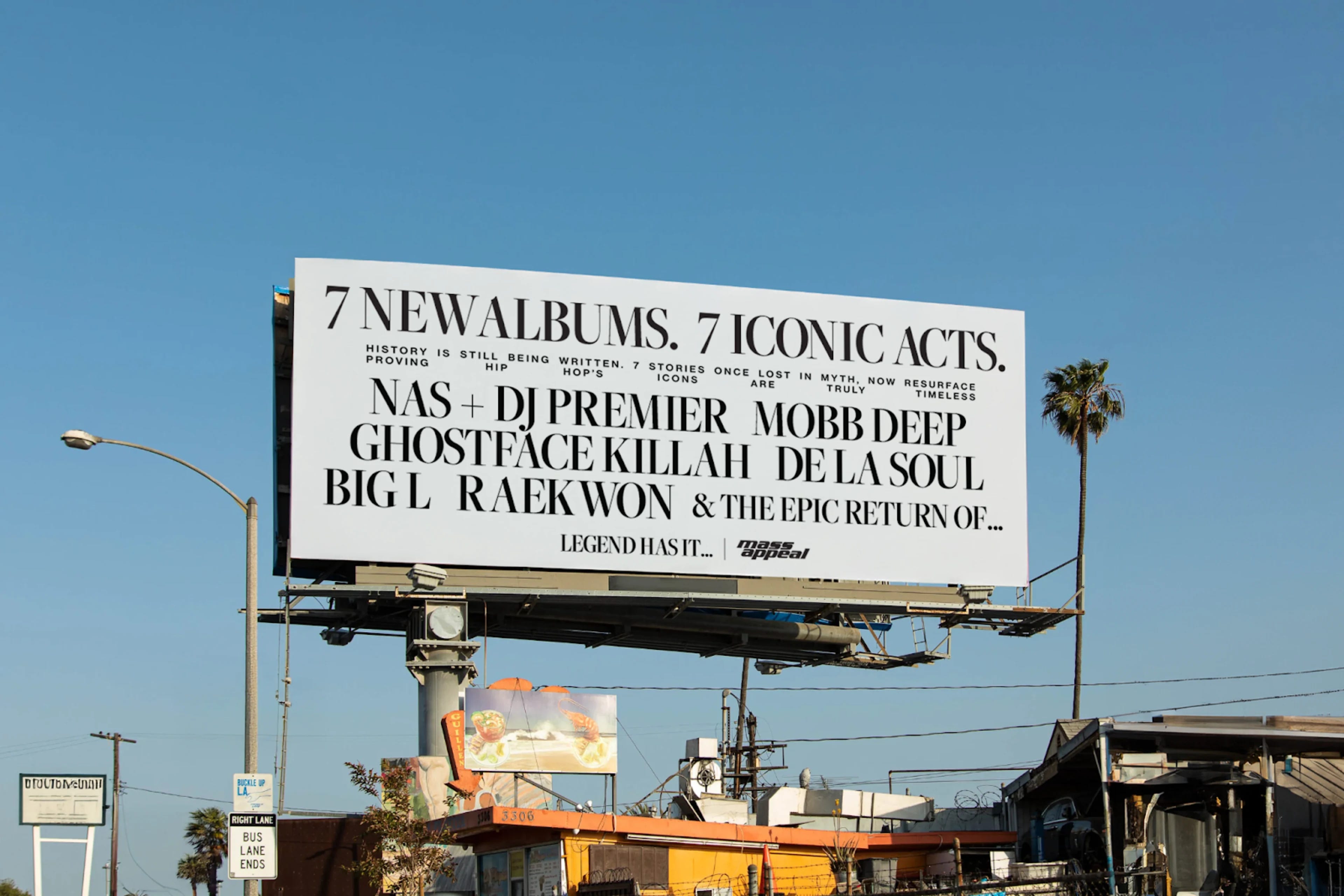
That universe is about to close with an album that has existed as a rumor for nearly two decades. Nas and DJ Premier, the rapper and producer whose work on 1994’s Illmatic helped define the sound of New York rap, will release Light-Years this Friday. We do not yet know what the album will sound like, and for now, the tracklist is less important than what the project represents. In a rare interview, Nas talked about the series as a reminder of hip-hop’s pureness, saying that the 2025 run has felt “like 1995 all over again” on Rolling Stone with Andre Gee, while insisting that the music is forward-looking. The concept of Light-Years plays on that idea. A light-year is not a measure of time but of distance—specifically, how far light travels in a year. To observe a star many light-years away is to look deep into the past because its light takes so long to reach us. The title suggests that Nas and Premier are sending a signal across decades. The songs may originate in 2006 or 2024, but the moment of reception is happening now, at the end of a year devoted to letting New York’s elder statespeople speak.
From the outside, Legend Has It… might look like a resurgence from our pioneers, but its rollout reveals a deliberate narrative. Victory, the opener, reminded those who aren’t aware that Slick Rick’s storytelling remains unmatched despite its brevity. It included a short film produced by Idris Elba and appearances from Nas, Giggs, and Busta Rhymes, positioning Rick as an elder and a contemporary. Raekwon’s The Emperor’s New Clothes leaned into mafioso imagery and an updated sound with Swizz Beatz and the J.U.S.T.I.C.E. League. Ghostface’s Supreme Clientele II revisited a long-awaited sequel to his 2000 classic, with contributions from Nas, Raekwon, and GZA. Mobb Deep’s Infinite confronted death head-on by mixing Prodigy’s vocals into new productions by Havoc and the Alchemist. Big L’s Harlem’s Finest restored and enhanced archive recordings, including a freestyle with JAY-Z that many had only heard in grainy bootlegs, documentaries, or YouTube videos. De La Soul’s Cabin in the Sky used Trugoy’s voice to explore mortality and joy, flowering like a concert of old and new friends.
Each project invited Nas as a featured guest. He appears on songs with Big L, Raekwon, Ghostface, Mobb Deep, and De La Soul. This is not just cross-promotion; it is a way for him to stitch these stories together, to move between boroughs and scenes, to listen as much as he rhymes. Mass Appeal, the company Nas co-owns, supported these projects with infrastructure that older artists rarely receive. Slick Rick noted that Idris Elba created a space where he could step back into his artistry. Havoc of Mobb Deep said he chose to work with Nas because he trusted him like a brother. The project coincided with Nas pledging a million dollars to the Hip-Hop Museum in the Bronx and awarding $500,000 grants to pioneers like Kool G Rap and Grand Puba through the Paid In Full Foundation. An A&R from Big L’s estate said that in a culture where Black artists over 40 are often discarded, Nas insisted on celebrating them. Those acts of philanthropy and curation gave the series a sense of purpose beyond streaming numbers. When critics questioned whether there was a market for these albums, participants responded: This is about honoring a lineage.

So why does it make sense for Nas and Premier to close the curtain? Nasir Jones and Christopher “DJ Premier” Martin met in the early 1990s, when the producer visited Queensbridge after hearing Nas’s demo. Premier produced three songs on Illmatic—“N.Y. State of Mind,” “Memory Lane,” and “Represent”—each capturing the daily rhythms of New York life. According to Premier, Nas wrote his verses in one take, prompting the producer to find a sample that matched the intensity of his lyrics and scratch KRS-One’s vocals into the hook. The result, “N.Y. State of Mind,” became a defining track of the so-called golden era. Premier later produced “Nas Is Like” (1999) and “2nd Childhood” (2001), and he and Nas appeared on the cover of Scratch magazine in 2006, teasing a full collaborative album. The idea lingered. Fans asked about it at shows; Premier promised it would happen; Nas mentioned it on “30” with his 2022 album King’s Disease III. For nearly twenty years, the project was a myth.
In April 2024, the myth became tangible. On the 30th anniversary of Illmatic, Nas and Premier released a single called “Define My Name.” The song revisits the origin of Nas’s name (“Nasir” derives from Arabic and means “helper” or “victorious”) and reflects on what it means to rap at 50. Premier’s boom-bap drums anchor Nas’s verses, and the outro features both artists promising that “the album” is coming. For those who have followed the duo’s partnership, the song is a nod to nostalgia and a promise.
Nas’s recent creative streak helps explain why Light-Years feels different from past speculation. During the pandemic, he and producer Hit-Boy released three King’s Disease albums and three Magic albums, a six-LP run, which is as an “unprecedented 2020s renaissance” for the rapper that’s multiple decades in his arsenal. The run won a Grammy and reintroduced Nas to a generation that may not have grown up with Illmatic. Nas even dedicated a song to encouraging his elder peers to get active with “1-800-Nas-&-Hit.” By the time Light-Years was announced, he had already proven that rappers in their fifties can evolve and experiment rather than resting on laurels. Premier, meanwhile, celebrated hip-hop’s 50th anniversary with an EP and countless DJ sets. The two artists appear energized, not nostalgic.
Importantly, the album is not being sold as a simple return to the 1990s. Nas has said that the series feels like 1995 but is “going forward” and that it carries “that feeling of urgency, that vibration, the celebration of life.” He has also explained that some ideas they recorded during earlier sessions will appear on Light-Years. The album includes recordings that date back to 2006 (allegedly) alongside recent sessions, and Premier has hinted that at least two songs originate from those early meetings. The very act of finishing such a project speaks to the rare ability of Black artists to circle back to unfinished dreams, to be granted the time and resources to deliver on promises delayed by industry politics or personal paths. In a genre that often discards its veterans, receiving the chance to complete an album after twenty years is itself a statement.
Because Light-Years has not yet been released, the column can only imagine its contours. The album title invites reflection on time and distance. A light-year represents the distance light travels in one year—nearly six trillion miles. Observing a distant galaxy means seeing light that left the object long ago; by the time it reaches us, we are looking into its past. Similarly, listening to Light-Years will mean hearing verses and beats that originated years apart. The track you might love most could have been drafted during the mid-2000s or a pandemic session. The album will collapse time, inviting the older and newer Nas fans to perceive 1995, 2006, and 2025 at once. When Nas references a memory, or Premier scratches a vocal, their light will have traveled decades to arrive.
Why does it matter who gets to frame the past, you may ask? Part of the answer lies in the way hip-hop history has often been written by outsiders or shaped by nostalgia that reduces the 1990s to a handful of canonical albums. Nas and Premier, like many of their peers, have watched their work become museum pieces even as they continue to record. In 2006, when Nas provocatively declared that “hip-hop is dead,” he received backlash from younger artists who felt he was dismissing their contributions. Since then, he has shifted from pronouncements to stewardship. By co-founding Mass Appeal Records and curating Legend Has It…, he has used his resources to make space for elders, to ensure that names like Slick Rick, De La Soul, and Big L remain in circulation. He has also channeled significant funds into institutions that will preserve hip-hop’s legacy. In other words, he is not only telling his own story but facilitating others’ stories.
The series also demonstrates that canon-building can come from within the culture rather than from corporate or academic institutions. Nas, Premier, and their peers chose to frame their contributions as heroic narratives by collaborating with Marvel Comics. At New York Comic Con 2025, the team unveiled a limited-edition comic in which Nas, Slick Rick, Big L, Ghostface Killah, Raekwon, Posdnuos, and Havoc become superheroes. Nas explained that artists are like superheroes because they help people get through tough times and “lift people up.” He and Mass Appeal partnered with Marvel not to chase cross-brand marketing but to tell their own stories in a medium long associated with mythology. The comic, like the albums, extends the narrative beyond music and reinforces the idea that these legends have powers worth celebrating.

Within the culture, the value lies not in chart positions but in the act of documentation. An A&R from Big L’s estate said that Nas’s dedication “matters” because it pushes against a culture that discards artists over 40. Havoc discussed making Infinite as a 21-gun salute to his partner. De La Soul used Cabin in the Sky to dance through tears and honor a brother. These acts resist the industry’s demand for constant novelty by insisting that what already exists still has value. They also remind younger artists that there is dignity in aging within rap, that your voice does not need to go silent after a certain age.
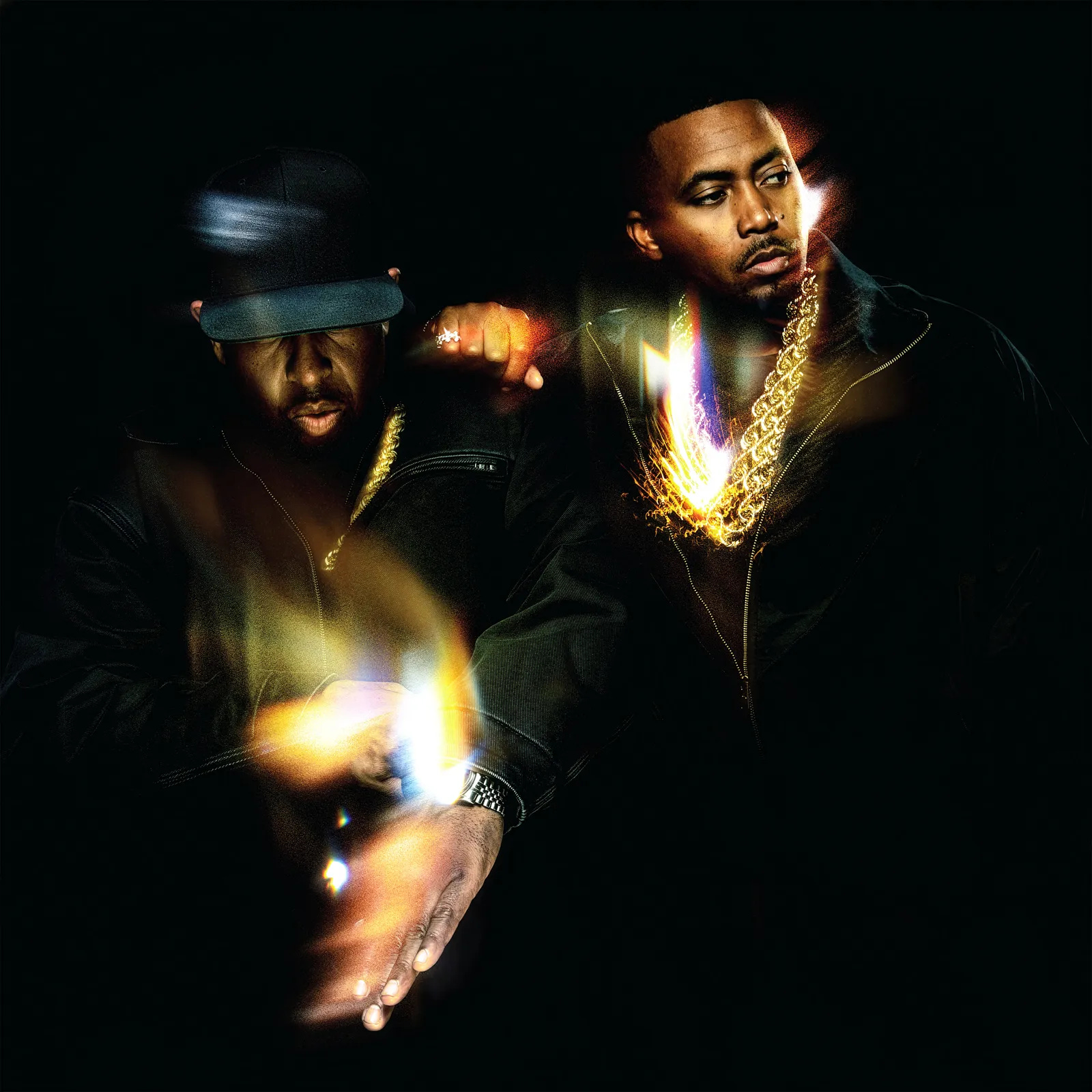
Nas and Premier have always reflected a particular New York rhythm. Premier’s beats are built from jazz loops, scratched hooks, and crisp drums; Nas’s writing anchors abstract reflections in concrete details. On “N.Y. State of Mind,” Nas described corners where fiends lean, and Sly and the Family Stone blares out of speakers. Premier recalls that he wanted the beat to match the intensity of Nas’s lines and that the track came together spontaneously. Their collaborations like “Nas Is Like” and “2nd Childhood” similarly capture the city’s mix of nostalgia and realism. Even when Nas raps about distant lands, his cadence feels tethered to stoops and street corners. Premier, a Houston native who made New York his home, understands how to translate those scenes into sound. Light-Years will likely continue this approach. The cover art released in November shows the two men in black leather with rope chains and Rolex watches, their jewelry catching the light. It’s a knowing image: part Dapper Dan styling, part sci-fi aura. They look like men who have traveled across time yet remain rooted in the city that shaped them.
That city has changed. In 2025, New York hip-hop extends from the experimental flows of Fivio Foreign and Ice Spice to the introspective poetics of MIKE and Wiki. The clubs where Nas once performed are now luxury condos or tourist attractions. The sound of New York is no longer defined by one neighborhood or crew but by constant flux. Younger artists borrow from drill, trap, Jersey club, and West African rhythms. They use TikTok to break songs and collaborate with producers worldwide. For them, the golden era is either a childhood soundtrack or a myth. Legend Has It… arrives in this context not to freeze the past but to remind new generations that there are foundations beneath their innovations. When Nas raps alongside Fivio Foreign on “Spicy” or when he invites DJ Premier to scratch on Hit-Boy-produced tracks, he enacts a conversation across generations. Light-Years will likely continue that conversation by integrating contemporary references with the boom-bap vocabulary that shaped them.
Once Light-Years arrives and the Legend Has It series concludes, what happens next? One possibility is that this mode of storytelling becomes a blueprint for other cities. The Bay Area could imagine a similar series with Too $hort, E-40, Souls of Mischief, and The Coup; Los Angeles could center on DJ Quik, Freestyle Fellowship, and others (it’s wishful thinking). Another possibility is that younger New York artists, having watched the elders claim their narratives, will feel empowered to frame their own eras before someone else does. Already, rappers like Joey Bada$$ and A$AP Rocky have referenced their city’s history while forging new sounds. The presence of Light-Years may encourage them to look at the long arc of their careers and think about what they want to say at 40 or 50.
For hip-hop fans (unless you’re one of those who like to pigeonhole Nas into making another Illmatic again), the album offers a chance to consider how we relate to the music that raised us. Nas and Premier are not asking us to live in the past; they are inviting us to see how past and present coexist. When Nas says that 2025 feels like 1995 but is moving forward, he is describing a feeling many of us share when we revisit old albums with new ears. The noise of the New York streets, the smell of vinyl and incense, the crackle of a needle on a record—these sensations are still with us, even as we stream music through apps and attend album premieres via livestream. The legend is not an object locked in a museum but a story we can retell and reshape. Light-Years will not be the final chapter of New York rap, but it will stand as a statement that the people who built the era deserve to speak first when its meaning is debated.
The anticipation around Light‑Years is not just about hearing Nas rap over DJ Premier’s production again. However, that in itself is exciting, but nerve-wracking at the same time, considering the latter’s soundscape outside of producing three songs on De La Soul’s Cabin in the Sky. It’s about witnessing two architects of hip‑hop close a narrative they helped start. The 2025 Legend Has It series has shown what happens when you give elders the stage: you get albums that grapple with grief, rebirth and legacy; you get a philanthropic commitment to preserving culture; you get a universe where comic books, films and music intersect; you get a space where a song recorded in 2006 can finally see daylight next to a verse written last summer. When the album drops in four days, we will hear decades of light converge. Until then, the image of Nas and Premier standing with chains and watches glistening is enough to remind us that the era they built still matters and that they, not outside narrators, will tell you why.
This was excellently written
I'm looking forward this next record. This will be interesting. What will Nas say at the age he's in at the highest level?