

James Anthony Carmichael Built the Records Everyone Else Sang On
He turned a Tuskegee party band into a ballad machine and piano demos into number ones, and his name stayed in the small type the whole time.
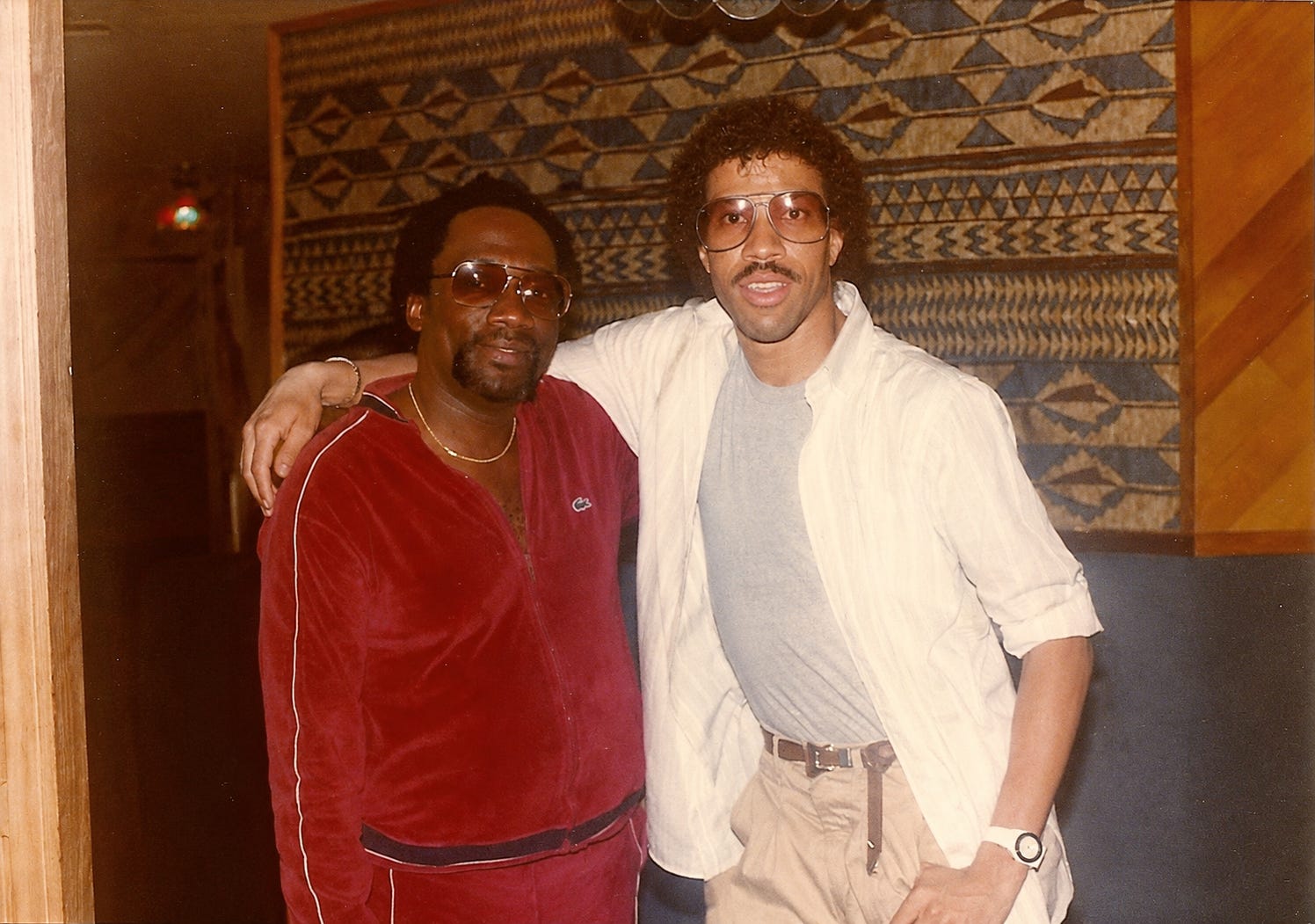
Long before Motown moved west and handed him a band to mold, James Anthony Carmichael was an arranger in L.A. He made charts for the Olympics and a Bill Cosby record throughout the 60s; the kind of work that leaves fingerprints all over a song and a writer’s name tiny on the credits. The habit stayed with him for the hits he produced as a Grammy winner. For the songs he and Lionel Richie constructed, the process always started with a cassette tape and a piano, the song a sketch before the rest. He would make a tape, hand it over, and say, “I hear it. Meet me at the studio,” Richie told liner-note writer Steven Ivory. The gap between a man humming into a tape machine and what ended up on the radio is where Carmichael lived. He died at age 84; his family announced his death this month, and said he had been retired since the early 90s and died surrounded by them.
The same people who cut “Brick House,” a hard-funk dance record sung by drummer Walter Orange, not Richie, also cut a 3/4 waltz: “Three Times a Lady.” A single producer sat over both sessions. When Richie brought “Three Times a Lady” to the Natural High sessions, he mentioned wanting to give it to Frank Sinatra. Carmichael persuaded him to keep it for the Commodores, and it became the band’s first number one pop hit. A Tuskegee party band with horns, who could have known that a producer’s insistence on keeping a waltz would give them their first pop hit, which then stayed there by sheer force of the same producer’s continued will? In 1981, the same two men were still writing hits with “Lady (You Bring Me Up),” a straight-ahead dance tune, the distance between these two modes and these two hits not at all apparent.
It is easiest to hear the arranging of the ballads: “Easy” moving at exactly that speed, strings and keys arranged so widely by Carmichael around the vocal, you could drift into it on a slow, steady breeze about ending a love without a fight; “Zoom,” reaching further for something a little beyond-it’s a piece with more of a float than a walking rhythm; “Sail On,” pulling a country tinge into a goodbye; “Still,” another pop #1 that leans back into the spare piano configuration he favored with the Commodores time and again. There’s a bit of Alabama in each; it’s the country phrasing and the church timing that pull a funk band toward what both men grew up with.
Then there’s “Jesus Is Love,” a gospel track that came out of the same desk, sandwiched between dance numbers. The church was always close.
A word of made-up, Caribbean-sound syllables, yet not any real Caribbean language, drifts through “All Night Long (All Night),” a calypso-flavored track that went number one on pop, R&B, and adult contemporary. It was one cut off of Can’t Slow Down, an album Carmichael nearly produced in its entirety after Richie left the Commodores for a solo career. “Truly,” Richie’s first single solo hit, had already proven the two men could make love songs work outside of the band; “Hello” from the same album asks, “Is it me you’re looking for?” “Running with the Night” is a rock piece, and “Stuck on You” sounds quite country. Carmichael and Richie tied in 1985 for Producer of the Year with an Album of the Year award for Can’t Slow Down. They are some of the few people who share production and writing credits on a Grammy winner, but on that particular project, each credit was given to a different person. Hits continued to follow; “Say You, Say Me” was a Carmichael co-production for White Nights, and it won an Oscar for Best Original Song.
Away from Richie, he produced Diana Ross’s “Missing You,” a ballad written by Richie for Marvin Gaye after he was shot by his own father. Turned into a hushed memorial track by Carmichael, he then went to work on “Am I Dreaming,” “Circles,” and “Send for Me,” all for Atlantic Starr, creating the sort of mellow R&B that served as wedding reception music for a decade. These never bore Richie’s name and had the same habits as the rest of Carmichael’s work: widely spaced vocals and a patience with slow tempos, a love for letting the music spread itself out.
The craft of it all was a kind of self-effacement. Carmichael’s production always sounded like the song, not like the producer-this is why his hits always feel as if they created themselves while plainly, on close examination, having done nothing of the sort. He left the business entirely in the early 90s, and though the music continued to sell without him, his stylistic signature was long visible in his work; the 3/4 turn of “Three Times a Lady,” the silly syllables of “All Night Long,” the expansive stretch between notes on the ballad where the singer could fill all that space. Someone heard each moment of that and then got out of the way so the singer could receive the applause.