

Jodeci, Every Freek’n Way (1995 BLAST Cover Story)
While DeVante Swing has long been regarded as the group’s main studio architect, most of the material was actually produced by Mr. Dalvin. We managed to catch Mr. Dalvin on the phone.
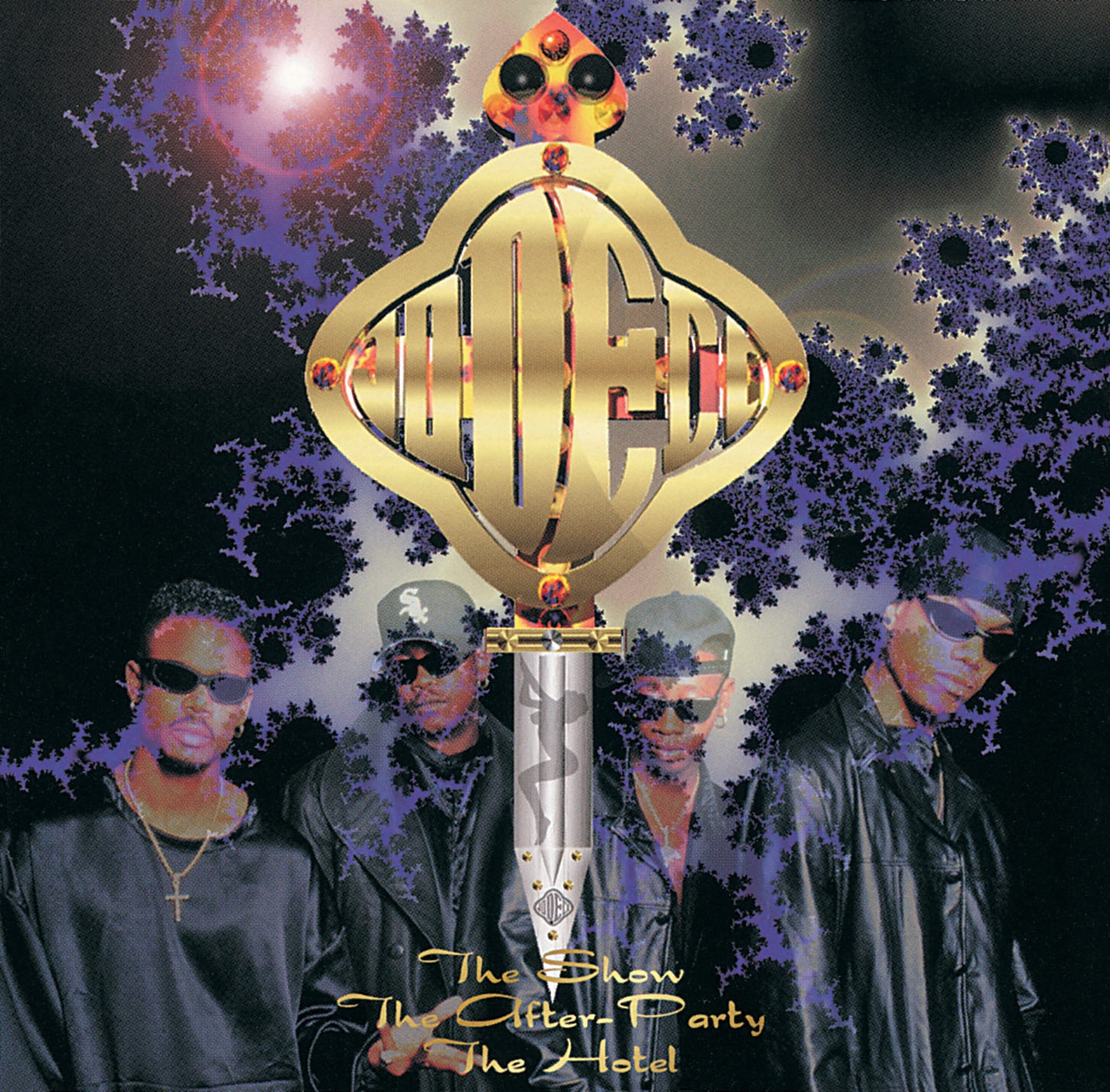
Translator’s Note: Interview by Tomoyuki Uchida / Text edited by Rei Ueno for BLAST in July 1995.Originally written in Japanese; translated into English for publication. All rights reserved.
“We just wanted to step back into the age of funk—go back in time and fool around with vintage gear.”
Jodeci’s new album, The Show, The After-Party, The Hotel, is one of those records that reveals deeper flavors every time you press play. It is, in the best sense, exactly what we were hoping for: a master-class in thick, indulgent production and daringly arranged ballads—yet what truly grabs you is the first half’s stack of funk workouts, rendered with a fat, full-bodied punch that feels absorbed straight from the source. While DeVante Swing has long been regarded as the group’s main studio architect, most of the new material was actually produced by Mr. Dalvin, and his suddenly broadened creative reach is one of the project’s biggest surprises.
We managed to catch Mr. Dalvin on the phone. The label warned us we had fifteen minutes, tops, so we made a long list of questions and raced through them. Even keeping the focus strictly on the new album, the list ballooned to more than thirty; after some brutal trimming, we still squeezed in about twenty. What follows is the unfiltered conversation.
“Isn’t it only natural that the essence of the music you personally love ends up spilling into your own sound?”
When you listen to Dalvin speak, you catch a whiff of Sly Stone’s rebellious perfume. He rattles off favorite artists from the ‘70s almost casually—anyone with genuine soul, anyone who could make the crowd feel. “First up is Prince,” he says, “then Sly, then EW&F, Stevie, Zapp—if it grooves, it’s in there.” Ask about producers, and he names Larry Smith, Roger Troutman, even Teddy Riley during the No One Else / Free at Last era. Dalvin isn’t merely listing influences; he’s showing you where his head has been.
Stevie Wonder pops up again when the talk turns to MTV Unplugged. “Remember how stripped ‘Lately’ was? That’s the vibe I keep chasing.” Dalvin says he wanted the new record to feel like a street-corner jam session one minute and a plush symphonic suite the next. “We’re hip-hop, sure, but the album had to stay rooted in original songs,” he insists. “We weren’t trying to jack anybody else’s beats.”
For Jodeci as a four-man unit, DeVante’s melodic sense is still the compass, but Dalvin believes the core of their appeal is the lead-voice chemistry between K-Ci and JoJo. “No matter how wild the production gets, those two bring it back to church,” he laughs. And while overseas writers keep tagging them as an “R&B harmony group,” Dalvin shrugs it off: “Call it whatever, but when we hit the stage it’s funk, straight up.”
What Does DeVante Really Love?
Dalvin pulls out the story of DeVante’s VIBE photoshoot, the one that showed a tattoo of a roaring panther on his arm. “That ink says everything,” Dalvin chuckles. “DeVante’s about raw emotion, but you have to notice the discipline underneath.” On this album, DeVante’s focus was “the spine”—arrangements that hold even the loosest passages together. “He’s got crates of ‘70s fusion LPs in the studio; he’ll drop the needle, catch a chord change, then flip it into something totally new.”
Track-by-Track Guide to The Show, The After-Party, The Hotel
“The Show,” “Bring On Da’ Funk,” “P.I.B. 4 Play,” “Pump It Back”
The opening quartet hits like a private party in Room 212—thick kicks, talk-box flickers, and synth-bass lines that ooze. Dalvin calls it “fun-2-nite music,” an intentional throwback to the all-night club sets they soaked up as teenagers.
Room 469 — “Can We Flo?,” “Zipper,” “Get On Up”
A slow-build funk suite: 80 BPM at the top, edging toward 92 by the end. Zippered breaks, clavinet stabs, a horn stab lifted from an old Mandrill single—then K-Ci swings in, stretching syllables until the groove snaps back.
Room 577 — “S-More,” “The After Party”
Nod to Memphis soul in the chord voicings, but the drums are pure Uptown. Dalvin says they wanted it to feel like Hi Records on 808s: “Play it loud enough and you’ll taste the wood grain.”
Room 911 — “D. J. Don Jeremy,” “Freek’n You”
A DJ interlude tumbles straight into the single everyone knows. The talk-box line came from an hour-long jam; K-Ci cut the final “Freek’n You” vocal in one take with the lights off, insisting on “no comps, keep it sweaty.”
Room 454 — “Inhermission,” “Time & Place,” “Fallin’”
The quiet-storm stretch. JoJo leans hard into his upper register over DeVante’s Rhodes washes; the drum programming is practically skeletal, every snare left to ring. Dalvin swears “Fallin’” was the most argued-over mix on the album.
Outro — “Good Luv”
A sunset glide—half-tempo, stacked falsettos, a Fender Rhodes vamp that drifts until it dissolves. The final chord lingers like incense and disappears.
“Of the four of us, I’m the one who parties the hardest—and I’m the one who loves funky sounds the most. So yeah, we aimed straight for funk.”
Asked whether the group’s split musical directions ever cause friction, Dalvin just laughs: “We fought like brothers back in the day, but now everybody’s cool with letting the best idea win.” He hints that Jodeci’s next move might involve a Crooning-Project concept showcasing outside vocalists, but quickly adds that nothing’s set in stone.
He circles back to the guiding principle: “On album two, people labeled us ‘Diary of a Mad Band’ for real. On album three, we wanted to prove we could still make you sweat.” Dalvin cites “Gin & Juice” as inspiration for how to keep songs loose yet dangerously tight. “At the end of the day,” he says, voice cracking into a grin, “it’s got to be raw, but it’s got to be right.”