

July 2026 Roundups: The Best Albums of the Month
With eighty albums cleared the bar in July, from Madonna’s dance floor to Fox BD’s living room, and the underground outwrote the majors at every weight class.
There are some months in which a critic searches for ten records that require defense. July 2026 was not one of those months. Four Fridays in succession served up enough albums to make the lineup grow rather than shrink over the course of the week. Pop icons unfolded after long hiatuses, archives were reopened after decades of closure, and a Grammy-winner returned home to produce someone else’s album. None of them wound up becoming the story of the month.
That said, here’s our best albums of July.
Thought Provokah, 82 Seward
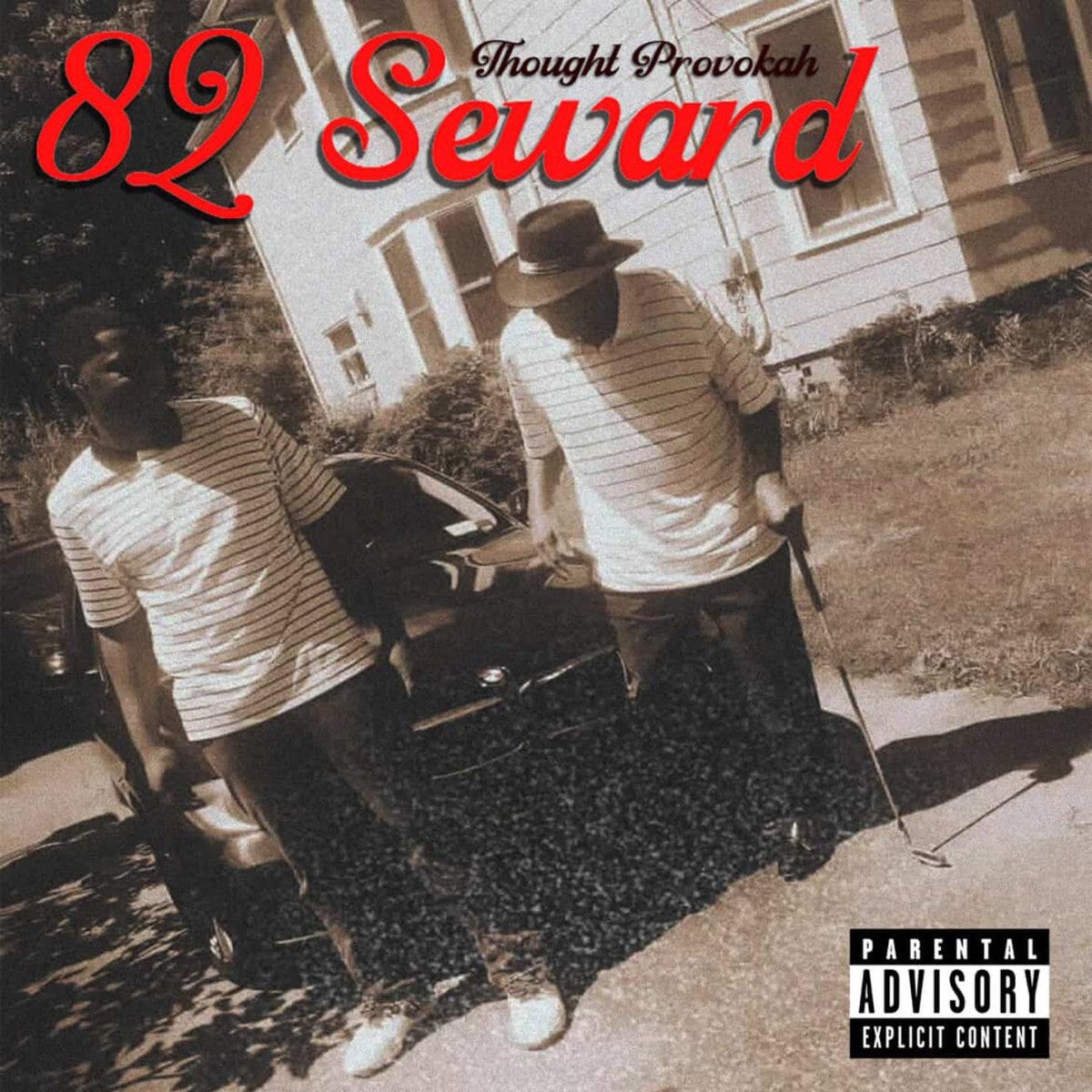
Being raised between Harlem and the Orange County communities north of it entails being familiar with two sets of names. The people of the block you’ve left behind and the people of the block you’ve settled down in, but most rappers who come out of this experience merge the two into one composite cast. A rapper from New York who tells us in his verses about his upbringing in Harlem, White Plains, Minisink, Middletown, and Port Jervis, Thought Provokah gave everyone first names. Auntie Anna, Miss Hinton, Father Dave, Uncle Charles, a godbrother called Mo, and two ladies whose first names are spelled letter by letter all come with a story, a task, a proverb, and an address. He knows which door they came out of and gives weight to the verse with such details.
He tells us the abodes he lived in on “Heaven Must Be What You Are,” starting with Metropolitan, a basement in White Plains, a place called Minisink upstate, and ending with Harlem, saying, “I ain’t had that for the first eight years of my life.” Talen Ted produced the song, and in the same verse he tells us how his grandmother prays and attends church every Sunday and how “Even with Alzheimer’s, knew God” while whistling out the window, saying it was time to sleep. And how his father is sitting in a van on Morningside Drive, losing everything due to a DUI and divorce, staying patient during a custody battle, taking parental rights, and moving them to Middletown. The precision remains unchanged even when he acknowledges someone directly. He bought the earrings she wanted on “Why the Ys” and will drop them off when he is in town, and they can watch Baddies together, although he hates the show. Insomnia on “Don’t Be Gone” has him sipping Remy and reminiscing, saying that he would have caught him with a CPAP and that he doesn’t need it himself. There is nothing at stake on “Church Street,” and he gives the same precise detail: a six-foot-three center who learned to post up and who never got selected first, playing games to eleven where you can lock him up for six, scoring on people he grew up with. —Quinn Baptiste
Tyla, A*POP
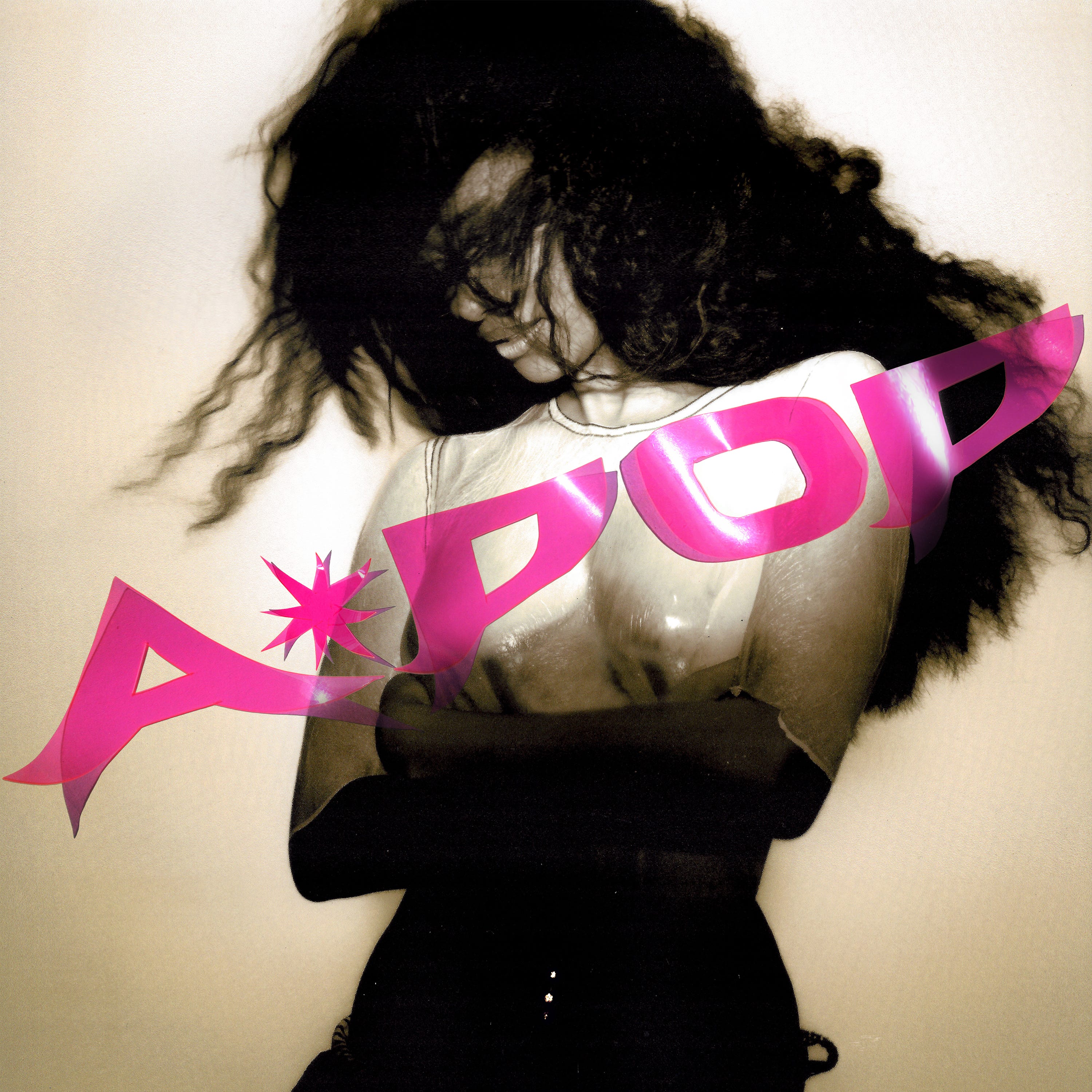
The biggest hint of what to expect from Tyla’s highly-anticipated second album was during a conversation with Rolling Stone in February. “I’ve been through it,” she told the interviewer, “and I feel like a woman now,” and dropped a question into the air: “What’s this Tyla now?” A*POP is her answer, and it is a stern one. Here she believes in very little; a man can tell her how much he loves her all he wants, but what she needs from him is proof, which can come in the form of crying, shopping, pulling up or, for example, tears. The words themselves are sweet, and she continues giving them away, but the lady singing these songs mostly wants her needs met without a doubt.
In the song “Is It Love” she tells a man that compliments lost their meaning a long time ago, “You know how many times I heard I was cute?/Can’t just say it, I need to see it, I need proof,” and the evidence she wants is the hardest to fake, namely tears, which must meet a standard: “Don’t mean shit If I don’t see tears in those eyes.” The price on “Chanel” is different, but here she demands to be shown as well: “How you say you love me? You ain’t put me in Chanel,” and during the hook she measures him as an unreliable investment, the kind who walks in confident, but falls for her and comes with a lot of baggage which costs her. In the song “That Girl,” she buys herself something expensive, like diamonds, watches and a trip to somewhere where her phone won’t work. Quality control, in other words. She has heard these words before from men who could not offer her anything else. —Tunde Albright
Davion Farris, Alchemy
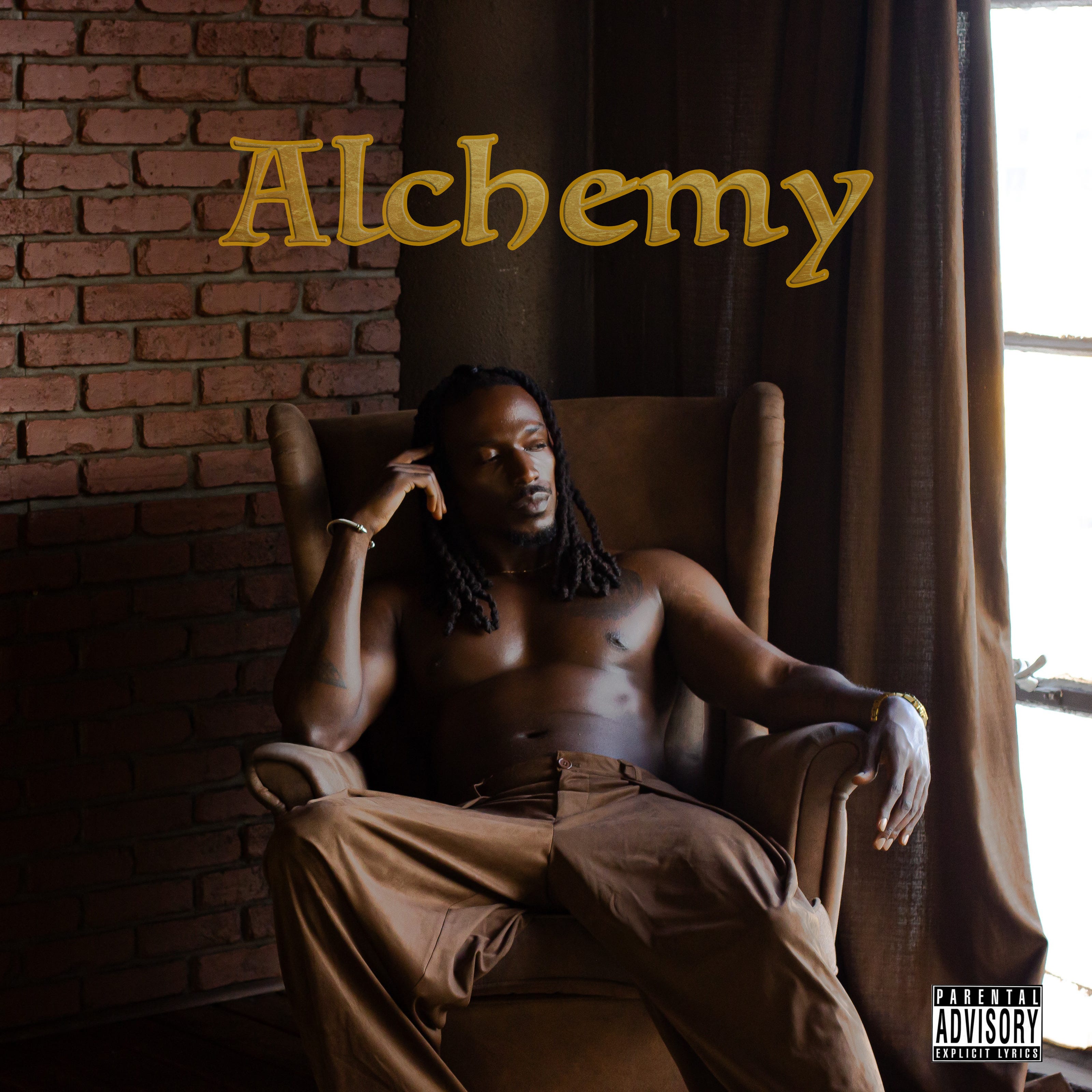
The Gouché-Farris household in Inglewood lived by music the same way other households live by their family trade. Jackie Gouché-Farris, a seasoned backup singer and minister of music, raised her children in the midst of it, and two of her sons, SiR and D Smoke, make albums under their own names while their eldest son remains behind the glass. Davion Farris went the songwriter route instead, years and years of session work culminating in a Grammy Award for co-writing “Falling in Love” by Lucky Daye and signing a record deal with Lena Waithe’s imprint Hillman Grad via Def Jam. Alchemy is him finally taking center stage and singing the material he chose to keep.
There is no such thing as a casual encounter in “Fiendin’.” Farris insists he was never trying to fuck, and that he told her he wanted to make love, but a few lines down he begs for a lie she can remember and suffers through withdrawals every time she is gone. The last verse yanks the pin out of the entire affair, Farris confessing “I can’t get caught fallin’ too deep/’Cause if I do then I won’t leave.” He works that same trope in the darker “Down Bad,” singing her as the drug and the plug, wondering why he cannot just sober up, offering his overdose as an escape plan if he fails. Ray Vaughn finds comedy in that addiction in the only rap verse of that song: “Since you blocked me, I can’t get over the counter like medicine.” He blames a voodoo doll, or whatever she gave him with his spaghetti, and the punchlines help him break away from verses Farris writes dead serious. Farris ends it sadder than either of them, conceding “A castle don’t hold up in sand,” and leaves the beach altogether. —Noura Haddad
Orquesta Akokán, América!
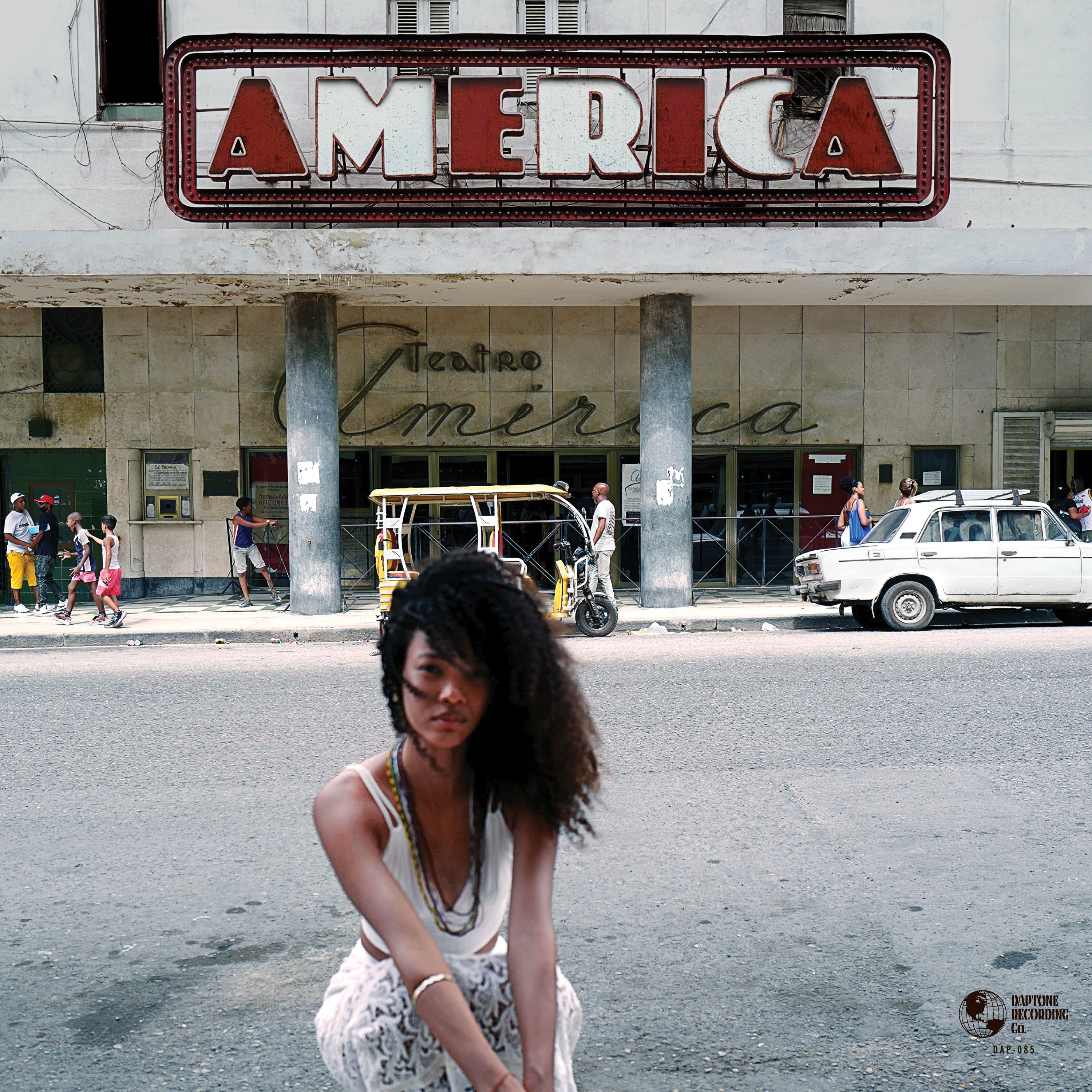
Akokán means “from the soul” in the Cuban Yoruba language. And the mambo band that took it as its moniker recorded its first album at Areíto, the old EGREM studio in Havana, trying to reproduce the vibe of Benny Moré and his “banda gigante.” Most of the musicians in Orquesta Akokán now have a home in New York City, and América!, their fourth album, continues following the same tradition, recorded live to tape at Penrose Recorders with Gabriel Roth engineering and Jacob Plasse producing, with Michael Eckroth writing the arrangements. There are two new singers taking over the mic once owned by José “Pepito” Gómez. Miriam Elhajli and Carolina Oliveros of Combo Chimbita bring the rough passion of Celia Cruz and La Lupe to the rare territory for a mambo album, dealing with the loss and upheaval of crossing the border and singing in a new homeland.
Brazilian influences are felt in the arrangement of “Girassol,” opened by trombones, handclaps, strings, Brazilian jazz blended into the strut of the mambo rhythm, with the words referring to the people who continue getting moved by the upheaval. There is even a flute break in the middle of the song. Elhajli wrote her own lyrics for the syncopated “Nadie Me Toca Igual,” a song about the struggle to maintain identity when the geography below changes, then slowing everything down with the bolero “Aprendizaje.” Mireya Ramos and Papote Jiménez take turns singing “Cha cha cha Ooh la la” with the cha-cha-chá rhythm and the orchestra heats things up with “Me Tienes Sin Cuidado,” again all done live to tape just like the Havana bands of the ‘50s used to do. The horns sound like they're right off the reel. —Rosa Delgado
AJ Suede, Atomic Justice

A Seattle-based operation conducted out of a single small room, Knowhatimean consists entirely of the work of the same man. AJ Suede wrote, chopped, rapped, mixed, and mastered these beats and signed his name using the moniker Suede God. With Atomic Justice, he raps in short blocks of thought-units more like statements than a performance, a man minding his own business at company headquarters. He thinks the ‘80s must have felt something like this, with Uncle Sam as the plug. “Able to be Kane” is how he takes that feeling and applies it to the present: “Terabytes of muscle memory/The new cocaine is RAM,” a star with bars instead of stars and stripes, protecting the legal monuments to keep the textbooks from being erased once history repeats itself. The loop used for sampling hits harder than in any surrounding song, and he adds quick line returns to it, regretting the pre-pandemic prices of chicken wings and wondering why the hateful comments only come from people with scripture in their bios. “Thrilla Bark” connects the same resentment to the power grid and makes it enough to recharge a Tesla, stored due to economic policies that kept us underwater, a kid raised on meritocracy receiving pay-to-win instead. “Wrawng” is the anger expressed the most directly and minimally, a verse consisting of pure Monday-to-Monday declarations set on a minimal pocket, though he keeps the vow worth keeping in it: “Pressure won’t force me to kneel/But pressure might force you to steal.” —Koda Lin
Syd, Beard
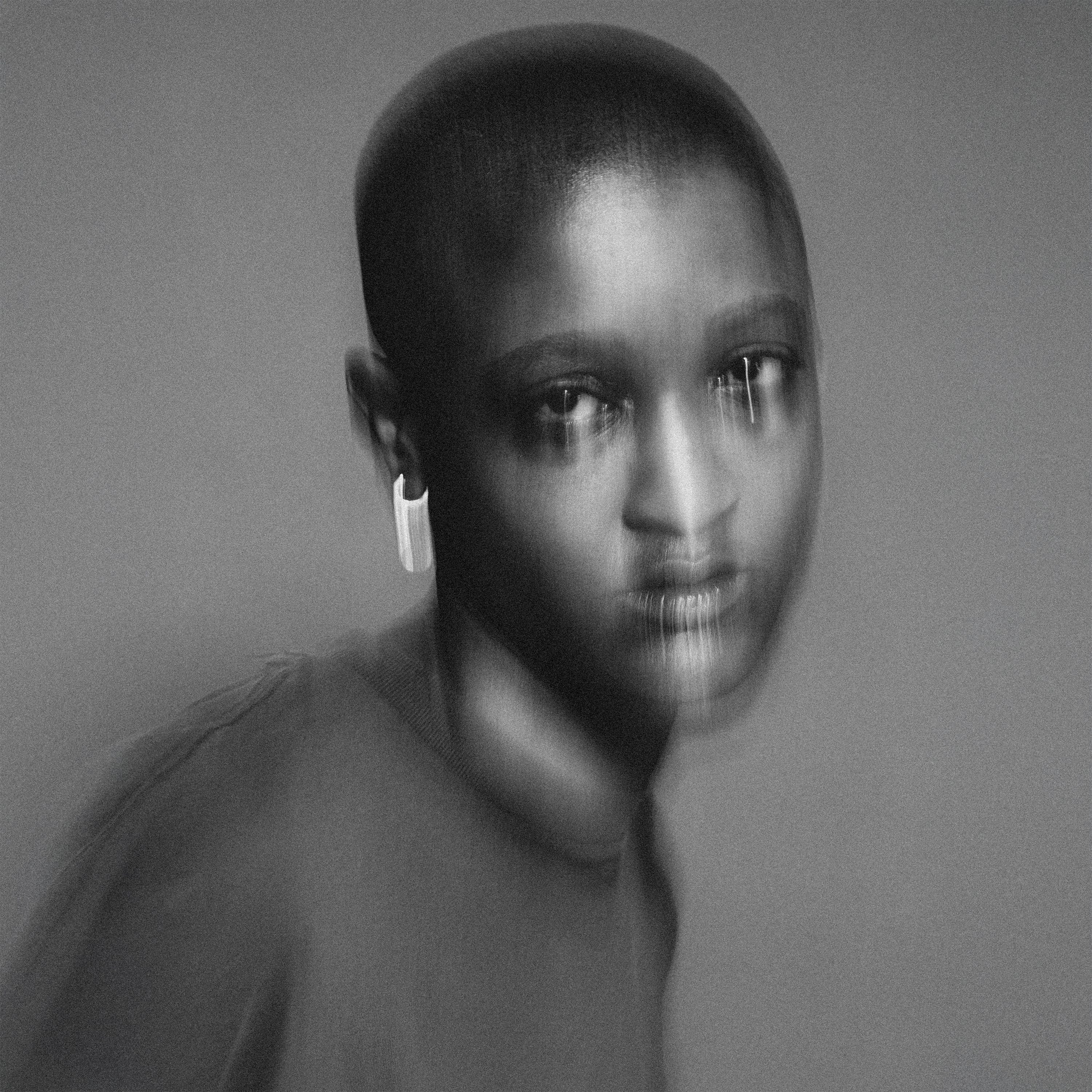
Circus posters sold the bearded lady as a cautionary tale: the woman who lost touch with her inner policeman and wound up on stage with a tent and a ticket price. Syd examined the peach fuzz above her lip, that thing “society has always taught me to hate,” and allowed it to grow. Into a career spanning two decades and featuring Odd Future sessions as a teenage engineer, fronting the Internet, and a Grammy for co- writing Beyoncé’s “Plastic Off the Sofa,” Syd unveiled her new LP, Beard, not so much a spectacle in her case, but an anomaly and an outlier. Hard to compare.” She calls it “a snapshot of what my life looks like right now,” and that shot is domestic: a home, with the wardrobe of another woman, a holster at her waist, and Hennessy with no mixer on the shopping list. Her seduction begins behind closed doors, at the thresholds, at the moment when the coat hangs at the door.
The snapshots in the opening “Walls” are framed in quick, short-phrase vocals, above soft keyboards and a rounded synth bassline. She keeps breathing between each line while she begs the guarded woman to “Come on over, let me give you lovin’.” It becomes more literal on “Closet,” when she makes room for someone that she otherwise would throw out: “Want my space/Not today/I feel the opposite,” while CUBE responds in his verse, hoping that a few hoodies go missing and there will be more reason to visit. Over deep synth bass and a drum pocket that remains behind the vocal, she plays armed bodyguard on “My Love,” keeping an eye on men surrounding her girl and offering security detail: “Holster at my waist/Just to keep them off you.” The promises ascend from a safe place to stay to first degree love, “If I go down I’d smile in my cell all day/‘Cause you’d know I love you, babe,” and she sings the most extreme vows with the same ease as the sweet ones, slow jamming to the long-standing R&B tradition of loving someone (despite the production being Bossa Nova-inspired) with such conviction that it amounts to a crime. —Noura Haddad
Gangrene, Better Than McDonald’s
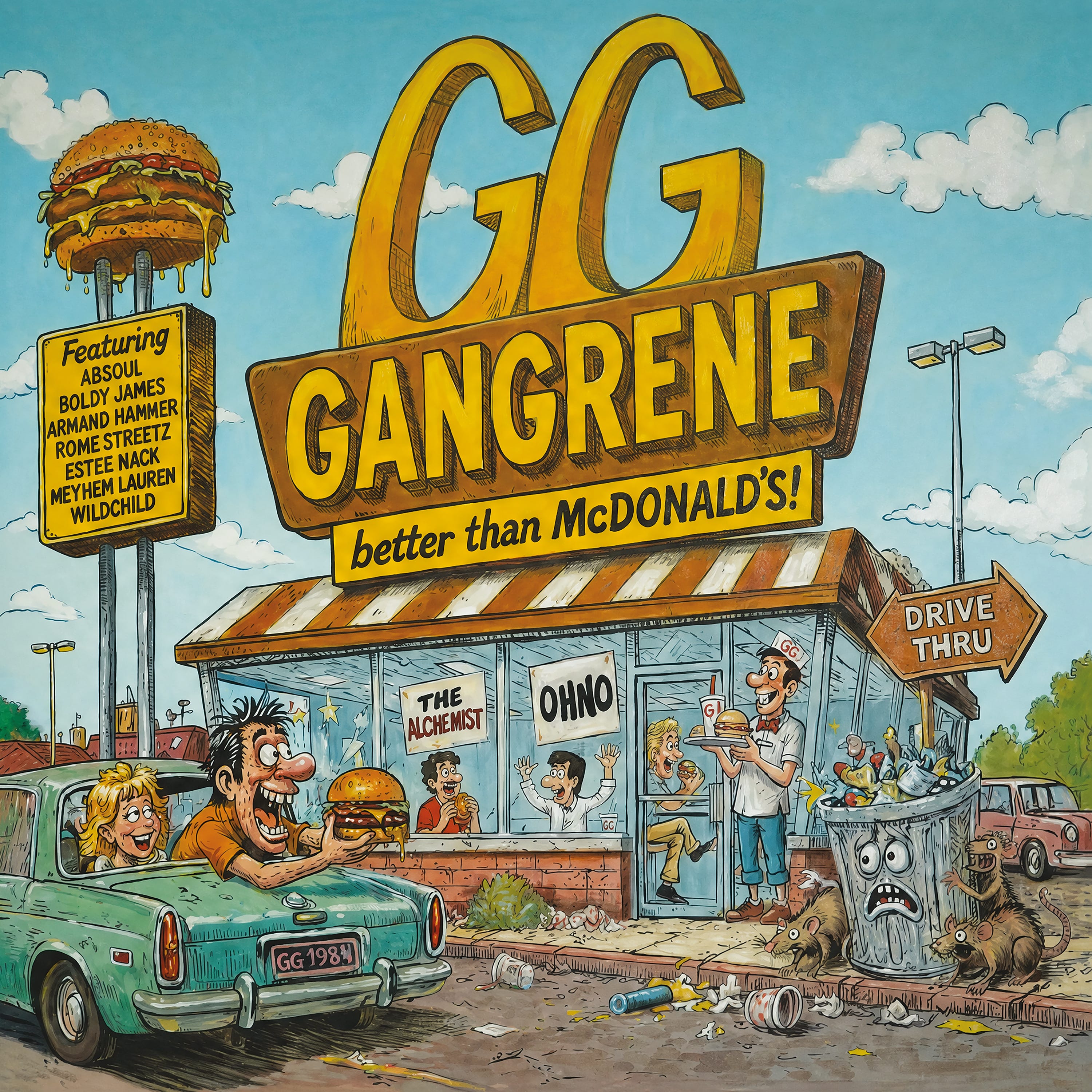
The two titans of underground rap didn’t take this long to follow-up with 2024’s Heads I Win, Tails You Lose. Oh No was brought up by Oxnard in a home filled with records, a younger brother to Madlib; the Alchemist was afforded his first rap gig with the Whooliganz in Beverly Hills by his uncle DJ Muggs. Together AS Gangrene, they make up half the underground rap production, and the meeting the two keep with each other is the place where loops get chosen on the basis of how ugly they are, and the two rap stoned, angry, and pleased with themselves. They do this throughout the entire length of Better Than McDonald’s, speaking of food, beef, and murder over samples no sane producer would ever give a client, and cut each guest a beat that is tailored to his voice (beyond the eye-rolling album cover).
The contrast is the client work, the smoothed-over daytime sound both men put behind them once stepping into Gangrene. The Alchemist’s beats carry a sense of heaviness and detachment from the listener, and his own rap is delivered in dry, precise chunks. Over the rising organ melody of “Note Ascension,” he crowns himself “the most dominant piece on the chessboard” and “runs cold like when you turn over the pillowcase,” while Oh No answers in rubber boots and janitor fashion, prepared to clean up the mess, feeding the dead rivals’ peanut brains to circus elephants. The Alchemist takes “Muscle Head” even further into its minimalism with a single low loop and does his seasoning by himself, being Jimmy Spice, adding pepper to things, jamming hard rock for a world he perceives as disco. Oh No, on the contrary, builds with a little more punch. His beats are made of jumpy mid-range loops and busy drums, and “Run Downs” is the pick of them, an irritating phrase playing over a static snare pocket while he cuts out the stones from the quarry bedrock, leaving a rival’s head hanging in the wind like Ned Stark’s, and clearing fiends like NasoneX. The Alchemist is there and sounds personally offended about something, complaining about “too much pretty and fluffy things in rap” and loosening his cufflinks just like Frank and Sam did before they slapped the heck out of him on the Tropicana. —Owen Baptiste
Brian Ennals & Blockhead, Boatshoes
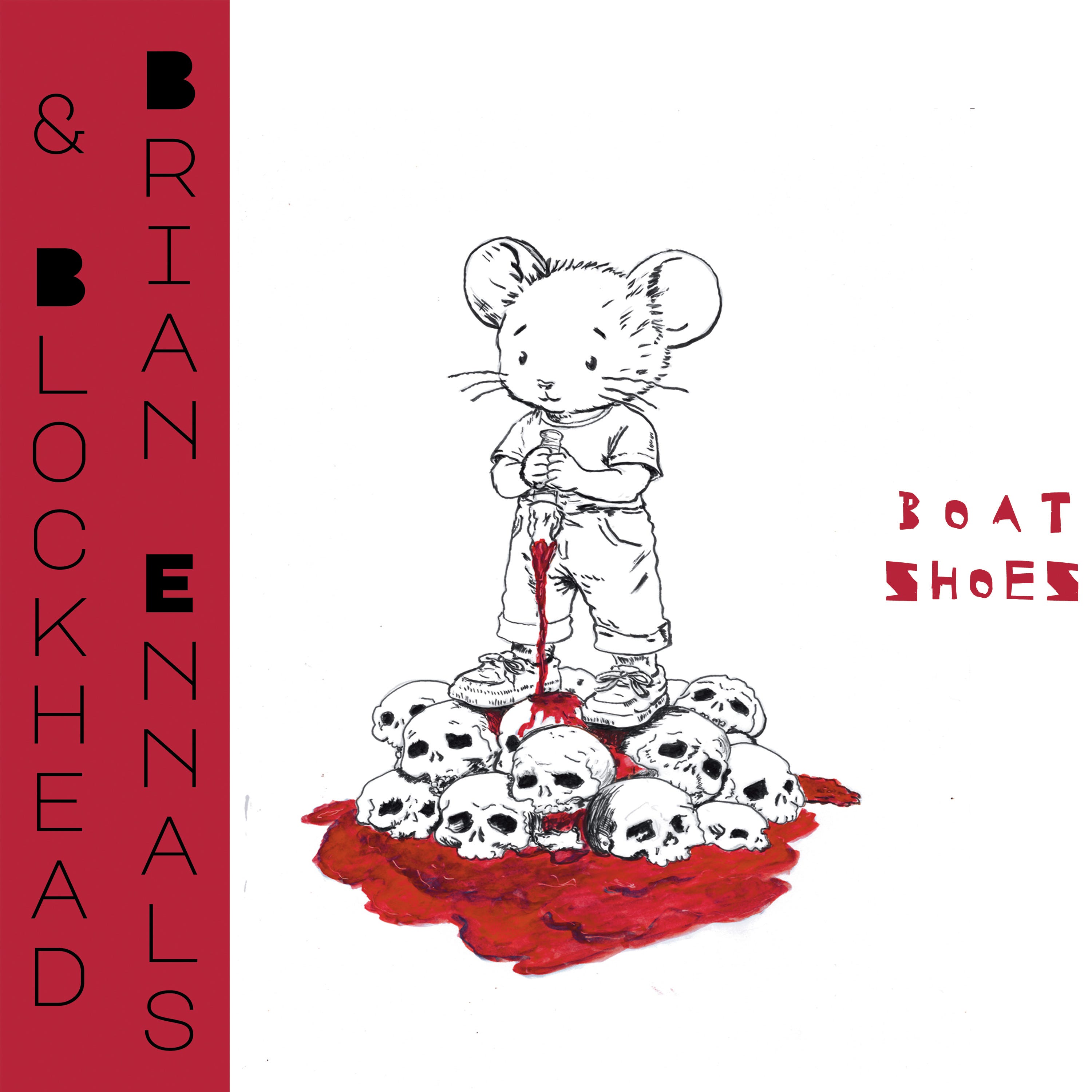
Severn, Maryland, is a bedroom community in Anne Arundel County about 16 miles south of the city of Baltimore. Typically, a rapper from Severn would be interested in trading up to Baltimore, but not Brian Ennals. Born in Annapolis, Ennals grew up in Severn and attended Howard University. As a rapper, he made his mark along with producer Infinity Knives on three ferocious, hard political albums full of cheap liquor, nasty vitriol and fierce, hyperactive lyrics. But on his partnership with producer Blockhead for Boatshoes, Ennals finds tracks that are way brighter and more funky than he is used to, and the subject matter remains pretty similar.
He just left rehab, by his own telling on “Roll Call,” and the first thing he’s going to do is get high, the second thing lie, and tell everybody he loves he really tried. The chorus is a self-introduction with a razor in it: “My name is Brian/And I’m from Severn/And I hate centrists/And I hate reverence.” Hell might be real, he figures, but there’s no heaven, and his son is going to hear it before he turns seven. The confession that cuts deepest is smaller than any of that, his ex’s new man being a hell of a guy who pays her rent, takes her shopping, and isn’t too drunk to fuck. He’s still smoking ports on “Wonderwall,” dreading the day his mother grows old, and saves his best writing for the little girl on “Shyne.” She is a celestial being that pierces through the clouds; after the apocalypse, she’ll still be around and will have come back stronger. Ennals asks to be with her for as long as she’s around. That’s it. The rest of the song is him laying out the harsh realities of his life: “Death is easy as fuck/It’s hard being alive.” He’s been numb for so long that he thought numb was a good thing; he thought that was healing. But his mother once told him, “Slowly, the time don’t stop,” and so Ennals has taken to embracing the surreal, the dreamlike quality of life. He’s a fan of Salvador Dali and on “Shyne” he’s four-wheeling towards the light. It’s as close to hope as Ennals gets. —Miles Everette
Lido Pimienta, Caribenya
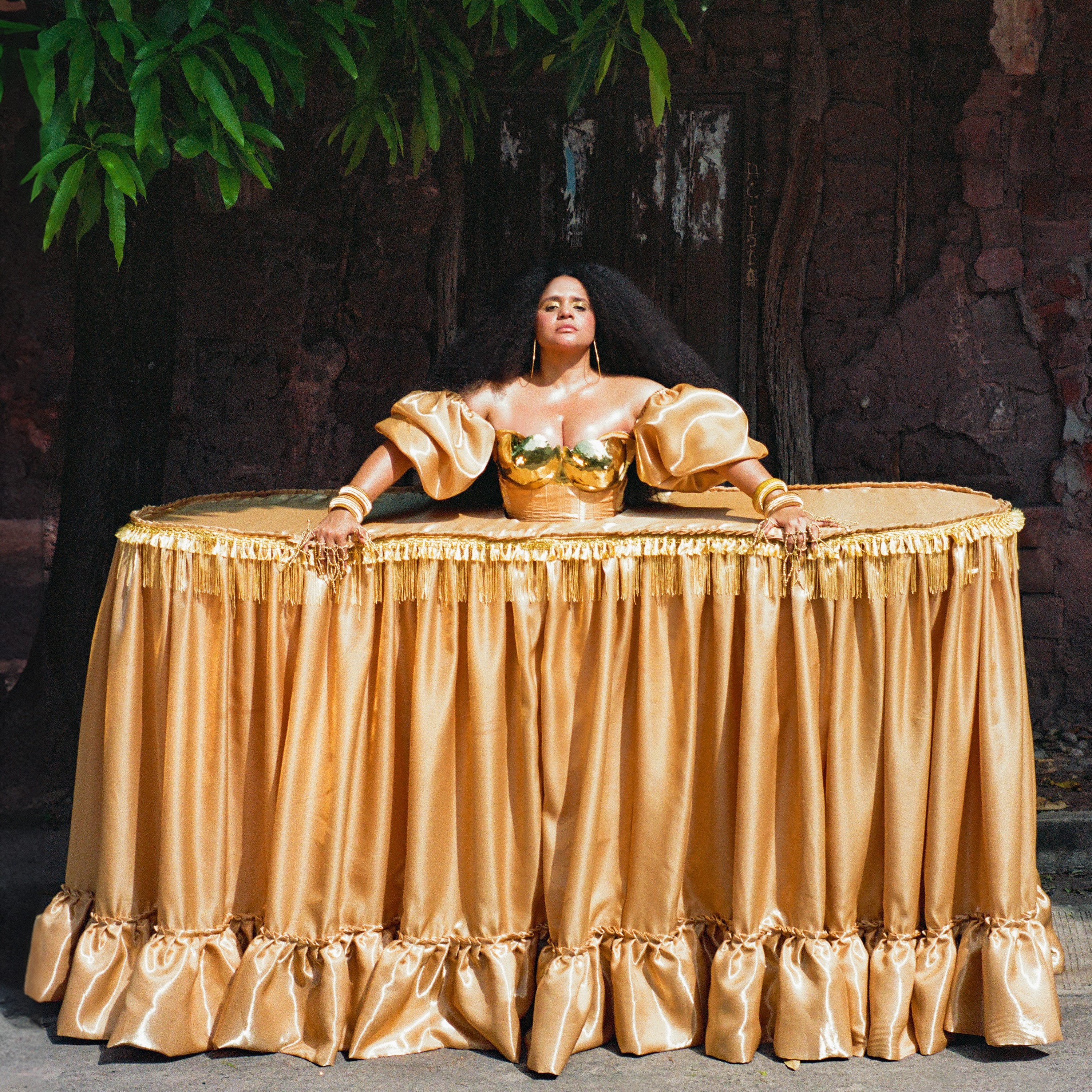
Someone told Lido Pimienta that classical albums are not for her, so she wrote one. Gregorian chant song cycle built out of the ballet score in which she became the first woman of color to compose for the New York City Ballet. This birthed last year’s La Belleza, which the cumbia singer from Barranquilla called impossible one, something only Europeans were supposed to do. Caribenya is what she made after the point was proved, in her Barranquilla-Toronto home, with production of Pedro Canale, aka Chancha Vía Circuito, and guest appearances of such bands as Mexican cumbia band Turbo Sonidero. The title blends “Caribe” into the name of Enya, the Irish recluse, whose music she listens to when writing, and the word contains her invitation: “you can just knock on the door.”
When it comes to “Marea,” she sets her own terms and names them in the second person, “Págame las uñas,” pay for my nails, take her out, buy shoes for her mama and for her brother who goes to school, el que va al colegio, and the kiss follows. She plays herself smaller when this man comes in, the prettiest one among all the muchachas from the place where, as she casually mentions, nobody is visited, and the trade consists only in occupying and trafficking. And then the bridge stops being flirtatious: “Váyanse de mi playa, váyanse de mi isla bonita/Váyanse de mi casa, váyanse de mi isla bonita.” Leave my beach, leave my house, leave my island. Pimienta mentioned “La Isla Bonita” by Madonna as the earliest example of Anglo pop borrowing an island it never lived on, and now she takes this phrase back and puts it like an eviction notice. “Beaches in Jamaica are not open for Jamaicans but for hotels and white tourists,” she says of the world behind the song. —F. Querishi
Corey King, Change the Wind
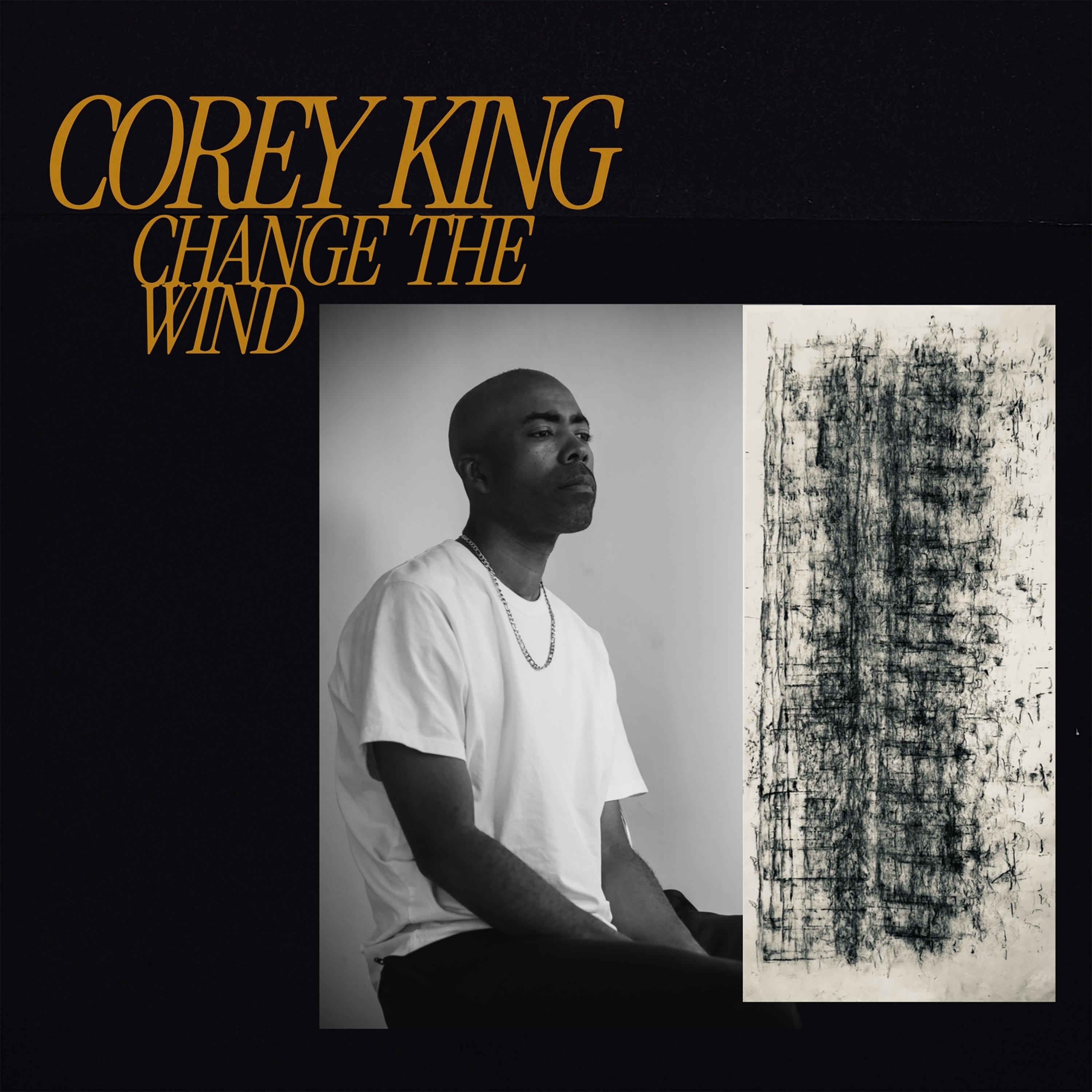
There is no secret that Houston’s High School for the Performing and Visual Arts fed many musicians to New York City for decades, but Corey King happened to be one of them who got there after attending the school as a trombonist and already having two educations, the church of his family and the jazz he learned to play the horn for at the age of eleven. For a while Corey King was everybody’s side man, touring or recording with José James, Christian Scott aTunde Adjuah, and Iggy Pop, collaborating with Gil Scott-Heron, Milton Nascimento, Bonobo, and DJ Premier among others, and getting a Grammy award for his co-writing and production on Esperanza Spalding’s Songwrights Apothecary Lab album. Change the Wind is his third solo album and his first since he became a father, written in isolation during the pandemic and constant touring, and his daughter serves as the inspiration for the record.
“R.M.K.” stands for his daughter, a song born from her birth and health issues she faced, with King singing “My soul has arrived” in a whispery tone. All of the collaborators King backed up for years pay back the favor, Esperanza Spalding performing “Worms” on her upright bass while Urian Hackney drums, Takuya Kuroda playing fat and funky trumpet lines on “Off the Embankment,” and Morgan Guerin producing “Did We See That Coming” with his saxophone, bass clarinet and keyboards. There is a certain Krautrock tension underlying the album, and King surrounds his whispered vocals with horns, post-punk guitars, hazy keyboards, and the spectral harp parts. —Imani Raven
Madonna, Confessions II
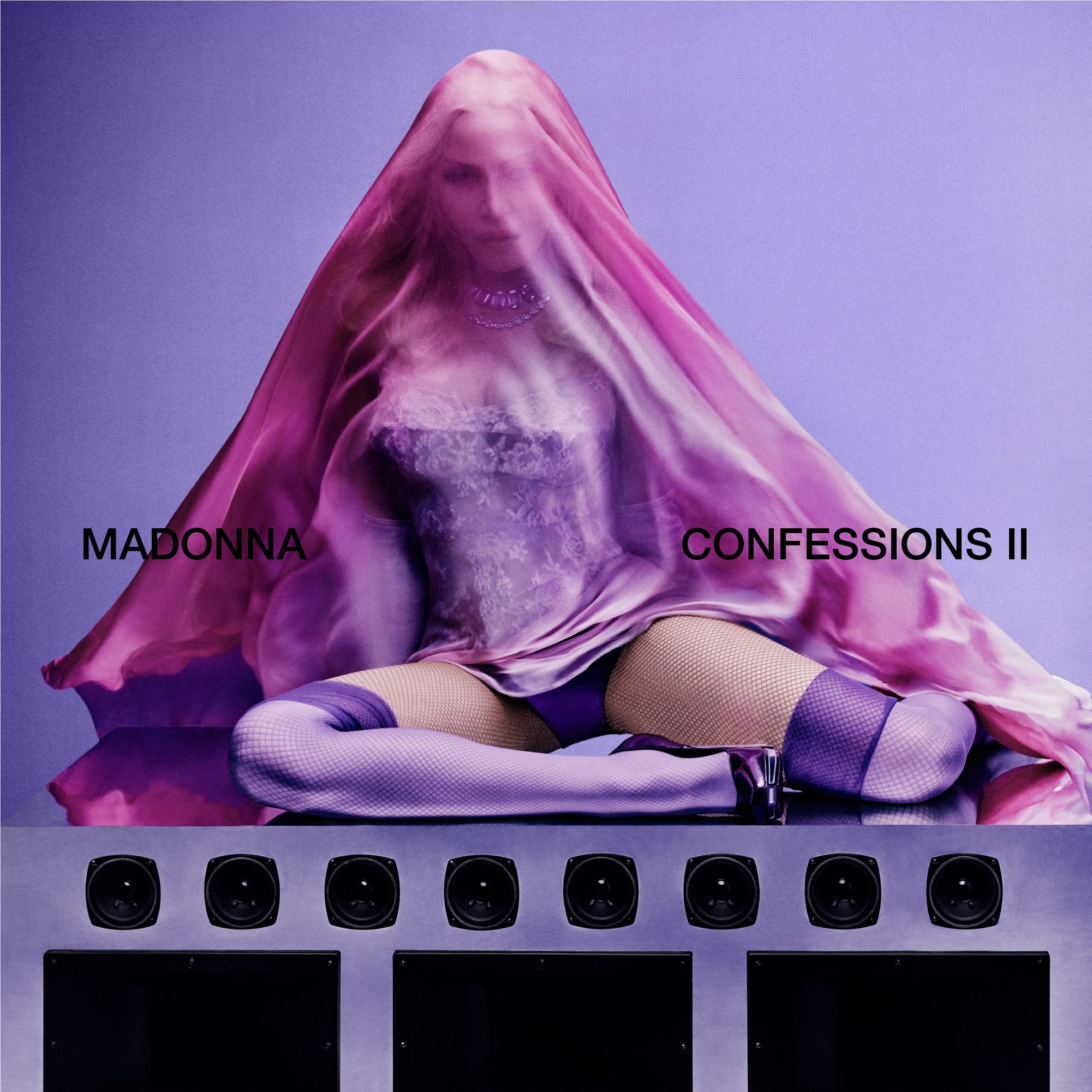
Madonna, the 46-year-old dance-pop lifer with the worst reviews of her life, secluded herself in Stuart Price’s London home studio and spun a continuous mix on shedding sweat beneath a mirror ball in 2005. Confessions on a Dance Floor was her last unquestionable hit, and she spent the next 20 years chasing its tail with EDM collaborators, releasing multiple forgettable albums, a side trip to Lisbon, and a greatest-hits tour. Price has returned for Confessions II, picking up the original’s thread, but tweaking one detail: the woman dancing on the floor is 67 now, and her deceased partners, exes, and her daughter have joined her.
Her recently departed brother is given the most vulnerable material. Madonna has said “Fragile” began after a last conversation with her brother Christopher Ciccone, who had been estranged from the family for years before his 2024 death. The words are stark: “We shared a name, a home/We shared a fragile bond/Now you’re gone.” She invites him into her dreams to carry out specific tasks, “Don’t forget about me” and “Don’t forget to be happy,” the grief organized into a to-do list. She goes ice-cold on “Betrayal,” writing a verse like an excerpt from a deposition: “When the book of love is written, I am the writer/And by the last page, you will not be mentioned.” She tells an off-stage addressee, “You’ll never take my mother’s place” and then melts mid-dance into something stranger, admitting she hated him once, then loved, “forever ‘til the end.” She gets deepest on “The Test.” Madonna is calling Lourdes Leon “Little star,” is perched on the stool she’s put under the strobes and announces “I wish I knew/The pain I caused.” Lola, as Lola Leon, is in the other verse: “I trace the line of what you have sewn/Keep my own design.” The two of them end on “You made me whole when I was broken too,” two careful singers around an unavoidable apology. After forty years of framing herself, Madonna gives the microphone to the only person in the room she can’t chassis, and it is all better for it. —Charlotte Rochel
Juicy J, The Clock Don’t Go Back
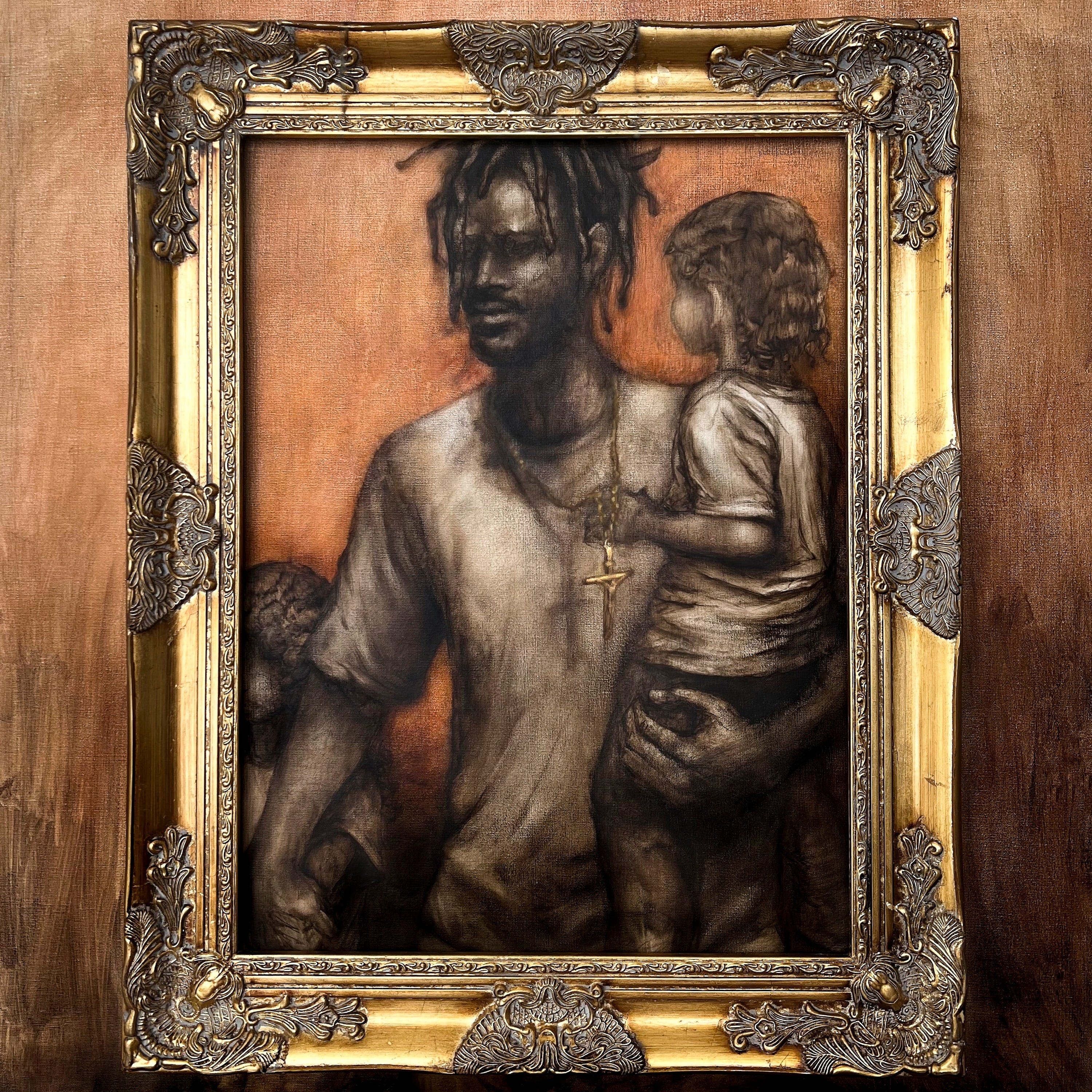
The form was already in place on Ravenite Social Club and Caught Up In This Illusion. This band talks its way through its song instead of rapping it. Produced and performed by Paul Cornish, with Keyon Harrold on trumpet and Georgia Anne Muldrow on synthesizer, The Clock Don’t Go Back sees Juicy J step back from singing himself to let others take the talking over, allowing him to remain close enough to each singer to say what happened to each individual in the song. On one of the most powerful songs, “The Addiction,” the cousin who was able to provide for his girl had no problem before she caught on that the bills were late. He bet on sports games and doubled down to get out of the debt, which resulted in the lights to his home being turned off. With piano and trumpet coming into play, “Beautiful Disguise” goes in about politicians selling hope to the people while buying power over them, children fleeing from bombs in their cities, and mothers who cannot understand why their children have to die. In one verse, the rich man contrasts with the man of color. In another verse, he asks what would happen if love were to become more contagious than hate, if kindness were to triumph over people’s natural tendency to repeat their mistakes, and if people could feel others’ pain personally. With spoken-word instead of rapping over Paul Cornish’s six-piece live band, he fills his third jazz album with character studies and comes back surprisingly with real detail. —Daliah Green
Juicy J & Project Pat, Dem Goats
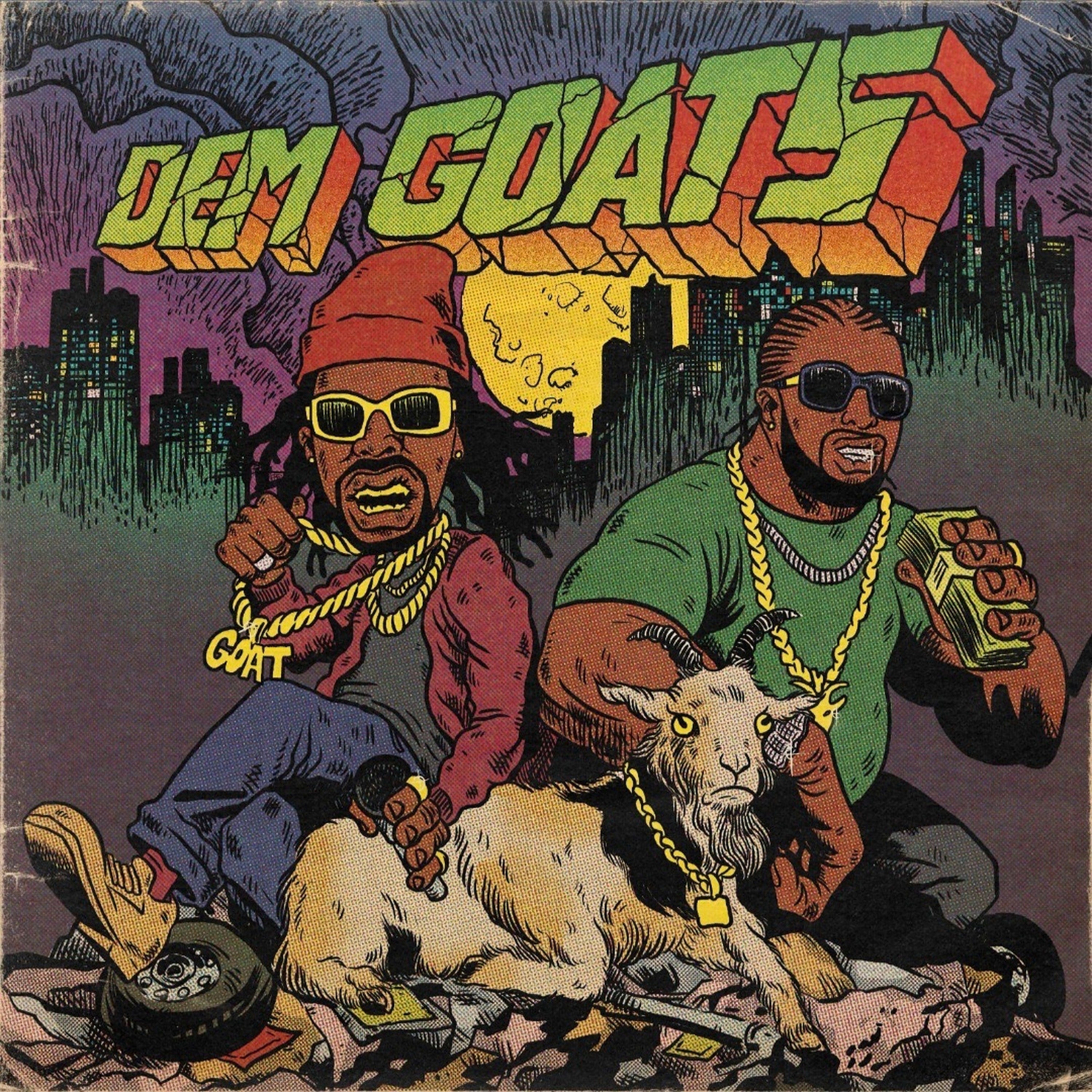
For decades now, North Memphis has been exporting the same pair of voices of one pruned into chants and ad-libs, the other lagging into its half-step behind the beat. Juicy J founded Three 6 Mafia, while his older brother Project Pat ran parallel to the dynasty in Hypnotize Camp Posse, cutting Mista Don’t Play into Memphis scripture. They both are past fifty, and they’ve never recorded a collaborative full-length album (outside of a mixtape) before this one. Project Pat talks in the intro, doing TV shows, radio interviews, podcasts, and prison tours, leaving the gangsta rap for the young niggas heading for the penitentiary. Project Pat still places his lines in a hair behind the drum; over the dark piano loop and a hard bounce of “Still the Same,” that lag becomes a highway of the same gravity as his repentance, made, he says, before federal agents got him into their net. Meanwhile, Juicy J works the opposite pocket, chant phrases and ad-lib room, warning that the biggest threat to your survival may turn out to be your next of kin, trying to save young niggas from going to the cage and the grave. He drops into the host mode on “Southern Hospitality,” arguing the crown is long overdue since all this new shit sounds like him; Project Pat supports the claims, there’s a lot of cappin’ in this rappin’, most sample artists should crown him too. The voice of Gangsta Boo, who died in 2023, runs through the last part of the song, chasing away playa haters with her .32, which will put you down to the floor. —Fallon Reese
Felix Ames, Did the Rain Stop?
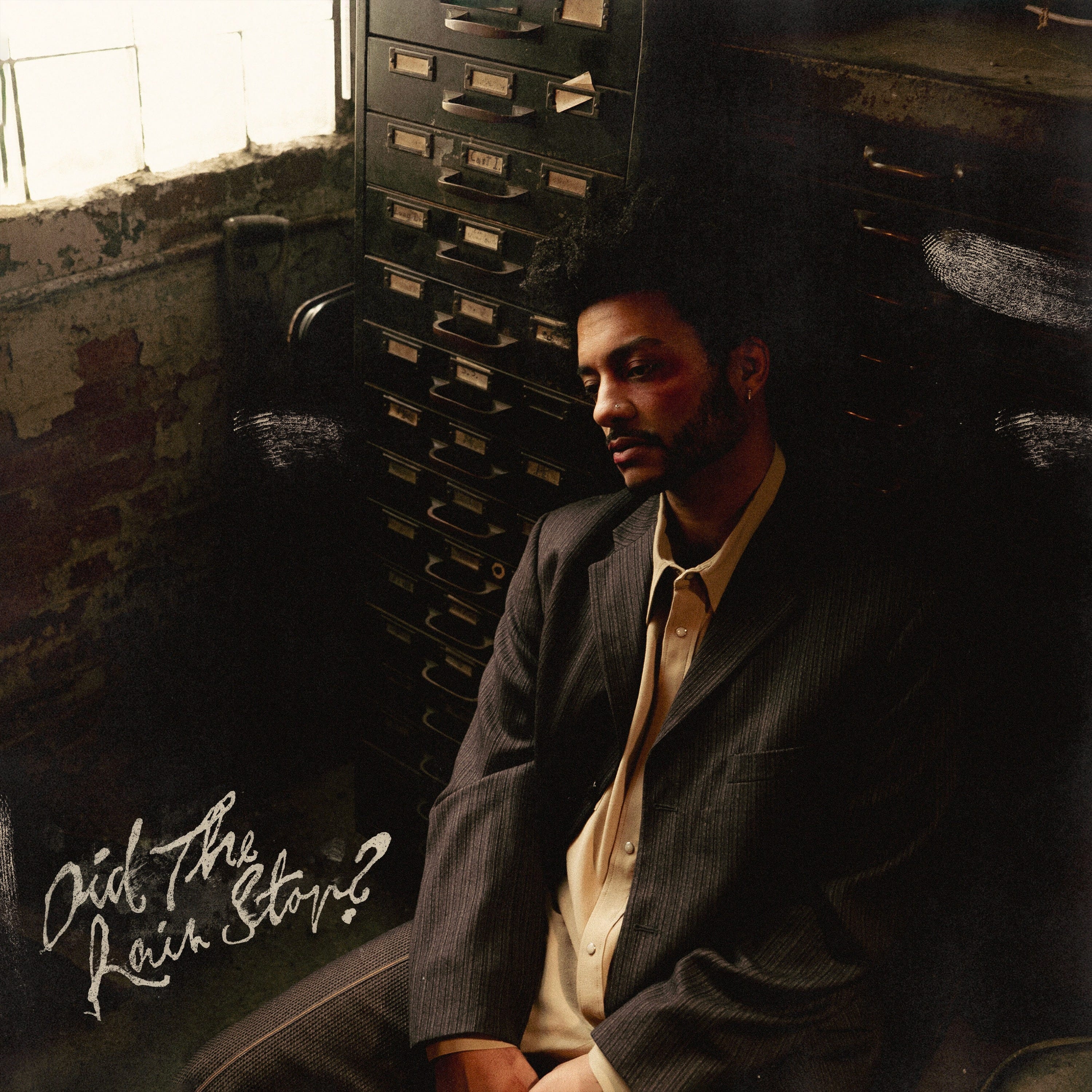
Felix Ames set up his recording studio in his mother’s basement during a period when he didn’t travel much, and the songs he recorded there became 7711, one of the first efforts in his discography. The equipment remained modest throughout. JENA, which Ames recorded in the house of his producer Calvin Valentine, was made immediately after he paid farewell to his grandfather in hospice, and in a 2024 interview he noted that he always saw his songwriting “as almost like telling myself what I need to hear.” Did the Rain Stop? continues the tradition and discusses such issues as a woman he cheated, a cup he doesn’t allow others to see, a surname he is afraid of, and a God he nevertheless thanks for everything.
A car accident was imminent in “Crack a Smile,” but he foresaw it and could never say he warned her, learning how to keep silent while watching her in need of assistance. Sometimes loving her “felt just like war,” he confesses, and the photograph that makes him smile leads him straight to the bottom: “Only I know what’s in my cup/And only I know how long it’s been/Since I’ve had a sober thought.” Ames depicts the process of drinking in the grimmest way possible on “I Don’t Wanna Die”: a monkey on his back, outlasting everything else, a poison that he uses as his only company, and everybody surrounding him putting the blame on everything else except the man who keeps her here. He answers himself that it is about time he simply grows up, and asks what he is supposed to do now. —Cierra Marcel
DAMEDAME*, DREAMS ON THE PASSENGER SEAT
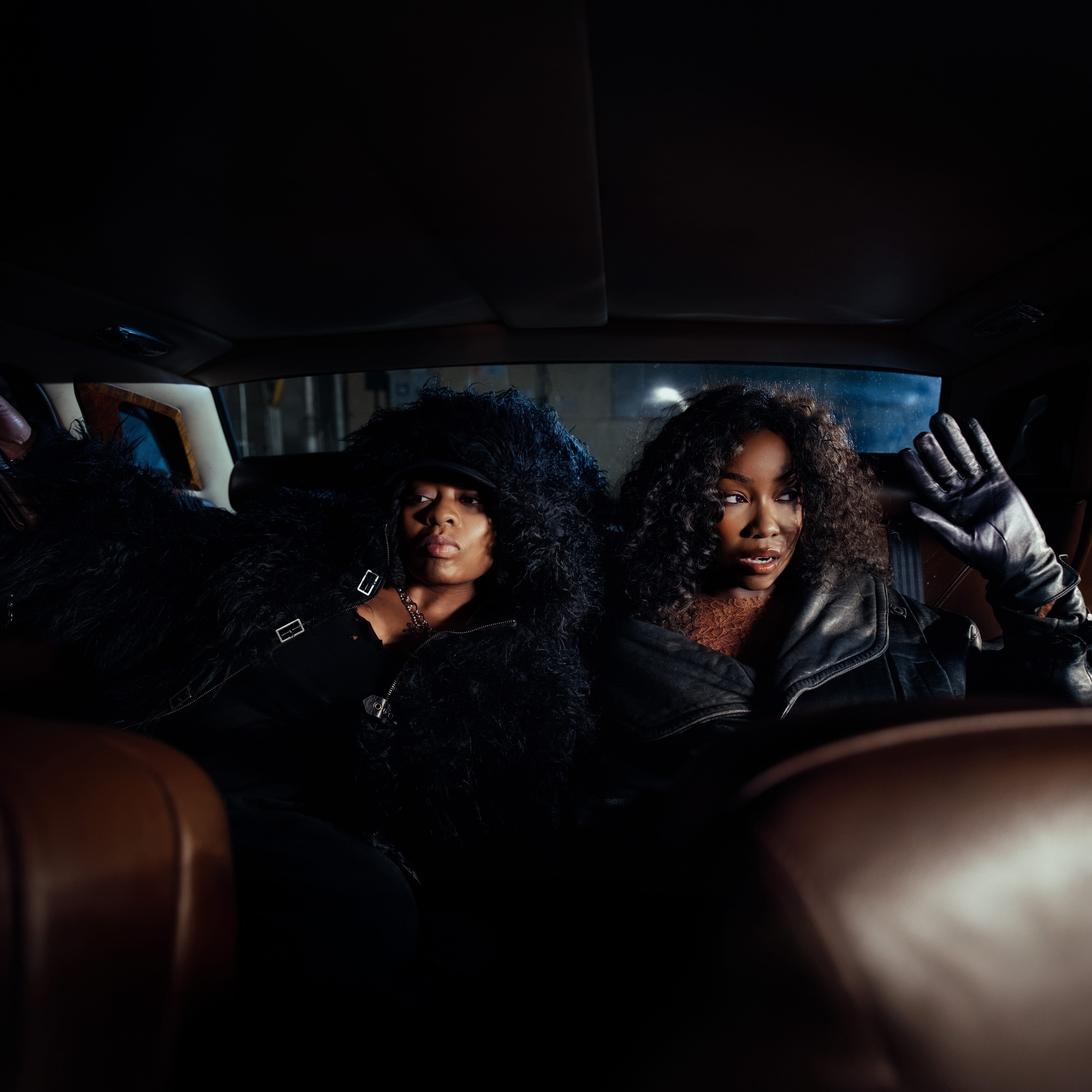
As a writing and production team, DAMEDAME* comprised two Black women hailing from Jorja Smith’s hometown. Barbara Boko and Edith Nelson were born and bred in Walsall, the Black Country, in the West Midlands, near Birmingham, and wrote and produced music before becoming singers relatively recently. “It was the album that brought me home,” as Smith put it herself later about Falling or Flying, and home is where Boko and Nelson explore the topics of DREAMS ON THE PASSENGER SEAT. Home is where somebody cooks for you, where your partner refuses to answer you directly, and where the sadness you hide from Instagram stays.
The address of home is mentioned in “CINNAMON,” the track with the sampled vocal from Jabez Walsh production, and the woman there hopes for visitors: “Come look for me I’m home/It’s good for me.” There is somebody cooking for her there, and by her admission, nothing else is good for her at all. “Security was foolishly one hell of a drug,” she admits, having the idea turned into something transactional already, “I use my loneliness for ransom does that tell you enough.” Boko and Nelson tell the whole work history on “FIRE BURNIN’ THRU THE RAIN,” giving the answer to the question of how hard is chasing a dream in a form of CV: “Had 25 jobs when I was only 25,” then “I’ve seen many many trials in my Air Force 1s,” and then the friends who did not make it and prayers that are easier to pray for other people’s needs than for hers. She takes all the blame on “LUV MYSELF,” telling the girl that the ones outside are the same anyway, and digging deep down to the bottom of it: “Been playing villain all my life/Now I know I really shoulda love myself.” By then, she misses the same woman again, confessing that she knows the difference between good and best, yet still hoping she is wrong. —Sabine Okafemi
Nia Archives, Emotional Junglist

Nia Archives had already been busy for five years working to bring jungle into British pop music, mixing ‘90s rave drums with Brazilian choirs and bits of Columbo dialogue, putting together unsigned bedroom producers at her Up Ya Archives club nights. The party girl in the middle of Silence Is Loud kept finding herself alone in the middle of crowded rooms, misunderstanding the rave she was hosting, and the hurt underneath those beats brought her 2024 debut album to the Mercury Prize shortlist. Emotional Junglist would come out of the full arc of one relationship, from the beginning to the end that is as messy as it gets, and she issued an advance warning to the purists in The FADER: “This is an alternative record. It’s not a jungle record.” She set herself the challenge in concrete terms, writing songs at tempos she never DJs at. She is the most alive when the sheets come off the bed.
Waking up is the hard part on “Lovers Grief.” She would rather be asleep than do this again, drinking to forget it over gloomy indie-rock chord changes and quick drum hits, asking an ex how he can live with himself, whether he feels the big man now for watching her drown, then changing her style, her hair, trying to forget the part of her that cares. The man gets the full treatment on “Boys In Blue,” with all driving drums and heavy guitar riffs, written after the breakup became so ugly that, as she told The FADER, he called the cops on her. “So go ahead and call the feds,” she taunts, looking down at a man that she used to share a bed with that is now trying to get her arrested, then ending it with the fact that he will never take away from her—that she will never snitch and couldn’t anyway. She leaves the wreckage tough, witty, and tall, showing the world her ex where he stands with his blue boys. —Monica LaSelle
Joe James, The Ends, Never Ends
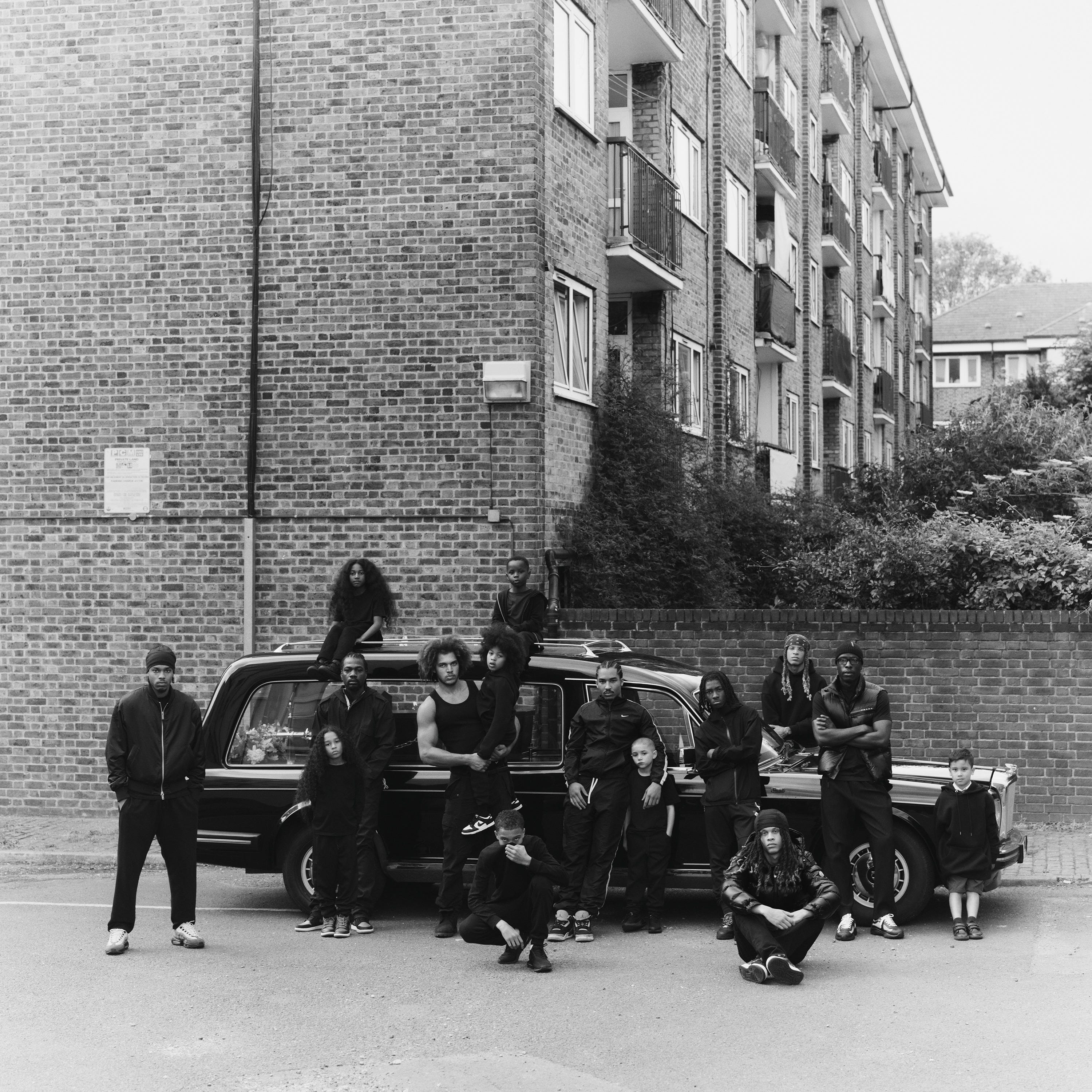
Before Joe James was ready for secondary school, the kid was already familiar with having lived in thirteen houses, moving between Southend- on-Sea and northwest London, between his young mum and whatever man she was with at the time. His seafaring gave him a pier and a postcode that was supposed to keep the same kind of pressure the city was keeping for itself. He was brought up among that motion and took notes. The Ends, Never Ends, his debut album, features him rapping autobiographical verses over live instrumentation, and the memories come with dates attached—ages, addresses, names of the men who were coming and going.
His exhausted mother watches her son losing himself to gang culture on the track “Who Is She?,” the spoken-word prologue on which Joe goes through the lives of a single woman being a paramedic, clinician, student, “a leader, a mother, academic and friend.” More mothers follow. On the track “Back Together,” he takes us back to his childhood again: “Well, when I was one, my pops just left out the house.” His stepdad named Mike left him when he was three. The next one “used to smack me about like a punching bag” when he was nine. At fourteen, police would knock on their door, and at sixteen, he would be forced to leave their home completely, living on sofas, floors, night buses. He and his mum then would not talk for many years, and the verse that would end that silence would become the warmest he would ever write: going to the Chanel store and saying to his mum softly, “Mum, remember, we used to be poor?” And at the end of the track, “Ooh, love/You put me back together” could have been addressed to his mum just as well as to any lover. —Ameenah Laquita
Anitta, EQUILIBRIVM II
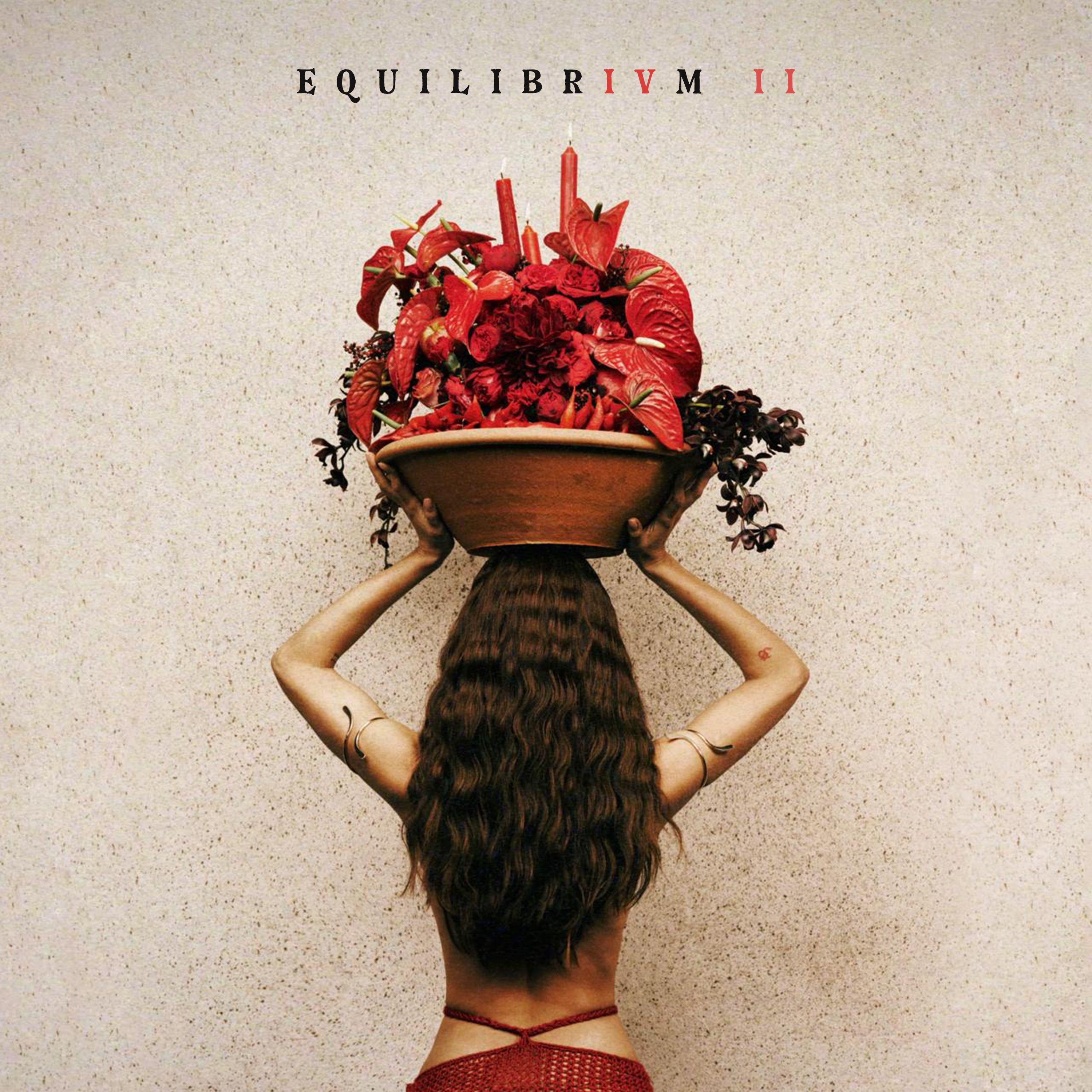
From the moment the first samba hit was written and recorded, candomblé and Umbanda deities have been smuggled into its lyrics, and the ones that stand are the ones that keep the objects intact: the coarse salt, the candle and the plant by the door. Anitta, who wrote and produced all of these songs for the sequel to EQUILIBRIVM in a studio within the walls of her own house, with her guests in the room, has composed almost all of them with this material. She claims she poured her entire soul into it. The essence of it is the hardware that keeps you safe, and everything comes with the name of whoever has delivered it.
In “Sal Grosso,” the hardware is the coarse salt, the prayer, a candle and a match, and the explanation offered is that the concrete jungle makes you protect yourself. KBrum blesses Seu Zé before the first sip, brings the herb from Guiné and a candle from the mercadão and says that the malandro’s heart is in the sole of his foot. The same thing gets an aroeira bath before it and an espada-de-são-jorge behind the door, and she’d rather run late than live in a rush. “Eu não sou santa, mas sei que a Santa me adora,” she says in “Eu Não Sou Santa,” the best song in the protective material. The verse following this hook is the darkest night anybody had in this material—cold as ice, nowhere to go, no affection and no home, and the one that saved her body from being out there was Nossa Senhora’s mantle. —Rosa Delgado
FATHERS, FATHERS
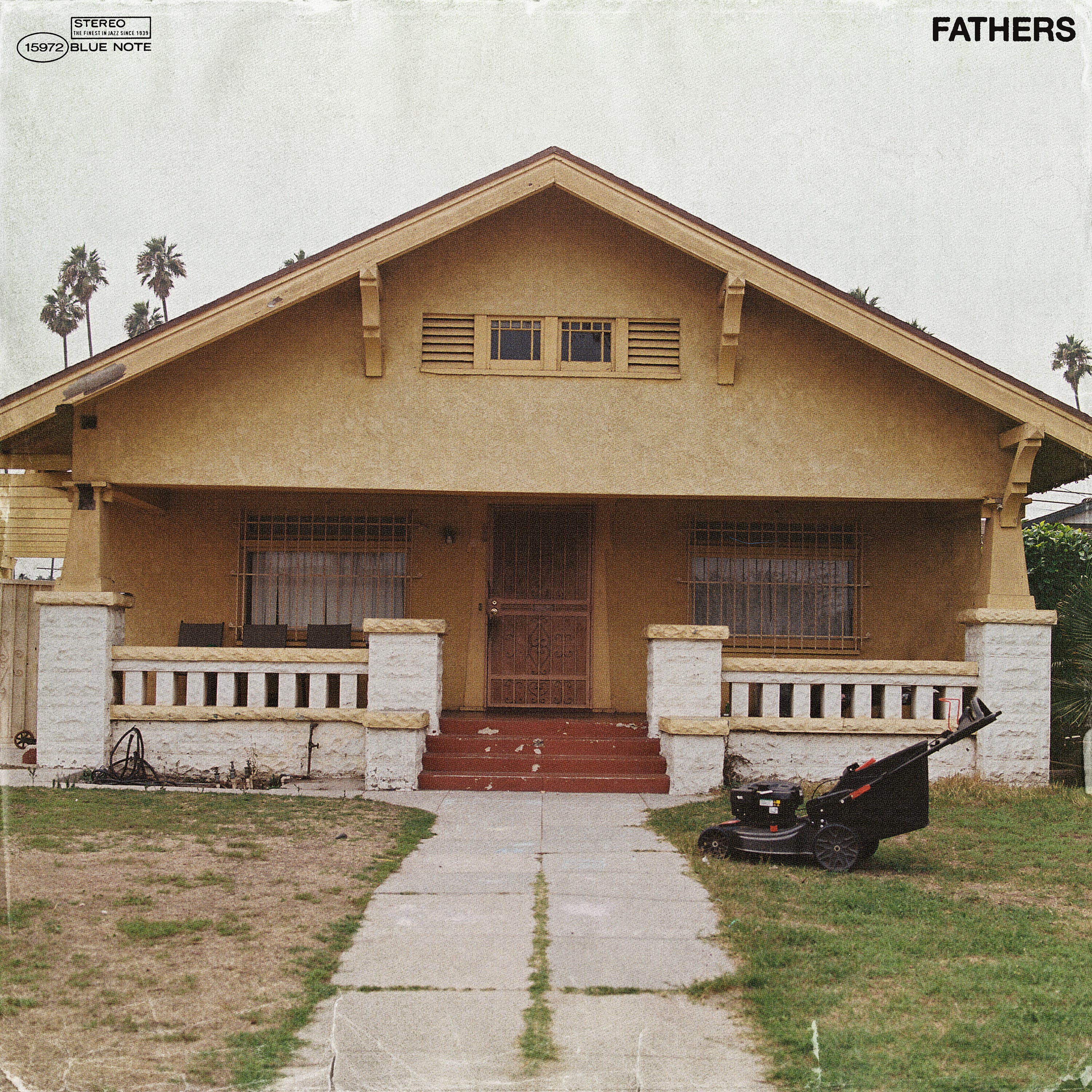
Putnam Hill was nearly finished. After spending months outfitting the LA studio with his own recording console, nothing had yet passed through it, so Kenny asked Kiefer to swing by and provide some work for the wiring. Conveniently, Kiefer was on tour with CARRTOONS and Nate Smith, three people Smith gathered in 2023 for his Montreal Jazz Festival residency and toured across the U.S. and Japan, and what would have been a mere gear check became a two-day session that none of them had expected. “Turns out the board works just fine,” Kenny later said. They left with new songs and a new name, FATHERS, inspired by the word Kiefer called anyone he liked playing with in the studio.
CARRTOONS rarely rests on any kind of root note. In “EYE LEVEL,” he converses with Kiefer, responding to him with a rolling, rounded melodic phrase, which stays active as Kiefer plays as though he were programming the groove and loosening it in the same breath, adding ghost notes and hi-hat details to keep the beat moving. Kenny polishes it to perfection and “PATCHWORK” further pushes the editing, fitting the keys, bass and drums in neat, syncopated fragments, musicians moving at the clipped, looped pace of a beat tape. Kiefer is concise, delivering his melodic phrases in short compact cells. —Lillian Sharpe
RetcH, Finesse the World 2
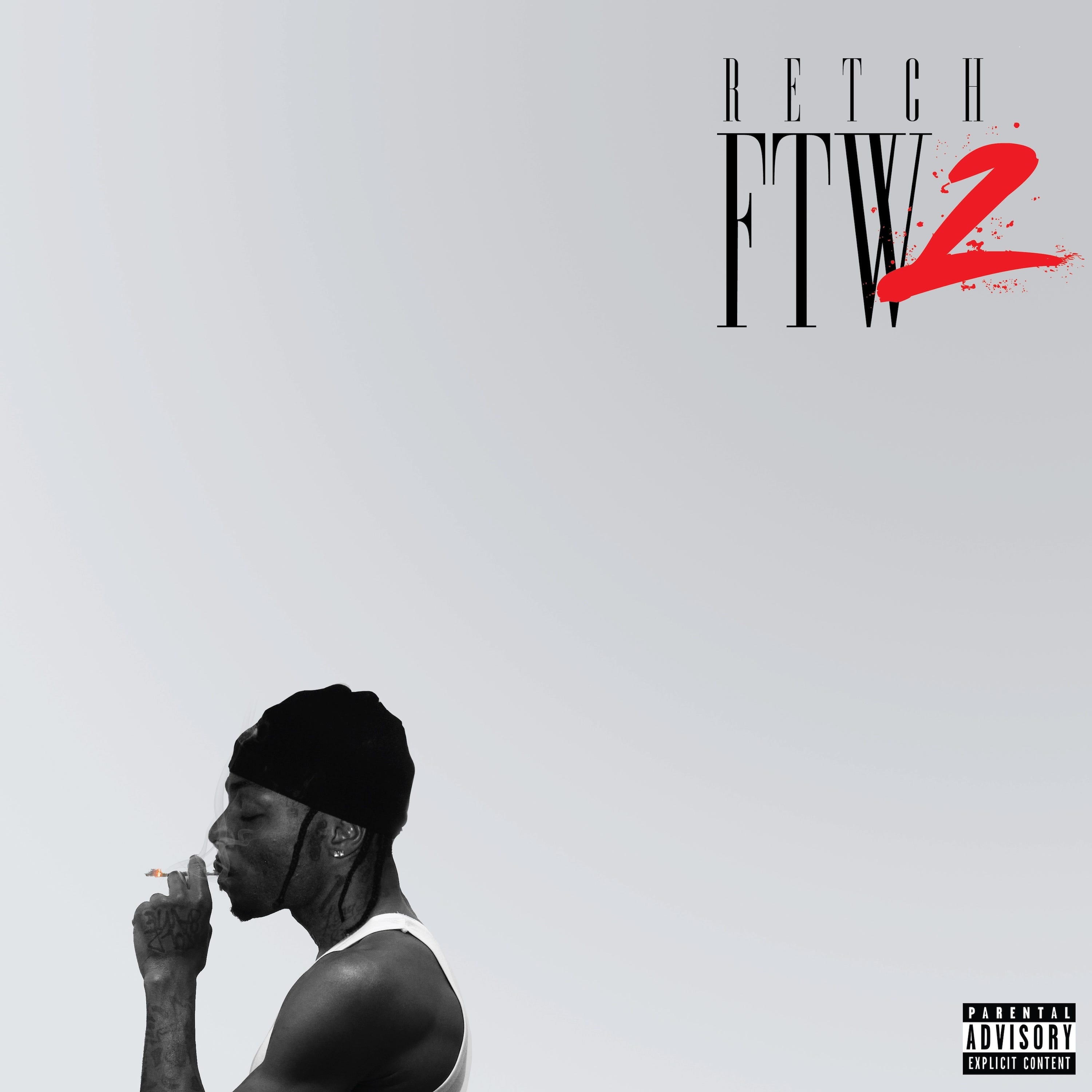
Hackensack is a city that is very close to the George Washington Bridge, and therefore the rap music from there has always been “New York but without the shine.” During the 2010s, one of the biggest local exports in the rap music industry was RetcH, a storyteller known for collecting Polos, who came up with the Finesse the World album in 2015. It became legendary because of its street drug detail, while the artist was facing charges in reality. The following decade produced albums called After the Verdict and Administrative Segregation, which mixed up county time and silences. Finesse the World 2 appears, which has been assembled using similar ingredients of grim sample loops and unsentimental, rough voice.
Finesse the World 2 starts with the track called “Disclaimer 2,” where RetcH delivers a spoken intro about living a life until the end and earning a college degree, followed by a job, which pays thirty thousand dollars per year and leaves five thousand dollars for survival once the taxes, student loans, and five hundred dollars rent are paid. RetcH replies to the questions of how anybody eats by specifying his listener—the brick sellers, the door kickers, the women selling themselves for the sake of being able to give something to their children, the dealers making fake drugs for small cities, the paranoid guys who “keep guns all through they home.” The artist sounds very dry and aggressive, and his flexes are professional—“Trappers move like stockbrokers.” He concludes with the dedication for those “that done caught stay silent, never squeal.” —Rafael Greene
Fox BD, Finessin Distribution Deals
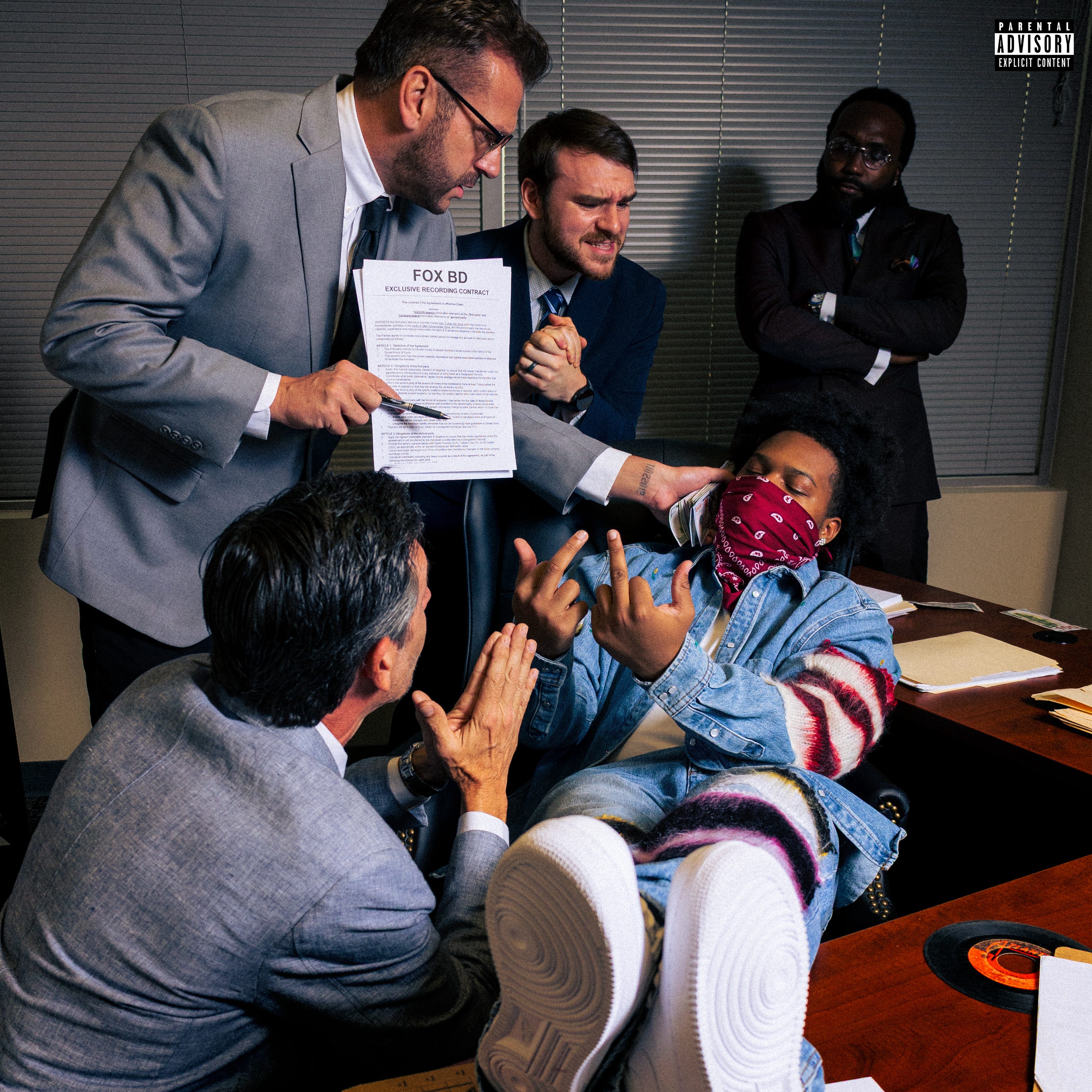
The loudest rap from that corner of West Memphis right now belongs to a crew named the Foxes, whose leader, Fox BD, can’t sit still on either side of the Mississippi River, representing the home field and Atlanta’s Bouldercrest at the same time and taking heat when anyone categorizes him as an Arkansan. His crew is deep, deep thousands by his own admission, with half of them free and the rest in jail, and waiting for him to keep them alive. He brings them all on board onto Finessin Distribution Deals, bar for bar. Fox wants company on his track.
The most genuine love song he offers goes to the drank, a dating relationship he officially recognizes on “Pharmacy R Us”: “Thank God for introducing me to lean, I’m proposing to her.” The love affair’s already in trouble, the doc terminating refills and his mama catching him mid- conversation with his muppet. Unc FaceTimes in from the bath with a recipe; the pours go in by four, by example of Drakeo The Ruler, and Babyface Ray stops to get charged for the clean drank; Jeffersons flex completely intact. He and Lil Yachty divide more of it on “Seals Dekline” where the discussion of the drank involves a request to have Bieber elaborate and a wish he’d alerted Granny to store up Actavis prior to a ban. He couples his lean addiction with a woman’s Xanax addiction on “G6” while Sexyy Red notes another of them taking and looking fancy about it. He confesses the price on “Baffled”: “I’m gettin’ fed up, I’m tired of purple shit sittin’ in my lungs,” a line that’s sandwiched between gator boots, a five grand mink carpet, the three investments he’ll mention, clothes, drugs and bump stocks. —Xavier Thomas
Masego, Fix Your Face
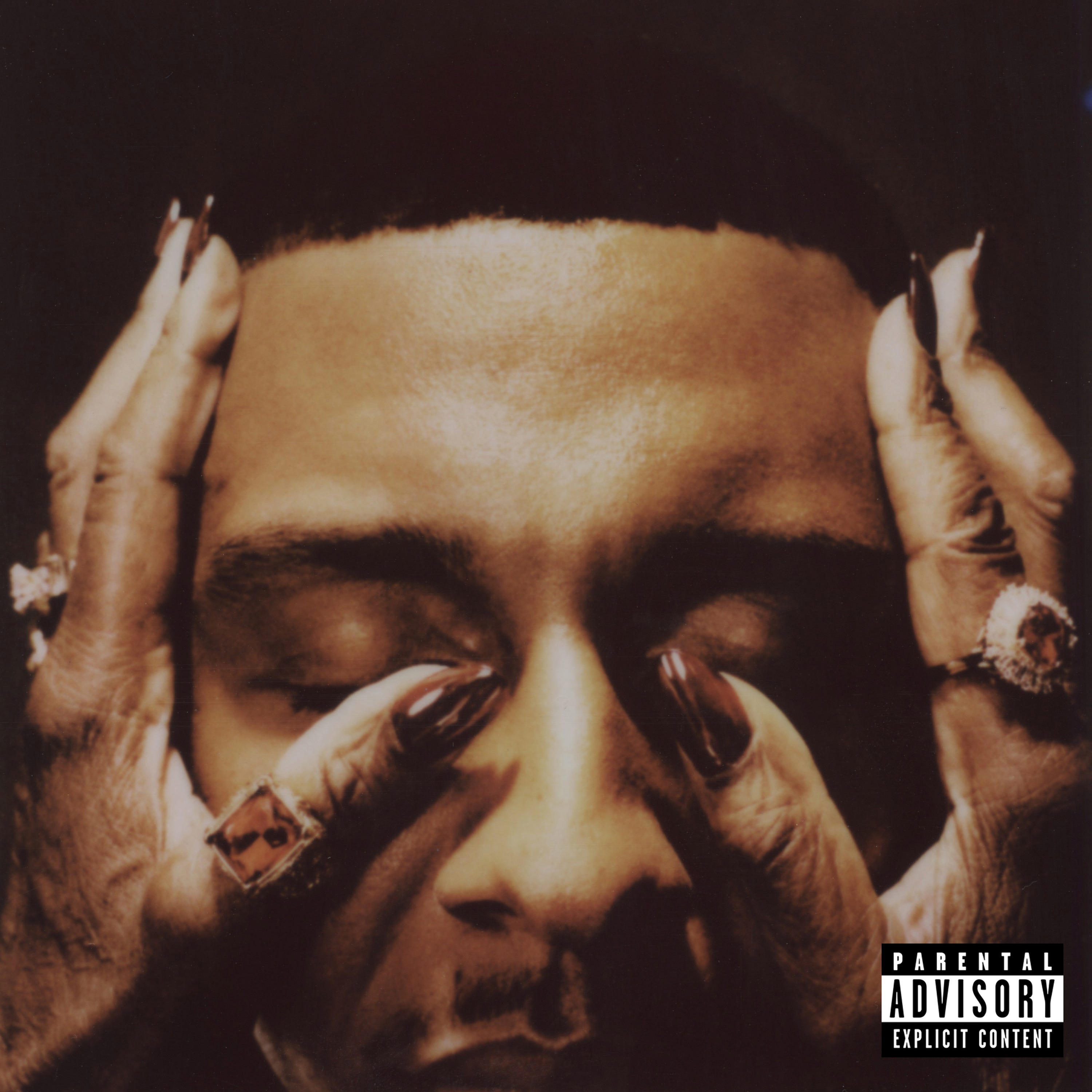
TrapHouseJazz began as the joke of a Virginia pastor’s son sampling sax over programmed drums and soon became a reality. It took Masego years of hard work, the viral moment of “Tadow” with FKJ, experimenting with the addition of horns to albums, vibe based on church charisma and mischief. On Fix Your Face, the churchy charm remains, but the scope is expanded. He is on the point of mourning, paperwork you have to do after a breakup, and the mom-voice on the endings of the tracks. He lost a family member while the meetings, sessions, and travels kept their dates, and has admitted “Breathe” to be a product of that pressure. He writes it as such. “Can I breathe? Can I live?/Can I grieve? Get a minute?” he asks over the restrained drums with the groove solid but never aggressive and the space around his voice. The woman called Mom gets the speaking role on “Charlie Brown.” He complains about fifty numbers calling and fans with conditions for compliments, and she listens to him, reminding him that this is what he prayed for, that he should remember who he is, that he hasn’t scratched the surface. The most intimate version of that conversation hides inside “Overthinking.” Musiq Soulchild starts to ease in with the soft and rounded ends and conversational melisma, a delivery worn from the frequent use, coaxes “Let me take my time” and “Tune out the world,” while someone in the verses begs her to get that girl out of her head—misery loves company, but no thanks. The talking resumes, the party continues, drinks are served, and the friends wait for him to walk back into the room. He does, every time, and the return of the singing, with grief, paperwork and all, is the best of Masego’s career. —Phil
sahn, the garden
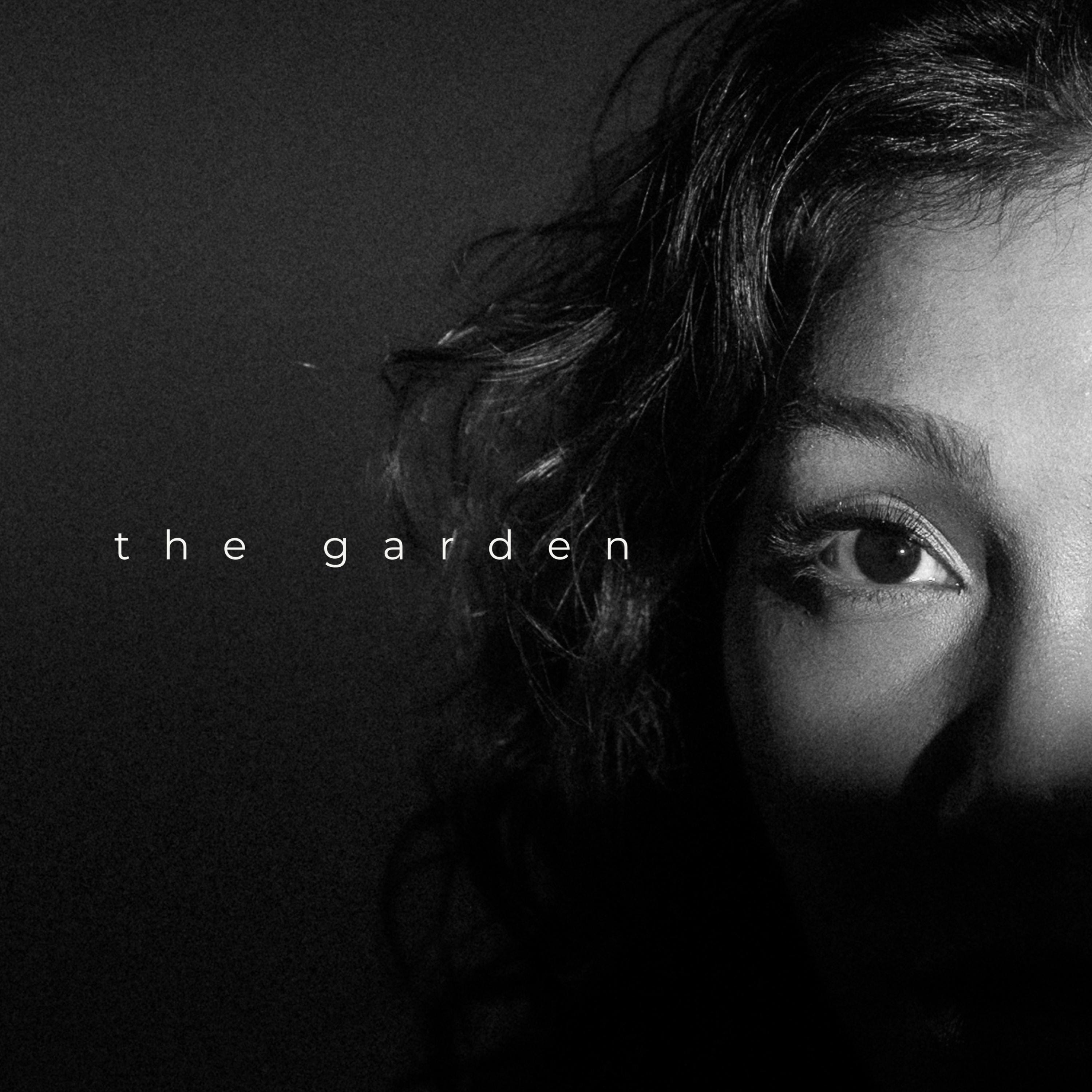
Vallejo retains a certain depth, from which Sly Stone used to sing gospel, Mac Dre created a dialect, and H.E.R. performed her name on arena stages. sahn takes a quiet corner of the same city, from which her 2023 debut, the mornings, sounded out with a complete visual album. Roots, weeds, mirrors, and morning prayer shape this second work, the garden, which is designed by the language of self-development: manifestations and healing tonics. In fact, she warbles the advice in a very literal sense, as the process itself, painstakingly—on hands and knees, in time.
She chants the instructions for “change your life” while a solid rhythm of keys, bass, and background vocals presses on, and they’re straightforward. “You’ve got to dig up all the roots, or it’ll just grow right back,” she warns, and the digging is internal first, because your “thoughts are what you’re made of, and how you think is how you pray.” It all comes together around the voices of her chorus, which fill the gaps with their agreement, but the message gets smaller and more intimate in “take care (roots).” This one carries similar themes but on a smaller scale, with a less accented rhythmic pulse, more emphasis on the lyrics. In the space of plucking out the weeds and clearing the old fruit, she advises “A hundred heartbreaks couldn’t break me,” “Never let a lame nigga play me,” and the hardiest line in either track comes when she imagines a card table in front of her. “Shuffle all the cards, but it’s still the same deck,” says sahn—rearranging the life and the change of life are not the same thing, and she knows it. —Zoe Westfield
Marco Benevento, Glera
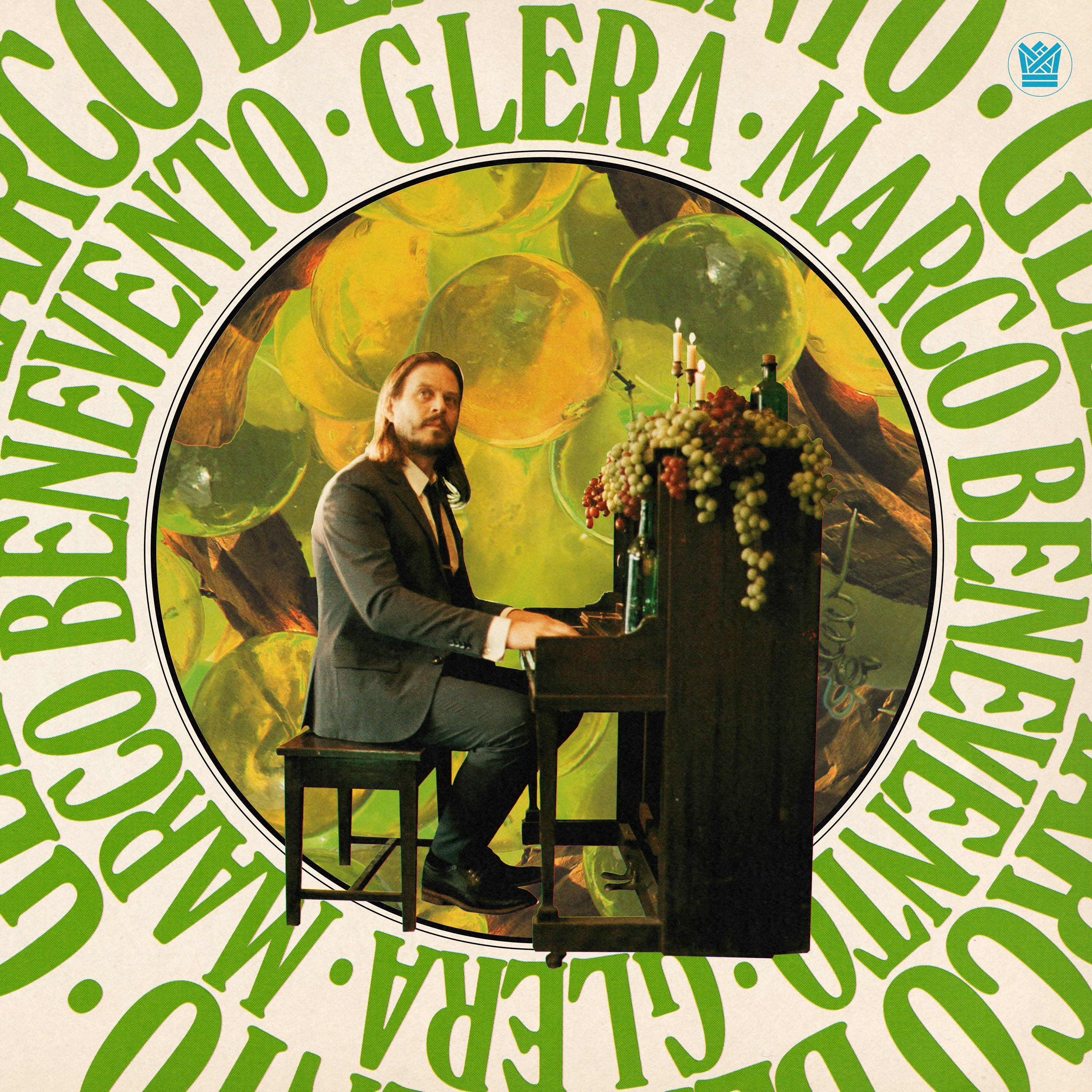
The Italian grape variety used to make Prosecco is called glera, and the keyboardist chose it for the title of his ninth album and begins it with the song of the same name, Italian for sparkling wine. Marco Benevento spent more than a quarter century playing behind the keyboards, mining the Grateful Dead songbook with Joe Russo’s Almost Dead, sharing the stage with Freddie Gibbs and Madlib, and appearing on Clairo and Leon Bridges’ album liner notes. Glera, his first album for Big Crown label after being associated with Royal Potato Family for fifteen-plus years, started as a personal project three years ago, Benevento writing songs intuitively towards an Italian movie score vibe in his mind, while his label brought in his family of musicians, including Leon Michels, Homer Steinweiss, and Nick Movshon.
Marianne Mirage sings “Turandot” in a throwback manner over Benevento’s keyboards and horns, and Chiara Civello answers with the song in the same language on “Quattro Passi.” Molly Lewis whistles through “Zio Tony,” Elizabeth Steiner brings her harp to “Miss Neptune,” and Dave Guy performs on trumpet on “Sorgini.” On “Houdini,” Benevento places his keyboard on top of the beat, which sounds like taken directly from the Madvillainy album, the most obvious tribute to the hours he spent with Madlib and Freddie Gibbs. Everything on this album is brief, sketching the idea and disappearing into thin air like the cues in the movies, and Benevento pours “Frizzante” with the bubbles. —Brandon O’Sullivan
Chuck Strangers, Glory of the King’s Hand
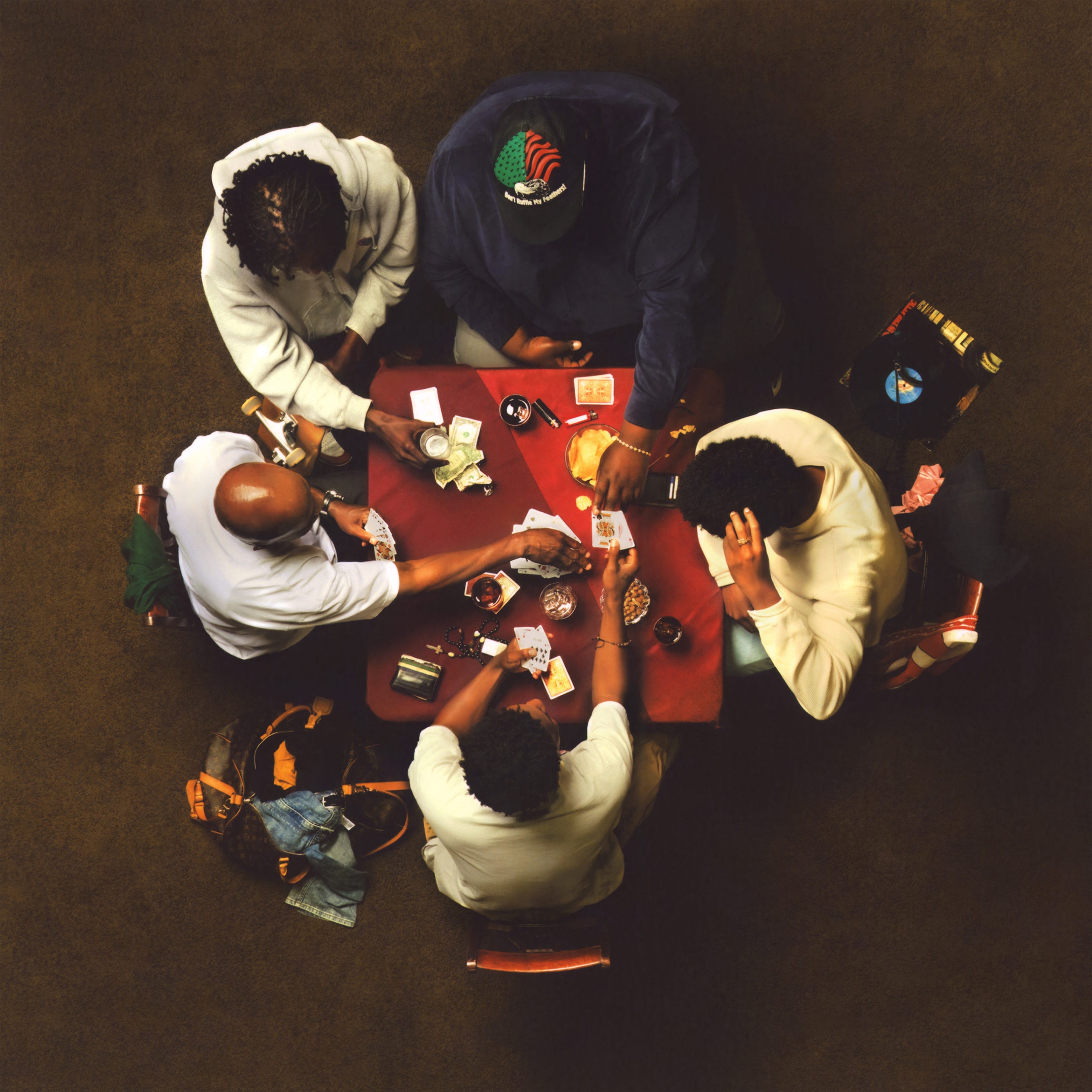
Self-sufficiency was the order of the decade. From East Flatbush came Chuck Strangers, rapper and producer, who came up in the Pro Era collective, making records for others’ breakthroughs before Consumers Park and A Forsaken Lover’s Plea, the loops and verses from the same hands, Strangers could have continued to commandeer for his own glory on the boards, for Glory of the King’s Hand, but he passed the production reigns once more to Preservation, Kenny Segal, the Alchemist, and an underground crew, he saved one beat for himself and declared his intentions for the rest, “I wanted to make better songs that people might want to hear again.” He moved to LA some years back, continuing to write about the blocks he left.
On “Intro,” he recounts childhood through one shared controller between kids, love found in the annex building, little brother tagging along, begrudgingly, measuring the distance with a steady cadence, “It’s been a long time since 23, it’s been a long time since New York City.” Faith is the other currency, and he guards that as a gambler might, “a hard card to play when you got options to weigh.” The present tense is the only assurance on “L2LL2C,” “There’s no forever, that’s a lie to feel better/God laughs at our plans,” while a label tries to herb him 20 days into his net 30. Due to the amount of gratitude in his words, he’s rarely unguarded. The wariness in “Ski’d Up Reprise” is long-practiced, “Smiling faces with they knives tucked waiting/To cut yo throat when you ain’t lookin’.” The song’s Brooklyn is immediate, a run out for a salmon chop cheese and a Gildan white tee, and its primary grief is family; the mother who kissed and hugged him turns to judgment as the years wore on, a disdain he can now parse as something akin to love. He’s spent the decade-plus making other rappers comfortable on his beats; on a reprise of bodega run, he finally sounds like he belongs. —Phil
BFB Da Packman, GOD BLESSING ALL THE FAT NIGGAS 2
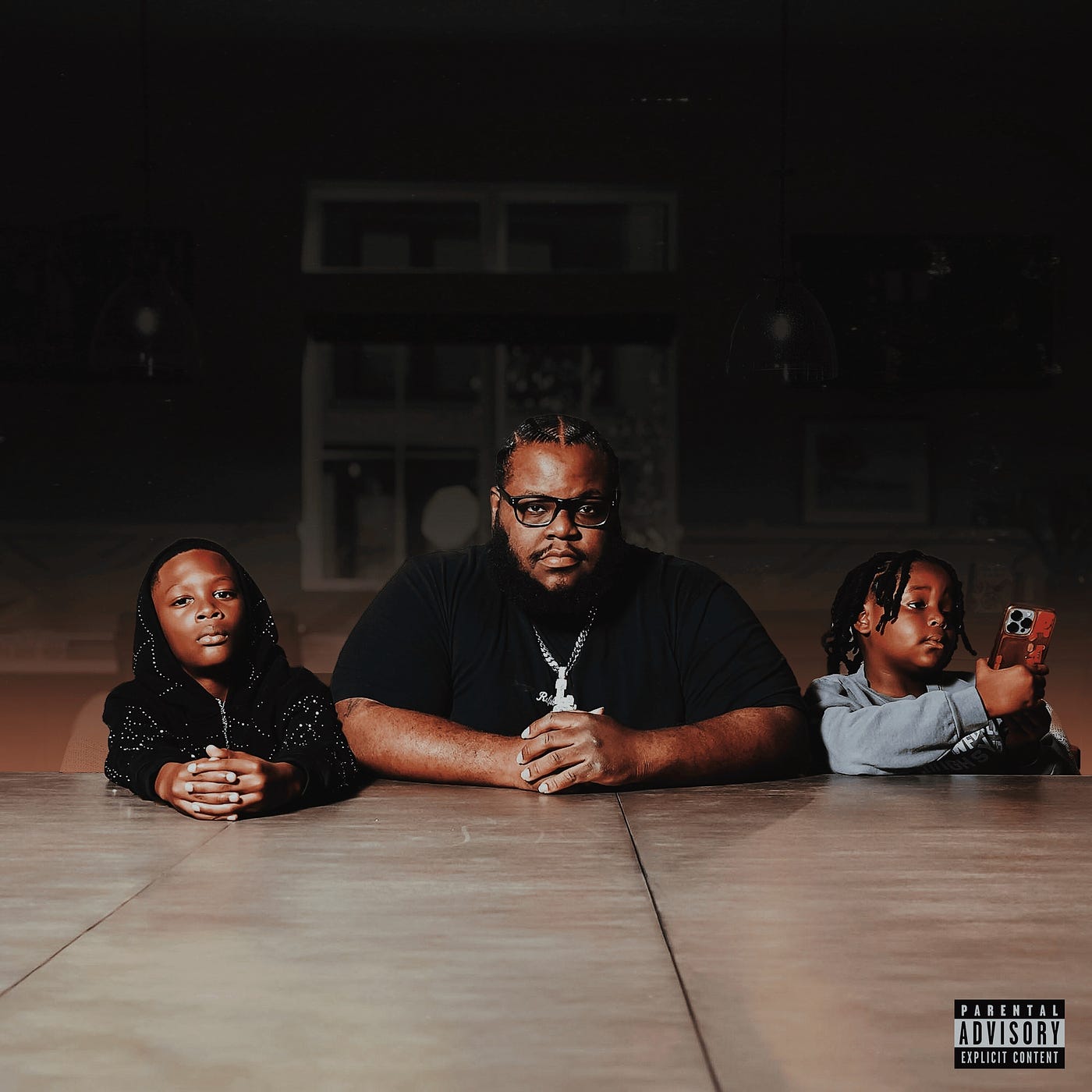
For a while in Michigan, one of the funniest rappers had to be a mailman. Carrying routes for the U.S. Postal Service down in Houston, a transplant of Flint packing up parcels working on the filthiest stuff in the Midwest, and “Free Joe Exotic,” a 202 tag team with Sada Baby, was BFB Da Packman’s break. He has been turning this bit up since, making to Fat Jesus, saying hello with a telemarker’s “Y’ello,” and begging listeners, mid-lib, never to say the Lunch Crew Company on their own. GOD BLESSING ALL THE FAT NIGGAS 2 traces back to a blessing he originally doled out in 2019, when the route still was his, and the subsequent years have left some mild under the punchlines.
Getting near to him takes a paper, and, to “MyChart,” that means the portal over patient, given over before emotions enter, while he keeps himself to the same rules of disclosure: “Should’ve bought a therapist, I rather buy Percs.” He plans on dying turnt and sleeps hooked up to a CPAP. By “Cully Music,” he names his hypothetical daughter Wocktrisha and shoving cucumber and kale through a five-hundred dollar juicer, chucks down the donuts and promises: “Gotta live for these kids, I can’t drop dead.” And on “ButterBall Shawty” he tells a woman to give him a pic of their MyChart before he picks her up. The gags seep through even on “Self Therapy”: “Lifted did the beat, it’s tighter than a virgin.” He requests beats so he can complain to them rather than a woman, and drops the dole for the family on record: “My daddy, he was weak, fell victim to that crack/How couldn’t I talk ‘bout him? I fell victim to that purple.” He pleads with a doctor for another bottle to kill the pain and tests his own urine for kidney. His sons get a guarantee that he is working being somebody he can follow. —Kamarion
SUBSTANCE810, Greed Tastes Like Power
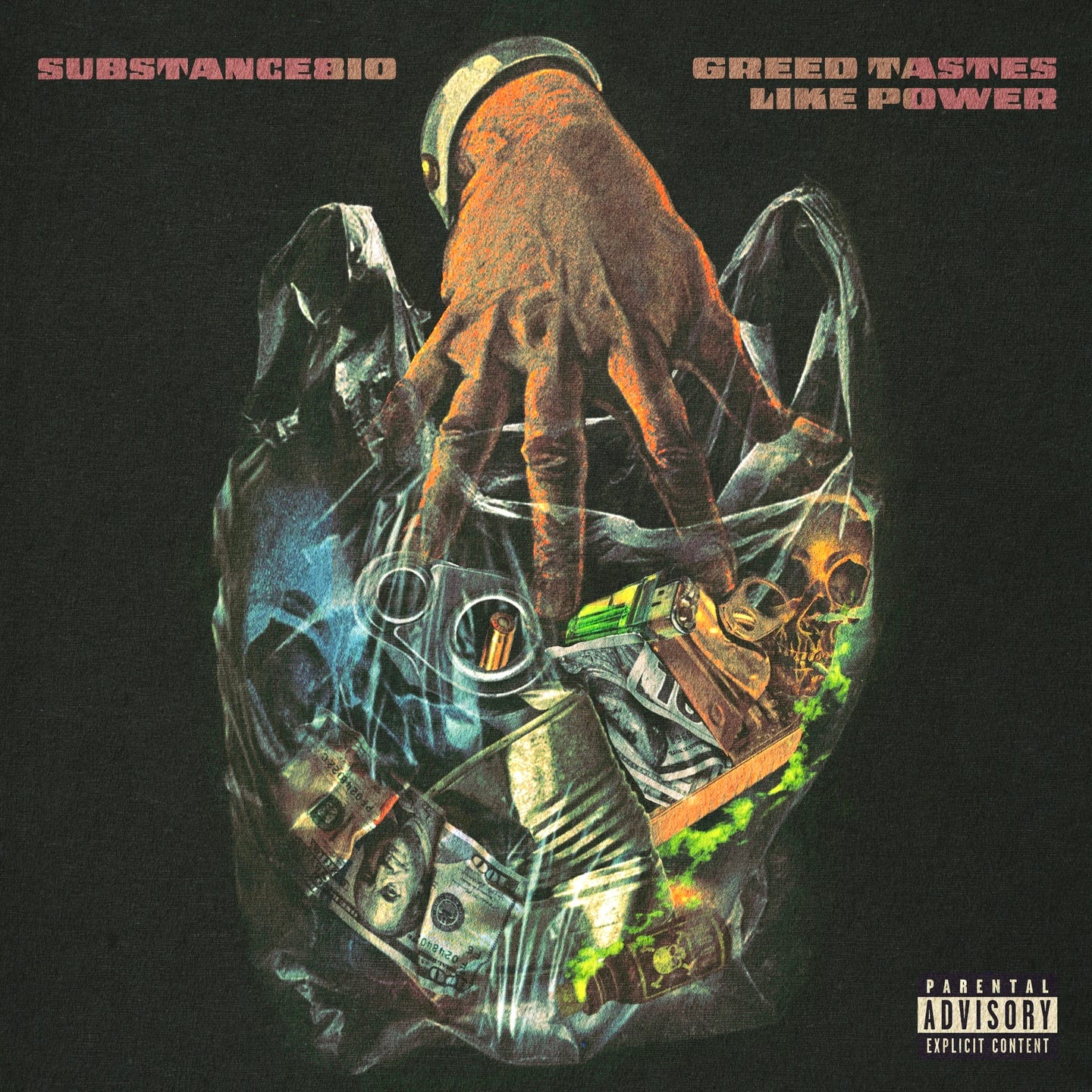
SUBSTANCE810 spends his time cutting a record with a certain producer, releasing it into the world, selling a few hundred copies to those who still pay attention to who produces their music, and begins making another one during the rest of the month. He comes from Port Huron, Michigan—the 810 comes from the local area code. As a member of Umbrella Collective, he releases his solo work with Greed Tastes Like Power, which deals with the money aspect, how to acquire it, keep it and what is required for a person not to get angry during the process.
The mood on “Gordon Gecko” looks like paperwork. He smashes the post office with a box truck, re-deposits a check and pockets the gross amount, and does the credit repair for a while to point out that seven- fifty or higher makes one a heavyweight. He says that he has learned to simplify and delegate. The lesson of “Money Never Sleeps” is the most elementary lesson in any business: not how much you make, but how much you keep matters. Below that verse, you find that it also describes household chores, keeping the line in the water, selling it to a well, the premature failure and freedom as the major goal. “Kindness for Weakness” features him doing jobs of a shepherd and baker, moving the units like chopping grams, playing his hands like playing Monopoly and being certified in making distinctions while using his verbs like Swahili. He can handle both burners, the oven and the blicky. If he does not see the legal CREAM, he schemes and does it dirty, and it arrives with no ceremony at all. He keeps his collectibles in a top loader. There is nothing aspirational or oversold here. —Harry Brown
Nickelus F, Hardbody
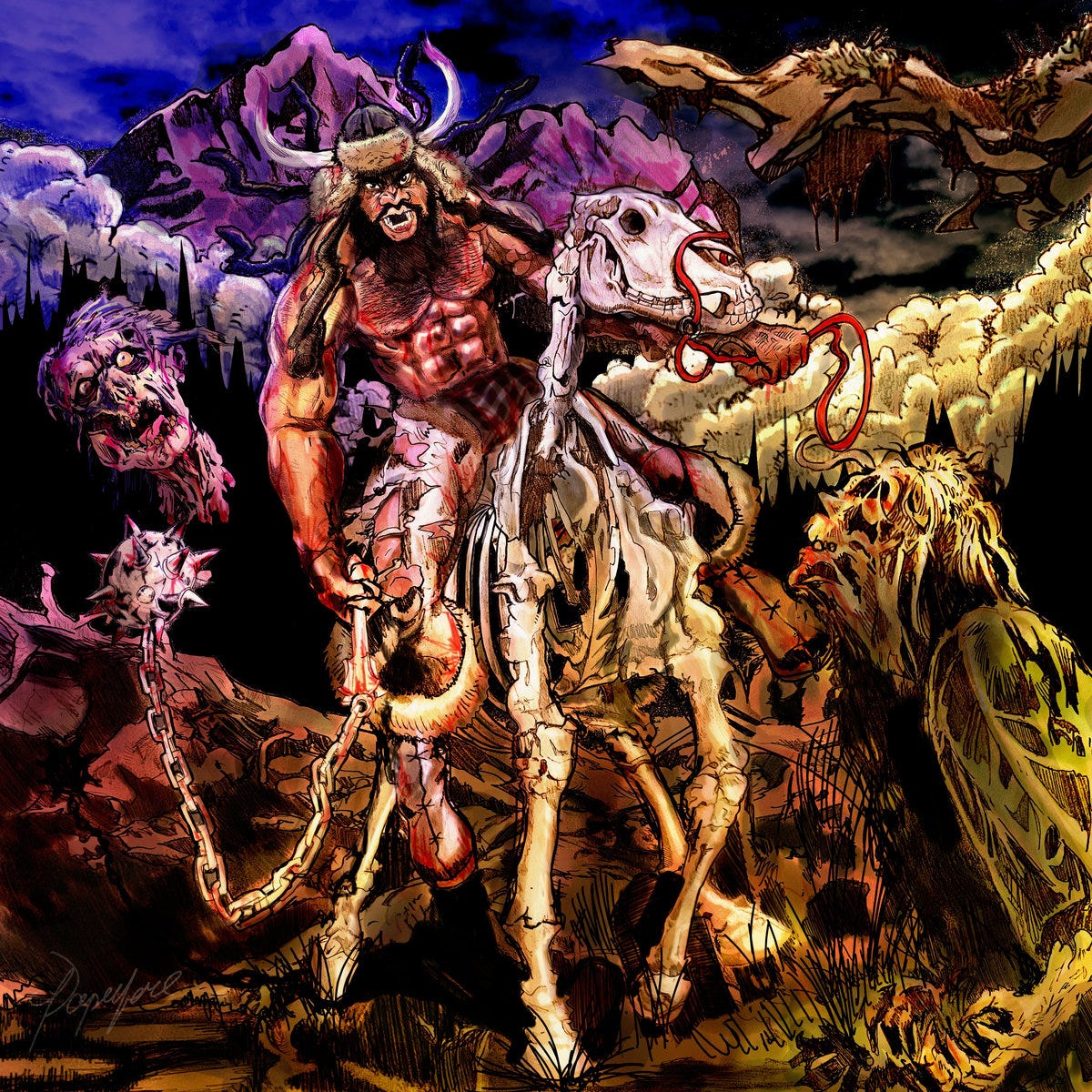
This household on Hardbody was paid for by drug money, and so the household turns up in the various verses to collect. Nickelus F wrote and recorded every beat on this album for himself, and it was released through Trick Dice, returning with his second album of the year, following The Undisputed. He buys guns to protect his daughters, remembers winter coats going on layaway, cracks a granite countertop in an argument, and funds it all with weight. That is to say, the dealing and the fathering are one job. On “Sporting Life,” he’s up at witching hours, making beats; the block is hot as a lava lake; young men in Richmond are ready to go up and blow your mom away; pounds are still shipping. But in vinyl weight, he’s counting the sales, then the graveyards that he’s populating. Then he’s making comparisons between his life and a body that cannot conceive, and he’s counting the money as the harvest anyway. “My life been like a bitch that never ovulate/But still, I bear fruit, just look at all the profit made” on “Set the Table.” He explains the accusations of a stranger. People used to doubt him considering he had a father in the house, and now he’s buying guns for his daughters to protect them. He makes its dealer-boasting answer to the daughters and winter coats it pays for, and stays funny throughout. —Tariq Belson
Bankroll Ni, Her, Actually
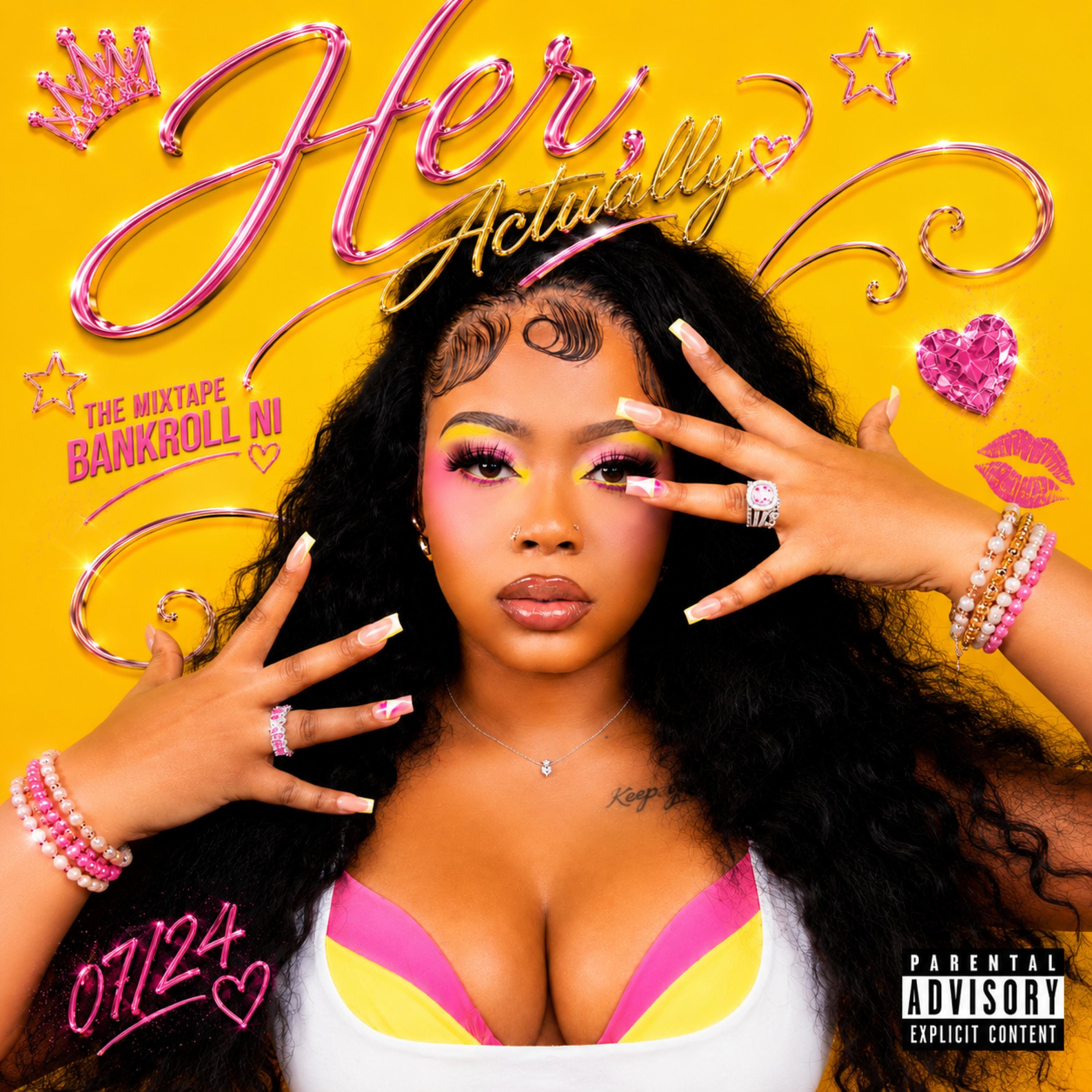
Six years in singles (with a viral “I’m So ATL” last year) from Atlanta’s Bankroll Ni, and in that time she’s refining her focus to who he got it coming from, who he crossed, and who’s man is in the passenger seat this week. She’s never once seemed to want to give any of that to anyone. On Her, Actually, the debut mixtape, she writes in punchlines almost exclusively, at a clip most of her peers can’t keep up for three songs, and the best of those is great.
On “Tab,” the verse cracked them all the way down to the last time she paid the favor, the hair all the way down her back, the nigga wire in the money, the Chanel bag, the dinner she just paid for, the car she just took off the lot. Then the chorus wraps it up with the last line, “He gon’ give me my gaps and I’m gon’ knock off his top.” A new verse on the same theme (a new verse in the same song, really), starts the candles, lays the roses, pours the bottles, turns the red lights on, fixes it to a real scene, not just a dollar value, “Do You Need That” completes the same transaction with a slight variation in the taunt, directed to a woman who, it seems, can’t look away, and she punches three or four more in the stomach just like they was nothing, “I start thinkin’ ‘bout some steak when these bitches bring up beef,” then immediately follows it with, “I’d be mad too if I had to bag you,” rolling the window down, throwing you out, and bidding you farewell, bye bye, boo. The price on “Poses To” includes the gratuity, and the verse is out of town, out of town talkers, word is that she tacked on a few questions, if you got any inquiries. —Tabia N. Mullings
Kamal., how the f*** does everybody else manage?
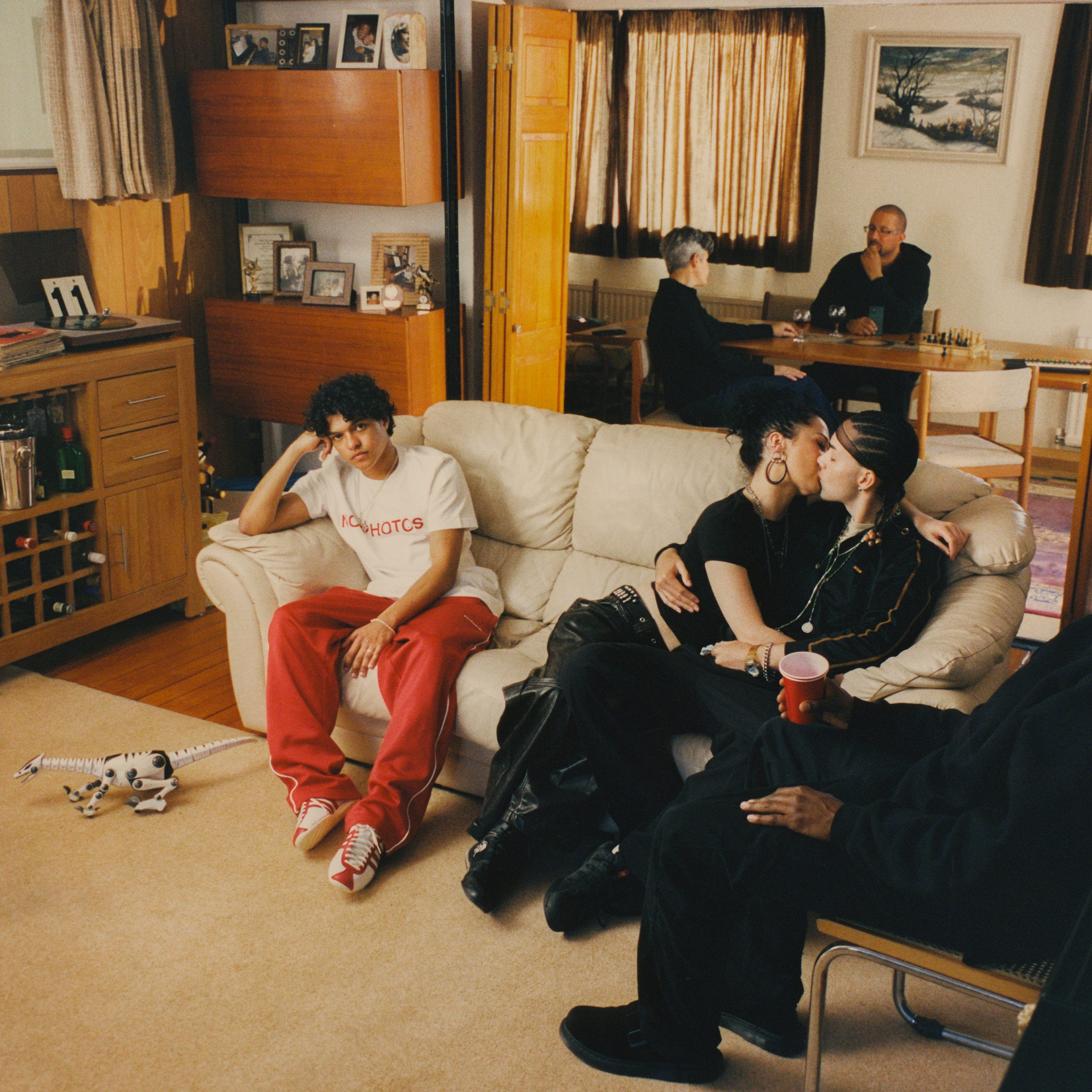
There was just one register in lockdown British bedroom pop, and it was the whisper, soft auto-tuned vocals, close-mic singing, dread made sufficiently comfortable to fall asleep to. Kamal. hails from Harlesden in North West London, whose piano education dates back to the age of six, and who had a habit of writing about homelessness before having any career to protect. Debuting with a so here you are, drowning mixtape, the actual full-length LP strips the gauze off the COVID sound, and asks how everybody else copes. Keaton Henson pops up on “no friend, no lover” with his thin and fragile- sounding voice, and the arrangement becomes narrower—soft guitar picking around the two voices, while Kamal. stands in his rubber Bottegas and dismisses the plastic flowers, the “Hey, stranger, how are you? It’s been time,” every fake reunion possible, down to the shared outro’s “No ‘Can we catch up?’ on the Jubilee line/No career advice, no, thank you, I’m fine.”
Natanya warms up “back then” instead, a soft sway beneath his homecoming verse, arms wide-open like a baby to his favorite toy, and her image of painting the walls of rooms inside her favorite voice, the two of them asking in the bridge to be treated like Play-Doh and taught the way back. Dave provides deep rapping over piano chords and open space on the song “the people that saved me,” grounded and speech-driven, riding the two-five-five through a friendship that was never love, lying in bed and crying out “God, am I better off dead?/What I did for the bread.” Kamal. boards the tube on “i don’t care,” and a stranger is wearing his ex- girlfriend’s perfume, the scent pulling him back to the time when the two of them were cool, until she gets off at Liverpool Street. For a song about not caring, it notices everything, including the station she left him at. —Ameenah Laquita
Nick Hakim, I Can See
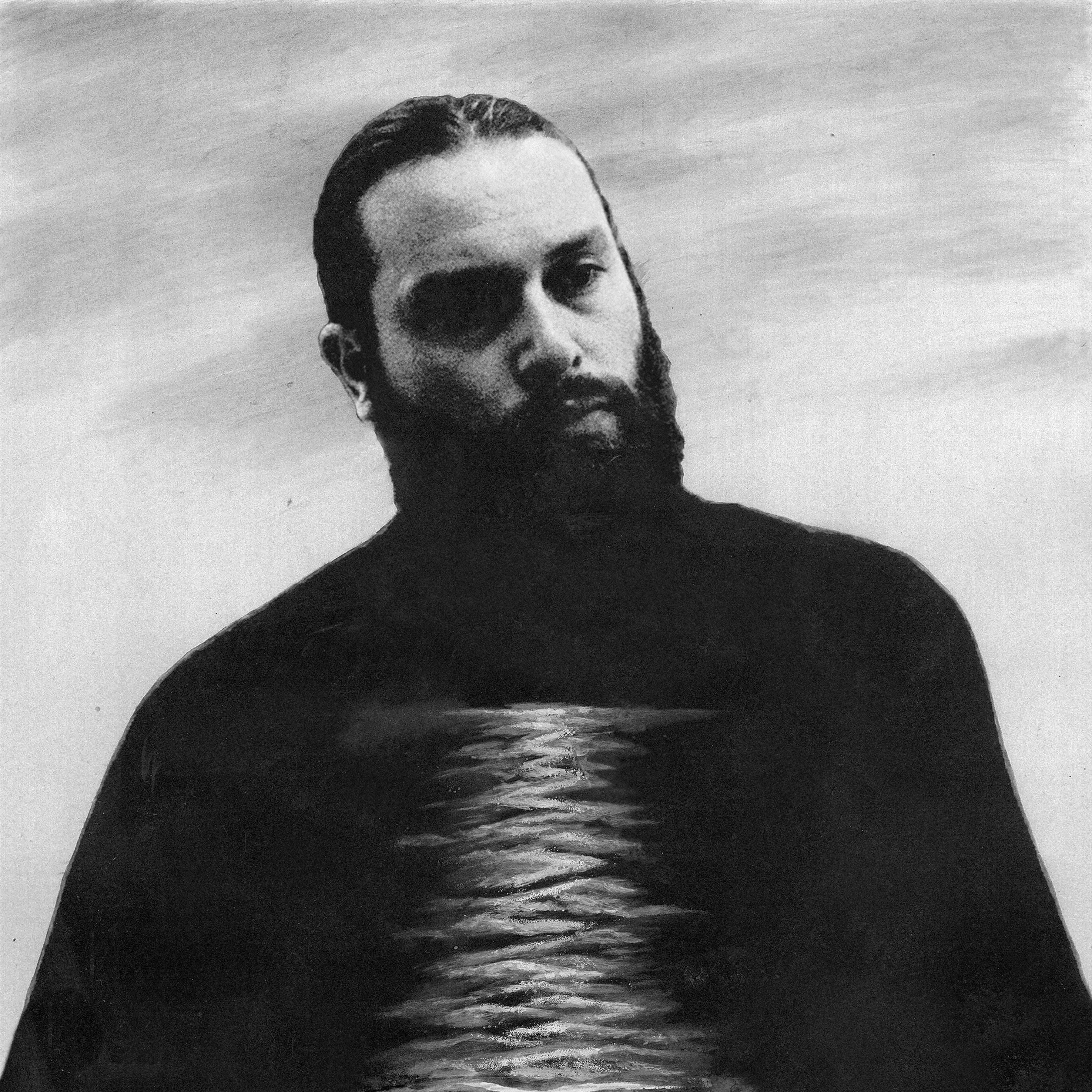
The rough draft of the title song took him twenty minutes; the final four years. “An experiment of how time moves, and we change” is the description of the song by Nick Hakim, and what he tried to achieve over the four years was not a better song but the sensation he achieved with the demo. Each one of the songs on I Can See surrounds it and carries the same idea—that love, family, and the voice of the sister from upstairs are bound to vanish before he finds someplace where to keep them forever. His sister has discovered magic, and on “Real Here Now” she says she can talk to grandpa in the attic. He has not seen the person he is singing to for a while, but he heard the laugh, which sounds just like hers, heard her singing the song she likes to sing always, and promises, “My ears can’t believe what they are seeing.” His brother knows some magic as well, and one of them lived in the attic once. The attic appears again in “U Can Make It,” on top of the staircase he has been falling from, the place he is tempted to return to until he blacks out, and while he calls himself a fool, who cannot make it but tries, another voice answers him, telling him all the way that he can make it, he can break this. —Kendra Oluwaseyi
Dame Atlas, if i’m being honest
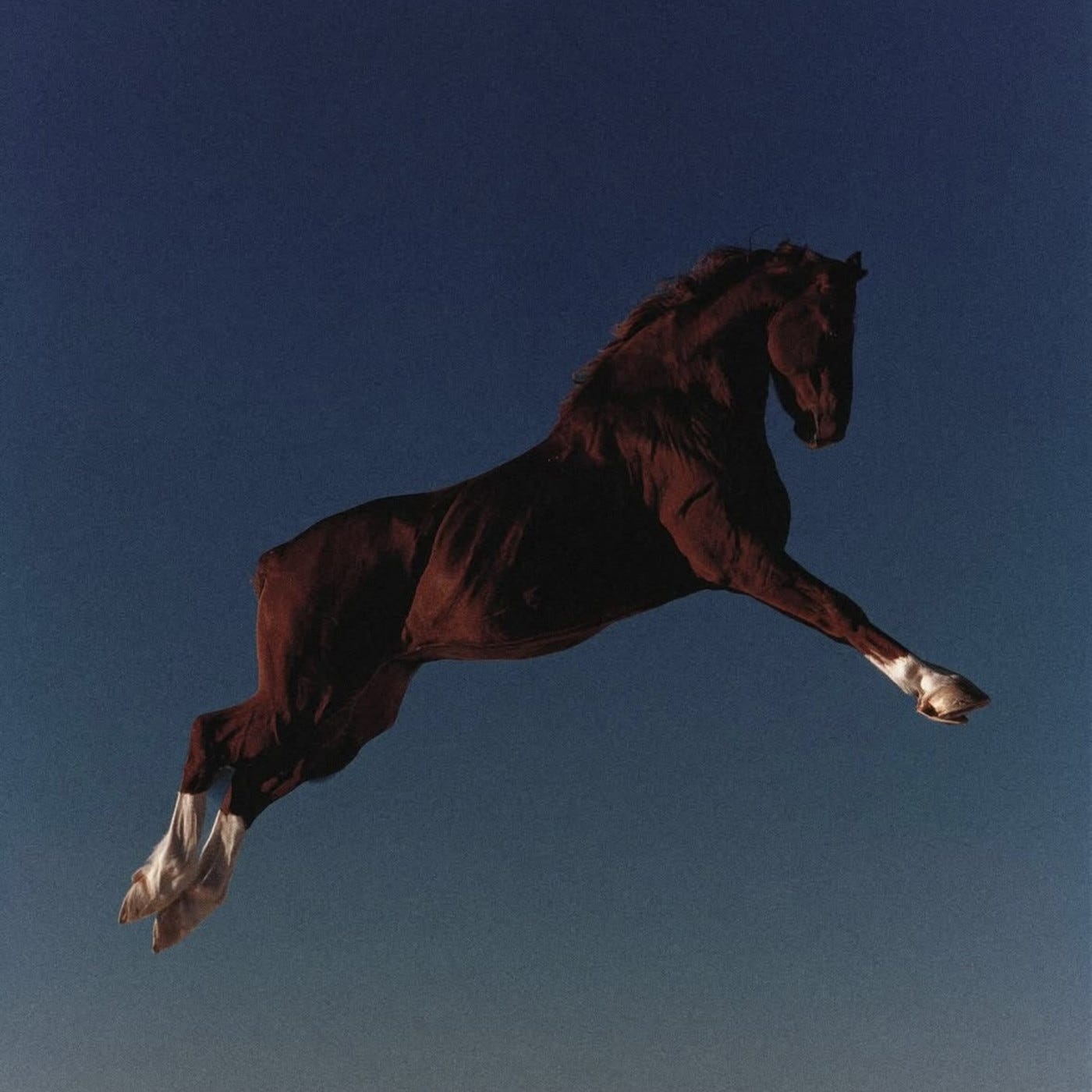
Male R&B stopped begging for forgiveness for its role in the relationship somewhere between Usher’s Confessions and Brent Faiyaz’s player records. Dame Atlas is the latest guy putting his case forward with if i’m being honest, entirely solo-written and solo-produced, with the object of his attention one woman—the one who blocked him, begged him to stay, left, and returned. He’s the judge and jury in this situation, and there isn’t anybody disputing in the room. She calls him during the kickoff on “super bowl sunday,” the national anthem playing in the background, when she says she is praying for protection while, in fact, she is praying her man doesn’t discover anything. Her man is a football player in mid-warm-up as she sits in Dame’s car with mascara running on the fourth down. “He chasing rings/You chasing peace,” says Dame, and he refuses to indulge in sympathy. For “high horse,” Dame removes the drums completely from a long intro along with one arpeggio and his voice, and he tells what loving her did to him: “I’ve been bleeding quiet/Just to keep you comfortable.” The distance she talks about he describes as abandonment. She acts like an angel when the lights go on, hides the knives, and tells God she was innocent, but he pulls God into it as well: “If God was watching/He looked away too.” The full drums appear behind him, overlapped with background vocals, and he concludes without hate, saying that he finally sees her and considering it the worst thing she has ever done to him. It’s the only song where the honesty hurts him more than it hurts her, and he pays up. —Brielle Saint-Amour
Allison Russell, In the Hour of Chaos
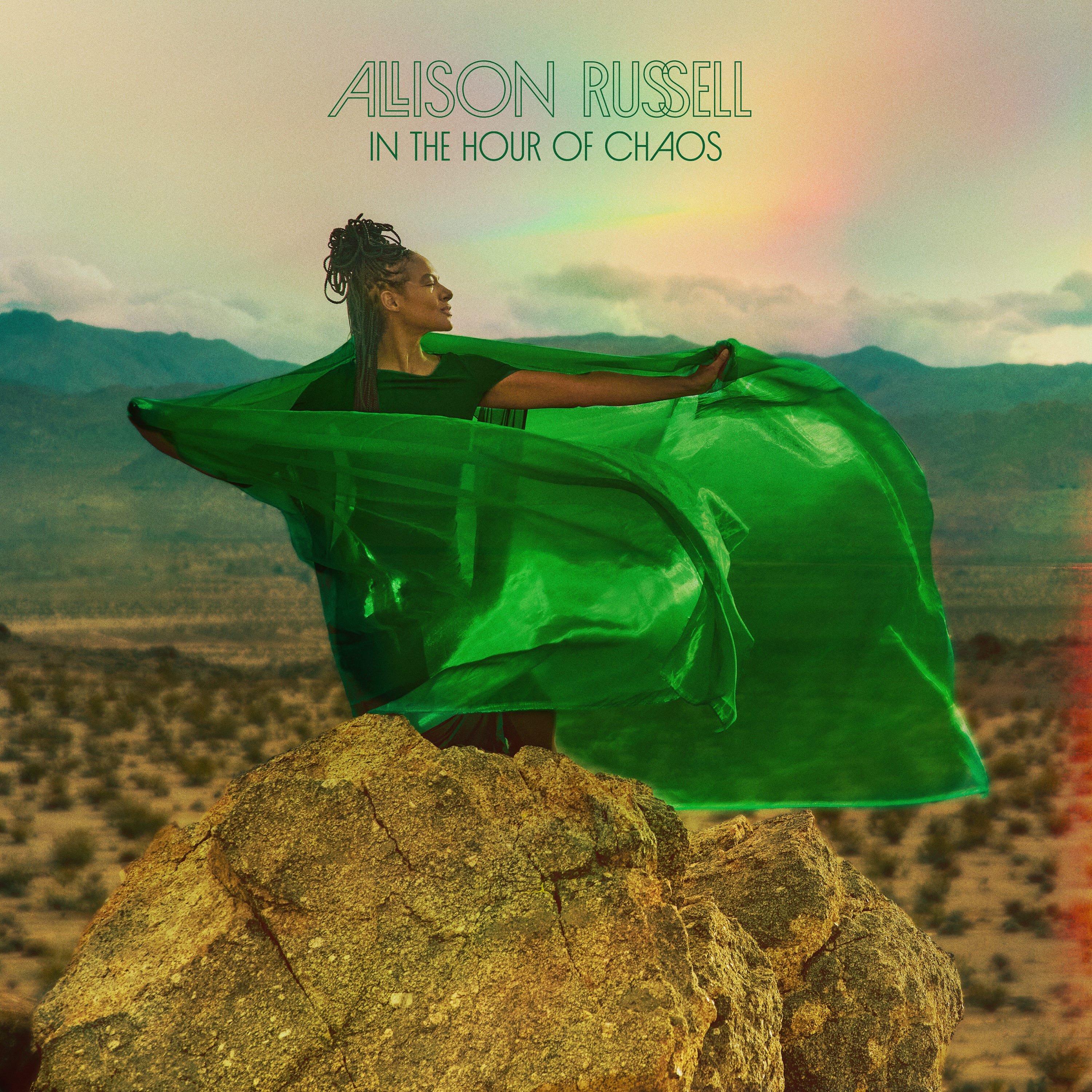
For two albums in a row, the story belonged to her alone. Outside Child put a name and an address on a Montreal childhood behind an abusive stepfather, and The Returner threw the survivor her homecoming party, making it big enough that “Eve Was Black” earned her the Grammy for Best American Roots Performance. Allison Russell writes and produces with dim star, the musical partnership of her husband JT Nero and Drew Lindsay, and the three of them pointed her third album, In the Hour of Chaos, the other way, towards the people she loves and the trouble they are in. She brings with her a banjo, a harp player, a youth choir, and more duet partners than there are chairs at a Thanksgiving table.
One of those doors leads inside a woman whose fight-or-flight cannot be turned off, and Russell comes through in “Black Lavender” bearing cures, asking “What’s it gonna take to bring your heart rate down?” and answering “Palo santo incense, lavender tea and kindness” as items on a nightstand, Brittney Spencer’s voice adding earthiness to a chorus addressing the sufferer as a black swan who has “rivers of adrenaline” in her and just needs an ocean to pour into. She offers the same cure in “Chaos Theory” in more casual clothing: “We can watch something stupid on TV,” fingernails stroking the small of the back slowly, slowly, with Wendy Melvoin’s acoustic guitar grounding the song, and Kyshona and Sara Watkins harmonizing around her as the arrangement builds. —Tayla North
Lance Skiiiwalker, invite,sessions,only!!
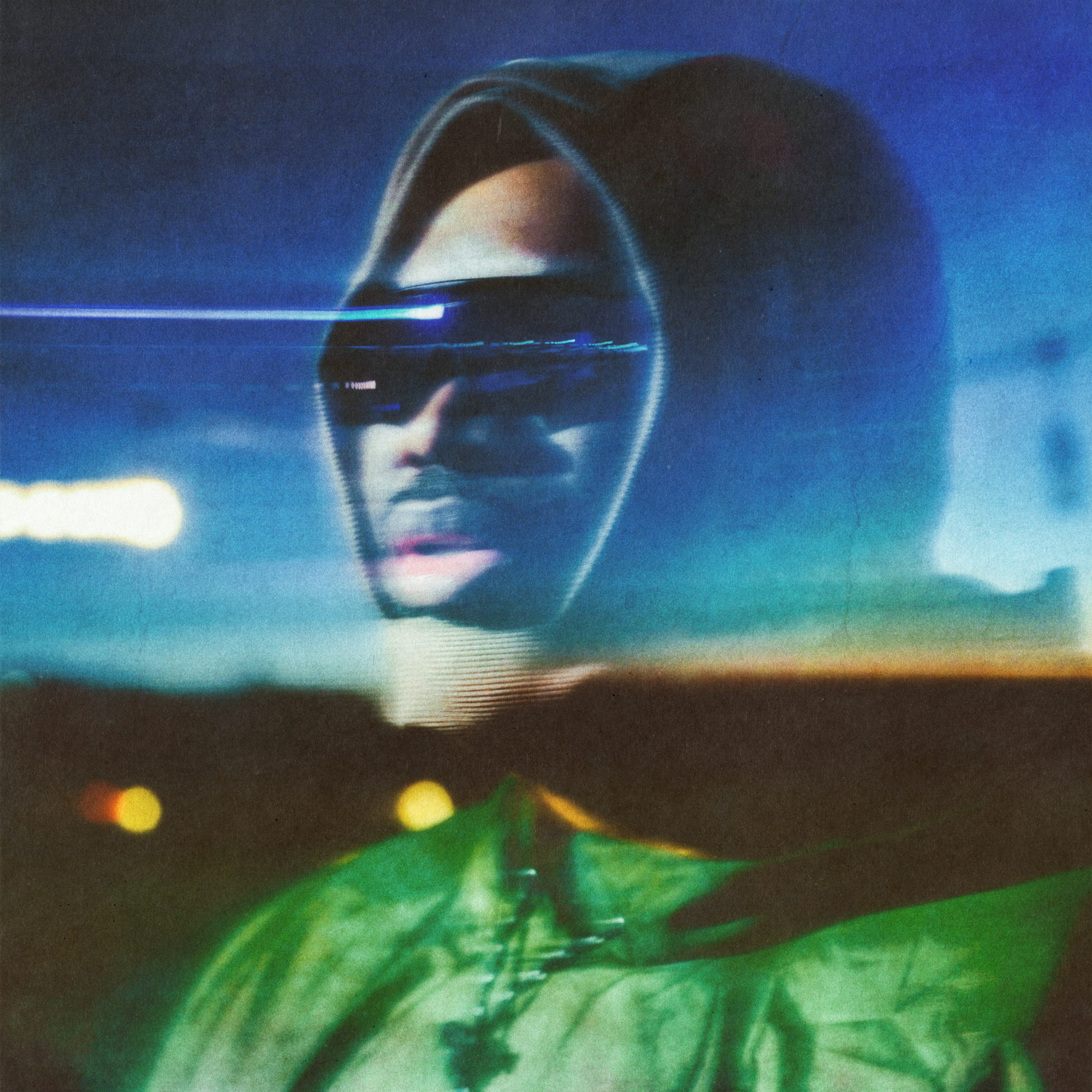
Lance Skiiiwalker may be the most unknown weirdo at TDE. He was born in Chicago and started his music career after a random stranger overheard him discussing music on public transport back in 2007. Since then, he’s been the secret ingredient in TDE, providing his twisted voice for Kendrick Lamar’s untitled unmastered. and Isaiah Rashad’s The Sun’s Tirade. Skiiiwalker’s first debut album, Introverted Intuition (2016), was filled with so many filters that critics couldn’t decide whether he can sing at all. His new album, invite,sessions,only!!, is totally unconcerned about it and contains studio fragments, unfinished hooks, altered voices, and guests appearing in the middle of the recording session, sequenced in such a way that it feels as if you have stumbled upon them just in the middle of their creative process.
Lance writes relationship songs the way people argue, going back on his word mid-sentence and switching opinions. Every answer on “Yes & No” is doubled, maybe now, maybe later, and “I tell you the truth, poof and it lies” is one of the least ambiguous answers in the whole album. In “Saturday” he pleads for a verdict by the weekend, asking “Will you love me by the weekend?” over drums full of actual daylight while Turich Benjy raps clean and direct through the open space. On “Test of Times” he is serious for once, strolling around her room and talking about investing time like people planning a mortgage. At “Mad at Meee!!” the argument is completely circular, ten years wasted, blame nowhere to go, and he snaps with the rhythm of the drum machine, “Waste ten years spent now/Should’ve happened then, split now.” That should sound as bitter as it can get, but it’s rather funny to hear him ask what he’s blamed for after he himself has blamed someone. —Lillian Sharpe
Cargo Cults, Kingdom Music for the Hard Rocks
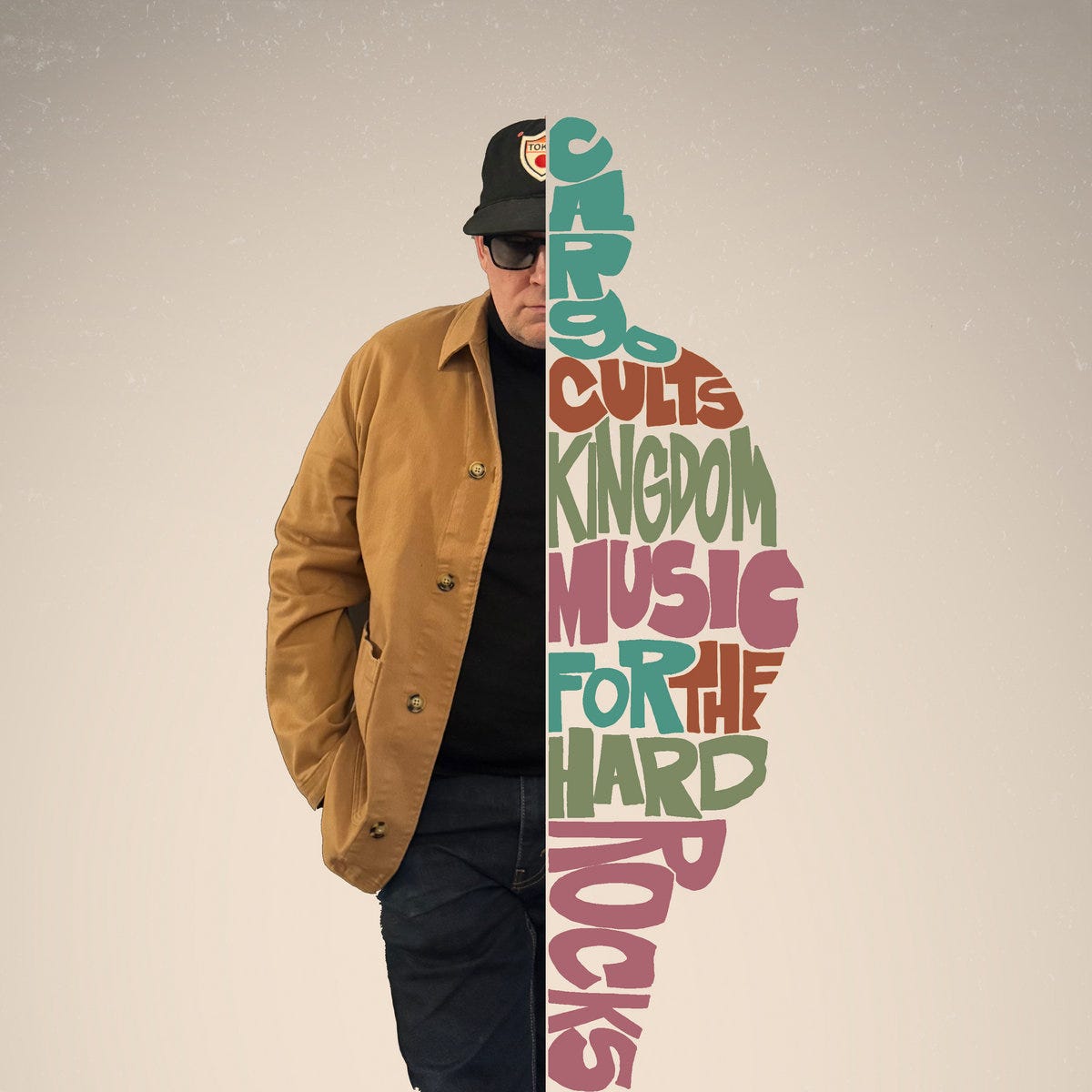
The moment when Zilla Rocca first heard the rapper around whom he would create his own group a decade later was when he was shelving the new arrivals at the record store. In 2013, the two rappers finally met and got to be on the same bill in New York City. As the producer from South Philadelphia told Bandcamp Daily in 2020, he was looking for a family man in his 40s who spent all his life being obsessed with rap. Thus, Cargo Cults was created with Alaska writing rhymes from New York and Zilla Rocca sending beats from Philadelphia. Alaska keeps everything in one drawer along with the arcade quarters and dead classmates, and his voice doesn’t change when he goes from one thing to another.
He says that the neighborhood where he lived was called “Amberlands,” a very poor neighborhood of white flight and blue-collar families and single mothers; it included twenty-six buildings in total. He describes how a local kid stole the tires from his bicycle and how he punished this kid for it. He mentions that divorced dads drove Trans Ams and that there was a motel which took in transients; there was also a kid who had a tattoo of a panther and some guy Benny who was connected to everything. “This wasn’t the environment for softer kids,” says Alaska, “It wasn’t always violent, but you always had to talk the shit.” There was also a clubhouse outside, filled with nudie magazines wrapped in plastic. Finally, there was the conclusion: “Sixth grade Darren got murdered, it was tragic/And just a month or two since that crack took Travis.” —Phil
ZuluMecca, The Limit Does Not Exist
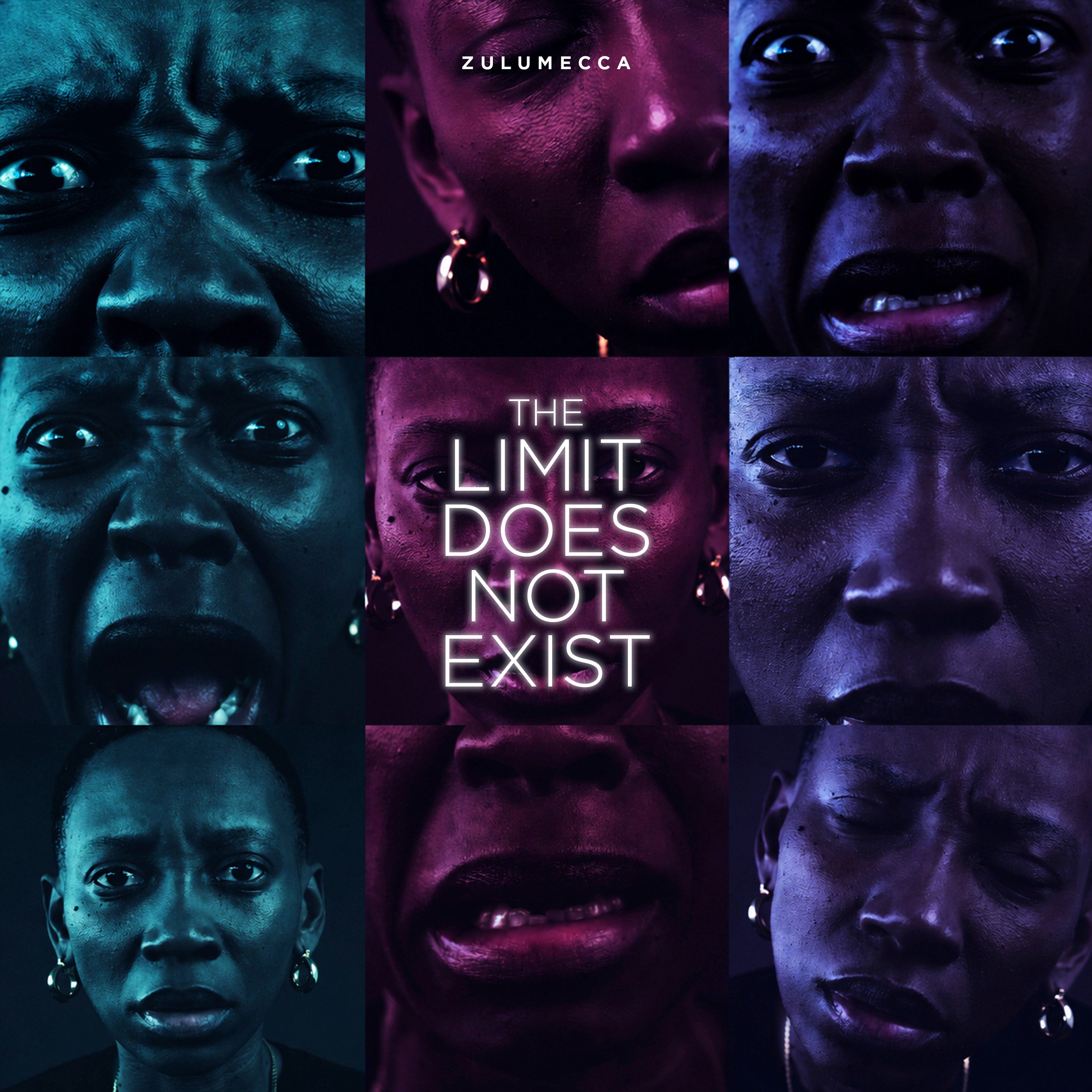
As a VIP bodyguard for Showmax’s Empini, Mbali pursues men through the streets for a living, as is practiced through training and her sidearm. As Mbali, she is portrayed by Mandisa Nduna, performing the stunts herself; it is not unusual either, as she can rap and has been doing it as ZuluMecca since Of Angels and Ancestors, then Wept and Seams, then ClxssicsOnly and Shooterkhumz, producing the bulk of The Limit Does Not Exist. The couplets to “CAP” summarize one uninterrupted fight: she is sent home from work, has a key in the door, and hears cobbling. The perspiration on her nostrils, the thunderousness, not surrendering, and the fleeing. His respiration is so sluggish that the couplet to record it lasts all of one line, and she then crashes through bushes and fences until he is hemmed in. “I said that I was tough/Not tough enough for niggas with guns,” she says as he approaches her; she charges him, knocks his head into a full nelson, and they wrestle over ownership of his weapon as it rolls from his fist, thus carrying on the fight as far as very bloody knuckles.
The function drunk, she swigs from the drink on “16 to the Head,” taking shots at her rivals, calling discord that which soothes her. She seeks solace at the bottom of the page that’s under another body and the solace she gains underneath bottles. Sixteen shots in the liver are equal to sixteen women in the bedroom as her version of a good time before it is identified as a disaster. The cold makes everything warm, flesh freezes, skins get gray and stark, everyone’s out of town to hit the Aspen slopes, and the skiing vacation begins on the end of the rope for us. She’s hilarious in “Don’t Date Rappers,” for warning us that rappers are unsafe, unfaithful, and liars, followed by her nonchalant response, “I was just fuckin’ them girls, I was gon’ get right back.” —Tunde Albright
Estee Nack & Mike Shabb, Live at the Tabernackle Vol. II
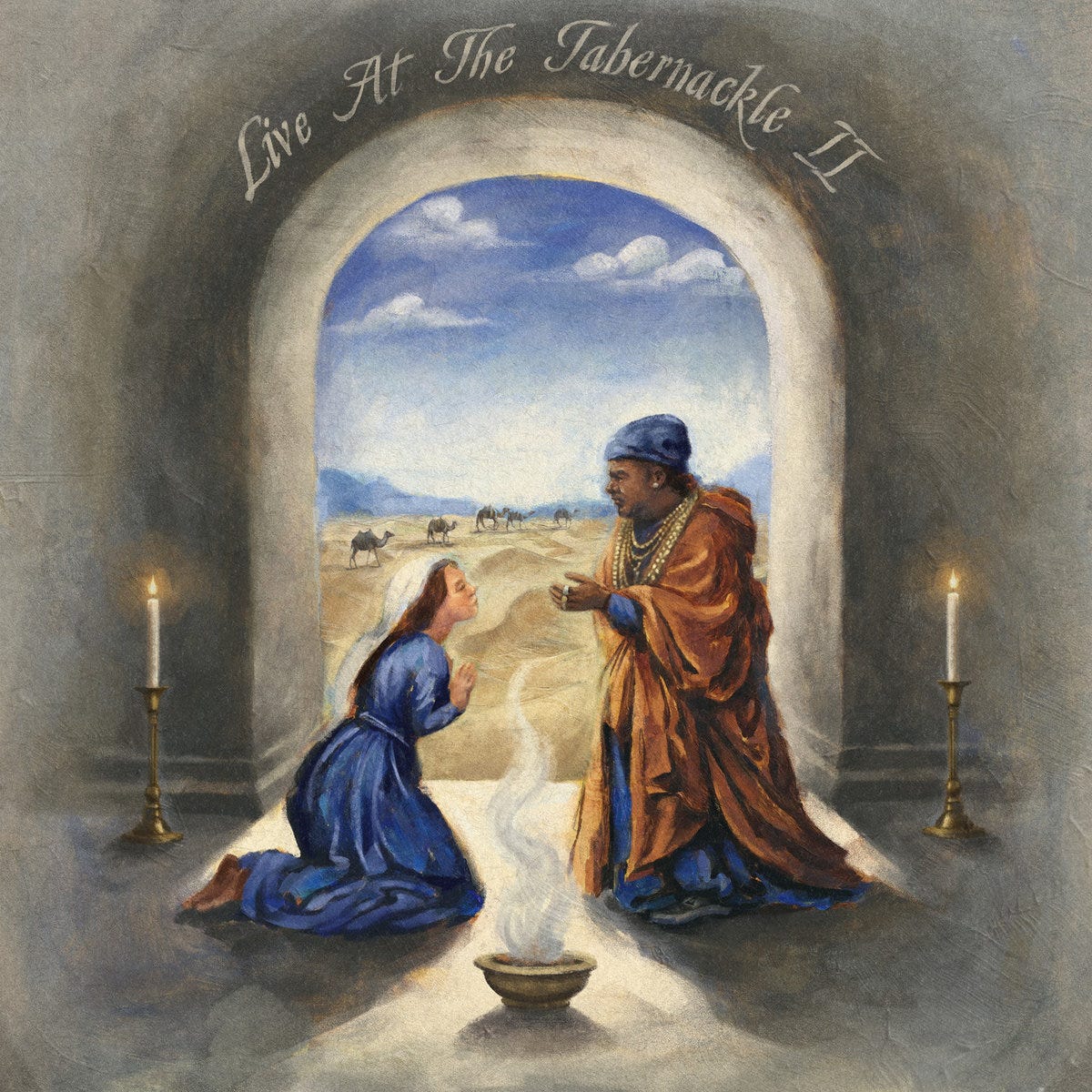
Lynn, Massachusetts, an archaic shoe-leather city ten miles north of Boston, has been exporting its loudest form of underground rap for a decade. Estee Nack came up there through Tragic Allies and made a discography so immense it’s nearly untraceable: nothing but dense, coded, Spanish-influenced lyricism delivered in a cursed, brusque howl. Montreal producer Mike Shabb compiled his first Tabernackle for him; this is the sequel, and Chris Mercedes is on the keys. Most of “AFFAIRSINARGENTINA” takes place in Spanish, kicked down by Shabb’s warmest, coolest hypnotic loop and low-slung drums. Nack checks a palm reader, spills whiskey by the quart, blows all the bread he previously hoarded in the kitchen: “Mad ounces of the medicina/Tryna get the queens, and that’s my only doctrine.” A ship departs North Carolina as he’s gazing over Medellín valley with friends, and the verse continues to migrate among hemispheres and hotel bars without ever crossing borders. He leaves the woman hanging on his arm the second she ceases to be of use. —Joelle Figueroa
The-Dream, Love/Hate II
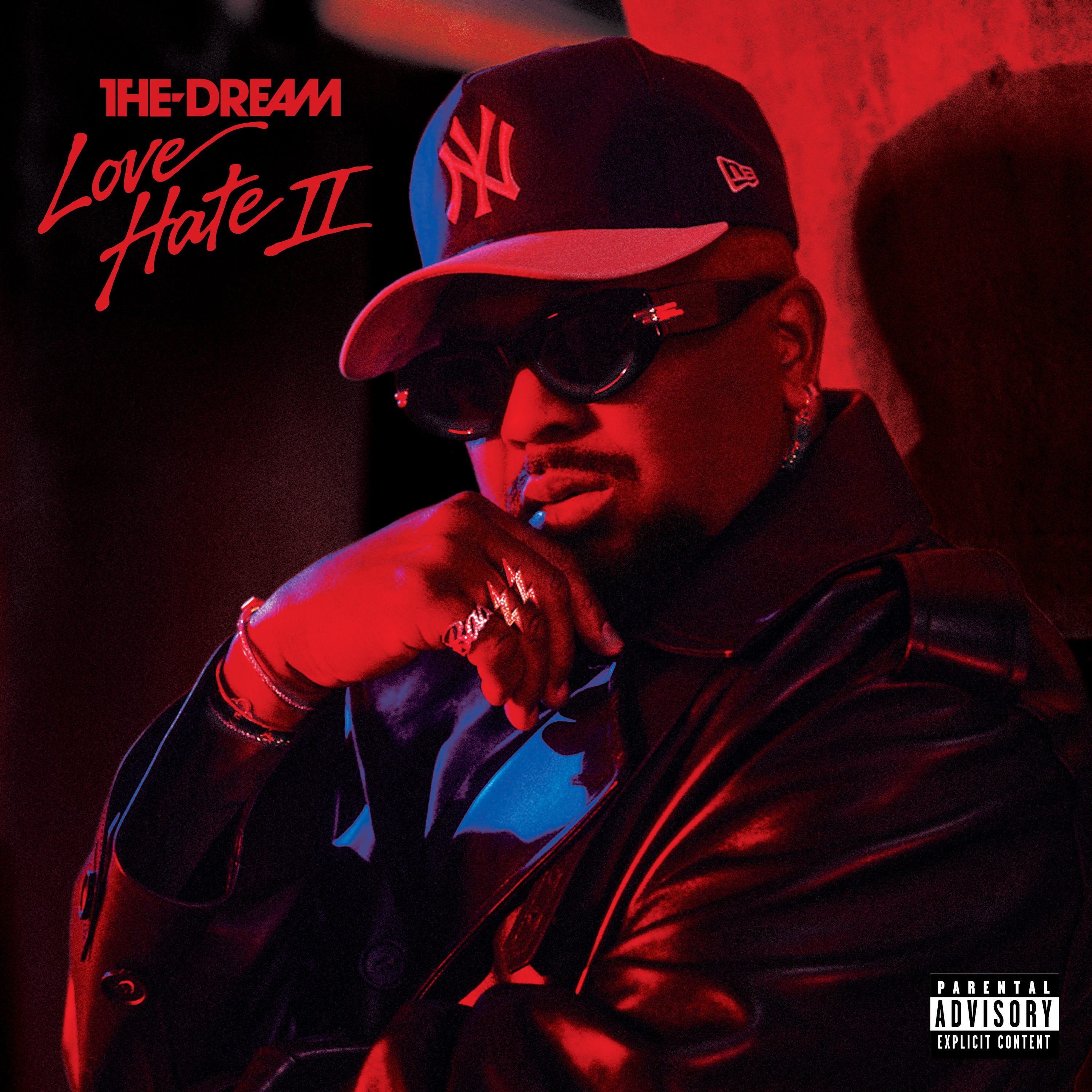
It was 2007, and The-Dream, who’d just written Rihanna’s “Umbrella,” spent, according to his own estimates, around eleven days creating a debut album dedicated to seducing women away from other men. The music of Love/Hate was driven by drum machines, deep synth bass and falsetto vocals stacked till the phrase exceeded the beat it was placed over, making Terius Gesteelde-Diamant, former Terius Nash and self- proclaimed Radio Killa, an institution of bedroom R&B. Love/Hate II becomes his first major label album since 2013’s IV Play, marking his return with a full season of courtship, danger and revenge.
Dirty macking returns as the topic of a phone call on “1 of 1,” and the same trick is played with even less patience on “Bring That Body.” The hook is built as a command, “Bring that body over here/Leave that fuck nigga over there,” he pretends to be a neutral party, “I’m just a messenger here to undress you,” until a different section reveals everything: just friends, but he has keys, and he lets himself in. He stops pretending on “Favorite” when the agreement is mutual, “You don’t need my love/You just want my check,” and they keep lying to each other regularly: she loves him when he’s in town, he loves her when he flies her out. All the warmth created by those songs is instantly ruined by a woman coming to “Powder Coat” and asking, “You sure you want it? You would kill whoever? If we can’t be together?” Pusha T delivers a quality rap verse, cryo-cooling on the neck, Richard Mille watches on the wrist, a Shedeur-and-Shiloh name-drop and a common tag, “Dream and King Push, we just psycho.” Strangest line goes to her: “She roams through the temple of life sacrilegiously.” —Tai Lawson
Oriiginelle, Loving This Black Woman
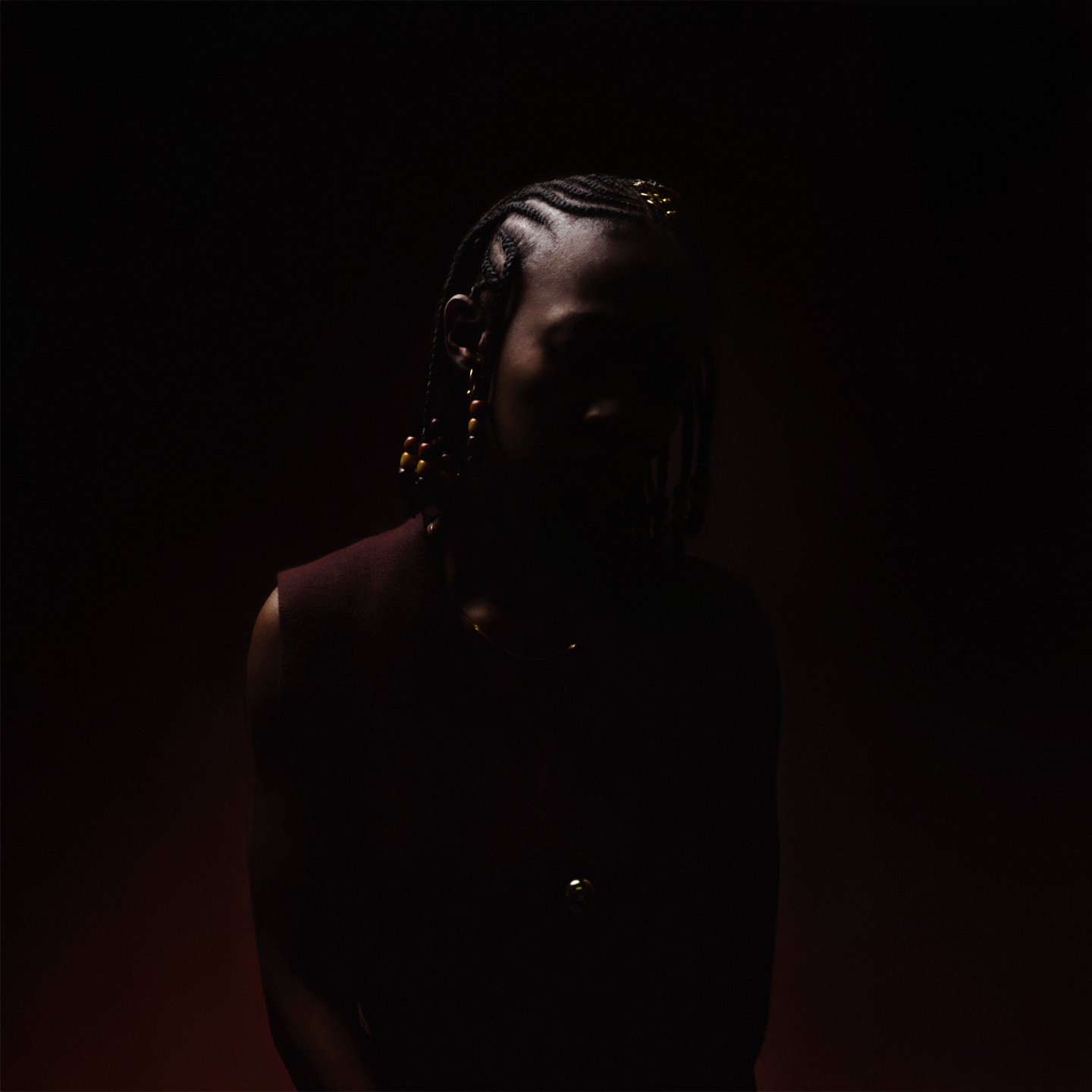
While making Phazed, Oriiginelle revealed to OkayAfrica that barely two years earlier, she couldn’t understand her own native tongue (siSwati), eroded by what she terms Western influence and that she had to wait before relearning who she was. The Mbabane rapper has used both languages successfully ever since. In Loving This Black Woman, she applies them to the oldest purpose possible, which is romance. She raps and sings to one Black woman against R&B chord progressions, and the deeper the songs dig, the more people she allows to comment on the love she receives and gives. A choir from Piggs Peak speaks up. So does her partner, Zinia. So does her late father.
When the woman finally responds, on “Zinia’s POV,” she is tired. Zinia sings the fight and lies plainly, “I’m just saying that I ain’t strong enough, and I can’t keep on crying,” names what was left after her, “pieces of every other girl you’ve ever met,” and asks to be released and set free. By “Sweet Love,” she is already living in the aftermath of that request: “Every day good mornings into three dots/Three dots into blank pages.” Oriiginelle admits that she opened doors to be the best but never opened the woman’s doors, that talk of children never scared her, that she searched for herself to feel secure all that time. She falls apart during crucial sessions, mourns amid the faces she grew up loving and gives herself permission to mourn the loss of all the great and sweet love. —Tunde Albright
Dark Lo & V Don, Made of Gold
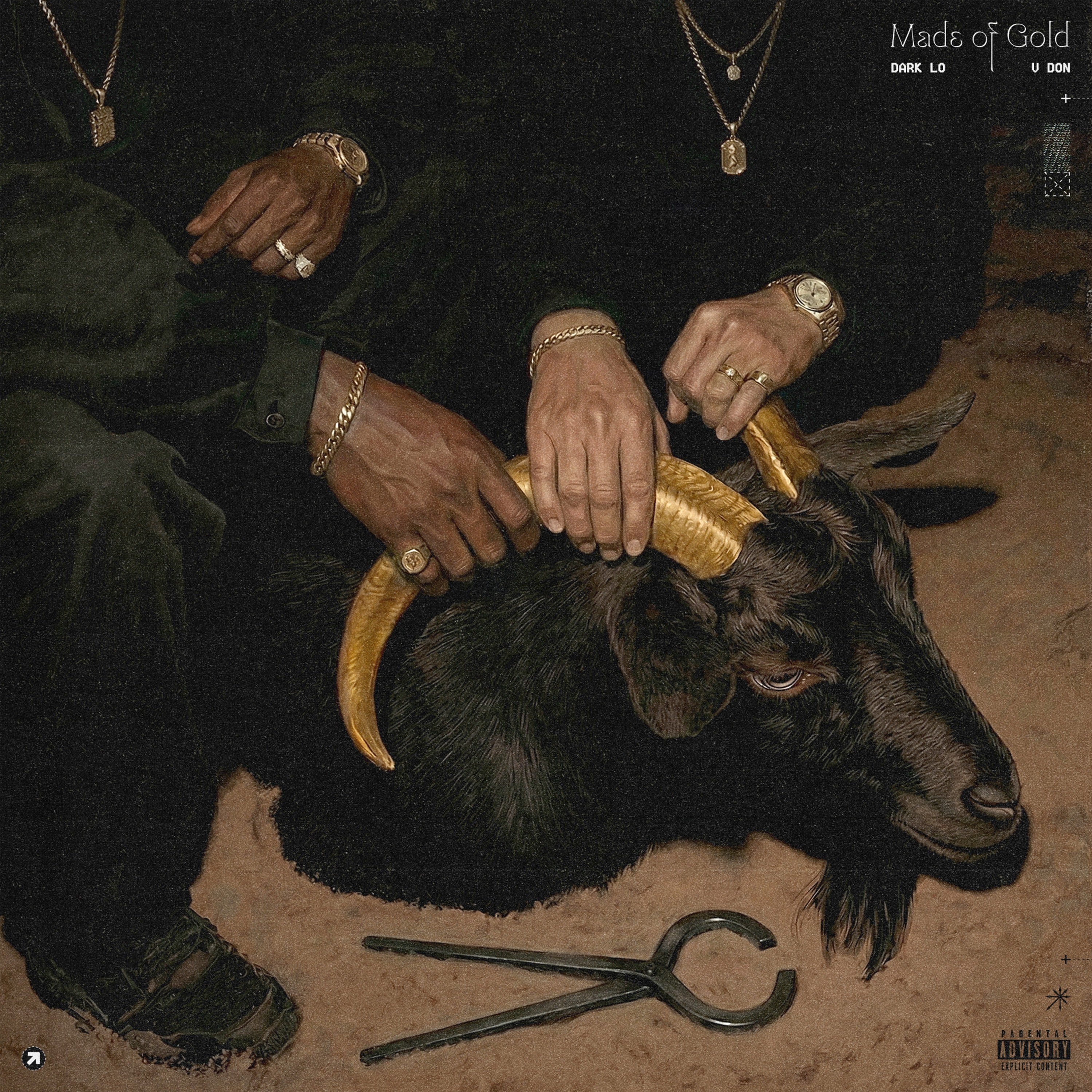
It has been more than eight years since Dark Lo became known as an artist among underground hip hop artists. If you have ever loved his music, then you know what to expect from him. In 2017, he began making music under the name of The Crook. All of those albums were created by producer V Don. The album Made of Gold is no exception. Lo’s world revolves around grocery stores, as is said in the song “Burgers On Wednesday,” where he goes to the grocery store to buy some grapes, uses vegetables as a substitute for steak, uses a pot of boiling water to form an, to watch somebody stabbed over two onions. With the end of this verse, he promises that he will forever be in a free mind. “Chowline” follows the same story only from another angle of the same kitchen, where the employee exchanges two tunas for a green pepper, an aunt thanking him for extra to a ten-brick sale telling the buyer to leave the car and take the train and warns a young man about fake wrestling moves. An old-timer doing life owns the hook to “Made of Gold,” offering up the wisdom not to return or to die since it is the lifestyle he chose. Dark Lo pauses only before an apology to a group of children about falling when their mothers told them to get down when they shot “them shells” to say “My apology to the kids who fell when they mothers told ‘em, ‘Get down, they shootin’ them shells.’” And “Stay Tuned” does likewise, running long as it circles back and forth from scripture in a cell to the wine glass at home and to the former prison that he’s been transferred from. —Wesley Durham
Charli XCX, Music, Fashion, Film
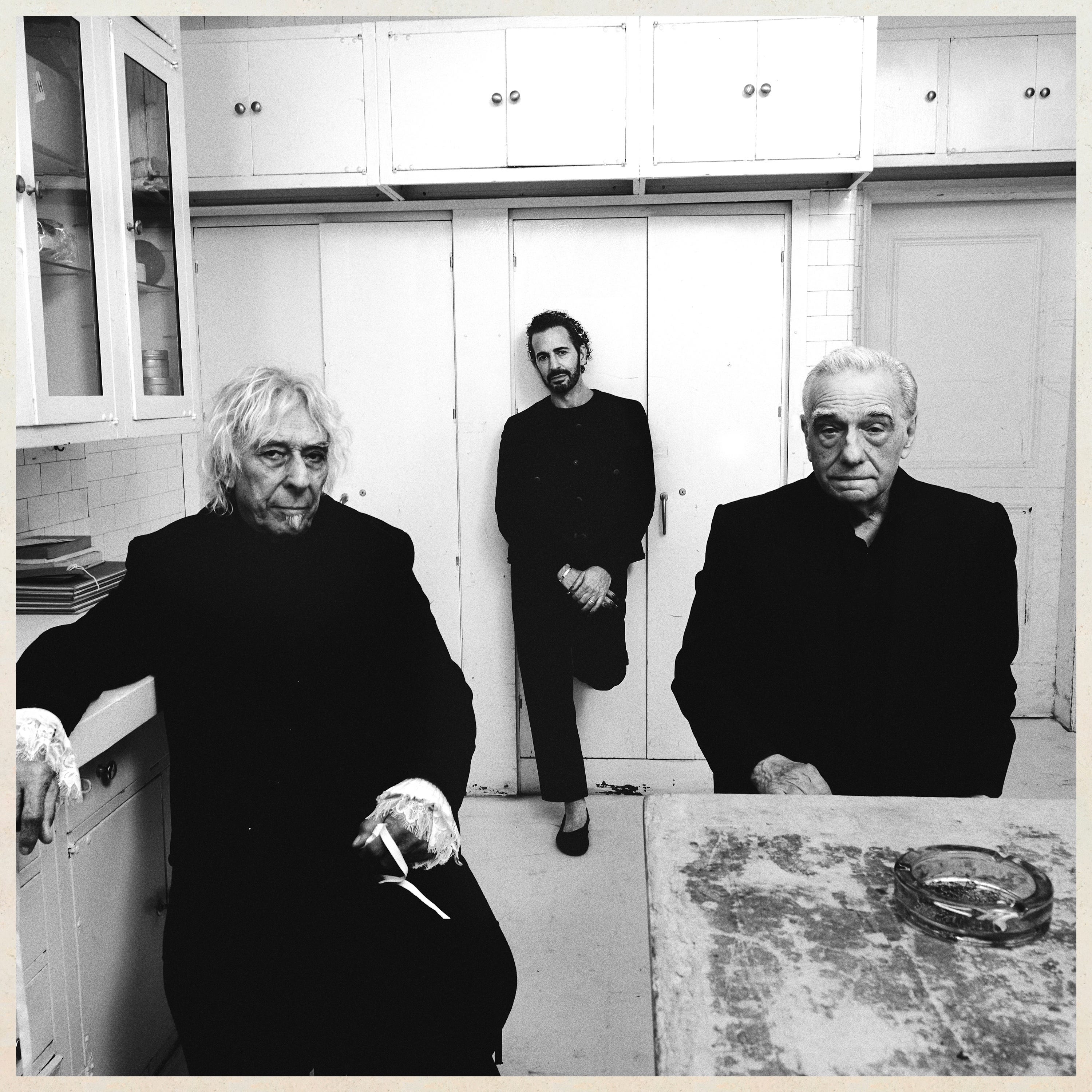
There was supposed to be a pause after the marriage to the drummer George Daniel, after the acting parts, after the year 2024 that saw Brat eating up entire seasons of pop culture. Instead, October 2025 had Charli XCX return to that same room with her long-term collaborators, A. G. Cook and Finn Keane, making swift songs out of processed guitar, digitally altered vocals, and understated electronic beats, feeling, as she puts it, inspired. There never was a year off. Instead, more songs developed about why that could not happen, composed by a young woman who has spent most of her life performing a version of herself and has forgotten how.
On the accessible “Camera,” she acts on the urge by going to the film set. Acting makes her want to throw everything away (her music, her fans, her life), and she poses the question, asking, “Do I wanna make music? Am I being fuckin’ stupid/If I try to be a girl on the screen when I’m turning thirty-four?” It is the marriage that receives the most terrifying song, “I’m Afraid,” in which happiness comes in boxes, in which she becomes a wife, a kid, destroyed, a bitch, too drunk, unable to sleep or feel anything, afraid of ruining it, telling him to take the ring off her hand. As it’s sonically opaque, he confesses the ugliest detail about herself: “All this pain makes me believe/I’m a better artist now,” knowing that it is nothing but an excuse to behave selfishly. She pretends to reform on “Wink Wink,” vowing she’s not a bad girl anymore, using trampolines with no underwear on, wearing trousers instead of them, selling her Porsche, “My friend Rostam told me I dressed like a slut/So now I shop at A.P.C.” as proof. Nobody believes her. She wonders why nobody considers her capable of being an angel girl. —Oliver I. Martin
Bella Kay, My Reckless Abandon
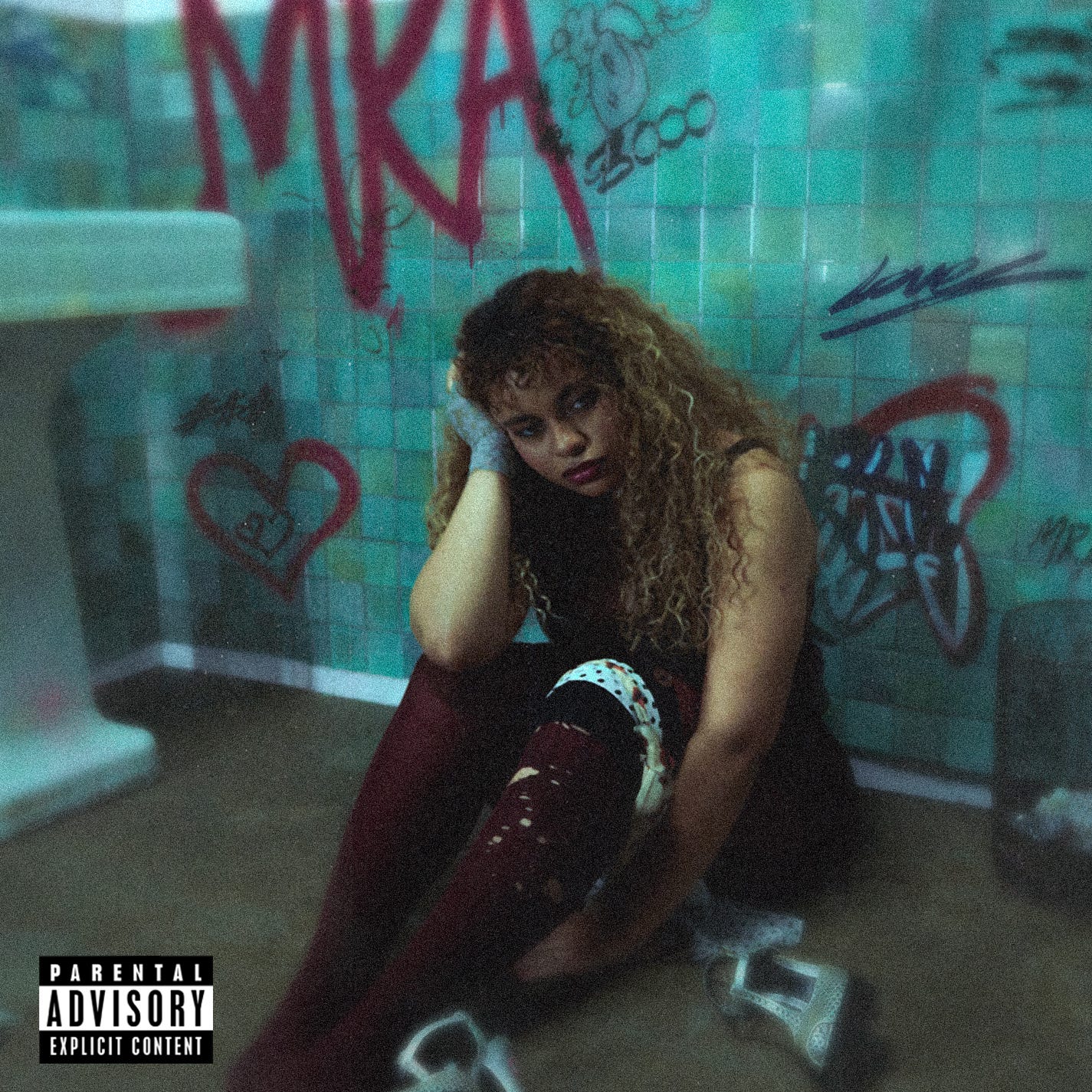
A song titled “The Sick” went viral in 2025 and made Bella Kay a household name even before she released any official content. What she does with this sudden fanbase on My Reckless Abandon, her debut album that she wrote when she was twenty and recorded in New York and Los Angeles under executive producer Idarose, is direct the spotlight at her most cringeworthy moments. Those guys that cannot admit to what they want, her mirror, the lecture her father gave her, it all comes up in the songs using the exact tone that brought strangers’ attention in the first place.
The voice of her father appears in the form of the voicemail she receives at the beginning of “A Father’s Lament,” and in the song that follows she recounts the lecture she heard when she was not tall than four feet. Do not be too much or too little, stay right in the middle to leave this place. Do not be too loud; our loud is different from their loud. You cannot afford to be proud. “You’re Black, baby girl, oh, don’t waste it.” When she started wearing the mini skirts, he gave her some explanations: do not give them one reason to hate you; do not give them one reason to start. The final verse of the song moves the lecture to another generation, to the little Tommy who likes the race cars and Nikes, and to the prayer that the world will find its redemption before he finds his own. —Sabine Okafemi
zayALLCAPS, My Uncle Told Me Some Real Ass Sh*t on the Phone Yesterday
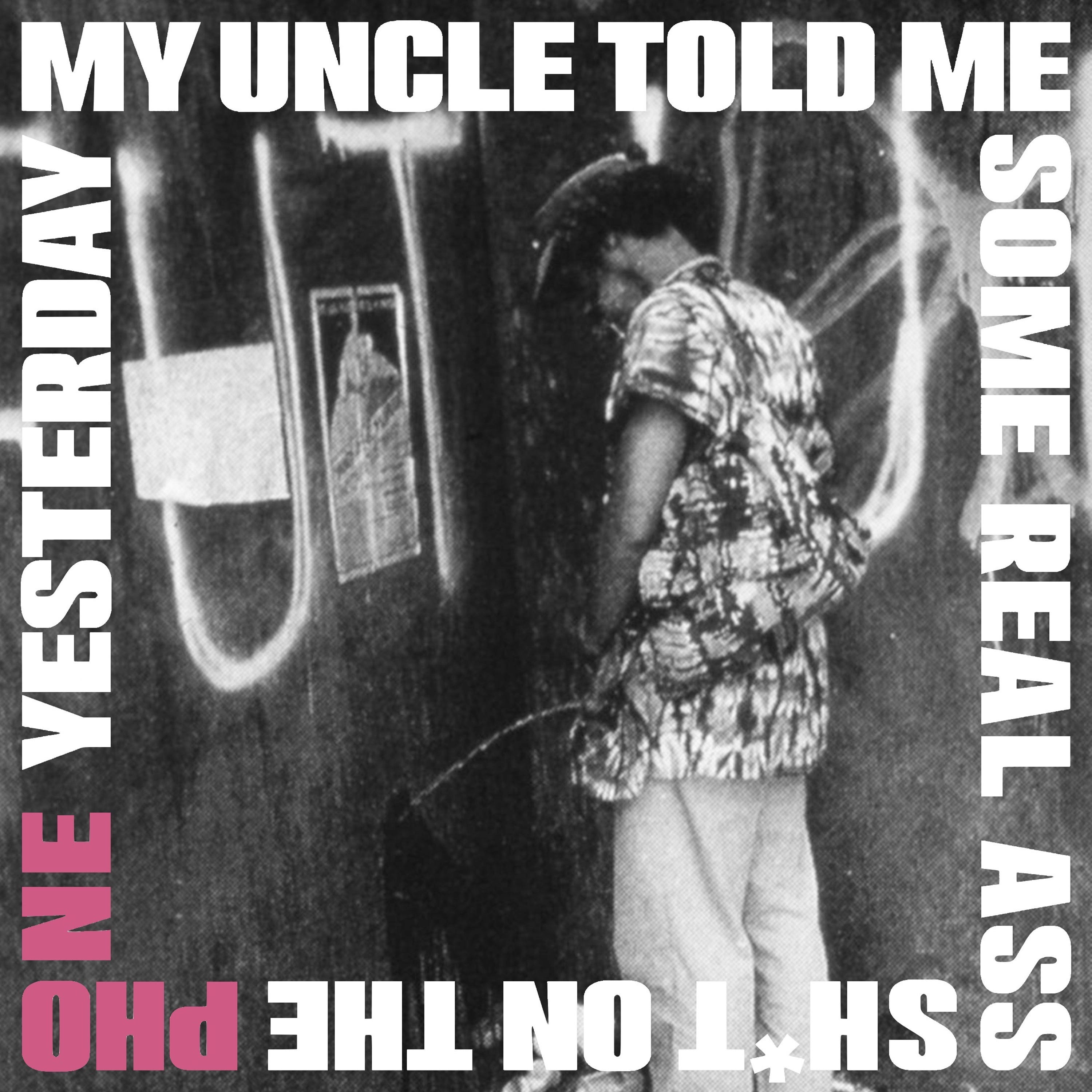
The raps on the producer’s instrumentals would often feel like a demo tape to a producer—except with raps on top. zayALLCAPS, out of Sacramento with residencies in LA, produced almost all of these experimental-esque songs and was credited with all with one of the best album titles in recent memory with My Uncle Told Me Some Real Ass Sh*t on the Phone Yesterday. “Satellite” covers a satellite in a tube connecting to his cell phone, a drunk in the speed lane in a car at the wheel of his life, and Brodie’s weed that runs to the police on his cod, and ends with him looking at his own wrist and deciding, “A Rollie is just a watch, different signifiers, while we watch the planet die,” with fires raging in California, and the coronavirus that is conveniently being named without taking a second. He mentioned having to leave the institution first, and then getting lost off of soju with a woman he wishes he’d never tell anything to.
On “BESTIE (TOKYO),” she finally breaks off from her verbal circling and asks, “Are we fuckin’, just friends or something?” The line is predicated by the same handful of instant-declarative-enabling words in which he dubs her his best friend and wishes they were good friends. Silas Short sings bass and guitars here and doesn’t sing. zay reminds her she is moving a great distance to a city that she will miss, reminds her he’s felt pinched even when he’s up, reminds her he’s hoping she’s good and something. (And she wants him to come home; she wants him to come over. When they’ve never really fixed anything, he calls her his Yoko (Ono), tells her to book him (don’t look for him), and warns that he’d never divorce a backseat. She refuses to choose between the three. Small as it is, he is talking, and the biggest thing he has to give is the front seat. —Randy
Adanna Duru, THE NAIJAMERICAN DREAM
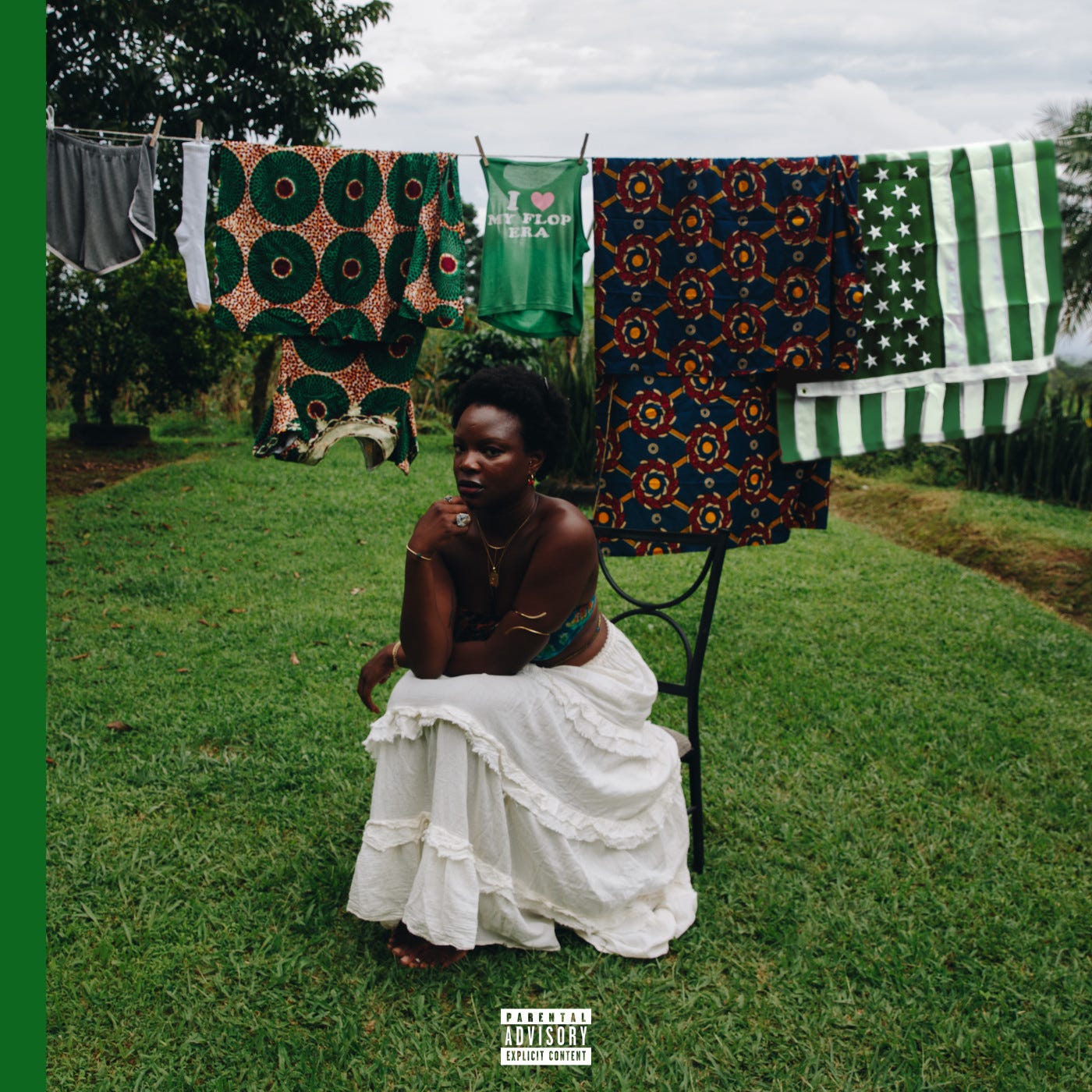
A therapist advised Adanna Duru to put it all behind her, but she didn’t like the piece of advice very much. There must be something in the Nigerian-American singer raised in Orange County that encourages her to dwell on every slight until it brings a new song to life—cheaters, fake friends, and her tastes in men included. But she can become tender instantly if only there is a worthy man to appreciate it. And both moods she treats the same seriously on THE NAIJAMERICAN DREAM. Her ex-bestie, who started acting like her foe, gets dismissed from the roster on “WHITE GIRL,” while Duru appears in the Maybach, pays her way using good credit, and states her ambition, breaking up the way white girls get to blow up, which may be considered the most outspoken statement about the music industry she is willing to make. Her therapist shows up again on “REVENGE” with the same piece of advice, but she crashes out, revealing her obsession—the man who does not like girls too Black and her own preference for such a type of guy. The alibi was Call of Duty with her homies; the truth was another woman, caught red-handed. She hopes her future daughter would be born with nappy hair and be raised to be proud of it, but decides to take her revenge on him by leaving him alone and wondering whether she can. —Raya Sinclair
Goosebytheway, Nature Boy
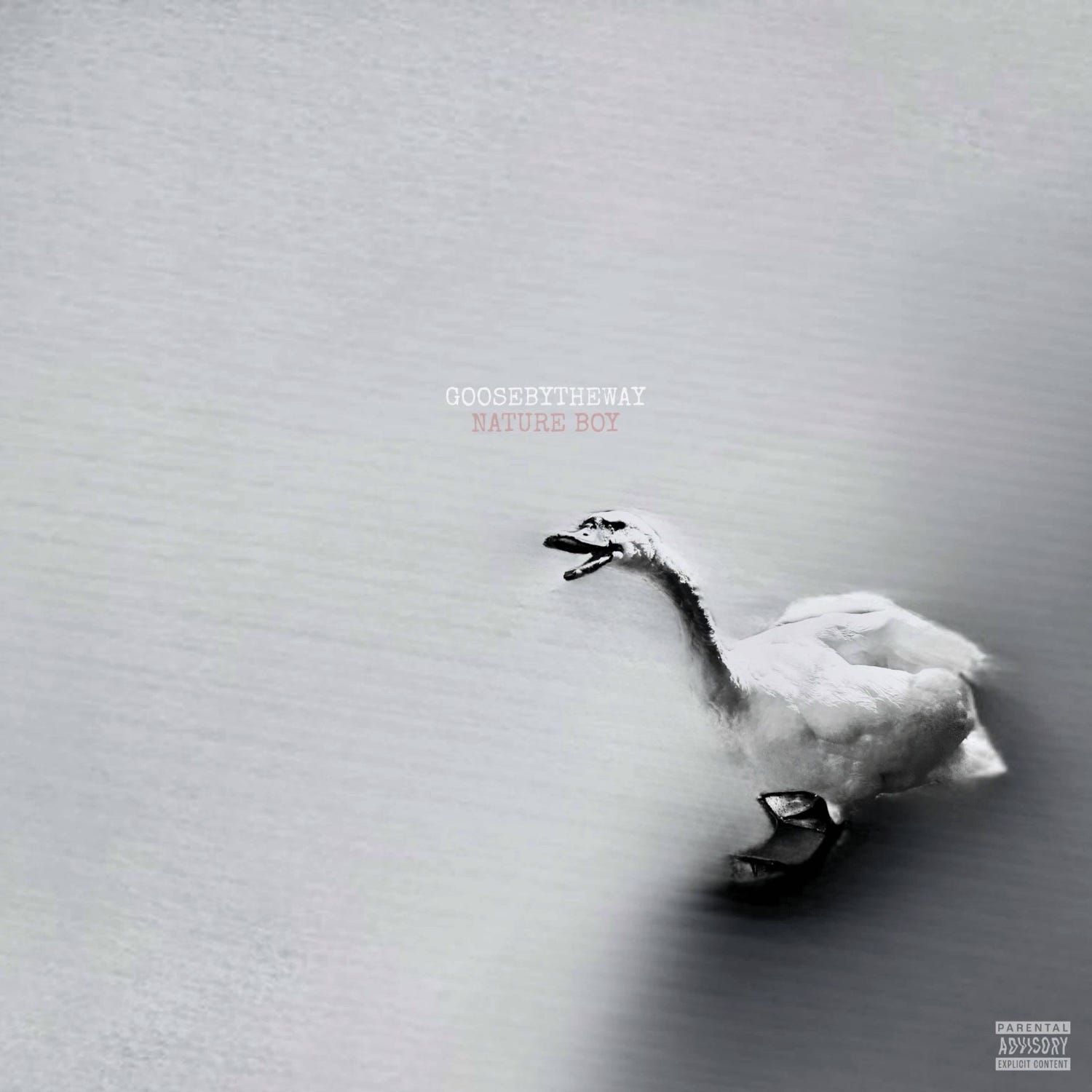
For a couple of years now, one voice has turned up on other people’s records, a verse or two on some song or hook, with no album to point to as his own. Goosebytheway, Goose for short, keeps to the one subject of his second Drumwork release, Nature Boy: money. He raps about not having enough when his kids needed feeding, and the money he now has and what is owed to him, in kind. For example, in “203,” he raps about making right all the times he couldn’t provide for his kids, with lines like, “No more seein’ my baby starve, this a different fight.” He goes on to talk about the general housekeeping of life. By earning his stripes, not to touch the weed if you can’t roll it, and the time that is too precious to be spent waiting around for life to happen. In the next verse, he raps, “I kept an empty shelf, we buy the case now,” on his way to rapping about the Fortune 500 companies. In “I Ain’t Did Enough,” he speaks about how an idle mind led him to playing in the dirt and to being at the bottom of the map. His head is in the books now, and it is only worth anything if he can use the information that he has acquired. He mentions his second year in the music game and how great he feels. Goose displays his verse on “Walk Ups” discussing how he got to this position and his childhood of growing up hating his life and how his addiction to music is one thing that no prescription can solve. Fuego Base takes the last verse and speaks of how his Easters were spent at the chow, how he lost his advance and owes someone for coke, and how he sold grandmothers’ samples in walk-ups. This last verse is what makes “Walk Ups” the best song on the album to play first. —Miles Everette
PFG, NEVER SAY DIE
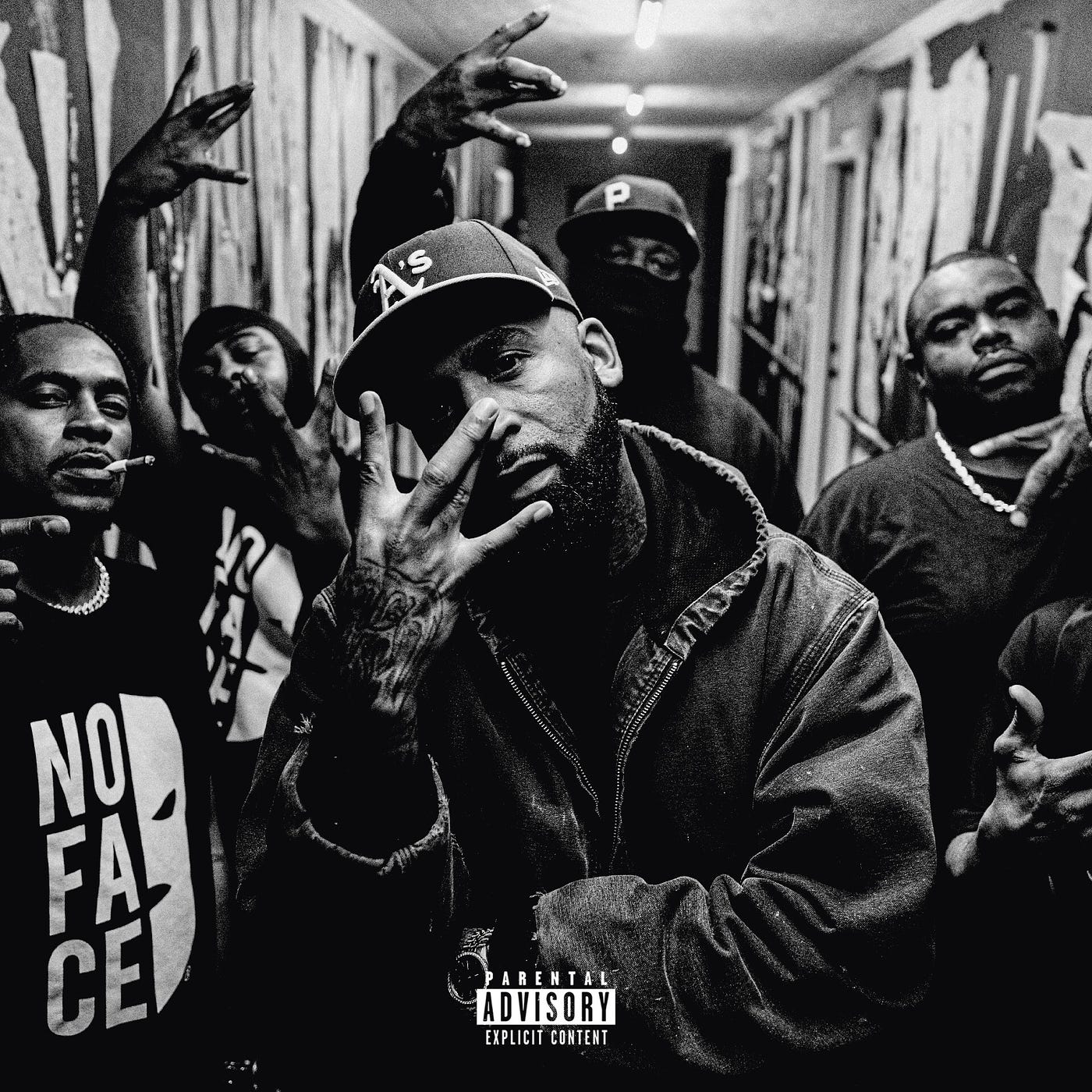
Fayetteville, North Carolina, is a soldier town, hemmed in around Fort Bragg and dubbed Fayettenam by the natives. Rap in that city has always come out of one house. Bomm Sheltuh ran teenage J. Cole through his first recording sessions before he made that city his nam,e and Nerv kept The Sheltuh rolling in his wake, and the frontman of that group goes by PFG, Prettyface Gangsta, a rapper who tags himself No Face right along with his own name. Cole came home to produce his NEVER SAY DIE and kept the production slim and mean, open air where a busy producer might pile melody. PFG eats up that space.
PFG watched a man get killed over cigarettes when he was nine years old. “When he become dead, I become alive,” he raps on “In Rotation Left,” locates the murder precisely, on the Merc, while he was living in Tiffany Pines, and takes the only message the moment taught him, which is that time is short and every quarter and dime matters. Cole serves the hook around him, blunt to the left hand, life always running clockwise, and by the second verse, PFG is out shopping weight from plugs who don’t speak English, one man, one nightmare like Jason. There is death coming on “Murk Mob” too. Over the busiest, most aggressive drums Cole gives him anywhere, PFG drives down Mercerson Road planning his next key and writes the coldest line on NEVER SAY DIE: “Around this time next year, niggas gonna wanna kill me.” Then he loads four bricks and a roadmap into the whip and promises to feed the projects when he gets back. —Harry Brown
Kelela, new avatar
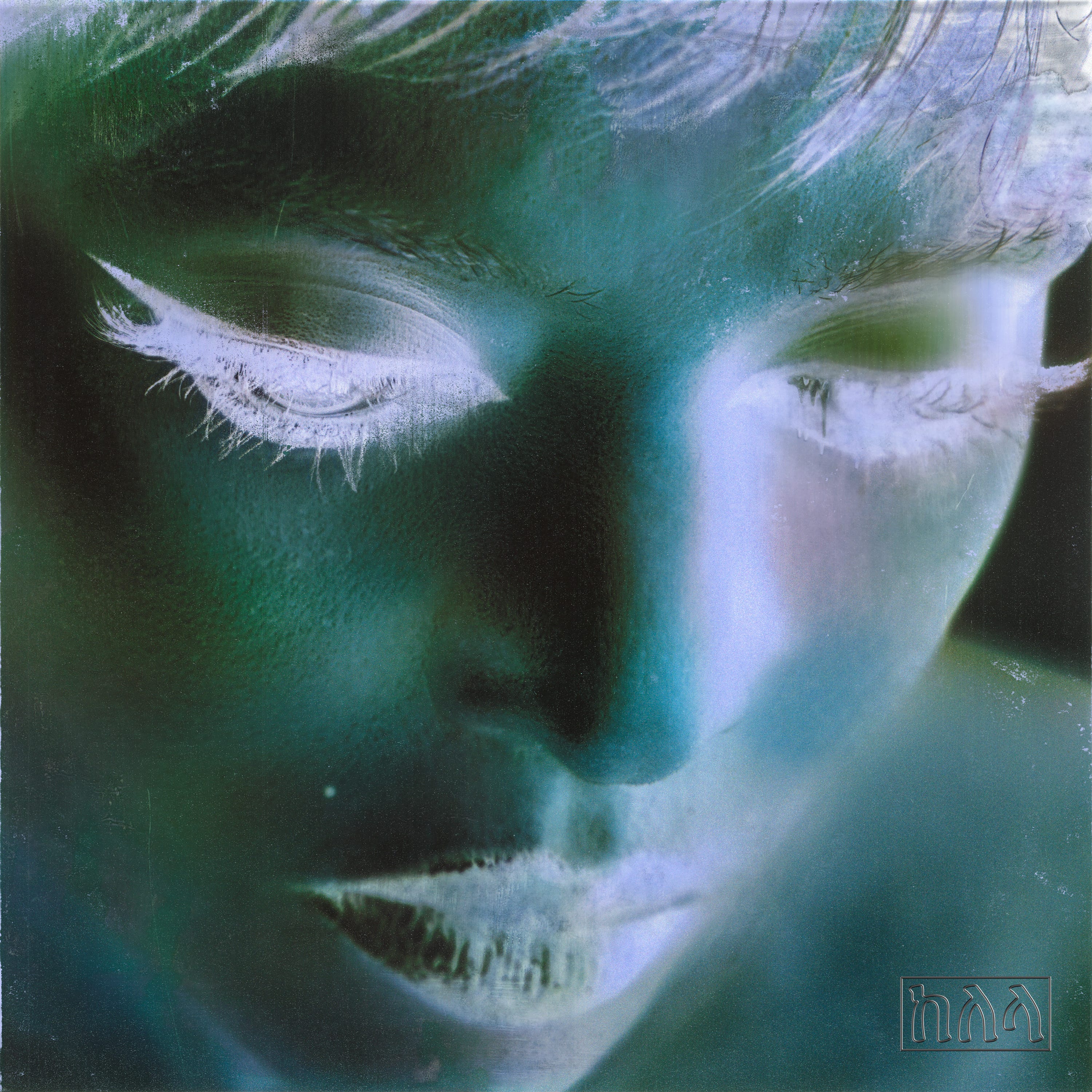
Octavia Butler’s Parable of the Sower finds a teenager watching California burn and making sense of it by scripting a new scripture line by line. Kelela had read the novel during the writing of some of the earliest songs, and the mission that she sets out for a new avatar could easily be from the pages of the heroine’s notebook, “solace in confronting,” the music that finds meaning in a mad world rather than trying to shut it out. For the DC-born artist, confrontation begins small. Someone she loves is no longer speaking to her, and she keeps pressing the silence until even the pressing becomes company.
Inside the dark house in which “Idea 1” takes place, the acres around are scorching. She knows he is hiding, and she keeps calling out for a pulse on the doorstep, asking “Are you alive?” to the person too jaded to answer. It has disappeared completely in “Goin Down,” with sympathy gone, the apology too clichéd, the eyes remaining dry while she cries all day, and she concludes the story on the hook: “Too bad you’re locked out of love.” Even the goodbyes in “If We Meet Again” keep the directness. She writes a grievance where a eulogy might go, “You don’t try hard enough/Even when it’s easy and obvious,” and when the word friends bubbles up during the verse, she pulls it back as she decides he does not deserve the compliment. —Marjani Fields
Steve Lacy, Oh yeah?
Up until recently, lyrics took a backseat to beats. As a Compton high schooler, Steve Lacy created tracks on the Internet using an iPhone, sketched a chorus, passed on the rest, and that was how “Bad Habit” took TikTok by storm and earned him his first No. 1 and a Grammy nomination in 2022. For four years afterwards, he went silent, opened up a fresh round of studio sessions right after his debut album Gemini Rights, recorded many of them in Paris, stopped drinking coffee and smoking edibles midway, and explained to Rolling Stone, “I’m ready to speak my mind.” That is what his newest album Oh yeah? is all about.
In August last year he released “nice shoes” as a solo. Now he has expanded it into a two-part suite “nice shoes / in your world,” which allows the filtered buildup to settle into a long groove jam, with a James Brown vocal sample borrowed from Lyn Collins’ “Think (About It).” He has never sounded lonelier or funnier at once: “If I, if I had a dollar for the friends I would fuck/I could buy a pair of really nice shoes.” He admits to being sad without realizing it, leaning on nothing but “my guitar and serotonin,” calls himself a “non-confront, avoidant, lonely coward,” and begs for permission to spiral. In Part II, he addresses a roomful of beautiful people, calls one of them an angel, confesses his own problems have always been about himself, and retreats back to his world before it becomes too heavy for them. He saves “bebe” for the comedown, a hexed little love spell where his friends bring him in off an edible, and he appears, somehow, holding wedding vows. —Reuben Dara
Another Planet & steel tipped dove, People Are Not Your Friends
Trust is not a way of surviving in the New York underground. Promoters have no money for the door split and no response on the cell phone, where crews break over beat money, handshakes get spoiled. Phiik and Lungs grew in the environment of mistrust: these are childhood friends from Long Island who write notebooks not differently from other rappers filling camera rolls with photos, performing as Another Planet and being part of the Tase Grip circle along with AKAI SOLO. Production work for People Are Not Your Friends is handled exclusively by steel tipped dove, a New York producer and engineer who is having an incredible run of releases. This mistrust permeates every possible direction, and the worst of it hits those holding microphones.
Phiik opens this with the line about rappers’ inability to support each other in spite of their jokes: “Heads crack jokes but won’t support you/The definition of choking on clout.” Then he sets a chair for another shipwrecked rapper to “sit back, relax and watch you drown.” The complaints begin from the very first track and never calm down. Lungs complains about fake people not differently from the way others do, seeing all people staring at the same phone and using the same tactics to control “a bunch of rats.” On “Treasure Junk,” Lungs observes rappers in the club who behave themselves as if they were not sleeping in the parental bed and says it is time to “shun the whole guild,” including himself: “Rappers not special/We should definitely be shunned.” Phiik takes the verse and does something quieter and deeper—this is what a performer feels about the silence after the request: “You ask the crowd to make noise/And they do not holler.” —Koda Lin
Ariana Grande, petal
When nineteen-year-old pop singers begin their careers, their thirties typically involve apologies for their past actions or reminiscences of their glory days in the music industry. For pop star Ariana Grande, who had begun working with producer Ilya Salmanzadeh in January until April, she had another option to spend the duration by starting to make fun of others within her music. The music within the eighth studio release (petal) included jokes towards the recipients of the songs, whether it’s the man she’s singing at, and often, herself. Within the lyrics of the first single, “hate that I made you love me,” the singer apologizes for being irresistible. She boldly takes credit for a grown man who cries during sex with her. In the R&B-inspired “big feelings,” she states, “Pussy so sweet, a tear fell from his eye.” Following that bold statement, she continues to sing about her powers and encourages her lover to enjoy them. For “never get over me,” Grande sings about the sweetness that she has to offer her lover, stating that it is a burden for her to have to let it go. However, she suggests that her lover can move on with the memory of the two of them together. In her head, she is being consumed by the ethereal drum ‘n’ bass atmosphere of “nowhere, nobody,” yet she reports that she will not bite. She has been holding hands with complexity since she was five, yet she still asks why she continues to strive towards her goals in life, only to end up at the beginning of her endeavors. —Charlotte Rochel
Ambré, PEYOTE
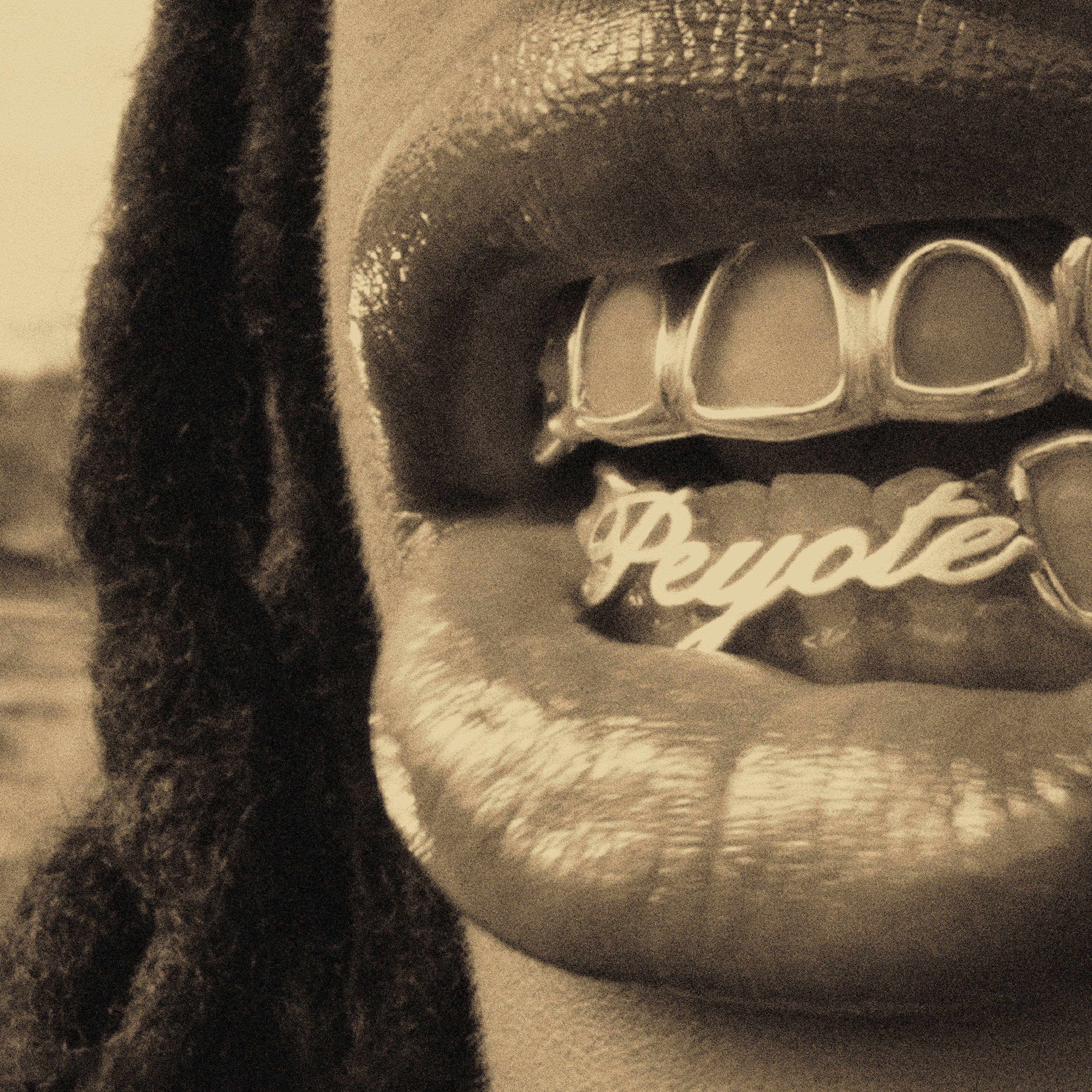
Peyote takes longer to grow than pretty much anything else in the desert, years before the cactus has even reached a size where it’s ready to harvest, and the rituals surrounding it take an entire night, starting with illness and getting clarity before dawn. Ambré knows a thing or two about the roundabout route. She grew up in New Orleans and worked as a songwriter for the likes of Kehlani and serpentwithfeet until she got a Grammy nomination as an uncredited songwriter for their records. PEYOTE is her first full-length project named after the cactus, and its visions don’t rise very high above the ground. They stay in hot- boxed cars, inherited curses, and a woman who refuses to come back.
She even hedges her recovery on “As Always / Feel,” a two-part suite by Justus West and Tane Runo, imagining a love that grows in her hands like a flower, and then taking it back for herself: “But I could be wrong/As always/Just doesn’t feel like always.” By the suite’s second thought, she decides that she doesn’t care where they go from here. “September” cuts deeper than anything else on this record, keys and slow sway under a woman who introduces herself as something other than a person: “I’m not a girl/I’m a story/With nothing to do.” She sees herself as the mirror of a godless man, looks for a place to put the anger in, “Find somewhere to place my rage safely,” and concludes that she is numb enough to skip the Novocaine. She keeps a round in the chamber and invites the game. This song sounds colder than any of the others on the album, and it is the most alive one. —Renée Holloway
Action Figure 973 & DiMaggio, Polo Grounds
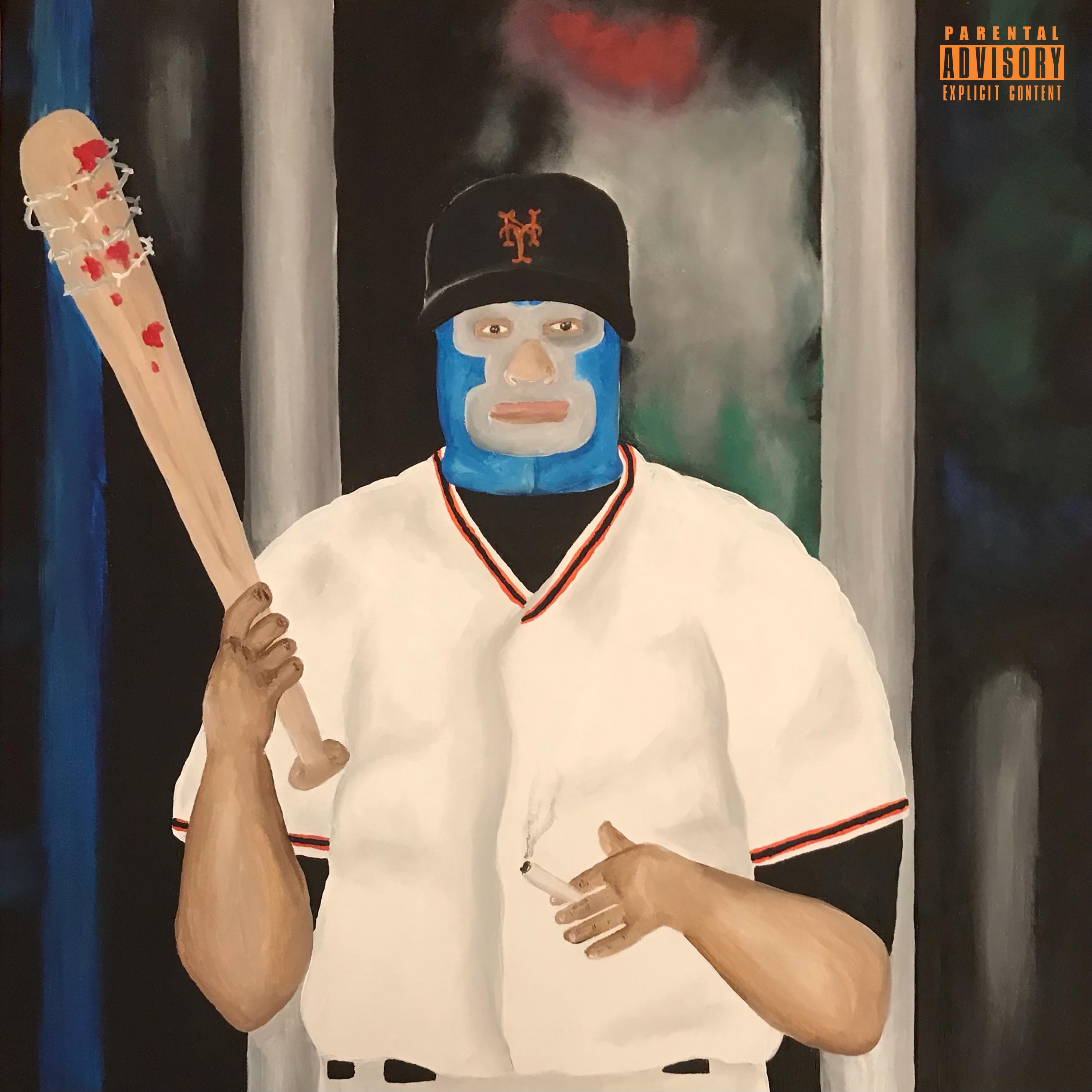
Being in the business of threatening other rappers about how they’re done is not well-paid and does not sustain itself very long. Almost everyone in it finds themselves running out of material by the third or fourth time around, when their threats start looking like legal documents and the individual on the receiving end becomes anonymous. Action Figure 973 is fully employed in this industry, wearing a luchador mask while having DiMaggio handle all the technicalities below, and his solution is to make fun of himself. There is no direct name-calling going on in Polo Grounds. The target of all of his invective is always the second person you—someone who owns a record label, a recording studio, a woman, a favorite rapper, and has the Crime Stoppers number saved on the speed dial of his phone. This allows for one insult to apply equally well to a multitude of individuals, making them all into different targets. These jokes are orthopedic and cosmetic, based on torn ligaments and surgery and wrestling endings, appearing as slapstick right before they become threats. The underlying anger is genuine and comes from his perception of the way he was already banqueting critics.
“Baseball and racism, America’s two favorite pastimes” is his least poetic line, contained within the title track of “Ken Griffey Jr Was Never a Yankee,” the hook of which builds up from his unpaid debt, to how everything can be bought except for integrity, and to the baseball player who didn’t wear pinstripes. The same theme appears a verse later as critics who “treat the underground like the Negro Leagues.” Anywhere else, the comedy dominates. He will not leave the sport in question on “Butch Husky,” as he is “Kobe at the foul line with a torn Achilles,” and after a couple of lines, he will put it under the surgeon’s knife, “like Coi Leray with bigger titties.” Fortune 500 company was born out of the mask that he stole from Amazon. On the hook of “Lou Gehrig’s Disease,” he asks who will be next to become rapper weed. Then prays that the competition gets Lou Gehrig’s disease, with the caveat in between saying that a foul is only a foul if one of them is bleeding. On “Showdown at Shea,” he takes the verses from his competitor and throws them right back, saying, “I heard your last verse/You don’t even sound like you, God.” Losing this game, according to his terms, is to play in traffic. —Owen Baptiste
Magi Merlin, POWER HOUSE
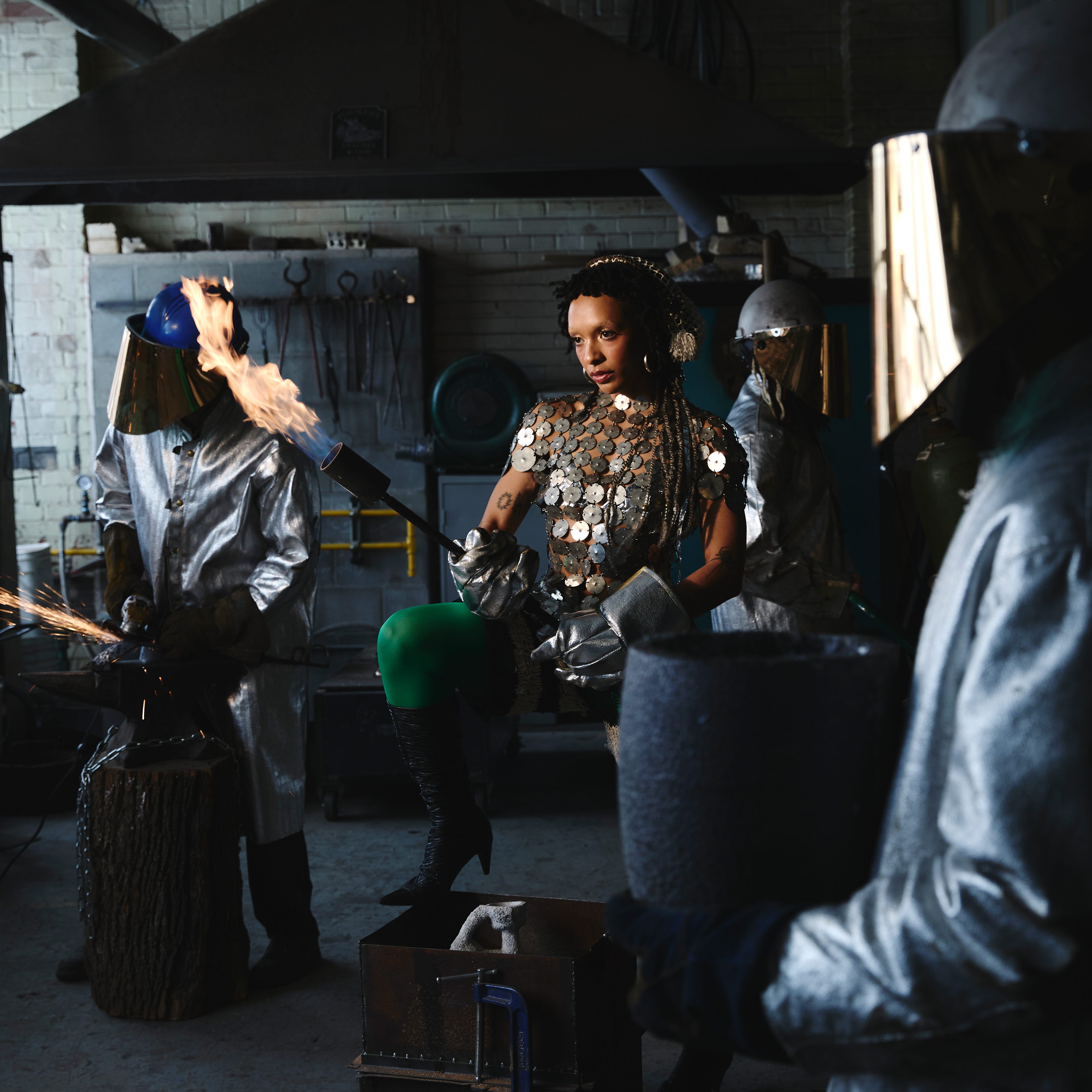
Broken R&B is practiced by exactly one artist. The genre name is claimed by a Montreal-based singer, producer, and actress called Magi Merlin (Mahd-j-eye, in pronunciation), who explored the concept with three EPs, namely Drug Music in 2021, Gone Girl released a year later, and A Weird Little Dog published last year. All of her records were made with the help of her longtime writing and producing partner Funkywhat while she was directing her own art projects as well as playing Chloe in Mile End Kicks. Magi Merlin implies something definite by “Broken R&B.” In her music, singing constantly breaks into speaking, hooks seem to be positions falling apart under the pressure, and the characters command others while asking to hold them. POWER HOUSE, her official debut, gives those characters a house to struggle in. “EAT!ME!OUT!” pushes her appetite into a live room. One of the album’s standouts features a hard drum pocket and thick bass with the saxophone that turns into the jam and argues with her instead of backing her. She persuades a lover “down down down to the brink” and uses an insult that she has gathered up, “I’m impossible to please/What else do you think about me,” using court language for her plea: “I plead guilty, your honor/Until the tables turn/And they’re turning.” The title pun does the closing argument, “You got me eating out your—/Can’t think, you’re eating me out.” —Osei Addae
Dave East & Harry Fraud, Price of Pain
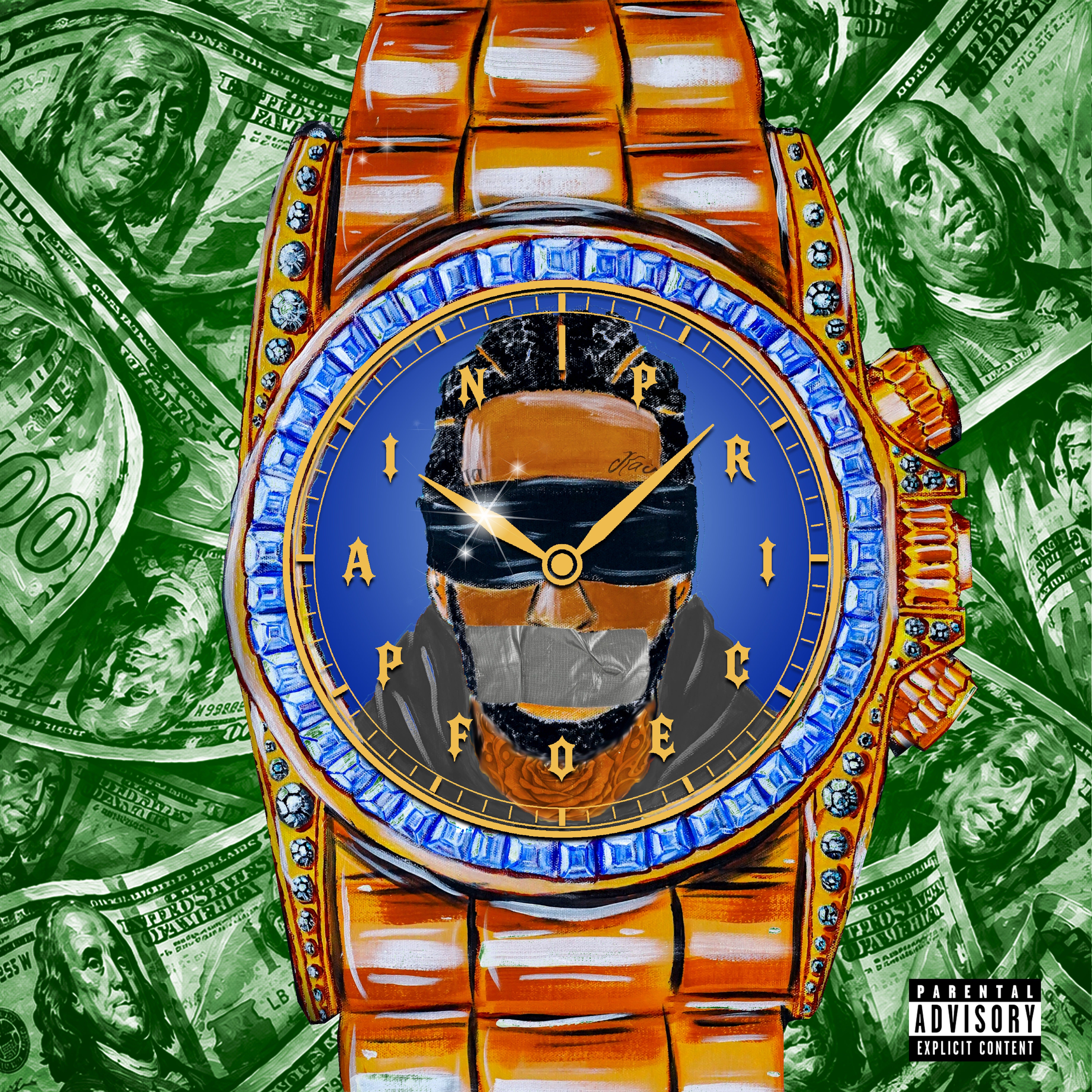
Having a single beatmaker on an entire album is an old New York tradition, and it is the burden of the writing. That is how Dave East worked all throughout the decade, making full-length albums with araabMUZIK, with Mike & Keys, with Scram Jones, with Cruch Calhoun, who makes an appearance here as a guest performer. The beatmaking duties were assigned to Harry Fraud twice already. After delivering 2021’s HOFFA, they doubled back like a deluxe for Price of Pain. This arrangement is driven by the material, by the rapper having written enough to avoid any overlapping, and East certainly did. Most of it comes in the form of shorthand, entire stories conveyed in bits and pieces. His mom is working in “Papaya Juice,” and his dad is hustling, and he is at home alone with Macaulay. The verse mentions his cousin who took a plea because he was scared of a trial and the final bag which has just been sold. Whoever is on the line is advised to try again in an hour.
“Minding My Business” works the same way, featuring his aunt reading Leviticus at a Bennigan’s table, the sniffer swearing the powder tasted sweet enough to be cinnamon and a former customer who used to wake up and pray about: “I used to wake up and hope that my custy ain’t overdose/They said he just caught the Holy Ghost.” The block renamed the death. This compression opens up on “Alley Oop,” where the homecoming of his friend is described with step-by-step precision, from the end of a deal to reaching the front door of his apartment. Backed by Harry Fraud hard drums, the lawyer is tap-dancing with the case, and the district attorney is looking for any chance to keep him in prison. Sixty days left and wake up call. Burpees and dips at the bar to lift his weight, Cartier watches as the durag comes off and his name gets out. And then he is home, and the reportage becomes domestic, a grown man who cannot use an iPhone, who opens an Instagram page and reveals his age, who posts selfies and gets some likes for them. —Termaine M. Scott
Homeboy Sandman & Jack Splash, Resonance Frequency
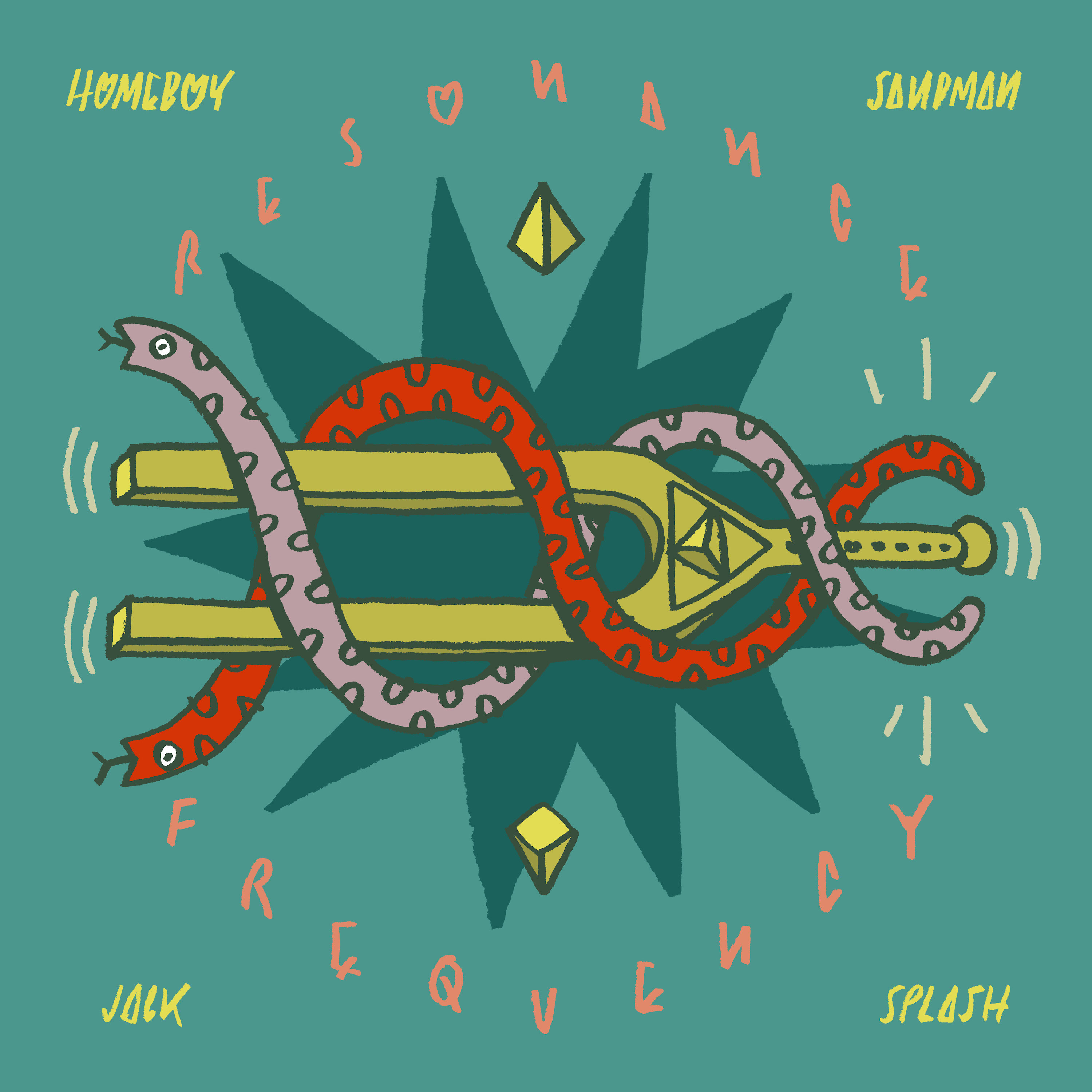
During his time from 2008 to 2018, Homeboy Sandman was quite prolific, releasing six albums. After these, he released four more albums from 2019 to 2022. Sandman’s music often has themes of consumption, spending, and distribution of goods, as seen in the songs that he has released. Jack Splash is the producer for Sandman’s album Resonance Frequency, and the pair make for an excellent team, combining both live instruments and classic hip-hop aspects of music. Sandman wrote the song “TWENTYFOURSEVEN” as a reaction to those individuals who referred to him as “strange” in reference to his own childhood habits. For instance, while his childhood friends played video games, Sandman was either reading or performing mathematical computations. Sandman has an interest in the amount of money that rappers like him receive for their music, as expressed in the same song. He claims that while other rappers might pursue that money, he has no need for it, and states that “Even for the mill’, ain’t no run-of-the- miller/Figures, it ain’t never Miller time.” He describes himself on “Arrow” as a “small fry turned Big Sam” in reference to Ryan Gosling in the video game movie Fall Guy. Sandman also uses this song to refer to himself in relation to the scarecrow from The Wizard of Oz, describing himself as seeking knowledge in the way that the scarecrow does.
In the triumphant “World On Fire,” CeeLo Green sings of the world being on fire (duh) and of there being nowhere to escape from it. Sandman’s verse in this song is filled with imagery of protecting his garden from attack by the forces of the universe, and inviting those who wish to live in a fantasy world to become his family. Sandman presents puddles as bubble baths, and black clouds as hovercrafts. When dealing with “Inner Realm,” Sandman writes that those who are hearing his song are always looking for something else to pay attention to besides themselves, and claims that this is what blinds them. Additionally, in this song, Sandman also directs a message to his peers in the hip hop community, writing, “Every rapper wanna be a movie star till somebody true decide to throw you from a moving car.” Sandman goes by shaking people up, waking people up, and asking if humanity has truly evolved over time, or if all of humanity is simply a vision in his mind. —Joelle Figueroa
LADIPOE, REVIVAL
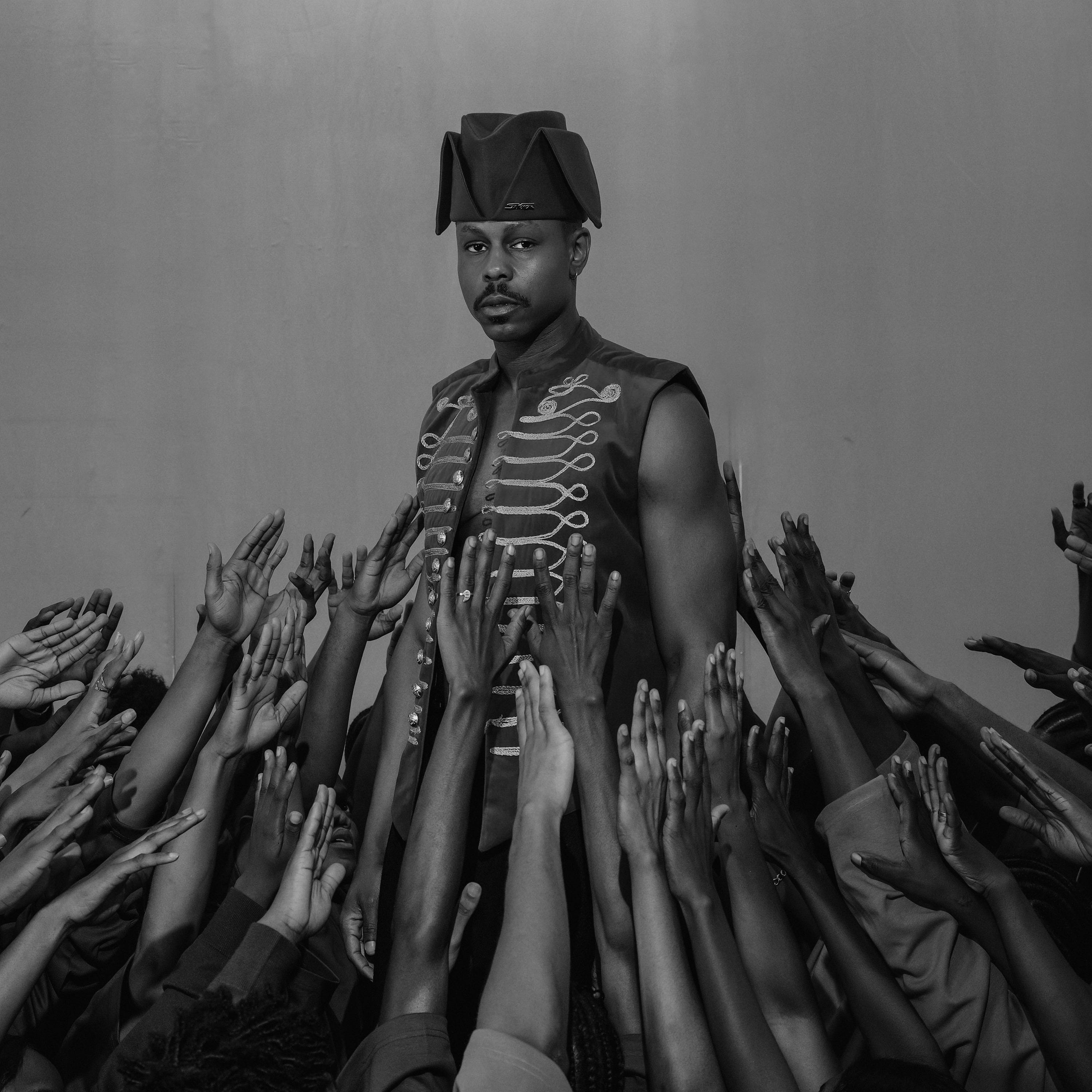
Melody is the thing that made Rema and Ayra Starr export-scale stars for Mavin Records. In 2017, the Lagos label only signed one rapper to a label next to a roster of A-listers. LADIPOE leans into that disparity on REVIVAL, loading the guest list with singers and rapping from the middle of those hooks. He contorts Afropop’s hook-first template to score- settling, and speaking in tongues over different languages. Mid-tour, his girlfriend called in about delivering their child, and on “Palm Trees (Interlude)” he replays that call, the partner who made the decision about how he wants to deliver that baby, “Fuck a c-section, I go push by force,” and the Cartier ring he bought when he realized what only a mother sacrifices. His father shows up too, quoted as if from scripture: “A man is much more than what he provides,” and that lesson placed beside his own maxim where money above all else but family and purpose. On “Jah (Outro),” he reserves the gratitude for God, tells Him he doesn’t want to do this alone, puts the price in long days, even longer flights, and messages on his phone he hasn’t answered yet, before he allows himself one credential: “From underrated to undeniable.” Morien sings his name over him until the prayer sounds answered. —Maya LaRoux
Sango, RHYTHM & MELODY
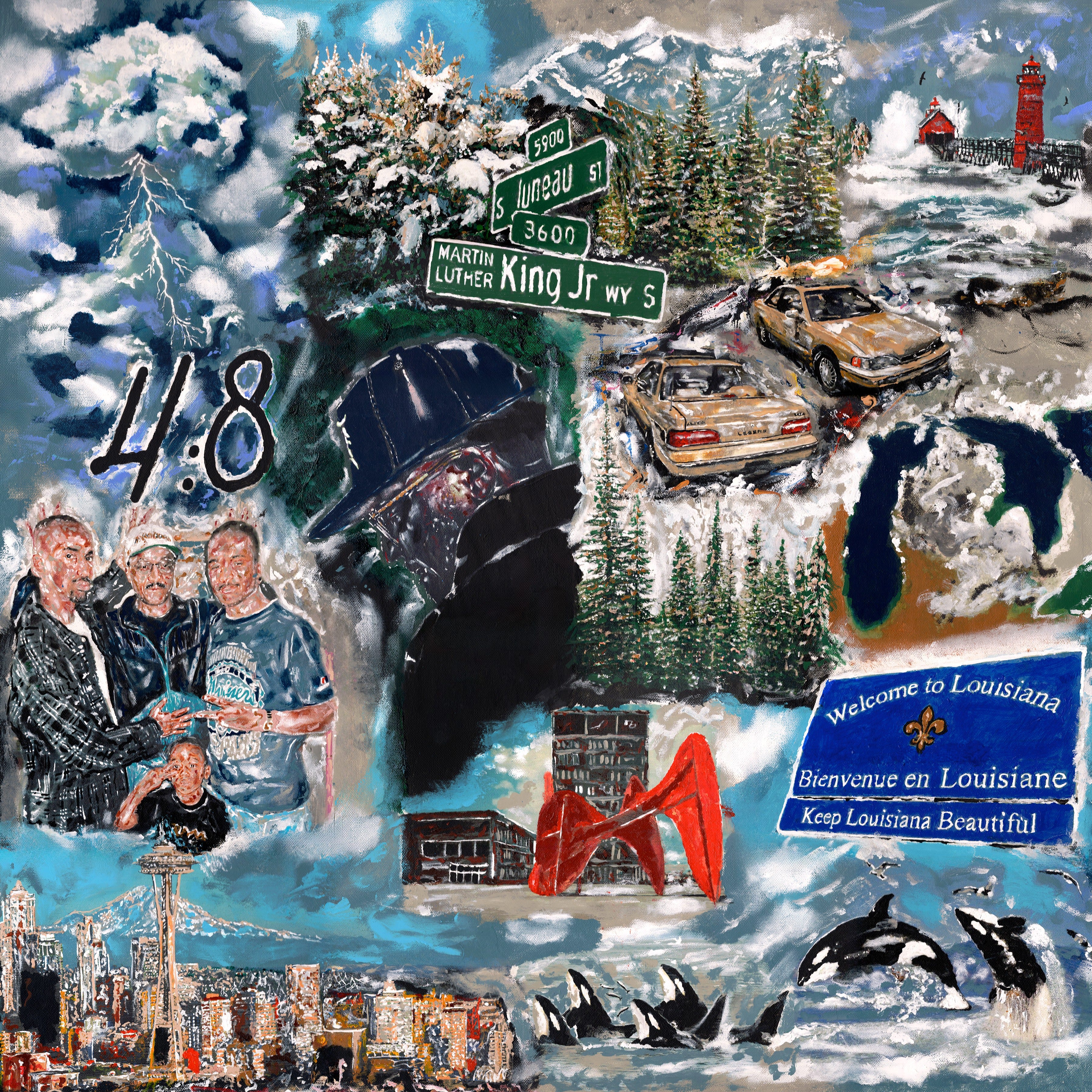
Soulection started building their audience from beat tapes and radio mixes out of Los Angeles, and the best crates of that collective belonged to a producer from Seattle. Throughout the 2010s, Sango flips Rio funk carioca in his Da Rocinha series, and the North tapes keep the rap and R&B parts of the catalog split geographically, years before Brazilian drums got used in American rap music as an accent. On RHYTHM & MELODY, the debut for Mass Appeal, he splits this catalog further and pushes the idea to its logical conclusions: two discs and a changing lineup of performers from Detroit, New Orleans, Chicago, D.C., and Rio, all of whom get put into pockets designed for their native cities, everything connected by the drums unique to no other. All of that Sango does collapses into “Rain & Shine.” Robb Bank$ begins the song bruised and grandiose, “I’m writing these verses in blood, I already be gone by the time the ink done dried,” and claims Michigan “like the Pistons” as a Florida rapper from a distance. Then Sango flips the beat beneath him, and Sir Michael Rocks saunters in, threatening to “exercise my options” if he isn’t signed, and reports that his “Mexican rich friend say he gon’ buy him a brick if the Sox win.” One beat, restructured mid-song, holding two types of cool without letting either drop. Sango has been recharting maps like this since the beat tape era; this time he scheduled every flight at once. —F. Qureshi
insyt., Rite of Passage
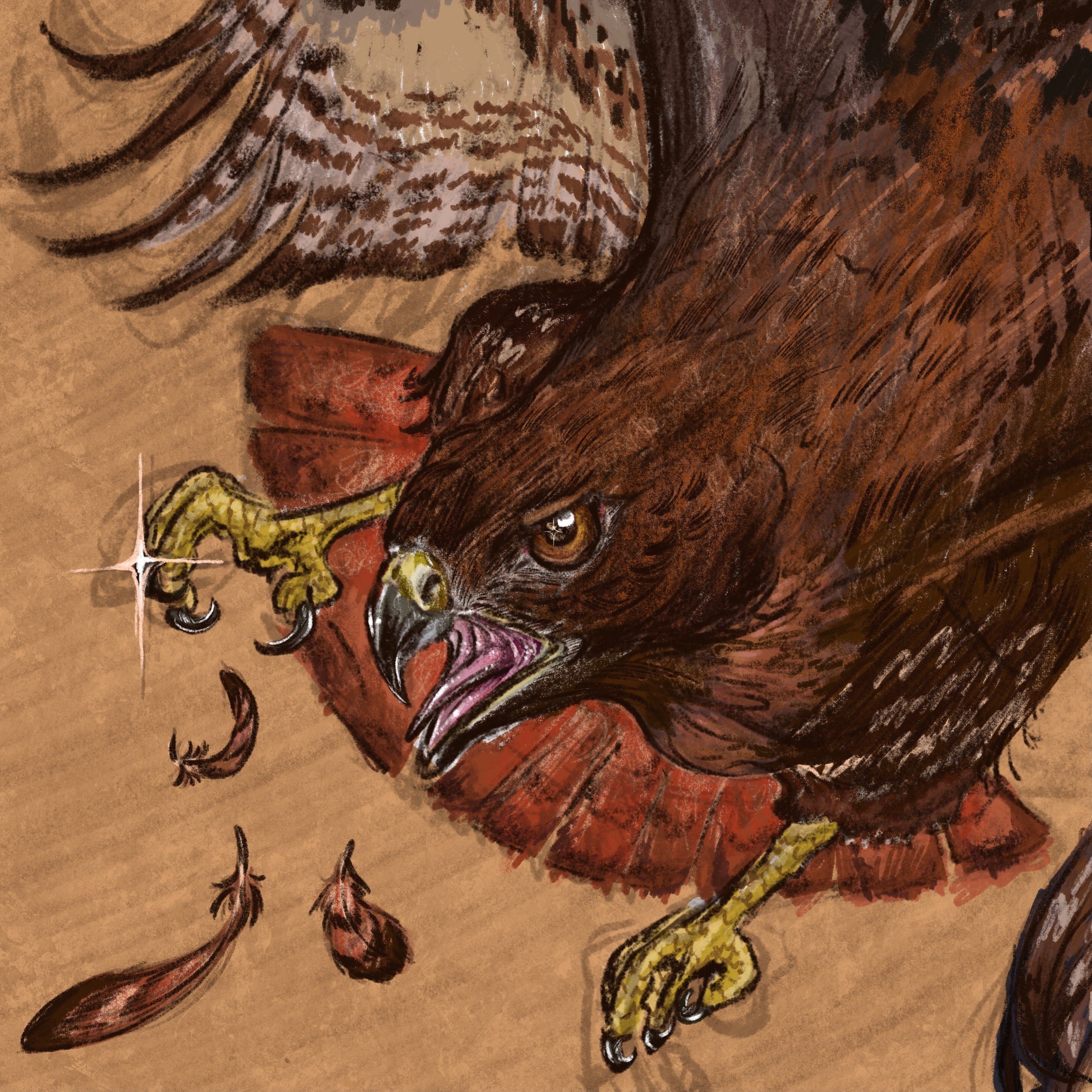
The voice you hear on the “Passage” introduction belongs to an educator, Jawanza Kunjufu, from the Rites of Passage into Manhood program. He speaks at the lectern, thanks his guests, and then tells the room that modern Black men consider manhood to be only the extent of smoking reefers, drinking wine, and producing babies. Previously, it was evident to everybody who the Black boys are who become men. insyt. finds this message very important. He lies in bed remembering the dream and asks to be rejuvenated on “360°.” After he has almost recovered, he puts his toes on the edge of the bed, saying: “Toes pokin’ off the ledge, got me thinkin’ ‘bout the fall/Had me backin’ up my steps, perseverance hit a wall.” Then he jumps from the bed, finds his inner underdog, starts all over, and spits a verse: “It remind me I exist, know the only way be up.” At the end of the story, he runs the same escape in speed mode on “Urgency // Collapse.” Breathing in deeply after coming up out of the water and realizing that he paid his dues and bought himself some time by letting go of the memories of the past years. He hears the voice that tells him he has only made it halfway and that he is ready to die. —Lance “LX” Brooks
Rico Nasty, RX
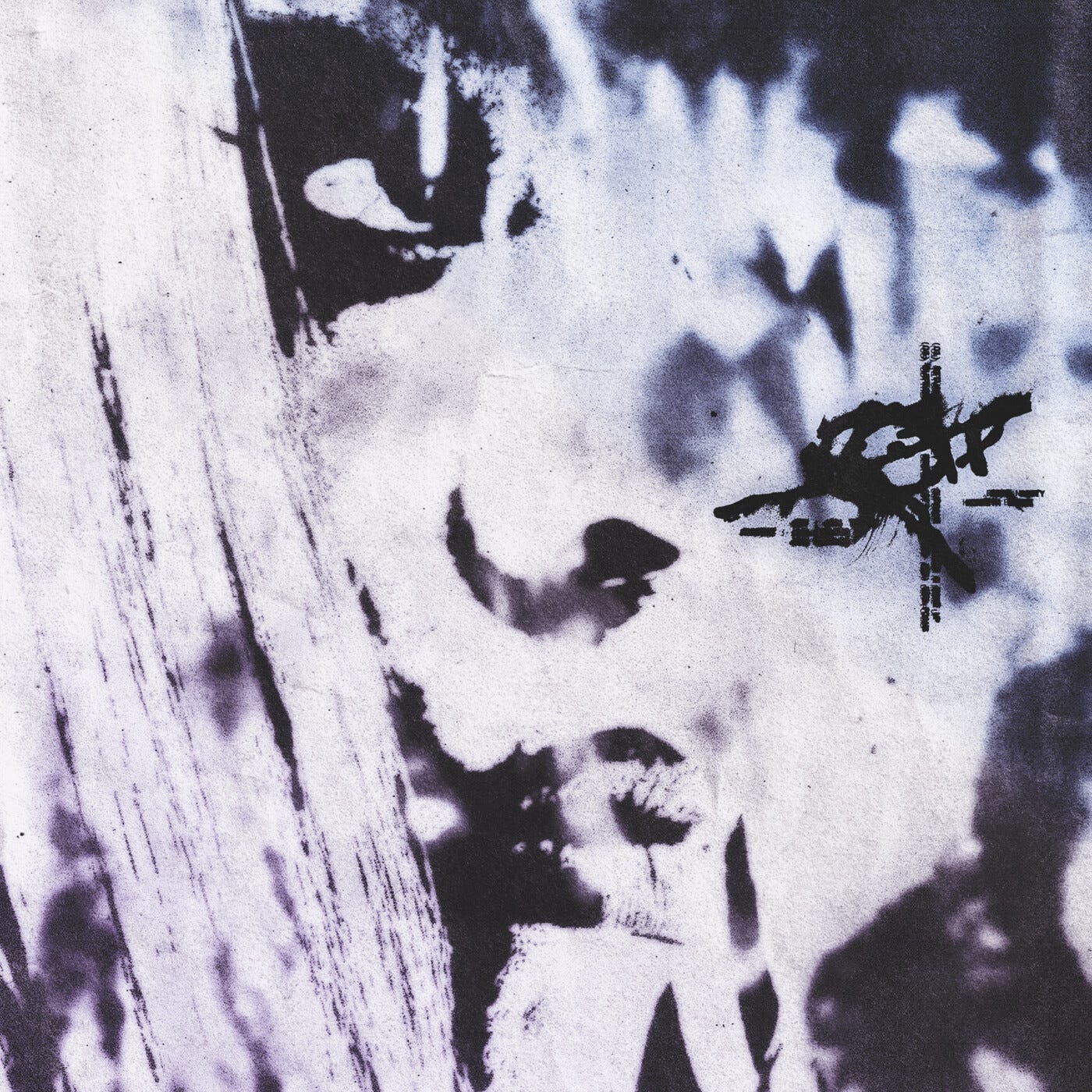
The art of talking shit is just like barbecuing on a grill. There are various regional schools and people who partake in them. One such school is the Maryland school, which thrives in quick wit and pettiness, the quickness with which the insult can fly from your mouth before your opponent is done breathing. In recent times, the school has had a most devoted student in the form of Rico Nasty, who, in one verse, can make fun of a man about his finances, his hairline and his mother, then charge him for the favor. On her fourth album, titled RX, she uses Kenneth Blume for production of all nine tracks and unleashes her wit upon everyone around. The pettiest thing that she does in these songs is in “Blow Your Nose,” where she leaves her man in the middle of a heart pouring while saving him in her phone as Critter and finding one use for his money: “I blow my nose with your lil’ check.” She demands the same hook from him that she doesn’t even boast about. Somewhere, there is a man called Critter still typing in the chat that remains on delivered. —Tabia N. Mullings
Rylo Rodriguez, S.K.A.T.E.
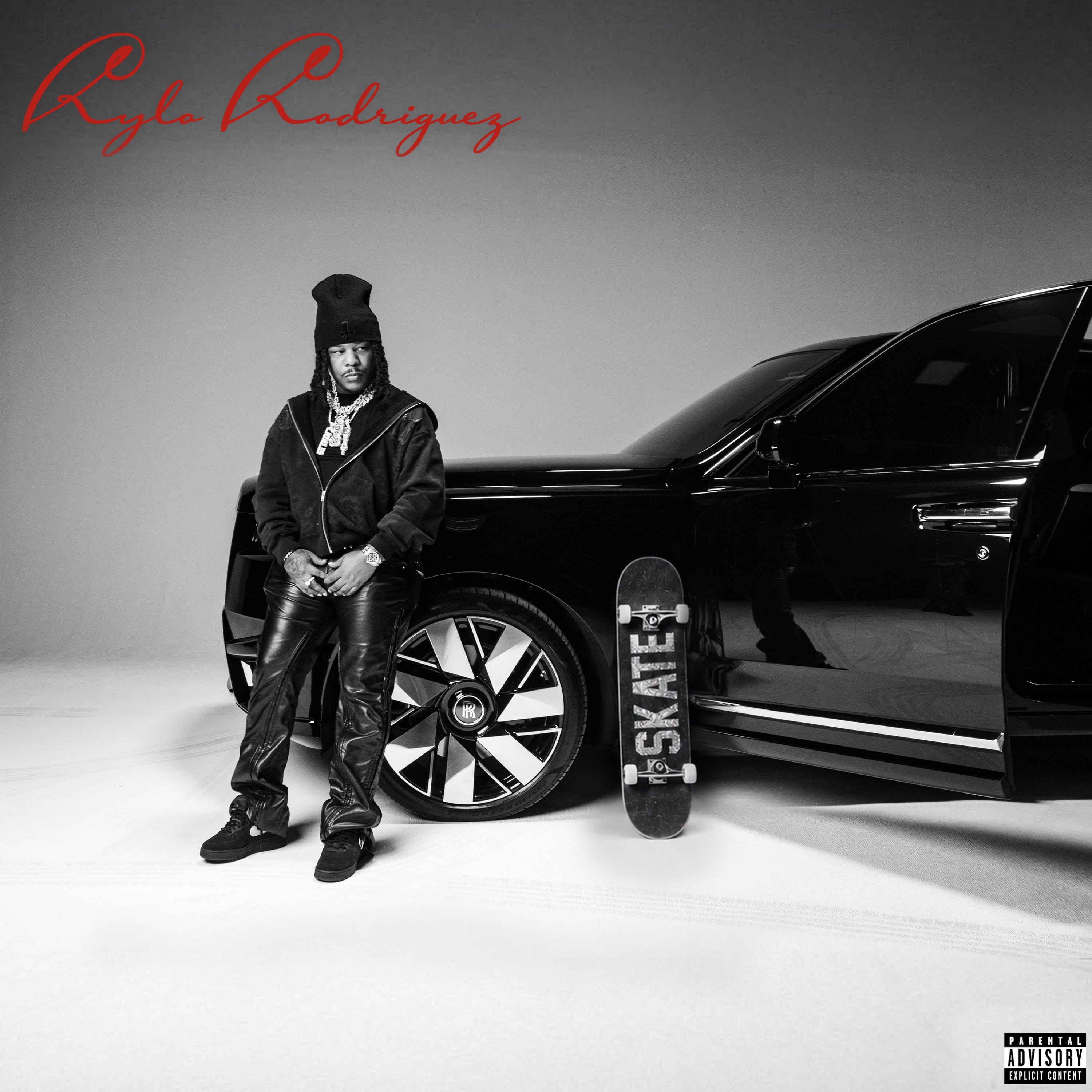
The philosophy of Mobile, Alabama street rap is that talking is the most expensive thing a man can do. Rylo Rodriguez comes from Mobile, Roger Williams Housing Projects, raised by his grandfather, and in 2020, he told Rolling Stone he “wouldn’t want to be from anywhere else.” He found his footing by remixing Mariah Carey’s “Always Be My Baby” into a life in the projects track called “Project Baby” and signed with Lil Baby’s label 4PF to produce two albums with a stream of name-checks, debts, and funerals until he ran out of flexes and things to mourn. His fourth studio album states his philosophy explicitly in its title, S.K.A.T.E., which stands for Silence Keeps All Targets Exposed. The silent man watches everybody give themselves away. The watching happens behind the walls. Audemars Piguet skeleton watch exposes everything. Its case is carved away to show the working gears, and with “AP Skelly” he wears one like a memento mori, “AP skelly watch, I can still see my bone.” He blames himself, “I blame myself because I knew you was flawed, but I looked past it,” and admits what the money could never fix, “I thought gettin’ this paper would’ve eventually made me happy.” On his wrist, the gold, the hours, and the bones are in the open, the only place on S.K.A.T.E. where he lets himself be exposed. —Tariq Belson
Charles Lloyd, Sangam & Friends
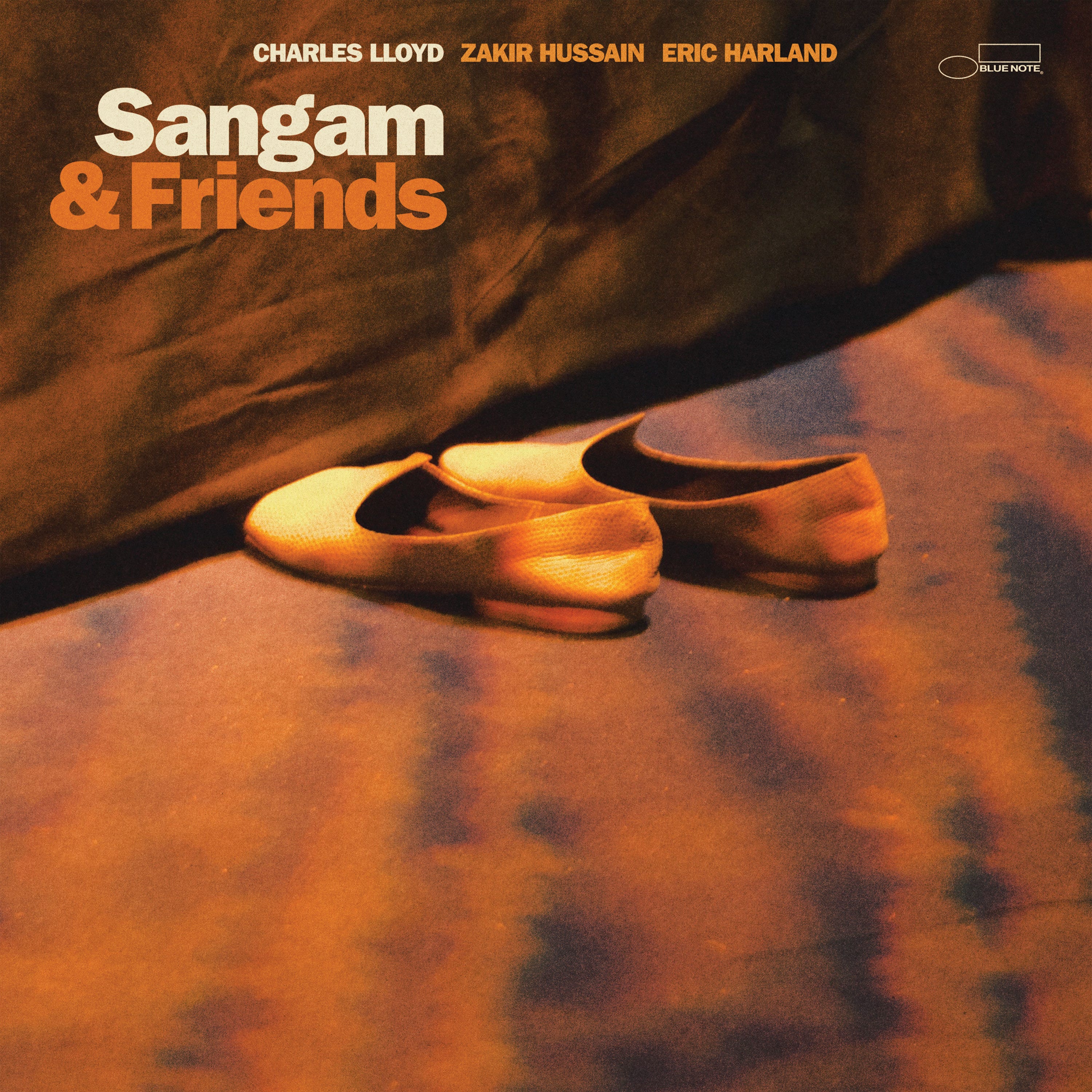
Two weeks after 9/11, the memorial service for the drummer Billy Higgins took place at Grace Cathedral in San Francisco, and two men met and performed together at that moment for the very first time. Charles Lloyd and Zakir Hussain never really stopped doing so after that meeting. Along with the drummer Eric Harland, they founded the Sangam project, whose 2004 performance at the Lobero Theater became an ECM album, and in February 2009 Zakir Hussain brought Lloyd to Mumbai to perform at his annual Abbaji concert dedicated to his father, the tabla master Alla Rakha. Three days after the concert, the trio entered Nirvana Studio to continue what they were doing, adding to the ensemble Vijay Prakash (voice), Rakesh Chaurasia (bansuri), Sabir Khan (sarangi), Ranjit Barot (keyboards), and Niladri Kumar (sitar). Hussain passed away in December 2024 before the album was finished.
Eleven minutes of “The Blessing” place the above-mentioned Mumbai ensemble, the voices of Prakash, bansuri, sarangi, and sitar surrounded by Lloyd’s flute and drums, and “Jai Ganga” is performed at a steady and driving pace. “Tagore” comes from another decade, recorded in Santa Barbara, and Dorothy Darr, author of the liner notes, recalls the city where it all happened, Mumbai, as “a mass of humanity, with multilayers of sound, resplendent colors, and exotic flavors.” The ensemble goes back to the river in “Sam on the Ganges.” Lloyd is 88 years old now, the only surviving horn from the concert in the cathedral, and he has spent the last years completing the work started by his deceased friend. —Nehemiah
Killy Shoot & Chuck Chan, The Schooling
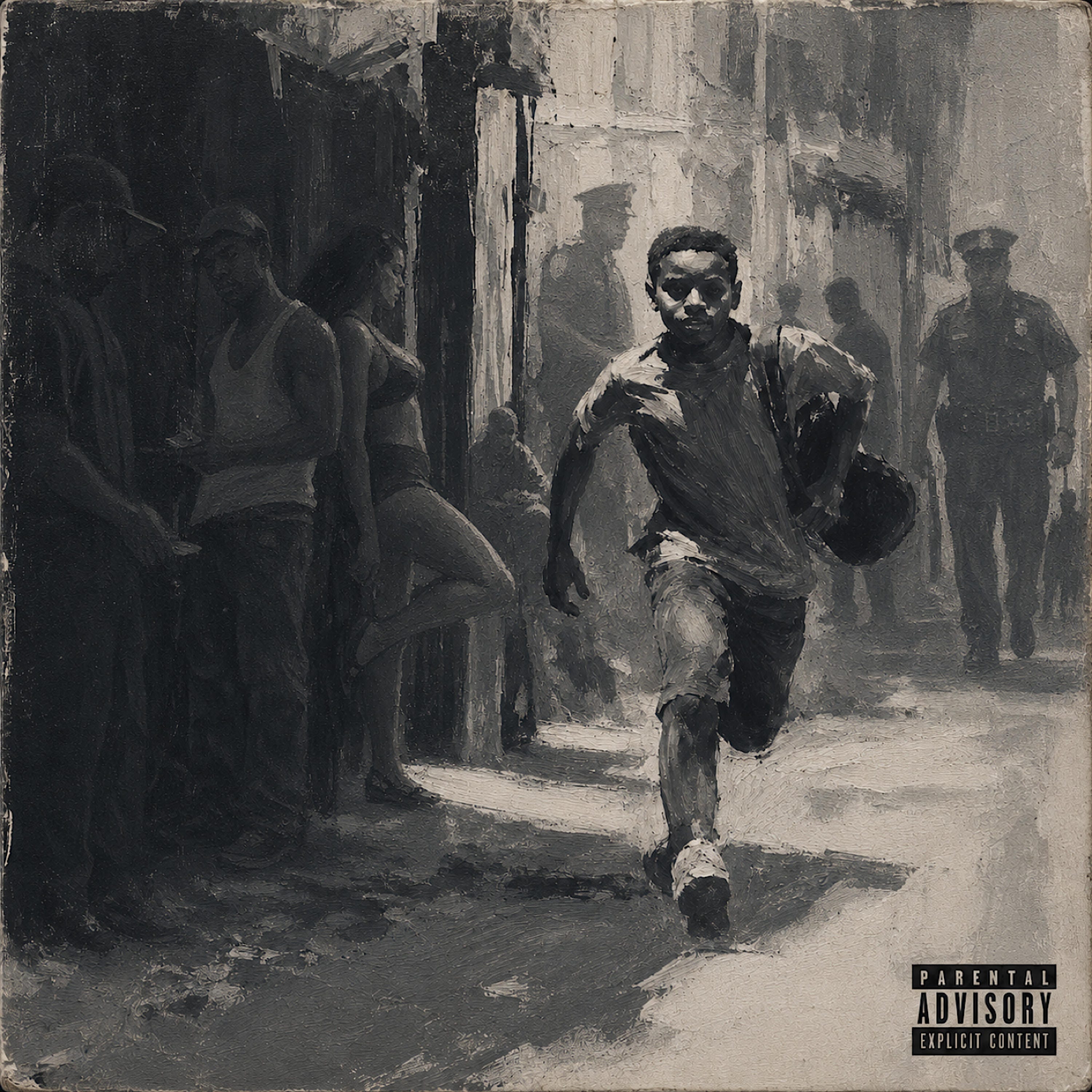
In 2019, Killy Shoot appeared on Respect Due Podcast and was asked about what he wants his listeners to learn from his lyrics. His answer was simple: pain and fear. He went on to explain that the fears are the fear of losing everything, the fear of letting people down who rely on you and the fear of a gun pointed at you in the world he came from. He elaborated more on the same topic in the aforementioned podcast by claiming that the one thing emcees leave out when describing their craft is fear. Because the description of an emcee’s task is being the baddest motherfucker in the room. He claims to have been rhyming since the mid-90s, coming from Main South—that’s how he refers to the part of Worcester by street name. Seven years later, over production from Chuck Chan, who took two verses, he actually did the thing he claimed nobody would do.
In the ferry ride on “Maintain”, Killy goes on to Staten for a fresh connection. He is scared and far from home; there are goons in the hallways with two more in the stairwell; he is given the cold stares, and the plainest line of the verse is “The work be sending you to places that you fear.” On “Anita,” he is driving a two-seater car with a meter next to him, with a pistol in the rearview mirror and “These are monsters, trying to put the fear in you”, whereas Catherine, Anita’s sister, already told her that he is a problem. On “Idolater,” the kitchen is where the trade got handed over to him: 1996, mothers working overnight, three guns on the table along with baking soda and coke, and “Mind my business,” he ignores until they turn around, smile at him and let him observe. By 1999 he was ready for his first brick. “All City” starts even before that. He is third grade kid at the Friendly House Boys Club, has birthdays at Skylight and fries at Riverside, but then the next ten years pass, and he is a rival in the drug trade: “Still inside a youth/But we living in apocalypse.” —Brandon O’Sullivan
Nao Yoshioka, self
At 20, a Japanese dropout from Osaka moved solo to America to learn soul in the land of its birth. Nao Yoshioka performed Amateur Night at the Apollo, wormed her way into the Philadelphia soul scene for an album of live session recordings, and toured the 2024 album, Flow, to eleven countries. But from that journey, she emerged with a new question than the one she went seeking, according to an interview with Parlé Mag. For many years, she explained, she had been in search of a better self but, in pursuing a version of herself, had reached the end of the line and run up against a wall. self, her new full-length studio album, consists of songs she wrote beyond the wall, featuring singers and musicians from Philadelphia, Chicago, Amsterdam, Hanoi, Helsinki, Tokyo, and Taipei.
Jamila Woods takes a verse to herself on “Safe Place” and watches herself dance there: “All along, I was the catch/All along, I was my own other half.” Two voices layer reassurances over warm keys and drums with a slow step behind them, Woods adding a quieter, spoken soul intensity that cools the heat surrounding Yoshioka’s lyrics. Mỹ Anh gets a verse on “Pieces of Me,” a Vietnamese singer whose verse identifies her trap: “My dependency tendency got me obsessed/Always tryna control what comes next.” The confrontation comes on “Shadow.” Bilal joins her in a duet set up as a battle of selves in which two voices trade lines: “I am the anger that you left untold/I am the fire you hid in the smoke.” His unpredictable phrasing contrasts with her control over the darker keys and bassline, with the snare drum marking each beat as a sign of the division between them. Two voices find a truce and hold tight to their broken pieces, letting shadow and light share space together. —Dai Kurihara
La Reezy, Skiddle Bandana
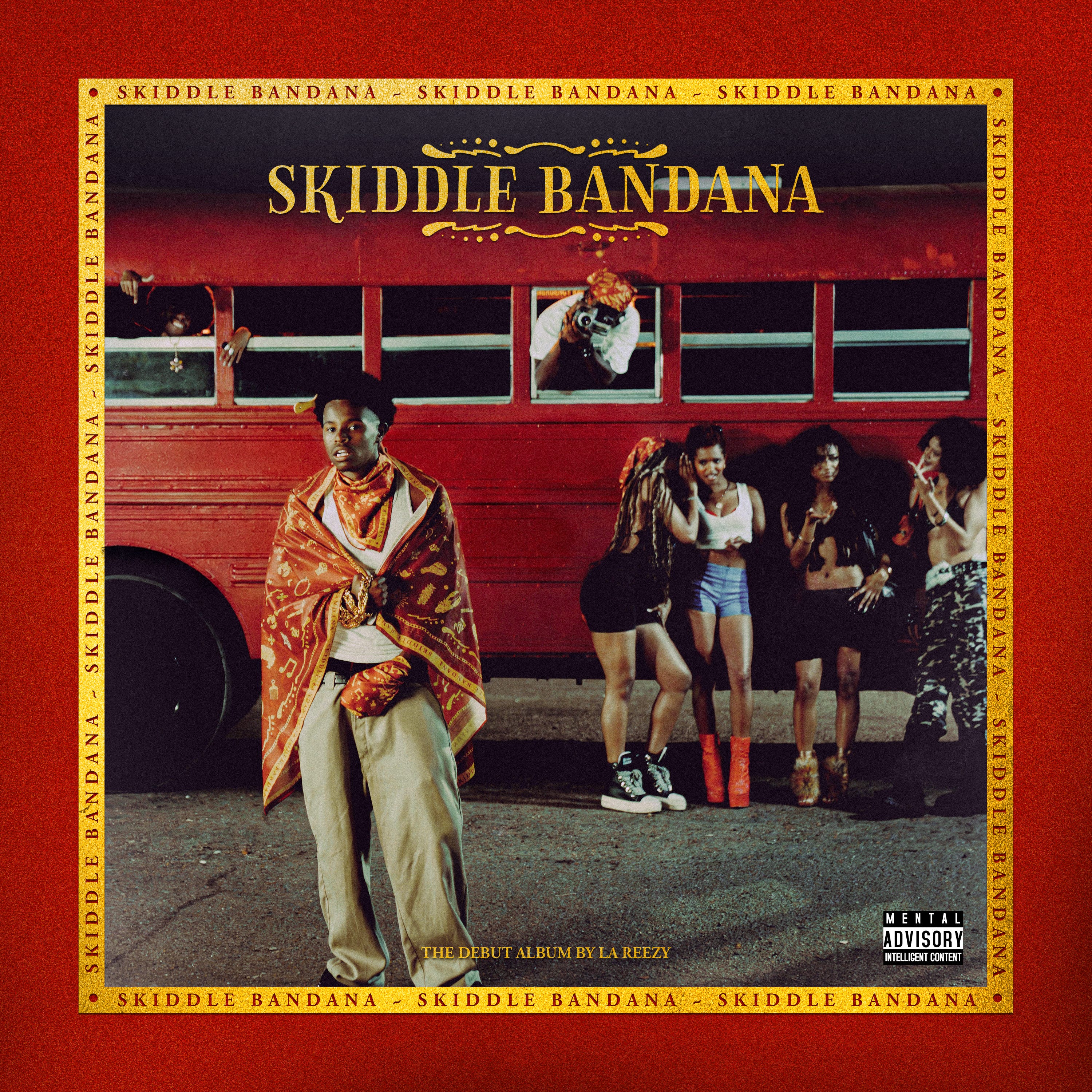
Born in the 12th Ward of New Orleans, La Reezy said that he was inspired to create the sequence of events in the song about a party bus based upon experiences he had riding such buses at age 13. Somewhere on the record, the vehicle is parked. There’s music being played, and someone is yelling for the curly-headed girls and boys to step onto the bus. The bus leaves again before they do, and continues to pick them up between songs. Riders are goofing off, and a driver is talking about unity before anyone will leave the bus. He said he staged the ride on Skiddle Bandana, which is his debut album, in the same manner. Whichever things pass in the window receive a verse.
At a park bench outside of his job, a drunk barber complains in “God Forgive Me” that he charges $20 per hour for cutting hair while his other barbers charge too much. After hearing the man’s jokes privately, he catches himself judging a man that clearly needs a hug. As a rap artist from New Orleans roughly a generation older than La Reezy, Mac Phipps introduces him on the title track. Mac describes him as “a young brother from New Orleans, Louisiana, with experience much, much like yours.” Reezy steps forward, tying his camel, praying through a prayer channel, filing a complaint in open court, “a 14-year- old charged as a man made me hot, your honor.” The second verse sits at a Save-A-Lot grocery store. As he recounts a 7-hour shift that boiled over after someone stole his parking spot, his energy collided with another person’s energy. The person remained mid-sentence while police were already present in the parking lot. He immediately redirects anger toward an empty chicken order, “Bitch, is you shittin’ me?” The comedic timing required to place dark humor next to death at 21 years old is evidence that he already has this raw talent. —Devon Kai Brooks
Rome Streetz, Sock It 2 My Pocket
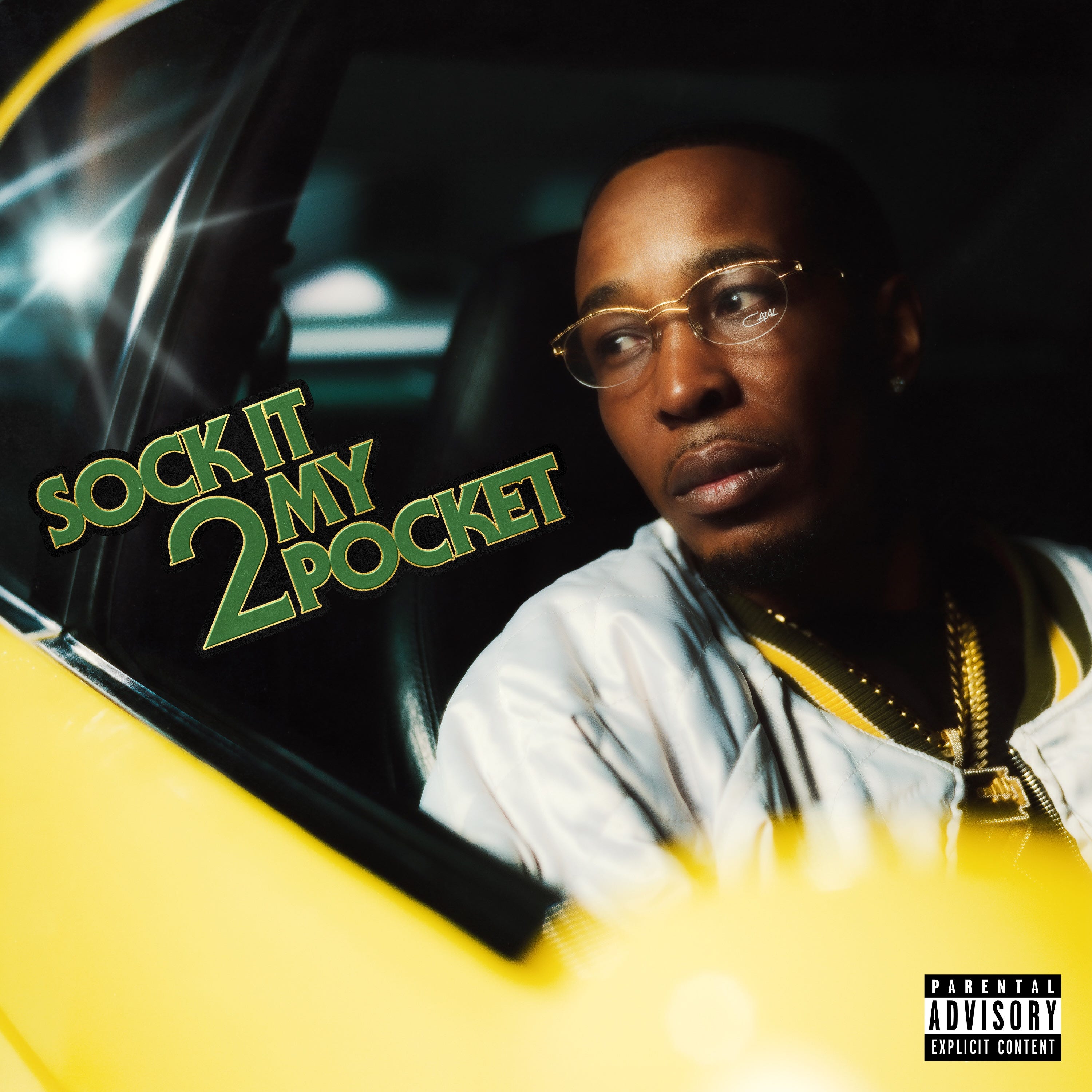
The catchphrase ad-lib that turned into an expression, sock it to my pocket, is the hustler’s demand after the job is done, and his hands are out to be paid. In July’s interview with VIBE magazine, the Queens-bred rapper Rome Streetz explained energy is not free—everything he does comes at a cost. He says it the way other men say amen. When Rome disobeyed his mother and refused to work, she had to make him understand by putting the cuffs on him slowly. This story is hidden in “Yellow Brick Road,” the dirty loop under all of GreyMatter, the new-money paranoia, cutting off everyone who “can’t exist in my axis,” telling one hater that he’d rather have him “stressed out slaving for Uncle Sam in a cubicle” than riding a plane. Mothers keep teaching. Over the clean knock of Pete Rock on “Son of a Gun,” she tells Rome to aim, and he creates his entire identity through it—“Scorpio spinning kinda like the cylinder of my revolver,” Phife Dawg in a Prada parka, worldwide like Starbucks. Malik, the man with the scar on his cheek in “Belt 2 Ass,” was arrested in ‘08 for being crazy on the gate. He came home to find weight—7 Series with PA plates, the nice place in Jamaica Estates, the nightlife that made him very easy to find. Conductor Williams leaves the beat as a loop pressure and negative space, and Rome fills it all with the story. —Quinn Baptiste
andrew, SOON MY DOUBLES WILL PULL OFF ALL OF MY STUNTS
Saturdays meant going to flea markets in andrew’s Philadelphia family house, as his father, a die-hard Beatles fan who collected all their memorabilia, insisted on going there, giving his son a bunch of duplicate tapes for starting his collection. Now, he has become a rap artist and producer and part of Sleepingdogs with Jesse the Tree from Providence, releasing his records through U Don’t Deserve This Beautiful Art of Darko the Super from his home in the UK. His father, Carm, has passed away. andrew produced each song for SOON MY DOUBLES WILL PULL OFF ALL OF MY STUNTS using only his own work, mainly soul samples, and released it on Carm’s birthday, dedicating it to his father, who was always playing something—records at home, tapes in the car.
This “hand-me-down” mentality is also present in the song “SOON.” He keeps his dial set back, playing movies from the nineties and music from the sixties; he is raised on Kenny Lofton and Ken Griffey; everything should be done with attention; every day he lives is a new game of Go Fish where he picks the bread mold instead of throwing the loaf away; even his cockiness has a funeral in it—“Pourin’ out some liquor, the old me out the picture.” He weighs his days in “WILL”: “Some days I lift some weights, and then some days I lift a burger.” Then he becomes a humble server who looks for a life preserver, zagging when they say zagging, using chewing gum and rubber bands to jerry-rig everything, and betting on himself. —Joelle Figueroa
Dru Kelly & Stix, sum breakup songs

The best friend calling in on the phone is something seen quite frequently in rap music. Most often, it is performed as a skit, quickly forgotten once over. Here, on sum breakup songs, the friend making the call is Stix, who produced all the beats (and dropped their third project this year), and the friend being checked in on is one of the most consistent rappers, Dru Kelly. Stix continues talking. He introduces himself as Kelly’s best friend and producer on “i’ll have yk paint you,” calling in after the news, and then he returns to explain, at great length, that when Kelly threatens “I pay YK my name to go paint your bitch,” he doesn’t mean that nobody is talking about his own hobby. Kelly, midway through the song, has moved past negotiations: “I already stamped/Don’t need a stamp of approval from you.” He has decided that love is a scam and scratches his ex out of all the pictures with a purple crayon, an odd detail that could not have come up by chance. The pep talk on “i’m grown” goes farther, an entire monologue declaring that Kelly is one of the coldest rappers and should never mention divorce again. Kelly answers with the meanest hook and the clearest line in one breath: “An alcoholic who happens to lack the shit to solve it.” Stix uses the same tight framework with the same hand on the boards and on Kelly’s shoulder. —Blaise Freeman
Nicholas Payton & Butcher Brown, A Supreme Blue
Payton was a member of the New Orleans brass bands and played bass and sousaphone and taught music between performances. Payton’s son learned to play the trumpet at a young age next to him and was working in James Andrews’ All-Star Brass Band at ten years old, supervised by Danny Barker. Payton himself is a horn player who can write almost as good as he can play, and his essay from 2011 about promoting Black American Music as the true name of this music genre is still circulating. Miles Davis and John Coltrane were both born in 1926. Payton had been mentoring Richmond-based collective Butcher Brown for years when he played with them in the band, got a groove similar to a house music under him, and began quoting the beginning of “Acknowledgement” on top of it. A Supreme Blue became a result of that performance.
What Payton noticed connecting the two recordings was rhythmic before spiritual, Mozambique groove underlying “Acknowledgement” and Elvin Jones playing the drums from an African concept, and both recordings are based on modes rather than chords. The band performs “So What,” “Freddie Freeloader,” “Blue in Green,” “All Blues,” and “Flamenco Sketches” from Kind of Blue, as well as four movements of A Love Supreme—“Acknowledgement,” “Resolution,” “Pursuance,” and “Psalm.” Butcher Brown used R4ND4ZZO’s synth bass and Corey Fonville’s drums for Payton’s trumpet, Tennishu on tenor saxophone, and DJ Harrison on keys, piano, and melodica. “This is fresh,” said Fonville about the recording, and he believes Davis and Coltrane would rather see their music reinterpreted to bring it to the present day rather than being left as it was back in 1959 and 1965. Instrument list also supports his point—kalimba, vocoder, MPC, and synth bass, which are not there in the original. —Nehemiah
KB, THIS CANNOT BE SOLD
Christian rap operates according to the same market principles as all the other rap that exists today. Booking gigs at the arenas, partnering with brands, streaming dashboard numbers, and a few artists operating in the genre operate as closely to the switchboard as this married father of three with a Dove Award to his name, who founded the Native Supply streetwear line and co-hosts the Southside Rabbi podcast. KB believes that his music is about value, and that his marriage isn’t for sale. The man with so much product on his plate gets to choose what remains off his plate: his family, his doctrine, his own mind, and then argues the cost of everything else. Ben Fuller starts “FATHER” by questioning whether God can really change sinners into sons and daughters, whether nothing can make him drunk or no pill can drug him, and KB responds with the most straightforward verse of his career. Every father he has known has abandoned him. His own father has taken him at age six to a friend’s house and never returned to check on him: “A six-year-old alone with another teen/She stole my innocence, can barely speak on what she done to me.” He despises that he cannot forget it and hates the talk of statistics, and in the second verse, he reports his decision, keeping the last name he almost lost, and for his sons, he will always be the one that he knows he needed to be. —Murffey Zavier
WILLOW, The Thread
The collaboration started with COPINGMECHANISM in 2022 and lasted until 2024’s Empathogen, nominated for a Grammy. The third project with Chris Greatti sees WILLOW choosing the oldest topic that she possibly could. “The Divine Mother archetype is present in almost every culture on Earth from ancient times on, as far as we know,” she explained regarding “She’s My Religion” this summer. “And this song is for her.” It’s the her who wears constellations with each star “a quiet warning,” and the warning is crystal clear: “Nature always wins.” Here, fury is a blessing, and the goddess tears the singer open to purify her, showering her with the grace that comes rushing down like a torrential river towards the sea, and WILLOW does not need a raft to reach it, the voice already inside of her. It’s the family that she’s asking for on “Unconditional”, drinking whiskey with her lover’s mother, crying her feelings out to her sister, keeping the love “in the in-between” where nobody gets imprisoned. She doesn’t mind if the person needs someone else to fill his/her loneliness with; she’ll love him/her even from that quiet place where the polarity meets. WILLOW’s courting takes a much wider scope on “Crush On Eternity,” as she holds hands with time and space, “You steal my mind/Bend me like light,” and the best line on it appears in the verse that she shares with Mei Semones: “I’ve kissed desire and called it grace,” confession and pick-up line at once. —Maya LeRoux
SWAMP THUG, TRY AS I MIGHT
If you know about Bandcamp, it’s all about name-your-price downloads and massive output, and there aren’t many people who can produce more than this rapper, who has recently put out two SHOCKINGLY RAW volumes just a month apart, and GET IT IN: OHIO EDITION, a Cleveland Heights posse mixtape with Josh The Author, AxL Urameshi, and Day Solo. Besides, he has released a lot of material with THUG ZINE and bromethugzine banners. SWAMP THUG has been doing things at this pace, and on TRY AS I MIGHT, he finally talks about the payment for this pace. While over GAWD’s bass and the thump of 808 drums on “make sumn shake,” he talks about the economics that are becoming increasingly difficult to survive in, about the dollar he stretches but will not bend, about a mom he prays for with no pension, about songs that receive no attention at all. “I am going to be 25 soon/Still not in position,” he raps on “make sumn shake,” and concludes the first verse with “Don’t wanna die, but getting tired of existing/Try as I might, I cannot make a living.” SWAMP THUG starts on “teeth skin,” living from windfall to windfall with occasional periods when everything is bad, carving scrimshaws with thin jaws and hoping they will not clench before he passes away. By the second verse his appetite is gone, yet he keeps eating anyway, the passenger who has been sitting longer than anyone can imagine, not bashful, he insists, a man of conviction. “Get a grip and then I lose it/Then I get a grip, and then I lose it,” he raps, “Money like the mental is elusive.” Ten years of unpaid labor sit in that verse, palms itching, M’s counted until the hands cramp, the handshake made to get in wherever he can. —Greg J.
Picture, Uuuuuuuu
Picture responds to a dozen names. He released his albums under the name Central, under the name Palta, he operates the labels with his brother Milán, who is better known as DJ Sports, and his production appears on the albums of Erika de Casier. Natal Zaks chooses to call himself Picture for dub techno and his second double twelve-inch for Sheffield-based Short Span, the label Matthew Kent established for the deep end of the spectrum. There are seven cuts on this release, “Quuuuuu” through “Wooooooo,” each given from six to seven minutes to perform. Zaks keeps “Quuuuuu” fast and percussive, and “Ziiiiiiiii” and “Wooooooo” are placed at the vaporous end of the spectrum, which was once inhabited by Chain Reaction records. Everything is mastered loud through Mike Grinser at Manmade, and is housed in metallic silver packaging of Mammo.Works, an object made to listen in the small hours. The seven cuts stick to the words, dub-weighted drums with the abstract electronics, cryptic and pressure built. —Oliver I. Martin
SIENNA SPIRO, Visitor

Somewhere in London in 2021, SIENNA SPIRO was uploading videos of herself singing into a phone camera, building her listening base around Etta James, Amy Winehouse, Frank Sinatra, and Frank Ocean. Now, five years later—at twenty—she is recording her debut album between Electric Lady in New York, Abbey Road in London, and Valentine in Los Angeles, setting her soul-driven writing against orchestral strings. On Visitor, her women are like that on the page: guests in a bed, a house, a life titled to somebody else, watching the daylight on their own welcome. One take is said to have sufficed for the title song, her vocals soaring with a 20-piece string orchestra arranged by Peter Rotter. “We lay on towers, on rented time/I’m yours for hours, you’re always mine/All things expire, I know you won’t stay,” she sings—like a hired spinner by the hour, turning her watch’s hands. To make a pair she pleads, “Say that you love me/Say I’m all you need,” self-aware and ragging on herself at once. She offers a compromise on “Mono No Aware,” a Japanese tribute to the ache in every parting, taking down all of those for whom it applies: “For flowers to expire/For love to lose desir /For you to get so tired.” She indulges herself in the chorus: “It’s okay to fall and turn to blue/It’s okay to love and okay to lose/The beauty is you don’t have to choose,” yet still insists, “Everybody dies/And I still ask why.” Then there is the “blue door” of “My House,” the one place she owns unconditionally. The song continues with the tears he willed filling her pool, her deed, her blood in the foundation. —Darryl Keyes
Songer, WHAT IF I SAY NO?

Alfie & the Alcoholics played Bob Dylan and Johnny Cash covers on banjos and battered guitars in Wokingham pubs, and the frontman’s grandson took his middle name from him. James Alfred Songer inherited the family ear alongside the name. “It’s in the family, people that love music,” he told Rolling Stone this month. “My dad adores music from my grandad, and I adore music from my dad.” The line has stretched from those covers through a childhood of Arctic Monkeys and Eminem records, lunchtimes trading insults with school-mates and teenage MC slots at drum ’n’ bass raves. Into WHAT IF I SAY NO?, his sixth album in seven years, cut almost entirely with the duo Blueboy & Dash. The pubs his grandad worked are still on “FIND MY FACE,” packed with no hopers, a man stealing his best mate’s old lady, another standing lapping him, kissing his teeth. Seven years on from “No More Candles,” all the candles on “NMC2” are back and not one of them has gone out. They tell him the candle that burns twice as bright lives half as long, so if he croaks at forty, look after his songs; he envisages a son as he worries the shoes he’s handed down seem double hard to run in unless he frees the laces he’s rated tight for years. He slots both hands on “VICES V VERSES,” the vices enhancing him, the verses making his existence visible, and he declines counseling as too ablating when he can tell a million souls in a beat: “They don’t ask me questions they tap their feet.” There is nothing more gratifying than family representing for him; when they play his music, he feels as if they’re checking on him, and from the stage he informs the crowd: “My fan base had my back for a third of my life/When I’m on a stage I’m just watching ‘em live.” —Greg J.
DOMi & JD BECK, WHO ASKED?
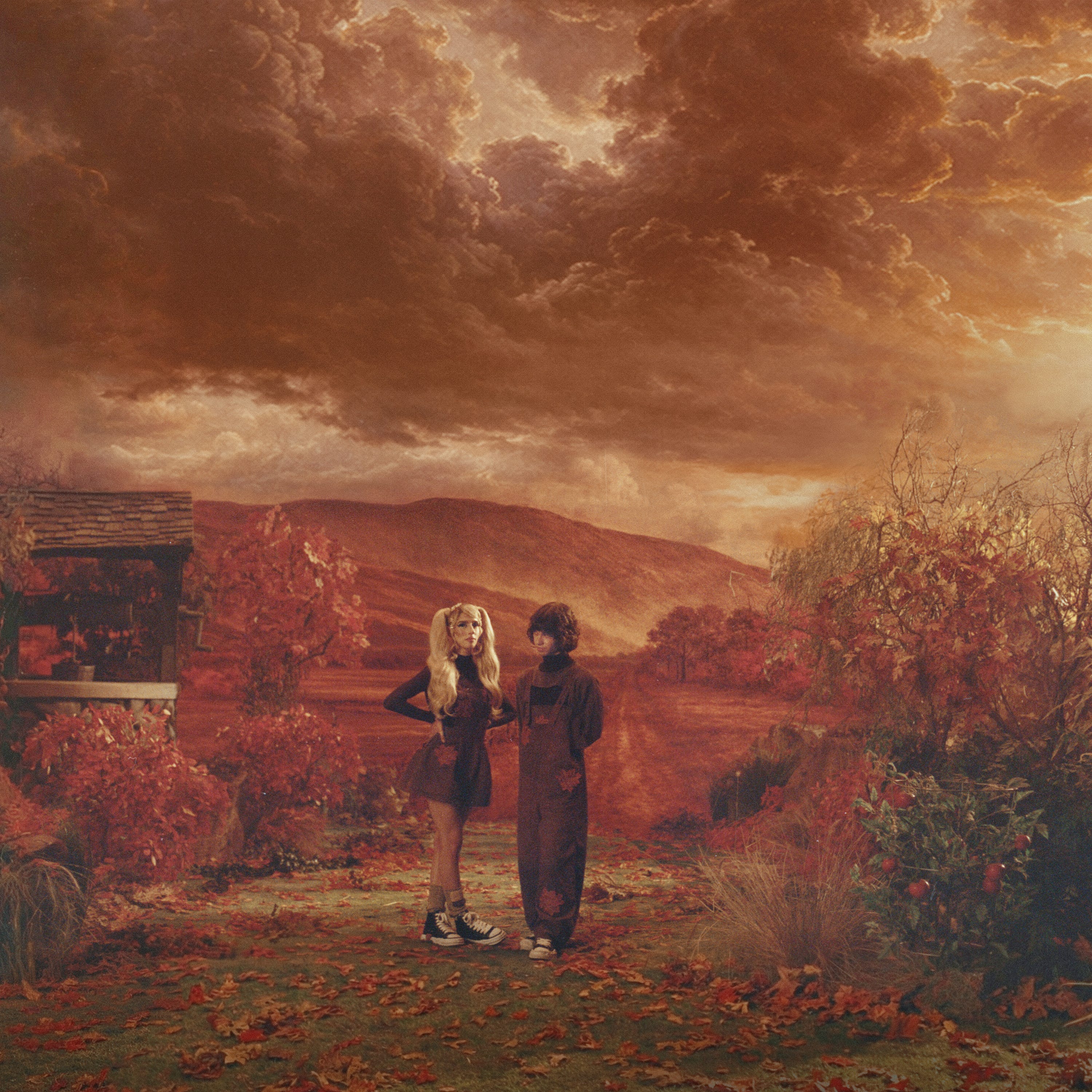
Everything on these songs sounds like a result of the work of just two artists and the little orchestra of string instruments; nothing is delegated to anyone else. DOMi Louna performs piano and keyboard tracks, JD BECK provides drums, and the process of writing, arranging, and producing the tracks was done by them. “SOME THiNGS NEVER CHANGE” plays rocks shaking, the earth humming, stones decomposing, and smooth singing above it. “Eyes dilated/Burning pain inside,” the second verse goes, and the chorus responds by being separated and faced with the madness, waiting calmly for the end of sadness. The weather performs the same role on “RAiN,” which opens on tears like feathers emerging through a glass door and wings flying free. Ice steps slip, drops talk in Morse code, pulse cuts like a knife, and the fog covers the way home. Underneath, the kick and snare remain syncopated while woodwind-like accents stab from the top, and it keeps the track from being turned into the ballad it could easily become otherwise. “LOVELY MASQUERADE” builds a party where puppets dance blind, the dull conversations fuel the charade, and nobody attending is the trusting kind. Composing every part between them, the duo build their bravest songs out of clocks, weather, and animals, and play them without a wasted motion on their second LP, WHO ASKED? —Lillian Sharpe
Larry June, Who Coppin
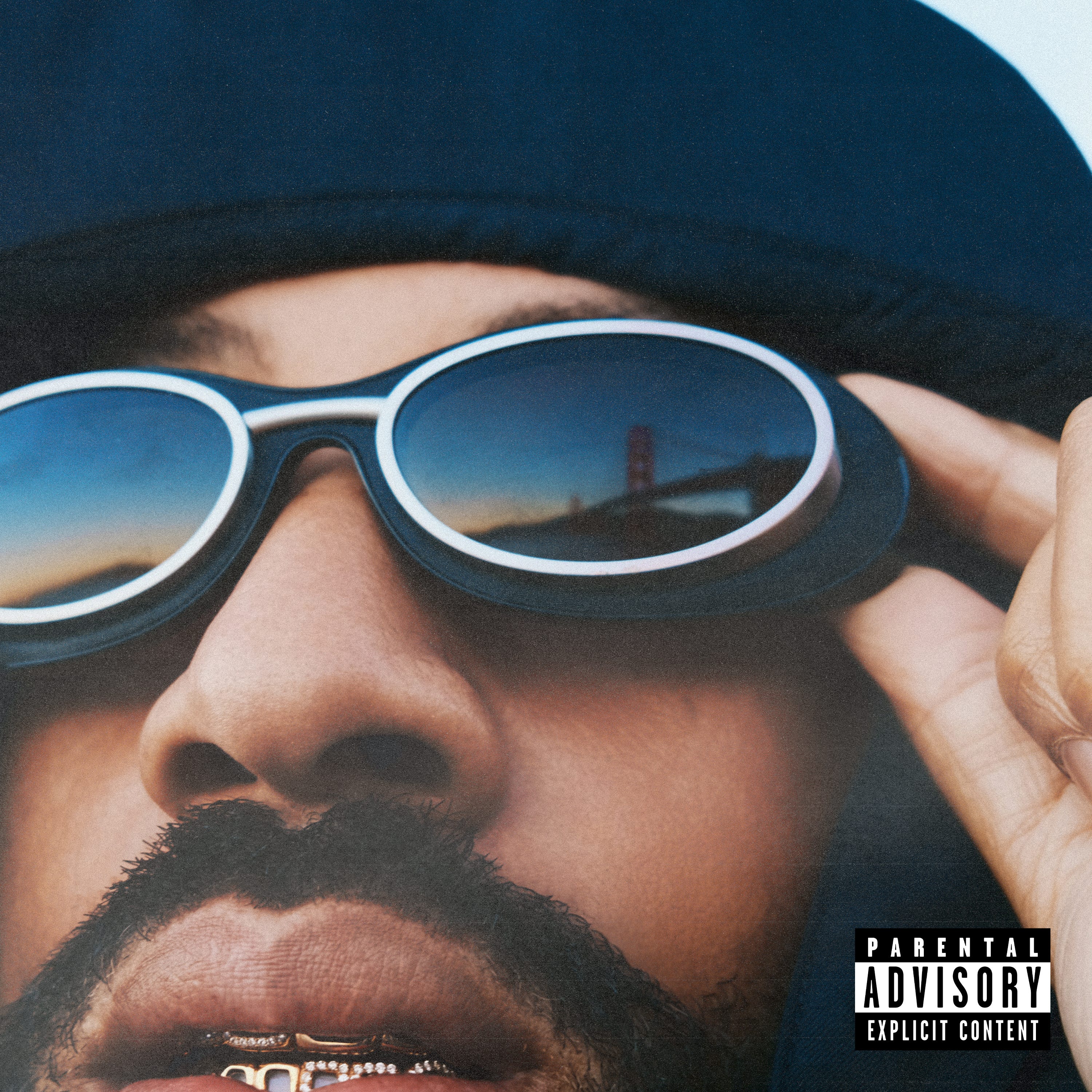
As a Philly ex-convict who returned from a twenty-year stretch preaching hustle and mindset to anyone with a cellphone, Wallo267 does this for a living these days. On “Go Outside Intro,” he receives a smooth soul groove and carte blanche, rapping about ships on the blade, whispering women, and money turning into more money. Wallo makes for a perfect doorman to the world Larry June has been building for ten years, a Hunters Point native who grew up hustling out of trunks, taking self-employment as his subject—from real estate advice to health lectures, and pistol sales, all at the same unhurried pace. Wallo creates movement. Below him, Larry already has the plans drafted on Who Coppin, patient enough to let compound interest do its work. His mother phoned him in 2012 to tell him to find himself a job, and he outlines the entire history on “Who Coppin”: “I knew the streets was dead, nigga, in 2009,” down on his luck that year, pushing an S5 by 2012 anyway, too involved to quit with a two-year-old son at home: “Wasn’t on no dumb shit, he was just tryna eat.” June Santana and Teeko place the thick bass and warm chords underneath a hook about searching in a box of hope for a heart, but finding a digi scale, a turkey bag, and a yacht, and about what you do when the baby needs diapers, and money doesn’t arrive. “God Got Us (Ain’t Too Many)” comes from the other side of everything, mama a product of the dope game, “I was taught how to survive, but never how to live, man,” the only thing he has ever asked God for being the strength to leave. He has been selling the solution since then, and on “Who Coppin” you can finally hear the price. —L. Ari James
Avara, why do women jump in the fire?
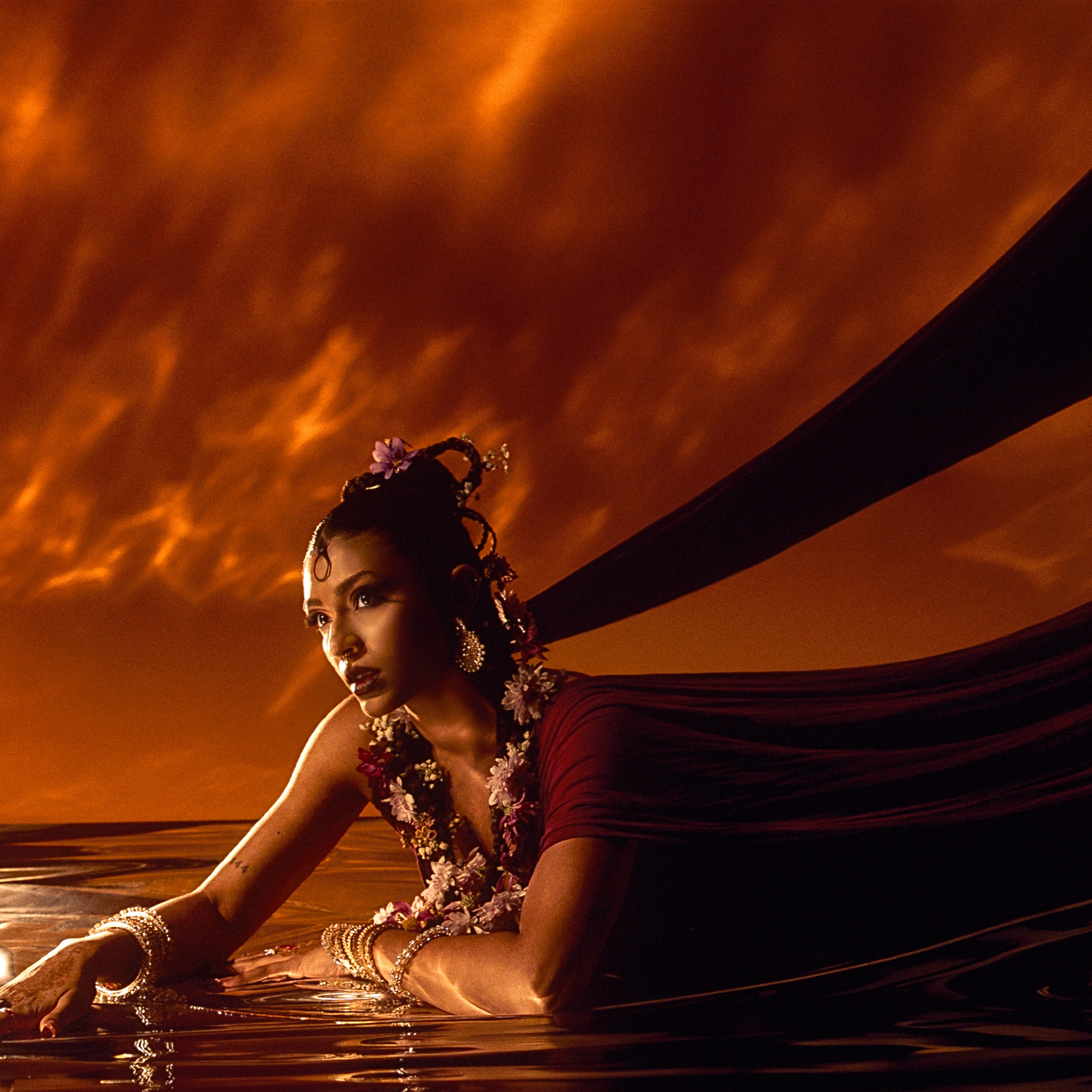
Located a half hour’s drive from downtown Atlanta along the interstate, Marietta, Georgia, is far enough away for a first-generation Indian kid to feel, according to her words, “never a part of the brown community but never completely a part of the American community.” Avara grew up in Marietta, studied Indian classical singing and dancing and piano, completed a business degree at Emory University, learned production software during quarantine and began uploading meditative R&B and soul tracks. By last summer, she had begun her first tour in Brooklyn, sitting amid a bed of roses. The collaborative 2025 effort (A Softer Place to Land) was dedicated to the South Asian artists surrounding her. She called the next one why do women jump in the fire?, recording it as she burned. In the song “kamikaze,” she introduces herself above percussive tapping and bass hits, “Fire burning, kamikaze/Static running through my body/Apocalyptic, so erotic,” before offering herself as the crimson bride, the alibi dressed for a wedding ceremony. On “potion no. 4,” she swallows Tylenol as if it might heal her wounds, after the verse “Heart’s so full of bullet holes/Band-Aids ain’t gon’ keep ‘em closed,” above the thick synth-bass and hand percussion details creating a ritual feeling in the hook. “alchemy” gives a picture of blood spilled on the pavement and she only wants to lie there, months late on the payments, loved by a man who calls her his favorite and wants to make her nameless; she lets her body turn to marble and calls her soul “a canteen” that she can’t keep. She becomes homesick most of all in “winston street,” asking an ex if he still thinks about her passing through their street, if he still loves Thai tea with honey and remembering her daddy saying “Don’t play games.” She was living on the west side while he was staying near the beach, and after the end of the singing she talks plainly, nowhere in her life being a home except music, except creating. —Priya Okafor
Raz Fresco, WHY EQUALS SELF
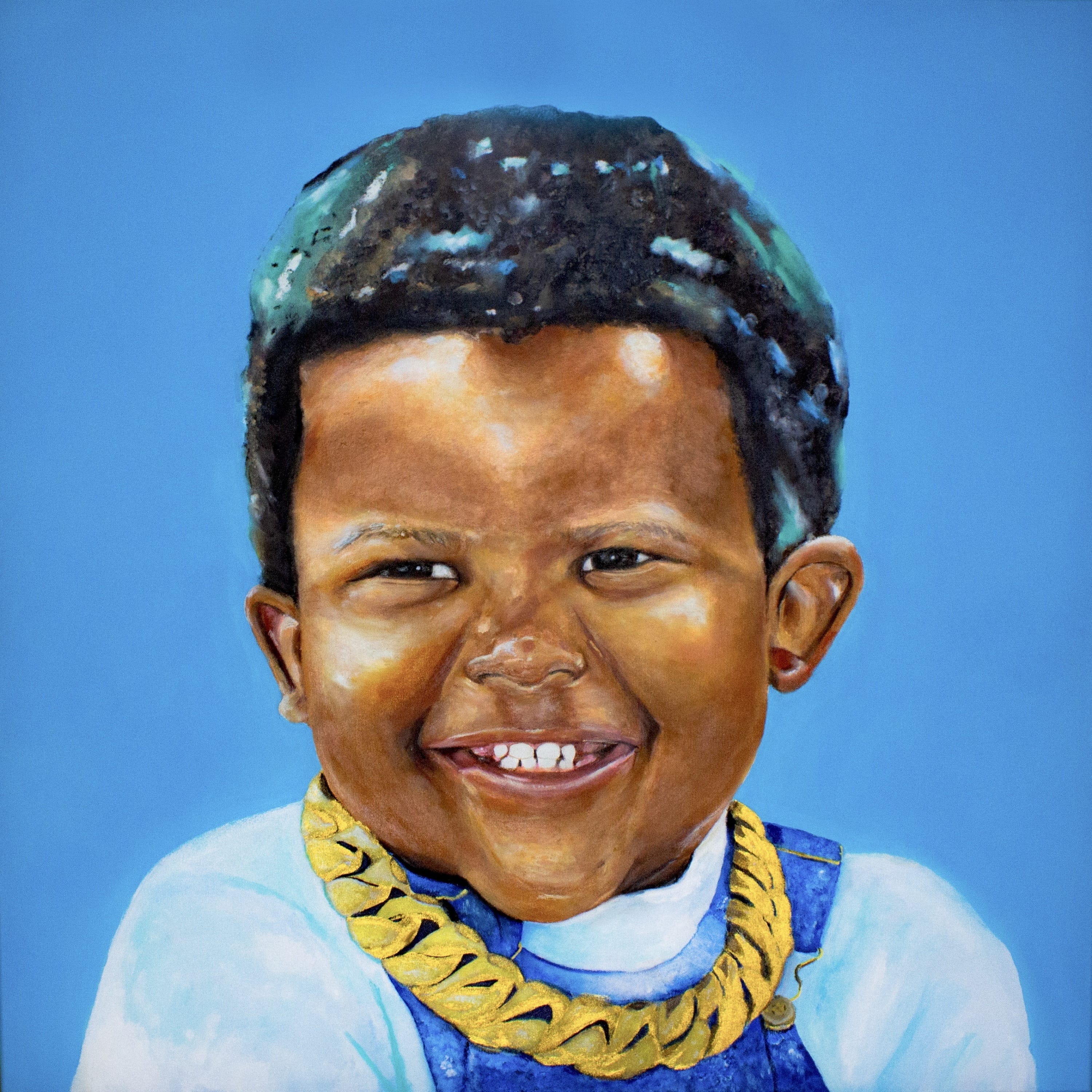
In the Nation of Gods and Earths, Y plays both the question and its answer simultaneously, the cause and effect, the seeker and the thing sought. Every number is endowed with a degree in Supreme Mathematics, and every degree has a lesson; and the student, the one who solves the whole cipher, ends up looking at his reflection. For over a decade, Raz Fresco has been solving the cipher in public, chopping tracks in a studio which he calls The Bakery, feeding the BKRSCLB crew which he created, releasing tapes at a rate which made him a fixture in the Canadian underground as his lyrics became increasingly knowledge- packed every year. On WHY EQUALS SELF, he solves the equation in the open, one degree after another, and the classroom is Toronto.
According to his account on “CROSSING BORDERS,” he last saw his father in the flesh in 2015, and the meeting he scheduled around his biggest show failed in an airport. He tells of DJ Muggs inviting him to Los Angeles, followed quickly by a call from Westside Gunn, and then the phone call home: “I called my pops, he like, ‘You here?’/I said, ‘They say I can’t go.’” Then he drags the borders through the family court, “Separated from my kids,” a lie told on the stand, “all out war” to get them back, and then within himself, “Too much borders, now you borderline schizo,” “borders around the mind that make the heart an igloo.” He concedes: “I’m older now, so I can see it from a father’s vantage point.” On “THE DEAF” his mother leaves Kingston to come to North America “to look for change,” his father “got caught up with the things,” and, he says, “now my daughters feel the same sometimes.” Here, three generations fit into a single verse, Kingston to Toronto to two girls waiting for a call. —Aicha Odilia
Arca, XXXXX
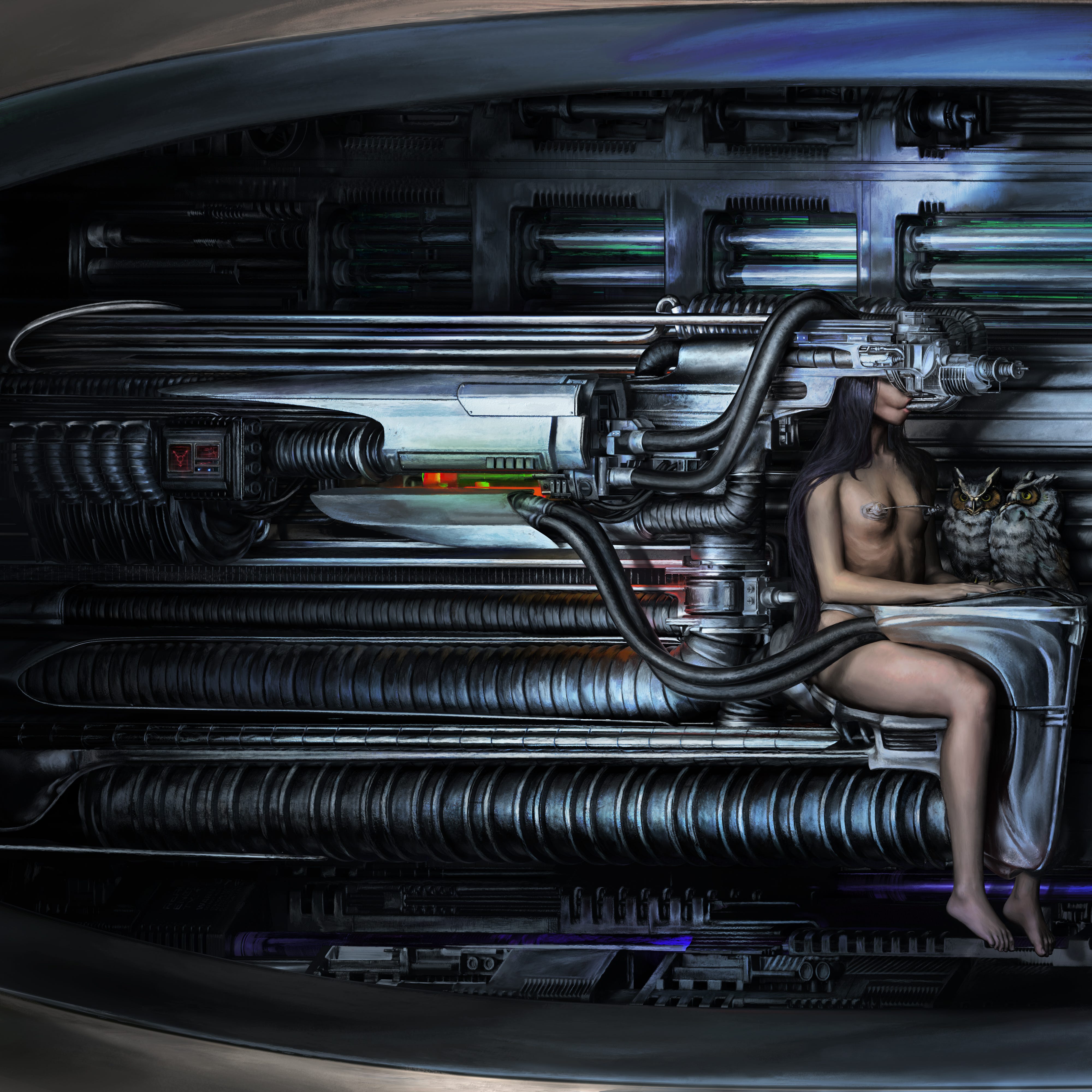
Artists from Venezuela who have ended up in the sphere of electronic music have found themselves working outside of it. Arca left Caracas early, and for the latter part of the 2010s, she was the artist brought in to make records work when they were not. The KICK series brought an end to that partnership. She has constructed a world of her own across it, sang in two languages across that world, and then waited five years without another full-length record to speak of. She has returned with XXXXX. Her songs are all built on appetite. They crave things in Spanish and in English, and half of them want the same thing twice. With a glitch-pop syncopated beat on “Fxck,” she calls herself the shit and calls you daddy in the same sentence. Then she turns to the father and asks him for himself dead. The high-energy Latin Eurodance of “Taconeando” reaches the same appetite from a party setting, with a heel and a tight skirt, and an instruction to bend down. Its chorus is a single admission, “Yo sé que tú quiere’ que me venga,” and she answers herself in the third person before ending up out in the open under the lights, wearing her heels. That uncertainty about the object of her address only grows in the two songs where she speaks rather than sings. “No End” wanders through shadow and departure and a leaf, then stops on something blunt and physical, “Bitch, look at how my face seeps.” Arca drives devotion and violence through the same voice, and the songs come out thrilling, funny, and mean. —Rosa Delgado
Baby Rose, YEARNALISM
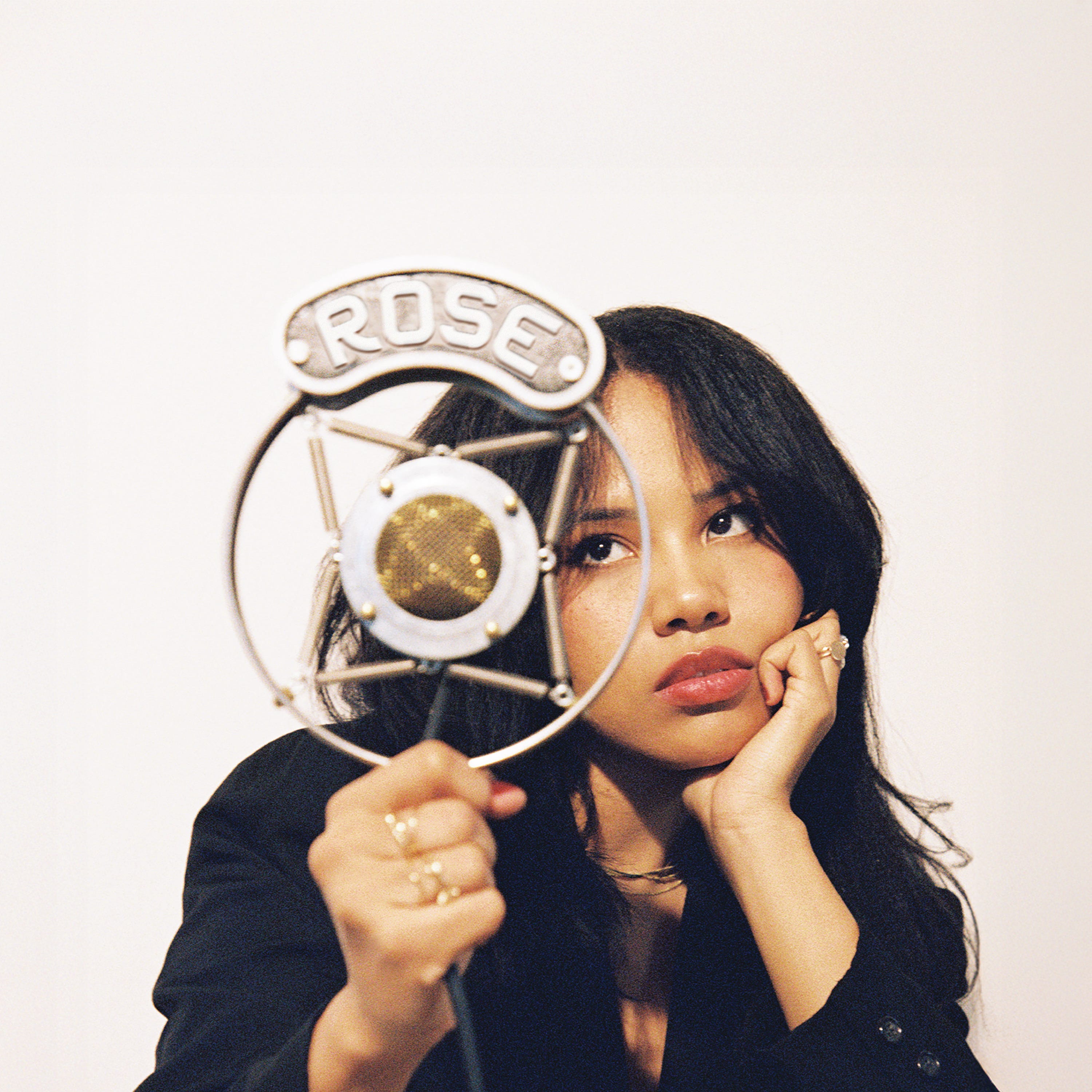
The term comes from a joke. Buried somewhere in the files of Baby Rose, there must’ve been a joke line she had typed out half-heartedly but kept because it described something she had been doing anyway: majoring in yearnalism (a play on journalism). Being born in Washington, D.C., raised in Fayetteville after she turned eleven, and now living in Atlanta, she is one of those artists whose contralto voices come even before the songs. While her first two records were made to strengthen her, YEARNALISM has been assembled by her with co-executive producer BIAKO. Along with a post-production team from roughly seventy sketches through tape, aimed at somebody else in the room. “When I’m Gone” is an ending that scores without gloating, and the second verse drives the nail right in: “You a cancer/Might fuck around, make me raise my standards/Now when you call, I won’t answer.” She is not hurt there; she is done with it, and in the outro, it is stated twice again for it to get its weight: “You’re a waste of time... I’m on my grind, I’ll be just fine.”
“Better” is an identical song but with the firmer groove (full-band backbeat with much more power behind it). The finale “Jasmine’s Sonnet” speaks to her younger self, the one she lost somewhere along the way, and in doing so it names her rawest wound: “Like an old tree in a storm, I was barely holding on.” In the chorus, the address is transformed into a benediction, “Now I’m basking in your light/Oh, let your love come,” before she gets to the thing that this whole album has been circling around and around without ever pulling its punches: “I was a wound that was open in bed.” That’s YEARNALISM in a nutshell—a document of everything she wanted, delivered by a woman who has finally realized that owning that desire is the hard, necessary thing. —Ivy Mensah