

Maxwell, Soul Musze-ic (2001 Interview)
This issue features an interview with Maxwell—conducted just as the release was announced—and an in-depth look at the lenses through which his Caribbean roots, vocal technique, and musical fusion.
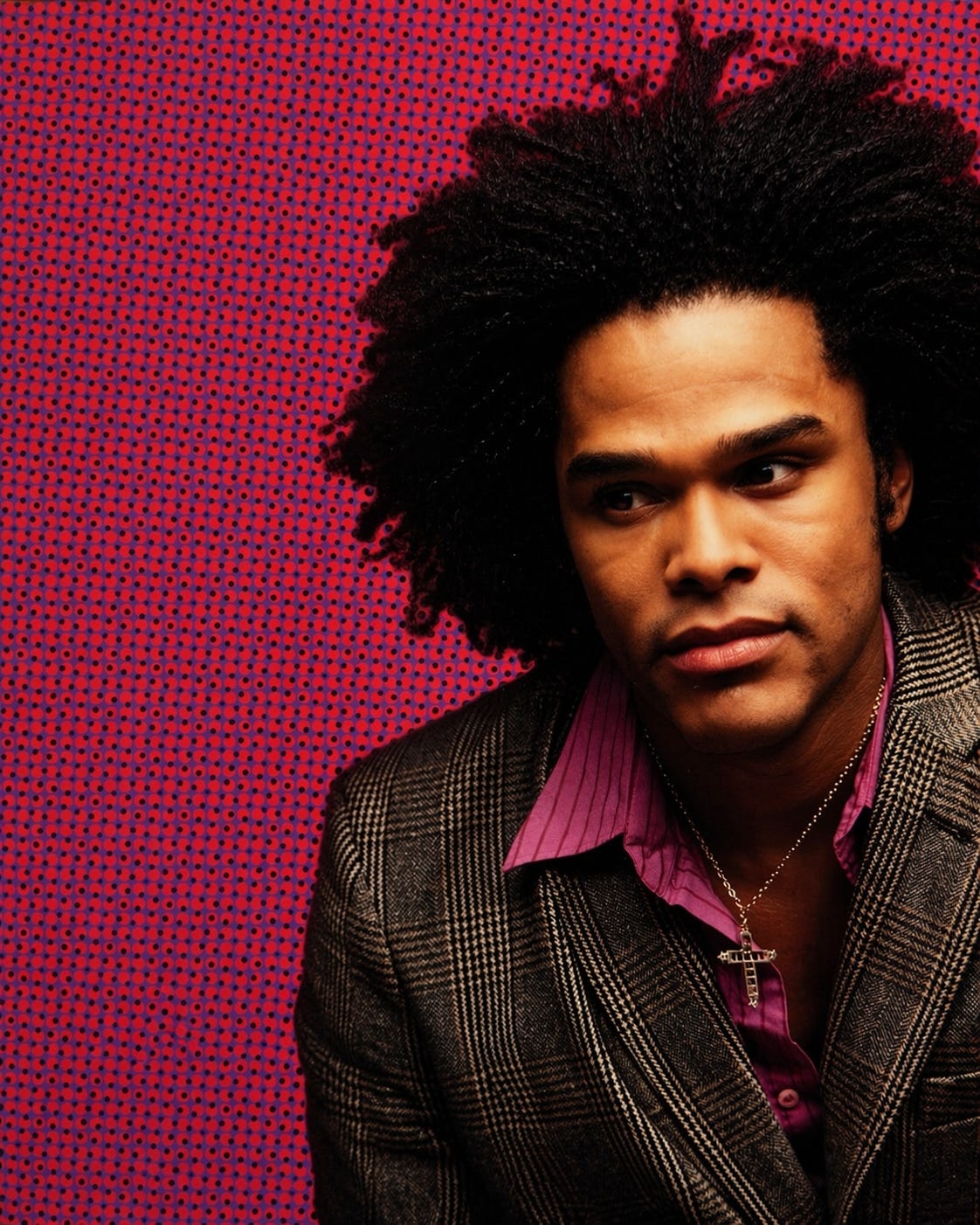
Translator’s Note: Written by Minako Ikeshiro for bmr (Black Music Review) in an April 2001 magazine issue number 272. Originally written in Japanese; translated into English for publication. All rights reserved.
Early spring, 2001. Maxwell’s third album Now is about to arrive, and the purpose of this piece is to get an advance look at the full picture of the new record and the man himself before its release, sharing that “we’ve been waiting!” anticipation with bmr’s readers and building the excitement even further. But to show my hand: as of this writing, with Valentine’s Day only just behind us, the only thing I’ve heard is the first single, “Get to Know Ya.” On top of that, the exchange with Mr. Maxwell, who apparently isn’t the biggest fan of interviews, was conducted via email. It’s a method that’s new and novel, sure, but even harder than a phone call when it comes to getting a read on the other person, and I have serious doubts about how well this will satisfy Maxwell fans’ expectations. To offer a bit more in the way of excuses: in the US hip-hop and R&B market, music has increasingly been leaking against artists’ wishes before release, and in the worst cases it ends up circulating as bootlegs. As a result, there’s been a growing crackdown on letting any music out before street date, and the collateral damage has landed on people like me, who have zero intention of profiting beyond a writing fee.
I’m not well versed in the situation in Japan, but if you happen to spot something that looks like a bootleg in a store, please don’t buy it. Refraining is one way of showing your love for the artist.
My apologies for starting with such an ugly, complaint-ridden opening. This is no way to match the beauty of Maxwell, so let me change the tone. When the proposal came from the other side, deep in recording, that they’d prefer to respond to the interview via email rather than by phone, I’ll be honest: a wave of anxiety hit me. (There I go again, back in complaint mode.) But when the forwarded replies to the questions I’d scraped together with my limited brainpower and information arrived and I opened them, my heart did skip. Email is also a slightly private, slightly formal medium. At its root, it’s a variation on the letter. So think of this as an open letter from Maxwell to bmr. Yes, when you look at it that way, it starts to feel special and exciting. (Staying positive, staying positive.)
First, let’s confirm the framework of the new record. From the start of his career, Maxwell has been an artist who generously showcased his talent for writing lyrics and crafting music, along with that falsetto voice. He has credited his work as a creator under the name “MuSZe,” hinting at the presence of a mystical muse within. Another widely known fact is that he brought in Stuart Matthewman, a core member of Sade, as his sole outside producer, in order to complete his art. I asked whether anything has changed on the new album.
Is the new album mostly the work of “Musze” again?
“Yes.”
Does “Musze” have any supporting members? If so, please introduce them.
“For me, God is ‘MUSZE.’ It’s also my own special nickname, the place I’ve been given, my everything.”
Is Stuart Matthewman involved on the new album as well?
His answers, his sentences, are in a sensory kind of English that connects to the world of his lyrics. The grammar might confuse a Japanese exam student (though the problem lies with the absurd rigidity of Japanese entrance-exam English, not with Maxwell, just to be clear). But reading his words over and over, I sensed a beauty hidden in the writing. That beauty comes from Maxwell’s inner world, and from the richness of his sensibility, since writing sometimes reveals a person more than speech does. To convey that beauty on the page as much as possible, I’ve kept the translation close to literal rather than liberal. It may be slightly hard to read, but I’d ask you to slow down for his answers. If doing so brings you into contact with his beauty, that’s all I could hope for.
When writing lyrics, what inspires you the most?
“It depends on the time and the situation.”
What are your usual circumstances when you write lyrics?
“There’s no set method. When something comes, it just comes. I’ve tried to control it more in the past, but I’ve found it works better to surrender to the inspiration when it wells up.”
You studied photography and design. When writing lyrics, do you have specific visuals or images in your mind?
“To some extent, but they’re not especially vivid. When I write, I’m more focused on setting down what I feel.”
What instruments do you use when composing?
“I start with the basics. Piano or guitar.”
On the previous album you used Spanish. Have you expressed your Latin or Caribbean roots this time as well?
“There’s a bit, but not prominently.”
The album title is Now. What kind of era do you believe we’re living in?
“I believe the possibilities are infinite, and the ultimate theme is truth. Cherishing ourselves, and respecting what is different from us. I think we’re living in a truly fascinating time.”
That last response might seem like a mismatch with the question, but I don’t think he misread it. Rather, he was conveying the overarching theme of the album and his message. It’s also the answer that best reveals his character, and it lets you infer that the essence of Maxwell’s music lies in a high spirituality and sharp sensitivity. That, most likely, is the true identity of “MUSZE.” Born in Brooklyn, New York, with West Indian blood including Puerto Rican heritage, he carries within his urbane sophistication a reverence for the primitive and a willingness to follow his emotions honestly. His fondness for the phrase “heart and soul” has a certain naivete that stands apart from the industry at large, a world that prefers to talk about money and chart victories, and it makes perfect sense that he keeps his distance from everyone except Matthewman.
“Get to Know Ya” is a beautiful song. What inspired its creation?
“I met someone who bewildered me in a way I’d never experienced before.”
What was your reaction when you first heard “Fortunate”?
“This is going to work.”
Did you think it would become that big a hit?
“Not especially. I don’t look at things that way. I decide based on whether I like it or not. Hits are unreliable, and having one doesn’t necessarily reflect a person’s talent. Having a hit does generally enable you to keep doing work on an even bigger scale, though.”
Your musical styles are completely different, but when I interviewed R. Kelly, I found he was also an extremely shy person. What was the studio experience like?
“I’ve never met him.”
“Fortunate,” the second single from the Eddie Murphy and Martin Lawrence film Life, remains his biggest hit to date. Given that R. Kelly basically invites artists to Chicago for recording sessions and that Maxwell has never met him, one can imagine Kelly crafted and handed off the song entirely on his own. And for Maxwell, who says the important thing is whether music is “good,” who the producer is probably matters less than how to make a good song his own. And it did, in fact, “work.” Q-Tip once said he was fed up with the trend of everyone judging songs by whether they’re “hot” rather than whether they’re “good,” and if you obsess over making “hot hits,” you’ll literally cool off eventually. Just as Urban Hang Suite still sounds fresh today, I have no doubt that Now will be a work that reflects its own “now” for decades to come. To be alive in a “now” that keeps producing talents like the ones Maxwell mentions is, I sincerely feel, fortunate for all of us.
A number of recently emerged artists regard you as a pioneer. What do you think of Musiq Soulchild, Bilal, and Jill Scott?
“I like and respect all of them. This movement is only going to grow, and the fact that it’s heading in this direction is testament to the heart and soul that lives in everyone.”
The word “testament” also refers to the Bible, and this answer offers a glimpse of his devoutness.
How do you evaluate Sade Adu as a vocalist?
“She’s an original.”
Do you think you’ve been influenced by her?
“Not in any particular way, but her records were the door that led me to meeting Stuart, a person of great influence.”
You’ve newly recorded Kate Bush’s “This Woman’s Work.” Are you drawn to British music?
“I just like ‘good’ music. I don’t much care where it comes from. What matters is whether it has heart and soul, and anyone from anywhere should be able to express that.”
Speaking of Matthewman, how did you find Sade’s new album?
“I love it. I think ‘Every Word’ in particular is a wonderful song.”
Is the theme of the new album love? If there are songs that address topics other than romance, could you tell us about them?
“The subject is always changing; you could say it reflects each moment. Romance is part of it, but my own growth, and having learned to let things roll off even when they don’t go well, has been the driving force this time.”
What’s the biggest difference from your previous two albums?
“I pray there are many differences, but I can’t give a clear answer. I think that’s something better left to the listener’s judgment.”
Do you have any special plans for Valentine’s Day?
“I’d like to.”
You’re regarded as a fashion leader. Who are your favorite designers?
“Right now, more than ever, I’m in the mood for regular clothes being the best.”
A song born from meeting a mysterious woman who rendered all prior experience useless (”Get to Know Ya”), things that didn’t go as planned and could only be let go of... It seems there have been all sorts of developments in his private life, and perhaps he converted those experiences into something positive through his music. According to press materials, this time around the production wasn’t as meticulous as on previous albums; he let things flow. Put differently, the album will probably be one that naturally wears the air in which the music exists. Maxwell’s heart and soul, the Maxwell who confides that “casual clothes suit my mood right now,” are surely packed into Now.

Sidebar: Maxwell’s Style
Atsuko “Akko” Matsuda
When I first saw Maxwell in the video for his debut single “Til the Cops Come Knockin’,” crawling across the floor in his explosive curly hair, a shirt, and slim-fit pants, I was shocked. “A UK singer? Gay?” That was my impression at the time. But Maxwell grew up in East New York, Brooklyn’s infamous ghetto, the same neighborhood that produced Cormega and many other rappers. During his middle and high school years, school and the streets around him must have been wall-to-wall hip-hop. So where did Maxwell’s style come from?
Before he had a record deal, Maxwell first performed at the downtown club Nell’s in 1993. From around 1992 to 1994, house parties in New York were losing steam, and downtown parties that played rare-groove records, like Giant Step and Soul Kitchen, were the main draw. I went to a few myself, and the crowd was mixed-race. I remember people wearing tidy shirts or vintage suits, often with a white tank top underneath, a hunting cap on their head, or their hair pulled back in a bun with a scarf wrapped around it. The fashion leaned toward what you’d see on UK acid jazz musicians. So when a friend of mine, who used to hang out with Maxwell just before he got his record deal, told me Maxwell was a regular at those parties, it all made sense.
According to that same friend, Maxwell was quite particular about his fashion and always looked stylish, so I believe he basically doesn’t use a stylist. With that in mind, if I were to pick my favorite looks from his magazine shoots, videos, and shows, the most striking was from his concert at Madison Square Garden last year. He wore an all-white suit with a white-based knit cap featuring Rasta-color stripes. The other was an official label photo: tightly braided cornrows flat against his scalp, paired with a fitted pinstripe suit. In both cases, he loosened up a sharp suit with his hairstyle or a knit cap, showing a style unique to Maxwell and unlike any other R&B singer. The styling has a UK feel, but as I mentioned, it actually emerged from New York’s downtown party scene. Maxwell’s fashion was, in the end, the ultimate New York downtown style.
II. Caribbean Frequencies in Maxwell’s Music
Michihiko Takahashi
I’m going to deviate slightly from the Caribbean framework right out of the gate and talk about Latin America for a moment.
On the well-known Red Hot + compilation series, one of its strongest entries, Red Hot + Rio, includes a Maxwell track called “Segurança.” As the “+ Rio” indicates, the album is focused on Brazilian music, and it features contributions from PM Dawn with Flora Purim and Airto Moreira, plus names like Money Mark and Caron Wheeler. Even in that company, Maxwell’s original number “Segurança” stands out. It’s not a flashy track by any means. In his usual alluring fashion, he delivers a vocal and arrangement heavily inspired by bossa nova. The song is co-written with Stuart Matthewman, and while you can certainly find a bossa nova sensibility in Sade as well, the key asset on “Segurança” is the presence of guitarist Vinícius Cantuária. A Brazilian musician based in New York and formerly of Caetano Veloso’s band, Cantuária adds a deeply authentic flavor. But authentic as it is, the way the güiro (a small percussion instrument made from a dried gourd with ridges scratched by a stick) and percussion are deployed carries a subtle Caribbean fragrance. Taken as a whole, the song becomes something only Maxwell could have made: a piece of music that is quintessentially New York.
Even tracks that appear simple in structure turn out to be quite intricately layered.
When it comes to Caribbean connections, artists like Ricky Martin, Jennifer Lopez, and Christina Aguilera, squarely in the showbiz lane, may be easier to discuss at this point. Their music puts backgrounds like Puerto Rico or Venezuela right on the surface. But Maxwell, despite being of Puerto Rican descent, never presents his heritage that directly. I get the sense that Roxy Music’s Avalon and Caribbean music have occupied roughly the same distance in his aesthetic world until now.
Looking at tracks from Maxwell’s Urban Hang Suite, “Whenever Wherever Whatever” carries a strong Caribbean scent. It’s not dance music; it’s a simple song backed mainly by a single guitar, but between the Spanish-inflected guitar tone and the vocal itself, you can sense a sabor (flavor) akin to what salsa calls sentimiento. The lyrics are in English, though.
This is all admittedly impressionistic, but as an album, the follow-up Embrya seems more consciously Caribbean in its sound. The percussion resonates differently from the first record, that’s the clearest tell. Following the opening secret track “Gestation: Mythos,” the song “Everything: To Want You to Want” features the same quality, but on “I’m You: You Are Me and We Are You (pt me & you),” sung partly in Spanish, the commitment to percussion becomes even more pronounced.
The new single “Get to Know Ya” is unexpectedly straightforward and pop in its feel, dialing back Maxwell’s usual seductive atmosphere. What’s interesting is that the horn arrangements are unmistakably Caribbean. Others have felt the same way, so this isn’t just my imagination. In fact, beyond the Caribbean, the horns evoke an African group: the groove is reminiscent of the late Franco (the greatest guitarist Africa ever produced) and his Congolese ensemble, simultaneously relaxed and sharp, exquisitely balanced. Embrya had “Arroz Con Pollo,” a track where the horns play a phrase resembling Allen Toussaint’s “Yes We Can Can,” but “Get to Know Ya” pushes that approach a step further.
I still haven’t been able to hear a single track from the new album beyond this one, but there’s a chance the musical direction has shifted considerably. Then again, he’s such an exceptionally stylish artist that the album as a whole might not change all that dramatically. Either way, I’m eagerly awaiting its arrival.
III. Maxwell’s Voice
Hayashi
By the standards of conventional soul and R&B, Maxwell’s vocals are not, strictly speaking, soulful. His falsetto-laced, caressing singing voice sits at the opposite pole from a sweaty, gritty singer like K-Ci, the type who leans on shouts and overpowers you with raw vocal force. And yet his sweet, sensual whisper grips the listener’s ear and doesn’t let go. The persuasive power is more than sufficient.
Sade and Maxwell are frequently compared (or practically equated) in terms of their musicality, not least because of the Stuart Matthewman connection. Sade Adu’s vocals, too, are neither soulful nor particularly virtuosic, yet precisely because of that, they radiate an erotic mystique that draws the listener in like quicksand. Whether or not Matthewman has an affinity for this type of voice is a separate question, but when Maxwell’s or Adu’s vocals dissolve into a mellow track, they don’t just gain in sensuality; they emerge with a three-dimensionality that sends a shiver down your spine.
At its core, Maxwell’s approach centers on a delicate but resilient tenor voice, deftly moving between falsetto and chest voice to enrich his expression. In that sense, he’s very close to Prince. On MTV Unplugged, when he sings Kate Bush’s “This Woman’s Work” in an agonized, transcendent falsetto, the effect is pure Prince. “Lonely’s the Only Company” on Urban Hang Suite carries a similar quality, if less intensely. That said, rather than making a raw emotional appeal through falsetto alone, his vocals, which deploy vibrato to trace delicate emotional terrain, possess something like compassion, a gentleness of manner, a tenderness toward the other person.
That brings to mind the artist whose work is most often cited alongside Maxwell’s (as with Sade): 1970s Marvin Gaye. Whether Maxwell himself acknowledges it or not, the resemblance to Marvin’s restless, wandering vocals on I Want You (1976) and Here, My Dear (1978) is undeniable, including the multitracked vocal layering. The affinity between Maxwell’s work and I Want You in particular, an album on which vocal recording alone reportedly took close to a year, is beyond question. How much time Maxwell spent on his vocal tracks is unknown, but in his singing, with its subtle deployment of a diverse range of voices, one senses, for better or worse, a certain calculated precision.
Come to think of it, El DeBarge, who covered Marvin’s “After the Dance” in 1992, has a naive, delicate vocal style in which the parallels with Maxwell are easy to spot. And both El DeBarge and Maxwell have Hispanic roots, which makes it tempting to dismiss their vocals as “not soulful like other Black singers.” That’s far too reductive, but the fact that Maxwell’s influences don’t come exclusively from Black music is genuinely significant. On MTV Unplugged, beyond the Kate Bush cover, he also tackled a Nine Inch Nails song, making no secret of his rock influences. It’s entirely possible to detect a (white) rock singer element in his vocals. Overlay the voice of someone like Bryan Ferry, a singer influenced by Black music, onto Maxwell’s, and there’s surprisingly little dissonance (a roundabout way of putting it, I know). Of course, Urban Hang Suite also includes “Suitelady (The Proposal Jam),” where he sings raw and rough in a traditional soul style straight out of the Sam Cooke-to-Bobby Womack lineage, and that makes perfect sense too. In any case, Maxwell is an omnidirectional singer, much like the hairstyle on the back cover of Urban Hang Suite. The question now is: what vocal style will he use to speak of his love for women on this new album? I can’t wait to find out.