

Milestones: 4 by Beyoncé
The most important Beyoncé album is the one nobody was ready for. She made a whole record about loving one man, and it rewired everything that came after.
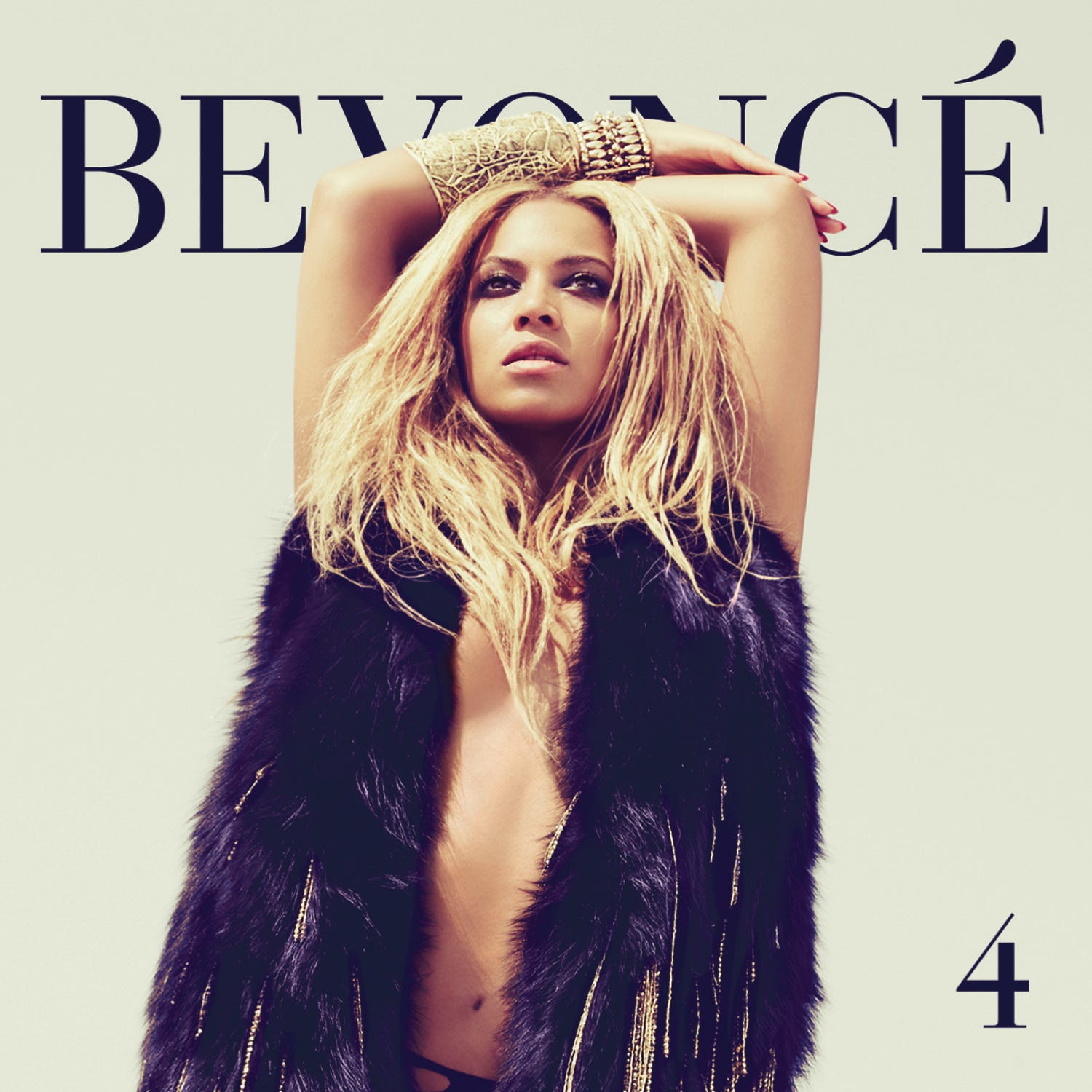
In 2010 and 2011, pop radio was nothing but bass drops, vocoder, and LMFAO; Loud was released by Rihanna. During the Teenage Dream cycle, Katy Perry was shooting whipped cream from her chest. The club records, which were the biggest ones, were produced in such a way that they made sure to keep your phone vibrating while in its pocket. Beyoncé Knowles-Carter used to spend two years on an I Am... Sasha Fierce world tour—and it seemed that she saw this trend and decided to follow a completely different path.
After her career as a teenager with the other girls from Destiny’s Child, it was her first significant break during which she stayed off from work for one year. She expressed it in a more precise manner while talking to the press, saying she needs “to live life, to be inspired by things again.” In Williamsburg, she took her nephew to school and witnessed Grizzly Bear play, but at the same time, she also used to visit restaurants. Besides all this, professionally, she finished her association with Mathew Knowles, her father, who worked as her manager since she was a kid. She asked for chords, bridges, and changes in notes and tunes the moment she made herself available for the studio again—hence, instruments for live as well. DeBarge, Fela Kuti, and Stevie Wonder. R&B, as it may appear, people playing along as they did, being in the studio itself.
Her sessions for the LP 4 took place across six cities in fourteen months. The first session was at Roc the Mic studios (JAŸ-Z-owned studios in Manhattan), then at KMA, then at MSR Studios (where the majority was cut), Peter Gabriel’s Real World Studios (rural England), a jury-rigged setup, as JAŸ-Z at the time was at his Sydney mansion recording with Kanye West for their album Watch the Throne, which he built for her. Other locations included Vegas, LA, Atlanta, and Honolulu, and before picking the album, she sent 72 finished tracks to Columbia. Her engineer, DJ Swivel, spoke of her in Sound on Sound that she was the main producer, as every idea had to pass her approval and the bar she set. Shea Taylor co-produced 7 of just the 12 songs and played most of the live instruments in collaboration with MSR’s own Jeff Bhasker. Beyoncé helped every song by creating her own harmonies and vocal stacks. In the earlier albums, Beyoncé was an executive producer, but 4 was the first album that was literally Beyoncé’s creative process, which set the bar “beyond” for all to follow.
Peter Gabriel’s multi-instrument room in Wiltshire is where Beyoncé, The-Dream, and Shea Taylor built “Love On Top.” She had gone to the English countryside for the gear, and she built the song from the ‘80s up: New Edition, the Jackson 5, Whitney Houston. The melody climbs and climbs, and in the final ninety seconds, she sings the same words in four different keys, shifting from C up through D-flat, D, E-flat, and E. It is a technical stunt, but it does not feel like one. She sounds more excited each time, the joy kicking up a half-step. Playing Etta James in Cadillac Records had given her a new way into her own voice. “I used a lot of the brassiness and grittiness in my voice that people hear in my live performances, but not necessarily on my records,” she told Dazed. At the 2011 VMAs, she sings “Love On Top” and unbuttons her blazer to show the world she is pregnant. You cannot separate the song from that image now, nor should you.
Before 4, The-Dream and Beyoncé had recorded a whole Fela Kuti-influenced album (twenty-plus songs) and scrapped the whole thing. “End of Time” survived the purge—marching-band drums, horns beating through the track, and a bass line copied from Kuti. She sings about endless love, yet the song pushes forward with a forcefulness that makes most ballads on 4 seem sedentary. A similar sense pushes throughout the strange “Countdown.” It moves from funk to hip-hop, through reggae to, near the end, a sort of Fela Kuti drum circle with a pop hook. The sample—the sped-up “Uhh, Ahh” chunk from Boyz II Men—was a little homage. Destiny’s Child’s first support act had been Boyz II Men, after all, the first group ever to take them on tour. Beyoncé counts down ten over tracks on which she brags about her romance, mentions the local Houston Rockets, and twice changes tempo! She called it “really experimental,” which, for a Beyoncé single in 2011, it really is.
Most of 4 slows down. “1+1” begins with heavy distorted guitar and little else. Sparse drums, her voice. She said it was her favorite song from 4. You can hear why; there is nowhere to hide in it. She would be with that one person if the world ended. “I Care” has a more dense engine; cooing background vocals and thick percussion, but there is a nasty edge to the vocals. She is telling someone she still cares, even if they clearly do not anymore; the hurt sits nicely next to the sadness. Jeff Bhasker and Chad Hugo of the Neptunes co-wrote it, a lot of the backing being played live by Bhasker. “I Miss You” was written by Frank Ocean, back before anyone knew who he was. Playing a CD in the car with JAŸ-Z as they drove to Brooklyn, she heard his voice and came calling for the song he had planned the next morning. Half-whispered and spacey, tinny 808s ping underneath evaporating keyboards. If you listen to the opener, Ocean can be heard mumbling audibly, almost accidentally. “I Miss You” and Ocean’s own “Thinkin Bout You” were both co-written by Shea Taylor during the same window. The two songs share blood. The same chord shapes Taylor kept returning to over the summer on both songs.
The only guest spot comes courtesy of André 3000 for “Party,” and he runs in a completely orthogonal direction with it. It is on a beat of late-’80s smooth funk, Doug E. Fresh and Slick Rick’s “La Di Da Di” sampled underneath it; it is produced by Kanye West. It is a song where Beyoncé sings to a lover how she cruises around with the top down. Then André turns up and raps about eating gyros in a food court, praying every morning, his grandmother, and kids looking up to him. He performs a mid-song autobiography, featuring precious little to do with the rest of the work, and it is to be found amongst the best lyrics on 4. He presents his raps with such a quality akin to a man who might have just wandered into someone else’s party and begun to tell you his life story. You would let him, because you knew him as André 3000.
Let’s be real. “Best Thing I Never Had” is a reheated “Irreplaceable”: same spiteful-break-up-song formula, same set of piano-driven pop construction, pretty much the same sermon with new words as it were; it is fine. “Die Young” goes further down the road of self-pity than Beyoncé normally does, which sometimes results in drama more than sympathy, stating that she would die young rather than live without this certain person, and quiet-storm production by Luke Steele does not steady things much. “Run the World (Girls)” was the lead single and the most contested, an utterly military-drum-dominated stroll produced almost entirely from “Pon de Floor” by Major Lazer, which gained accusations of copy before 4 was even released. “I Was Here” was added last moment. Diane Warren had presented the song by phone to JAŸ-Z, he had sent her through to Beyoncé, and mastering was then postponed for another week. It is a competent Diane Warren ode based around wishing to know that life had mattered, and it is the record’s least interesting song that offers a lot more interesting ideas.
Most of the songs on 4 address themselves solely to one person. The audience, whether it is for songs that count down devotion like “Countdown” or die young to avoid loss of the song’s subject, is a party of two. Even the breakup songs “Best Thing” and “I Care” are about being done with the wrong man or still smarting over the right one. Unlike earlier anthems “Single Ladies” and “Crazy in Love”—which address every room they walk into—Beyoncé’s album barely looks up from under the dinner table. Where there is no obvious anthem trying to strike right to the roots of a generation, where there is no longer the role of the energetic alter ego Sasha Fierce, all there is is a woman down by the dinner table.
This narrowness is really what critics pointed out as the reason why the 2011 album came back mediocre. It got a Metacritic score of 73, and a few notable outlets called it pleasing but minor. It did not release another “Single Ladies.” And then she got the 2013 self-titled, surprise-released, no singles, visual album. But all the things that people celebrate now about Beyoncé as an auteur are experimented with in 4, and Lemonade takes it further. All these elements, from the creative independence, the fetish on live instruments, to the willingness to make something that is not chasing pop radio, started here in an album with messages sent to only one person, almost.
Great (★★★★☆)