

Milestones: 8701 by Usher
The Atlanta R&B prodigy’s third album was gutted by Napster and rebuilt by a committee of hitmakers who bet everything on his voice over his choreography.
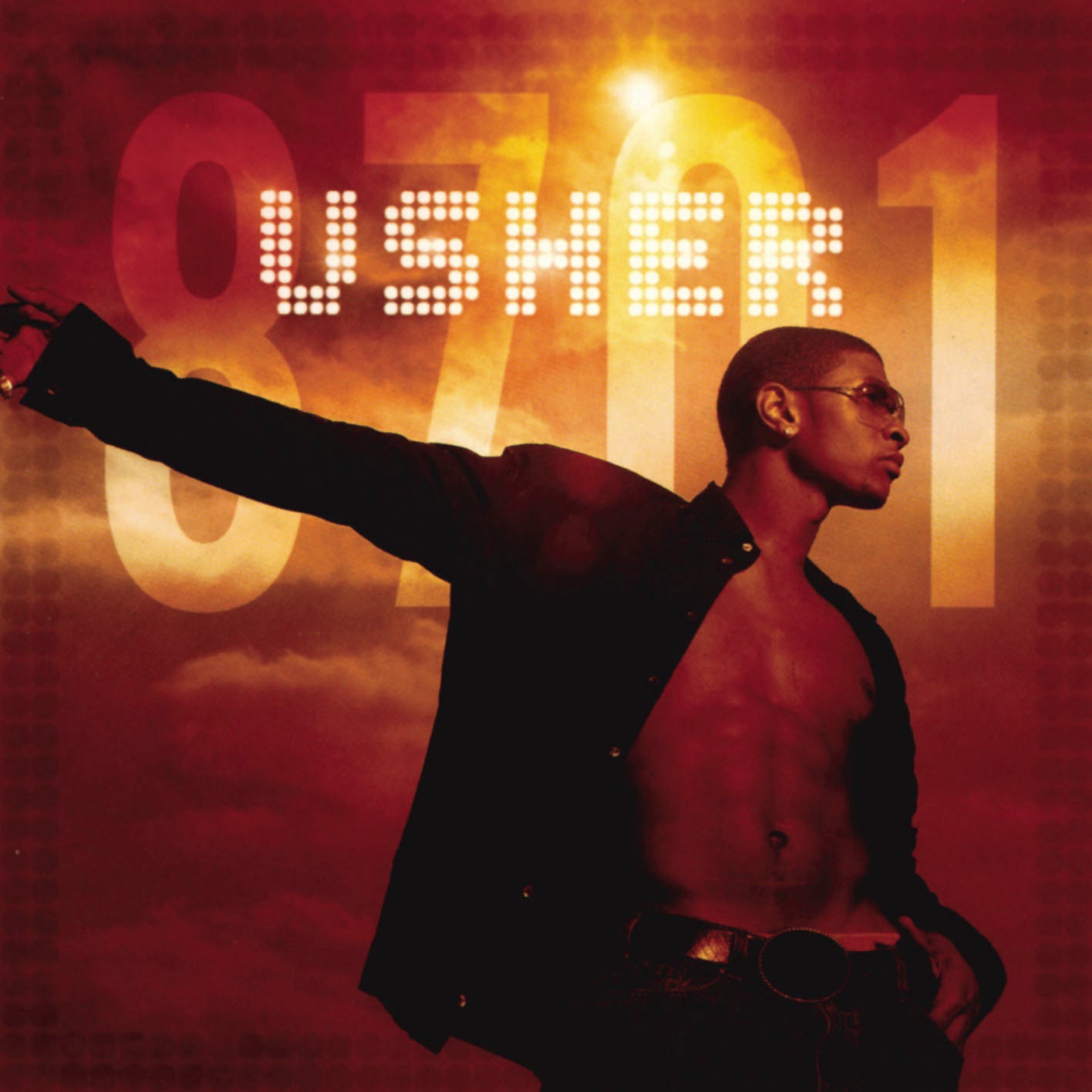
As early as March 2000, some uncompleted songs were circulating on Napster. “T.T.P.,” “U R the One,” “Pop Ya Collar.” All these songs were associated with Usher’s upcoming album All About U, due on Halloween. Arista Records didn’t know how to stop file-sharing, and all those leaks destroyed the promotion of one of the top R&B singers, a twenty-one-year-old former choirmaster who sold millions of copies of his debut album My Way and still couldn’t prove to anybody that he’s a vocalist rather than a dancer. Arista Records postponed the release of the album two times. Usher went back into the studio, discarded most of the songs and left only a few. This new record received a new name—8701. “87” in the title of the album is the year when he started to perform in public at his church in Atlanta; “01” stands for the release year. According to MTV, this title represents his “soul,” and he compared his voice to the voices of Donny Hathaway, Stevie Wonder, Marvin Gaye, and Michael Jackson. It’s quite an impressive list to be associated with a pop-R&B album containing “Twork It Out.”
Those who made this album should be given more credit than usually. His mother, Jonetta Patton, managed his career during this period and was in charge of the A&R of the project. She approached Jimmy Jam and Terry Lewis at the 2000 MTV Music Awards and pitched her son’s next step on the carpet. They agreed to work on the album, and they produced seven of seventeen songs in it. LA Reid, who was the head of Arista back then, became the executive producer, and he actually was in charge of the process, sending back producers to redo the tracks, choosing the singles himself, etc. He answered the question in one sentence. If the track doesn’t prove it, it goes away.
This approach was the most successful in the song “U Remind Me.” Edmund Clement produced the first version; it was good and had a bounce. LA Reid listened to the track and asked Jam and Lewis to do something different. “We already know he can dance”, he told them. “I want people to go and realize he can sing”. The second version of the song contained a guitar loop and swing that was somewhere in between dance and ballad. But the most important part is the meaning of the song itself. He meets a girl, falls in love with her, and suddenly realizes that he cannot be near her because she reminds him of somebody who already hurt him. He’s unable to make the difference between the new and the old wound, and he just leaves. A number one hit for four weeks—a story about the man who is too messed up to accept the good. This song won Usher the first Grammy Award (three years of flips on TRL debating his substance, probably deserved it).
Pharrell and Chad Hugo treated Usher in 2001 the same way they treated everybody else. They gave him the beat without any other instruments and waited to see what would happen. “U Don’t Have to Call” has only dry claps and a hypnotic loop. The rest of the space is for the other instruments, and it doesn’t contain anything else. Usher performs the song in the way he would send a voicemail that he knows will not be returned. The lyrics say that it’s over, that she shouldn’t call, and he moved on. But he cuts every line even shorter than it should be, and you can hear every bit of hurt in his voice. It reached number three in charts. On the other Neptunes’ track “I Don’t Know,” P. Diddy appears with the ad-libs and an interlude that the song didn’t ask for and does not need at all—precisely the kind of distraction that makes you think how many of seventeen songs survived the editing.
Dupri and Cox wrote another hit of this album, and it’s embarrassing. “U Got It Bad” is about the effects the woman causes on you when you’re so crazy about her that you can’t live without her. You can’t eat or sleep; you keep checking your phone. They built the track around an acoustic guitar and not much else, and when Usher’s falsetto appears in the lyrics “got it bad,” he sounds wrecked. Not performing wrecked, not selling ballad moment for a concert crowd, but actually a little embarrassed about how much he needs this woman. Six weeks at number one, longer than “U Remind Me”. It’s the song that makes the whole cookout sing along.
Some songs that were cut from the scrapped All About U album are still on 8701. They look a little out of place there. “Pop Ya Collar” by She’kspere was already a single in 2000, charting better in the UK than in the US. It feels, listening to the finished album (if you live overseas), as the leftover from the party that Usher already left. “T.T.P.” leaked on Napster in the previous year and sounds like that, dance song by Dupri and Cox still wearing the scrapped LP clothes. None of the songs embarrasses itself next to the newer material, but neither of them belongs to the same discussion. “Twork It Out” and “If I Want To” have opposite problems. They were recorded for the new album, but they could easily be from any other studio. The Babyface-produced “If I Want To,” which is about Usher’s attractiveness, spends four minutes imitating Michael Jackson without ever becoming an imitation.
LA Reid asked Jam and Lewis to write the track similar to Force MDs’ “Tender Love,” and what came back is “Can U Help Me,” a five-minute-plus ballad with the surprisingly simple idea behind it. Usher asks a woman for help, both emotional and physical, without pretending that he doesn’t need it. His vocal coach Jan Smith had been teaching him about the pre-production, and you can listen to the results. He sings verses conversationally rather than performing them, and late ad-libs sound improvised. “Good Ol’ Ghetto” is the only track when Usher talks about his hometowns (Chattanooga and Atlanta) in such detail that it sounds like he remembers those places rather than retelling his biography. Dupri and Cox kept the beat nod-simple, and Usher sang over it as he talked to somebody sitting opposite him.
8701 is the album that stands between Usher of the past and the one that LA Reid wants him to become. He mentioned Hathaway and Gaye, but what he got is half great singing and half filler, proving that he could move a crowd without proving anything to it. The album title explains the idea of this album. 1987, church, beginning. 2001, arrival. But “Pop Ya Collar” isn’t the arrival of anything except the release date. Three singles that were successful were successful for the same reasons. Usher stopped dancing long enough to make people listen to him. And every time he does that, he is the best male vocalist of pop.
Three years later, Confessions will sell ten million copies in the US, and nobody will be wondering whether Usher can sing. But the grit in his voice on “U Got It Bad”, snagging against the smoothness of the rest of the phrase “I know she ain’t coming back,” was the moment when everything got settled. Everything after started here, on a remade LP that almost never appeared.
Standout (★★★★½)