

Milestones: Aaliyah by Aaliyah
One of the most influential R&B albums of the 2000s, it was commercially sinking when she died. Everything it became happened without her.
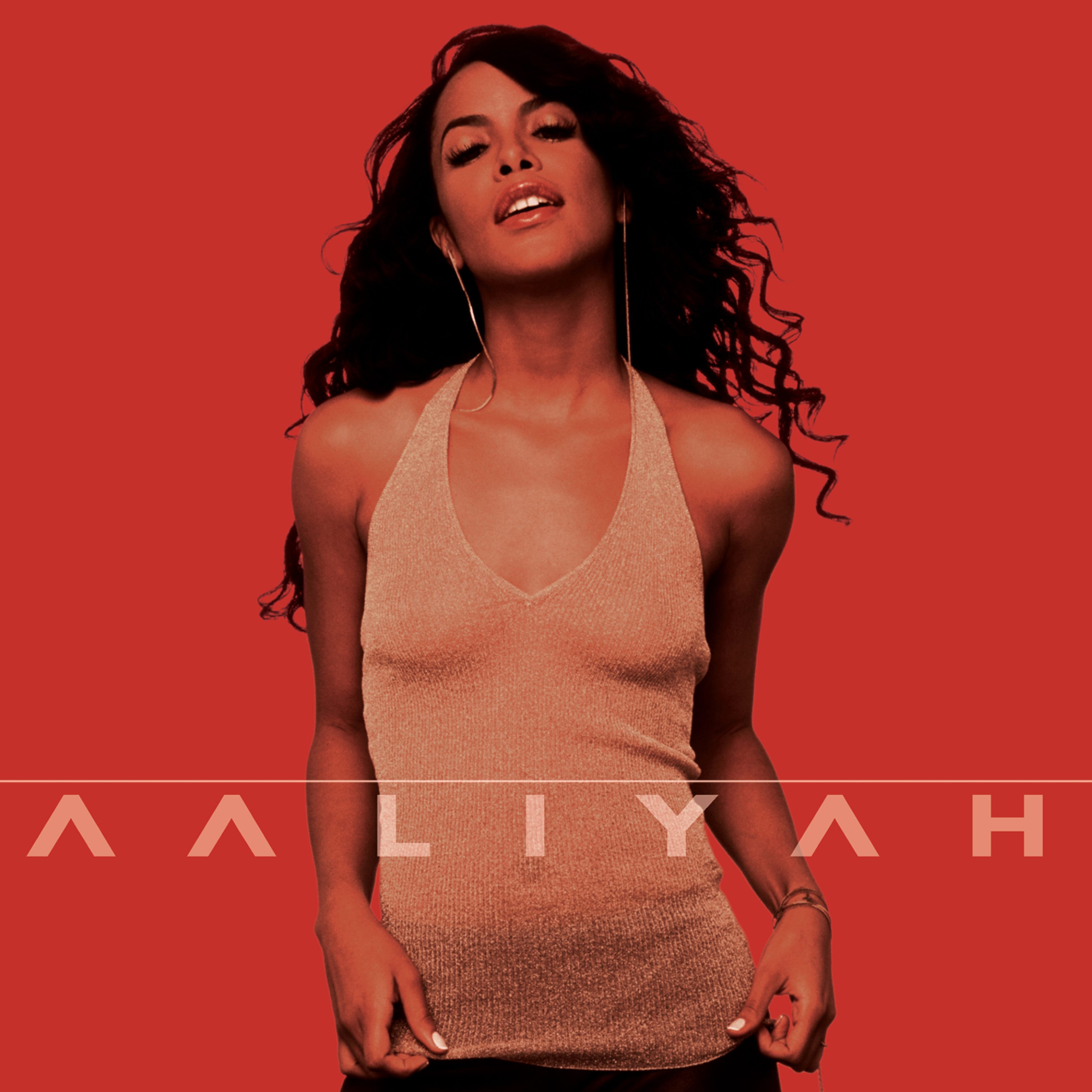
Five years earlier, Aaliyah had broken free from R. Kelly. She’d been only fifteen when they secretly married; he was twenty-seven, and her age was altered on the marriage certificate. The marriage got annulled. She switched from Jive Records to Atlantic, and there was real panic at Blackground about whether she could match the success R. Kelly had crafted for her debut, Age Ain’t Nothing But a Number. Aaliyah took a risk and chose to work with two producers no one knew yet. Timbaland and Missy Elliott were just looking for their big break, and Aaliyah treated them like stars already. Missy told Rolling Stone that Aaliyah “had that much faith in our music that she treated us like we already sold a million records, when we hadn’t sold anything yet.” Her album One In a Million went double platinum, proving the gamble was spot on. “Are You That Somebody?” and “Try Again” only expanded her reach. “Try Again” even became the first song to hit number one on the Hot 100 from radio airplay alone.
Static Major, whose real name was Stephen Garrett, had been part of the Virginia R&B group Playa, wrote songs for Ginuwine, and had been collaborating with Timbaland and Missy for years. Aaliyah brought him into her circle for this album. He penned thirteen of the fifteen tracks, and they didn’t seem like the work of just one writer. They felt like different ways to have a conversation with someone. On “Loose Rap,” Static offers a casual pick-up line so subtle it almost flies under the radar. By “Read Between the Lines,” she’s tired of having to spell things out, and the listener is left to guess what she isn’t saying. Static himself was in his twenties, crafting words for a twenty-two-year-old woman, putting phrases in her mouth that no one else had thought of before.
In contrast, Aaliyah’s peers sang with a noticeable intensity. Mariah Carey hit those high whistle notes. Whitney Houston reached for the stars with every track. Aaliyah, on the other hand, kept her voice soft across the whole album, layering her harmonies into multi-track arrangements that were mixed so gently you had to turn up the volume to catch them. When she comes in on Timbaland’s beat on “More Than a Woman,” it sounds like a conversation with someone who’s already been won over. There’s no pitch left to make. The whole track feels like the things you say after the deal is sealed.
Timbaland whipped up the lead track, “We Need a Resolution,” and even throws in a rap, but the beat is off even before it kicks in. The drums don’t keep time as they should. They drop out halfway through a bar and then crash back in just when you don’t expect it. Aaliyah finds herself tangled in a fight over a fading relationship. “Am I supposed to change? Are you supposed to change?” she keeps asking, her voice full of tiredness that’s not really looking for an answer. Timbaland’s production seems to tussle with her too. No one else in her league put out such an uneasy lead track that summer, and it landed at number 59 on the Hot 100, predictably where a restless single might land.
Then there’s “Never No More,” crafted by Bud’da, a song that lingers in your mind long after it ends. Aaliyah talks about an abusive relationship in straightforward words, with her decision to leave already clear and the guy involved not getting any chance to defend himself. Static penned those lines for a woman whose past with R. Kelly was still a fresh sore, though neither the song nor the album notes openly link to that story. They don’t have to. The message is loud and clear. “Rock the Boat” has its own gravity. Static wrote it using water and boating as metaphors for intimacy, and at first, Blackground didn’t think Aaliyah was the right fit. Yet, the song gained traction on the radio just like that, and the label eventually gave in. That video, captured in the Bahamas with its white sands and gentle waves, turned out to be her last. Blackground was right—it was different for her. But they misjudged everything else.
When you listen to “I Care 4 U,” Aaliyah sends a simple message: she cares. Timbaland produced the track, Missy co-wrote it, and it just unfolds over four minutes, uncomplicated, her voice low and intentionally subdued, more like sharing a secret than performing. “U Got Nerve” takes a different route. She’s upset, calling someone out for daring to show up after what they did, with Eric Seats and Rapture’s production driving hard beneath her voice. “I Refuse” is about drawing a line of self-respect and holding to it. These songs lay out every shade of what she will and won’t tolerate. Most of those words came from Static. Yet, Aaliyah made them her own story.
She crafted this album while living two lives. By day in Melbourne, she filmed Queen of the Damned, her second movie role after Romeo Must Die. At night, she’d head over to Sing Sing Studios to record. More sessions took place at Westlake Recording Studios in L.A., Manhattan Centre, and Sony Music Studios in New York. Who makes an album that way? Aaliyah had put off starting in 1998 to chase acting, and how it was scheduled speaks volumes about the conditions it was made under. This wasn’t a focused studio retreat. It was an album pieced together between call sheets and red-eye flights, by a woman juggling two careers, mostly managing both.
The album hit number two at first. Sales slipped over two months. Then on August 25, 2001, the Cessna twin-engine flight carrying her and eight others from the Bahamas crashed right after takeoff. Everyone on board lost their lives. She was just 22. The album went on to reach number one. It has sold over thirteen million copies worldwide. Everything that followed—the millions in sales, the critical re-evaluations, the influence seen in Solange’s harmonies, Frank Ocean’s falsetto, and Rihanna’s overall vibe—unfolded without the person who created it.
For twenty years after Aaliyah passed away, her album wasn’t up on streaming services. Her uncle Barry Hankerson, who ran Blackground, the label, got caught in legal battles with her estate and the people who made the album. There were a lot of false starts along the way. Drake and 40 once started working on a posthumous album but then dropped the project. There was an unauthorized greatest hits album and some catalog sales to publishing companies. For two long decades, the only album you could stream or download was Age Ain’t Nothing But a Number, which was created by the guy who married her when she was just fifteen. Finally, her self-titled album showed up on streaming services in September 2021.
Static Major passed away on February 23, 2008, at just thirty-three years old. A routine medical procedure didn’t go as planned, leading to a blood clot after he was treated for myasthenia gravis. He had penned thirteen songs on someone else’s self-titled album, and both he and the woman who sang them never got to see the streaming era reward them for their work together. His name is all over this album, while hers graces the cover.
Standout (★★★★½)