

Milestones: blackSUMMERS’night by Maxwell
Seven years of quiet produced the most honest R&B album of 2016’s stacked summer, and the most ignored.
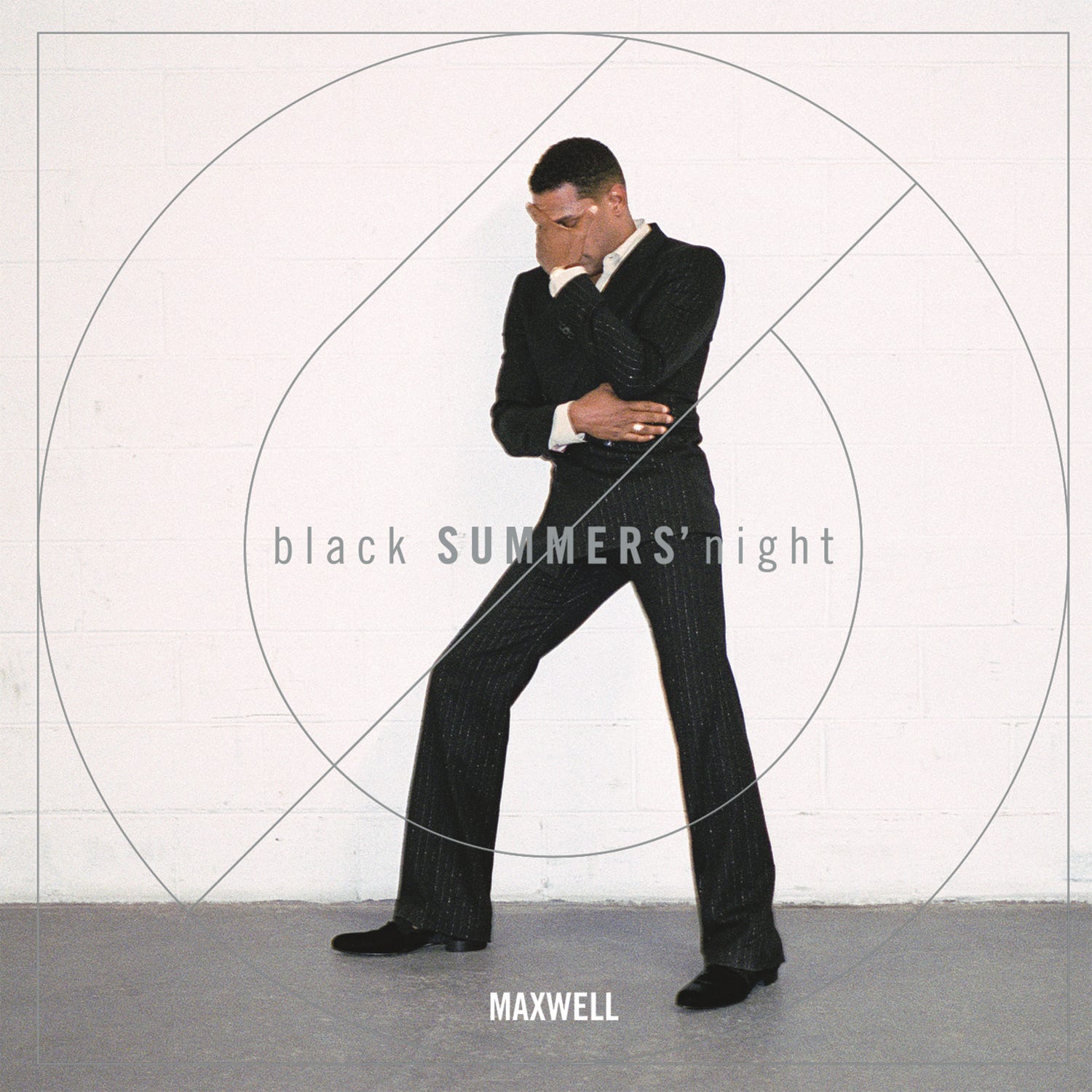
Releasing an album after eight years is risky for a career. Releasing a fifth album fifteen years after your first one is almost synonymous with retirement. Now disappeared once, after reaching number one in 2001, and remained absent throughout the decade. When he returned, in 2009, with BLACKsummers’night, his ring name had changed to the machine to cut hair and he had two Grammys under his arm. He announced that the sequels were going to be released. Maxwell had the custom of leaving in the right cabin. blackSUMMERS’night arrived at the twentieth anniversary of the album by Maxwell’s Urban Hang Suite. If you weren’t paying attention, you could miss it. Maxwell announced in The FADER that he had taken so long to record it because he was sad; a close cousin had died in 2014. In addition, he gave travel and the simple terror of disappointment as excuses. “It’s like an anxiety attack to release a record,” he mused. “The fact of returning and the pressure involved in that generated anxiety.”
The album was created by a live band, and you can definitely feel it. Kenneth Whalum III’s sax, and Keyon Harrold’s trumpet aren’t performing frills; they get into a tussle with the melodies, lose track of them, show up late. Stuart Matthewman from Sade returned for “Lost” and “Listen Hear” (their first work together since 2001), each of which was layed down in one totally off-the-cuff session. No lyrics jotted down in advance, no chance to preview even the instrumentals, one take per. When asked by NPR’s Ari Shapiro why he needed seven years if that’s all he needs, Maxwell’s response was curt. “Because you gotta live something to be able to have something like that happen.” The production, which is co-credited to Maxwell (as MUSZE) and past partner Hod David, shares in that room-room looseness, the interplay of the musicians unfolding in segmented time-slots rather than a gridded-out arrangement of square one reaching for the ultimate velocity. Petite mort, if you will. Nothing here is trying to chase and recap 2016’s tone. Maxwell says he’d rather be “soulful and popular” than just popular.
Nearly every song finds Maxwell dashing around the same truth without quite landing there, and the brilliance lies in the fact that each one sprints in a different direction. “Fingers Crossed” is entirely made up of conditionals (“If you get the courage, baby, someday, maybe, probably, maybe, you’ll be mine”) and he sings the sentence anyway, piling maybes high in the place of an outright affirmation, like a guy papering over a marriage proposal with all his fidgety insincerities. “Hostage” speaks against itself from within a single verse. He introduces his statement as a hostage, then insists that he’s free in the cage of her heart; says he’ll stay dumb and trust her, says he can spy her. He gets it and sticks around anyway, which is a kind of admission distinct from anything on “Fingers Crossed.” And “1990x,” the song title that winks at the decade that birthed the man, says the smallest thing on the whole record. “There’s no song that defines what we have, no music behind it, no lyric to read from—there’s just you and the moment.” Here’s a singer admitting that singing ain’t enough.
He disclosed to Complex that he had harbored insecurities about his heritage since day one. Attending a school that is located in Brooklyn, which is characterized as a melting pot of cultures, the artist grew up in a family of two Caribbean heritages (Haitian on his mother’s side, Puerto Rican on his father’s) who did not have the Southern church roots or go-go lineage that the neo-soul artists used to measure against. He did not feel that he had the goods, he admitted. There is reflection of this in his album. In “The Fall,” the artist expresses the pressure-induced feelings of self-doubt by singing “the pressure is savage and I feel average,” which comes across as sincere rather than a tactical ploy; it is like something that an individual would mutter to himself when sleepless at night when nothing is going well. The song “Listen Hear” goes even deeper. “I’m confusing at times, sometimes I might lie. I’m scared and I’m shy to show you just how weak I am.” To this, he replies that he is vacant within, that there is something inside him that tries to destroy and deny the destiny he has been given, that the life he has chosen is not the one he was meant to live. Most singers, particularly men in R&B, dance around these issues. Maxwell, however, gives it straight.
Maxwell stated on NPR that the same woman “Pretty Wings” was about is also the subject of “Lost,” a true story about her marrying someone else and starting a life while he was just watching her from afar. In the album, he sees her children growing, her husband caring and loving her, and he confesses that he is not sure whether he can go on with it. In an interview, he had a statement so wise that it is worthwhile to repeat it entirely. “I’m not going to make her mad because we are actually really good friends, and I love the husband.” And then, almost in the same breath, “But when you’re singing ‘I know you’re happy,’ you are also kind of asking her not to leave you. It’s strange.” The song “Lost” was recorded entirely without planning; he laid down a track on top of instrumentals he had never heard before, without written lyrics and in one take. There is something in the sound of his voice that makes one feel he is saying so much from himself that even no one is listening.
On “III,” he sings “I want a Michelle Obama lady to hold me down when the world’s crazy,” which is the most relaxed and casual moment on the album. He references the High Line, Paris, Russia, keeps counting to three multiple times, compliments a girl at the club that nobody else gives a second glance, and it’s all so wonderfully messy with the charm of someone who kinda forgot they were hurting for a minute. The album’s lead single, “Lake by the Ocean,” is propelled by a falsetto hook and a metaphor (swimming a private lake beside an enormous ocean), and it was his first solo single in seven years. Even so, “Of All Kind” lays it on even thicker. He simply tells her he loves her with no end in sight, a God in his mind, and doesn’t add a disclaimer to any of it. After all the hedging that goes on elsewhere on the album, it can almost be surprising to hear him say something and realize he simply meant it.
blackSUMMERS’night dropped right in the middle of the most stacked R&B summer in a decade at least, with Beyoncé’s Lemonade arriving in April, three months before Maxwell, and the conversation having already shifted. Frank Ocean’s Blonde followed in August. Solange’s A Seat at the Table came in September. Anderson .Paak had released Malibu in January. Maxwell arrived in all of that without features, without guests, without a crossover hip-hop bid, with a lead single made of just piano and strings, at age 43, having released five albums in 20 years. His album entered the charts at number three, sold 59,000 copies its first week and no one spoke about it. He told Complex he had been to Haiti, had learned that “holding anger keeps you from being happy,” and suggested that the first two parts of the trilogy were partially about processing the maternal family issues he’d been harboring since childhood. Part three is still forthcoming.
Great (★★★★☆)