

Milestones: Breezin’ by George Benson
George Benson left the jazz purists behind in 1976. Three days at Capitol Studios produced the genre’s first platinum album.
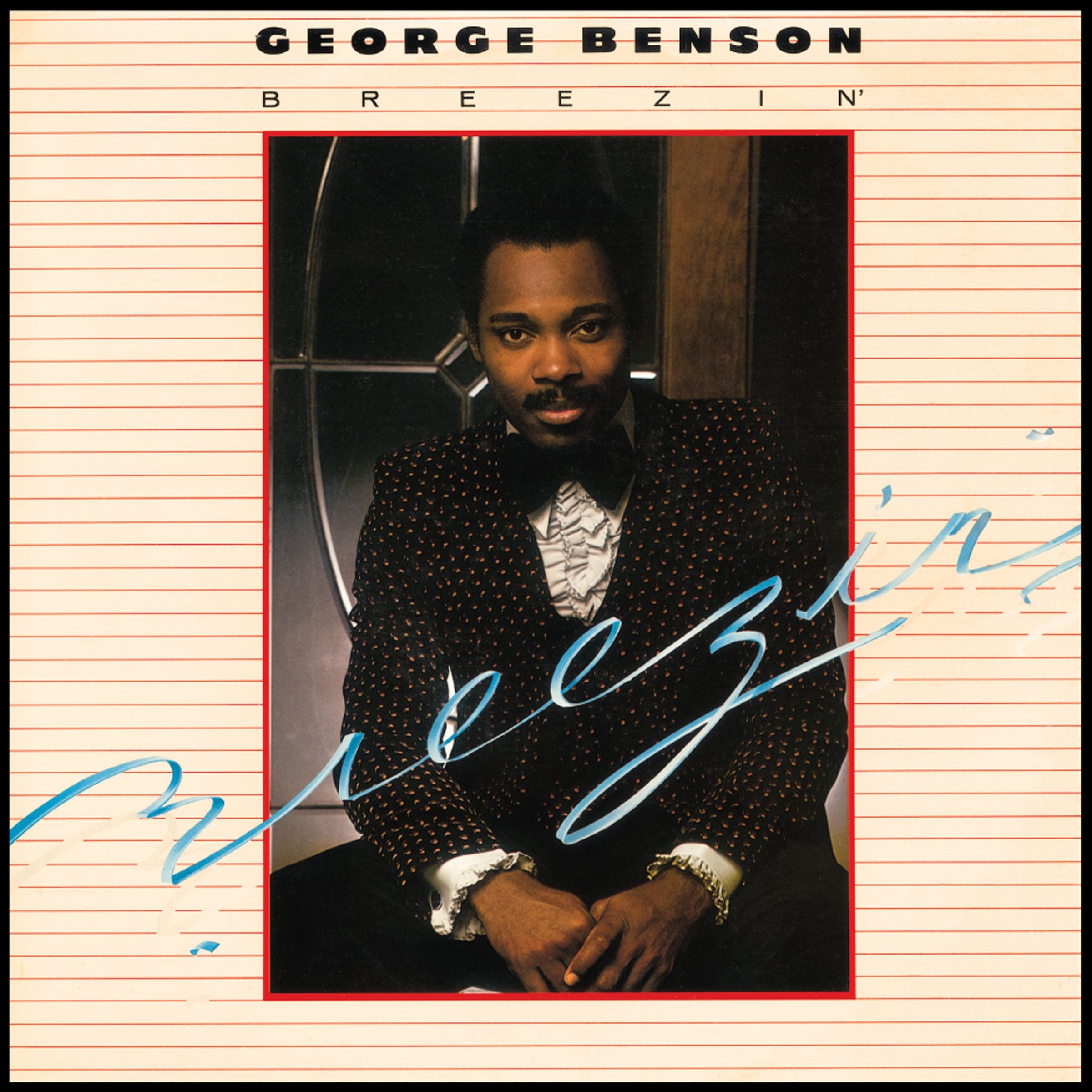
The boundaries between jazz, R&B, and pop had grown so porous that a record could plausibly chart in all three categories and nobody would bat an eye. Grover Washington Jr. had pulled off the same crossover trick a year prior with Mister Magic, proving that a jazz saxophonist could land on R&B radio if the groove sat deep enough. And then there was the CTI Records stable, where Creed Taylor had spent years packaging jazz musicians inside string arrangements and commercial production, chasing the audience that Wes Montgomery’s pop-oriented final albums had briefly captured before his death in 1968. Among Taylor’s roster of polished instrumentalists, a Pittsburgh-born guitarist named George Benson had been grinding through albums like Bad Benson and Good King Bad, racking up jazz chart positions while privately itching to do something his label discouraged. He wanted to sing.
Benson had been performing vocally in live settings for years, scatting alongside his guitar solos and occasionally covering R&B standards between the jazz numbers. But Creed Taylor saw him as the heir to Montgomery’s guitar throne and had little appetite for vocal tracks. The frustration mounted. In late 1975, Benson landed at Warner Bros., where a staff producer named Tommy LiPuma had been nursing a fixation since a night in 1973 at San Francisco’s Keystone Korner. LiPuma and engineer Al Schmitt had dropped into the club on a whim, caught Benson singing “Summertime,” and LiPuma walked out astonished that nobody had thought to build a record around that voice. Three years later, with Benson finally signed to his label, LiPuma asked him directly why he hadn’t sung more on his albums. Benson told him that Taylor had been steering him away from it. LiPuma’s response, as he later recalled in an interview with Jerry Jazz Musician, was blunt: he thought the voice was fantastic and that Benson should use it.
The sessions happened over three days in January 1976 at Capitol Studios in Hollywood, a room Benson loved because Nat King Cole had recorded there. LiPuma assembled a lean band: Phil Upchurch on rhythm guitar, Harvey Mason on drums, Ralph MacDonald on percussion, Ronnie Foster and Jorge Dalto splitting keyboard duties, and Stanley Banks on bass. Claus Ogerman handled the orchestral arrangements. Five of the six finished tracks were cut in a single take. The efficiency came from the players’ comfort with one another and from LiPuma’s decision to keep the sessions loose, almost informal.
The centerpiece instrumental, “Breezin’,” had been kicking around since 1970, when Bobby Womack wrote it for a Gábor Szabó date that LiPuma himself had produced. Nothing much happened with that version. But LiPuma kept the tune in his pocket for six years, and when Womack showed up at Capitol during the Benson sessions, he brought along the one ingredient that Szabó’s recording lacked. Benson recalled it to Guitar Player: Womack sang him a double-stop lick he’d always wanted on the song, and Benson played it back. That phrase, a brief two-note figure slotted between the verses, became the hook that carried “Breezin’” to radio.
The title track earns its keep on pure feel. Mason’s drums sit in a loose pocket, unhurried but locked in, while Benson’s Gibson Johnny Smith guitar, plugged into a Polytone amplifier he’d never used before, delivers a tone rounder and warmer than anything on his CTI records. Ogerman’s strings arrive without fanfare, curling around the melody rather than competing for attention. The song stays level, refusing to climb toward a crescendo. Benson plays the melody, takes a solo, returns to the melody, and the whole thing glides for five and a half minutes without a single moment that sounds labored. It works because nobody on the track is trying to prove anything. Mason isn’t showing off his chops. Upchurch barely registers as a separate presence. The collective restraint gives Benson room to phrase the Bobby Womack melody with the loose confidence of someone playing a favorite song in his living room.
“This Masquerade” came from a different place entirely. Leon Russell had written it as a B-side for his 1972 single “Tight Rope,” a midtempo ballad about a couple pretending they’re still in love while the relationship hollows out. The Carpenters had already recorded it; Helen Reddy too. Benson was skeptical. He told LiPuma he liked Russell’s version but didn’t think he could improve on it. LiPuma pushed him to try, and when Benson stepped up to the microphone for what was supposed to be a scratch vocal, a rough guide for the band to play against, he sang the entire track through on an Electro-Voice 666, a cheap cardioid mic that happened to be sitting on a stand near him. The take was so good that LiPuma kept it.
That scratch vocal, captured on a microphone that cost a fraction of what a proper studio condenser would, is the performance that won the 1977 Grammy for Record of the Year. Benson’s voice on “This Masquerade” carries a grain of Stevie Wonder’s phrasing, enough that the record stores initially told Warner Bros.’ promotions team that customers kept asking about the new Stevie Wonder single. When the vocal drops out and Benson starts scatting in unison with his guitar solo, the technique sounds spontaneous and a little reckless, as if he forgot he was supposed to choose one instrument or the other and just ran both at once.
The remaining four tracks don’t reach that level of pop-single electricity, but they fill out the album with purpose. “Affirmation,” a José Feliciano composition, begins with Benson alone on guitar for a few bars before the band slides in underneath him, and Jorge Dalto’s electric piano solo midway through is the jazziest passage on the record, the one concession to the straightahead crowd that Taylor had wanted Benson to stay loyal to. “Six to Four,” written by Upchurch, picks up the tempo and lets Ronnie Foster stretch on the Mini-Moog, giving Benson a chance to play funkier and faster than anywhere else on the album. “So This Is Love?,” Benson’s only original composition here, moves with a patient groove while Ogerman’s strings do heavier lifting, and the guitar solo winds through the changes with enough harmonic intelligence to remind you that this is the same player who once recorded with Miles Davis. “Lady,” which closes the album, dials the energy down to a murmur. Foster’s piano and Benson’s guitar trade the melody back and forth in a conversation so subdued it almost evaporates.
Jazz purists accused Benson of selling out. LiPuma admitted the jazz police never forgave him for steering Benson into pop. But the accusations miss what the album actually delivers, which is a group of top-shelf session musicians playing loose, melodic, rhythm-driven music with zero pretension and considerable skill. Breezin’ doesn’t demand much from the listener. It’s not confrontational, doesn’t announce big ideas, doesn’t grandstand. That bothered critics who wanted jazz to mean something heavier. But Benson had spent over a decade proving his jazz credentials on records that few people outside the jazz press bothered to hear, and he wanted to reach a wider audience without abandoning what his hands could do on a fretboard. Breezin’ accomplished that. The album topped the Billboard pop, R&B, and jazz charts simultaneously, the first jazz record to go platinum, and it did so by prioritizing feel over virtuosity and songs over statements. That’s a tradeoff that still irritates purists, but the music isn’t bothered by the argument. Breezin’ avoids difficult emotional territory, steers clear of ugliness or dissonance, and its refusal to push against anything gives it a ceiling. But within the boundaries it draws for itself, the execution is nearly flawless.
Great (★★★★☆)