

Milestones: Coloring Book by Chance the Rapper
A 23-year-old put mattresses in a Chicago studio, invited everyone he knew, and made the decade’s most generous rap album.
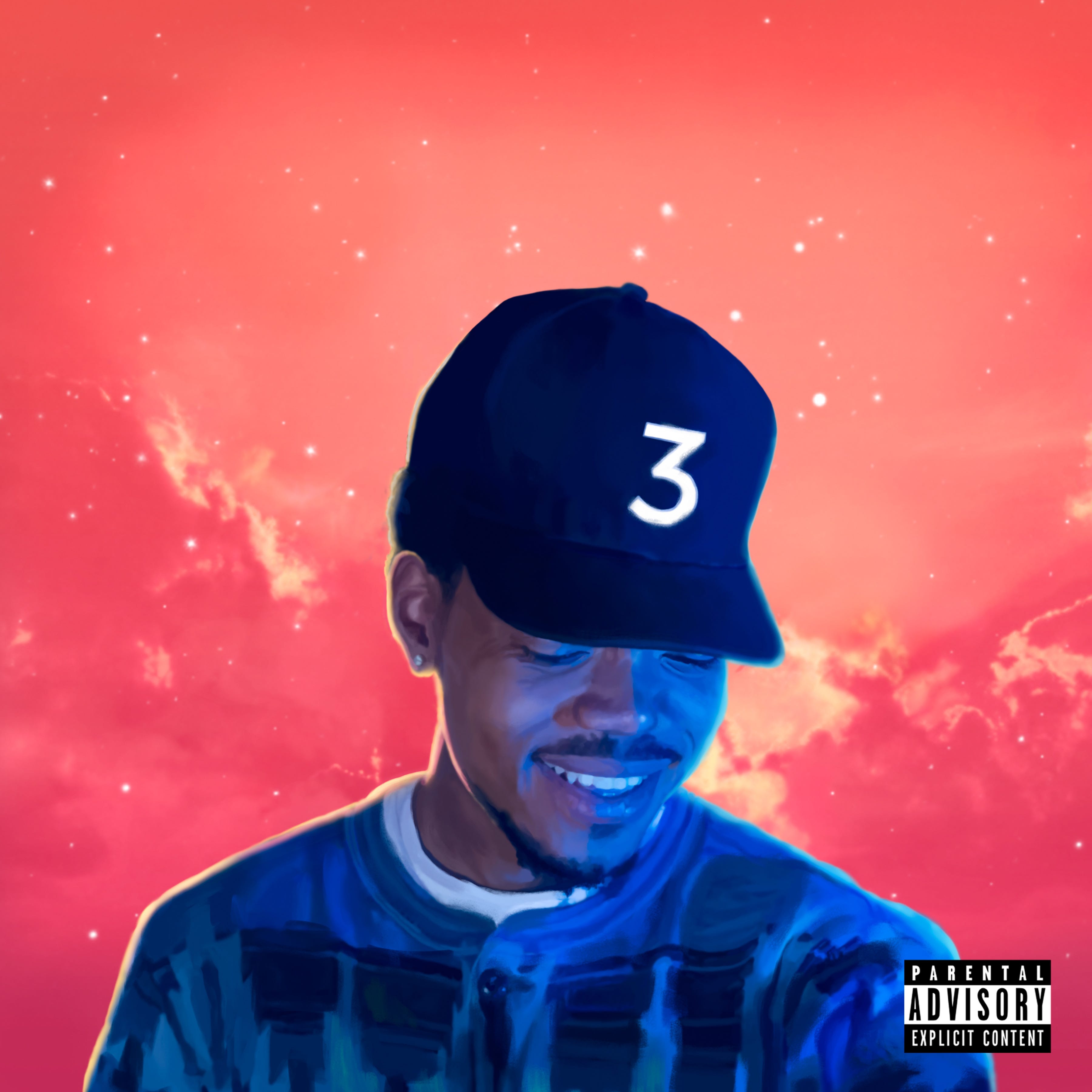
In June 2016, the Recording Academy quietly amended its eligibility rules so streaming-only projects could compete for Grammys. That didn’t come from nowhere. A month earlier, a 23-year-old from Chicago’s West Chatham neighborhood had dropped a fourteen-song mixtape on Apple Music (free to stream, impossible to buy) and watched it hit number eight on the Billboard 200 off 57 million streams. Nobody at the Grammys said the rule got bent for him. Nobody had to. Chancelor Bennett, who raps under the name he’s had since grammar school, had been dodging labels since 10 Day in 2012 and blowing past them since Acid Rap in 2013. Coloring Book was the thing that made the rest of the music industry rearrange the furniture.
Here’s what’s weird about Coloring Book, though. Chance’s cousin Nicole opens “How Great” by singing “How Great Is Our God” for three straight minutes. No rapping. No one cuts in. Just Nicole and a hymn, as if she wandered into the wrong studio and nobody stopped her. Kirk Franklin full-on preaches on “Finish Line/Drown.” Jamila Woods is praising God on the first “Blessings.” A children’s choir from Chicago is on the hook of “All We Got.” And none of it ever comes off as a bit, or a genre exercise, or some rapper’s church phase. Chance told Zane Lowe he wasn’t trying to make new gospel or pretend to be the gospel. Just music from a Christian man. On “Blessings (Reprise)” he says he speaks to God in public, that God thinks his new music jams, that they’re mutual fans. He’s cracking up about it. He also means it completely.
Most of Coloring Book is looking up. “Summer Friends” is the one that looks sideways, at the ground, at specific people. JJ. Mikey. Lil Derek. Chance rattles off South Side childhood in a rush, Harold’s Chicken, Blockbuster rentals, lightning bugs in the backyard on 79th, and you’re nodding along with it, you’re in somebody’s summer, and then he yanks: “first day, nigga’s shooting/summer school get to losing students/but the CPD getting new recruitment.” Same verse. Didn’t even take a breath between the ice cream truck and the funeral. Jeremih fades out at the end, half-praying into a phone nobody picked up. That’s the whole South Side math right there. You don’t get the good summers without the other ones, they were always the same summers.
Growing apart from somebody you still love is the hardest thing to write a song about without sounding like a greeting card, and Chance went through roughly twenty versions of “Same Drugs” trying to get it right. Dropped a whole Regina Spektor collaboration. Called it his biggest mistake later. The version that stuck is a Peter Pan story. He’s talking to Wendy, except Wendy grew up and he didn’t notice till the window was already shut. “You were always perfect, and I was only practice.” Nothing to do with drugs. The whole thing is about the stuff you used to believe together before one of you stopped. On Acid Rap he would’ve buried that feeling in yelps and acid-washed ad-libs. Here he’s just at a piano next to a Muppet (the music video is literally that) and he lets the sadness sit still for once.
Chance recorded most of this at Chicago Recording Company in early 2016, and the way it went was: he rented one room, needed more space, rented another one, and eventually just took over the entire place and dragged air mattresses into every room. People lived there for weeks. He’d gotten the idea from Kanye West, who’d been doing that for The Life of Pablo, commandeering studios like a man setting up a government in exile. Chance had worked on Pablo too, and the verse he dropped on “Ultralight Beam” for the SNL performance in February 2016 basically rewired his public life overnight. “I met Kanye West, I’m never going to fail.” West didn’t even want that line on there. Chance had to fight him for it. Won the argument, then won the Grammy. That’s the whole album’s mood in miniature: laughing and dead serious, both at once.
Chance sounds scared exactly once. “Finish Line/Drown” is where he cops to the Xanax addiction the year before, the four months wasted in LA, his grandfather dying at 84. T-Pain wails about a finish line; Kirk Franklin preaches; Noname drops in. And Chance is in the middle of all of it saying the stuff the rest of Coloring Book is too happy to mention. He almost wasn’t happy. Almost didn’t come back to Chicago. Almost didn’t come back period. He doesn’t polish it. Just says it happened, in between a gospel choir and a Kirk Franklin sermon, and that plainness is harder to shake off than any of the bigger, louder moves around it.
Every label that passed on Chance gets its own line on “No Problem.” If one more label try to stop me, there gon’ be some dreads in their lobby. Wayne and 2 Chainz pile on, the Brasstracks horns are blaring like a second-line parade that got lost in a rap beef, and underneath all that noise is real hostility toward an industry that kept telling this kid he needed a deal. Apple Music paid $500,000 for two weeks of exclusivity on Coloring Book. It was still free. On the first “Blessings” he says he doesn’t make songs for free, he makes them for freedom. Which, look, as a sentence, that’s bumper-sticker corny. But he’d actually done it. Three mixtapes deep with no label, a Grammy speech where he thanked God and not a single executive. The corn had receipts.
Seventy-plus credited contributors and not all of them needed to be here. Bieber croons a first-love hook on “Juke Jam” and vanishes into the song completely anonymous. Saba rides right next to Chance on “Angels” without stepping on him, two Chicago guys who obviously grew up swapping bars. Then there’s Jay Electronica on “How Great” going full Jay Electronica (Harry Potter, Lion King, color-changing spoons) right after three minutes of Chance’s cousin belting a hymn, and it’s a lot to absorb in one sitting. Future on “Smoke Break” just wants five minutes to sit down, and that smallness is actually a relief by the second half. So is “All Night,” a Kaytranada dance track with zero message and no apology about it. D.R.A.M.’s interlude is a minute of sweetness that doesn’t stick, and “Mixtape” with Thug and Yachty cheers for the format without really saying why. Chance wanted the whole world in the room. Some rooms were more crowded than they needed to be.
Three years later Chance put out The Big Day, his actual debut album, and it flopped. Wedding-drunk, overlong, missing whatever made the earlier sprawl feel generous instead of confused. Manager gone, lawsuits pending. Star Line in 2025 got the sharpness back. But Coloring Book already has its room in the decade and nobody else is getting in. A free mixtape with gospel choirs and a children’s choir and Kirk Franklin preaching won a Grammy, and the kid who made it turned down GOOD Music the same year. He was 22 and 23 when he recorded it. His daughter had just been born. He dragged mattresses into a Chicago studio and told the people he loved to come sleep there, and they did, and they made this.
Standout (★★★★½)
first of all, this was beautifully written. yall did that! secondly, I forgot how much I loved this album, so I'm going to give it a proper relisten tonight!! thank you!