

Milestones: Donny Hathaway by Donny Hathaway
The 1971 self-titled sophomore album from the soul singer whose borrowed songs became indistinguishable from prayer. Atlantic wanted a crossover act, but Donny Hathaway gave them church instead.
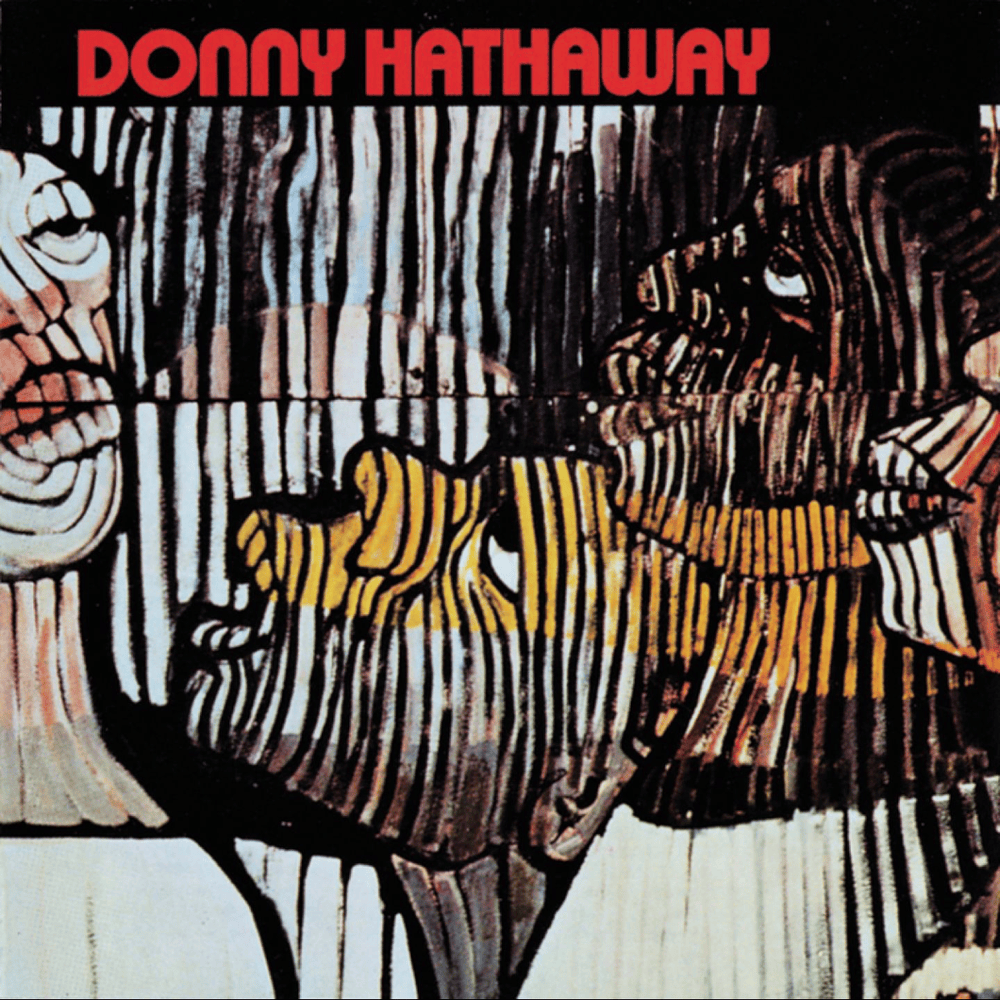
April was a strange month to release an album of love songs and easy-listening covers if you were a twenty-five-year-old Black singer on Atlantic Records. Marvin Gaye had What’s Going On ready for May. Stevie Wonder put out Where I’m Coming From that same spring, Curtis Mayfield had just released Curtis, and Sly Stone was deep into There’s a Riot Goin’ On. Every major figure in Black popular music was writing original songs about Vietnam, poverty, post-assassination grief, and the fracturing promise of civil rights. Hathaway’s self-titled second album contains none of that. No funk, no protest, no autobiography worth mentioning. Van McCoy ballads instead. Billy Preston songs. Quasi-religious pop tunes that Helen Reddy and Perry Como had already taken to the charts. The record is almost entirely assembled from other people’s words.
Jerry Wexler took over production. He and Arif Mardin handled nine of the eleven tracks, and the commercial logic was obvious: position Hathaway as a vocalist who could sell across audiences, move him away from the communal, socially conscious sound of his debut Everything Is Everything (1970), feed him proven repertoire. Robert Christgau gave the album a D- in The Village Voice. “Supper-club melodrama” and “homogenized jazz.” It peaked at No. 6 on Billboard’s Top Soul Albums chart, and the single “Giving Up” scraped No. 21 R&B but barely dented pop at No. 81. Never went gold. Hathaway’s live album the following year went gold almost right away, his duets with Roberta Flack went gold, but this record, the covers album, the one with his name on it and almost none of his writing, didn’t sell.
He’d been a prodigy since before he could read. Born Donny Edward Pitts in Chicago in 1945, raised by his grandmother Martha Pitts in the Carr Square projects in St. Louis, singing in her church choir at three. By four he was performing publicly as “Donny Pitts, The Nation’s Youngest Gospel Singer,” dressed in a white sailor suit with a small ukulele while grown musicians watched his hands on the keys. He took music theory at Washington University while still at Vashon High, got a fine arts scholarship to Howard in 1964, and left before finishing because the job offers came faster than the coursework. Produced for Curtis Mayfield’s Curtom Records. Arranged for Aretha Franklin and the Staple Singers. Directed the Impressions’ band. King Curtis heard him singing in an elevator, mimicking the pitch of the motor according to Emily J. Lordi’s account, and brought him to Wexler and Ahmet Ertegun at Atlantic. His debut had “The Ghetto,” co-written with Leroy Hutson, a seven-minute groove that peaked at No. 23 R&B. A person with those credentials covering a Gene MacLellan tune that Anne Murray made famous is a strange sight, and the strangeness is part of what keeps this album worth returning to.
“Giving Up” opens with a man who can’t let go of a woman who left. He says giving up is hard, says he’s tried, says his hope is “burning dim,” but he prays she’ll come back. Hathaway drags the tempo below what Gladys Knight did with the song in 1964 and buries the vocal under slashing strings that ratchet tighter with each pass. On “A Song for You,” Leon Russell’s 1970 ballad, he makes a small adjustment that changes the whole song: “singing this song for you” becomes “singing this song to you.” Russell wrote a dedication. Hathaway made it direct address, singing to a person in the room, not about them from a stage. Jerry Wexler said the track demonstrated why Mardin had “the fastest growing reputation among the new breed of arrangers,” and Hathaway’s version became so permanently his that performers on singing competition shows still mistakenly credit him as the songwriter. “Be There” refuses every romantic gesture except physical presence—“Don’t promise to be mine for Christmas/Or even mine at all,” he sings, “just be there.” And “She Is My Lady” gives a man language for gratitude so direct it sounds naive: she lifted the shadow, she taught him love, she turned his tears with a sigh.
The gospel tunes had no business being as serious as Hathaway made them. Anne Murray took “Put Your Hand in the Hand” to No. 2 on the Hot 100 in 1971; by then it was already a singalong, a coffeehouse standard, a folk-pop novelty. Mac Davis wrote “I Believe in Music” and it wound up on Wayne Newton records. “Magnificent Sanctuary Band” was Dorsey Burnette camp-meeting pop—the kind of song people clap along to without thinking about it very hard. Hathaway sang every one of them as though his salvation depended on the chorus. On “He Ain’t Heavy, He’s My Brother,” he added a line that Bobby Scott and Bob Russell never wrote: “Thank you, Lord.” He put it right after the lyric about being “laden with sadness/that everyone’s heart is not filled with gladness.” Maybe two seconds of the song, but it shifts the whole register from sentiment to gratitude. He grew up in his grandmother Martha’s choir before he could spell. The gospel attack on these pop tunes isn’t a stylistic decision he made in the studio. It’s the only way he knows how to sing.
Nadine McKinnor was a mail sorter for the U.S. Postal Service in Chicago, writing holiday lyrics in a spiral notebook during her route. She called them “homemade poetry turned into songs.” An interior decorator who happened to be working on both her home and Hathaway’s office connected them, and McKinnor performed her lyrics for Hathaway in his studio. He built “This Christmas” around her words, pulling some of the melody from an Afro Sheen jingle he’d been tinkering with, and recorded it at Audio Finishers Studio on Ontario Street in the fall of 1970. Ric Powell on drums, Phil Upchurch on guitar, Hathaway playing Upchurch’s keyboard bass. It didn’t chart. McKinnor has said Hathaway wanted to write the first Black Christmas standard, something authored and performed by African Americans that could sit alongside Nat King Cole’s “The Christmas Song” in the December songbook. It’s now the 30th most-performed holiday song of all time according to ASCAP and has been covered more than 300 times. Aretha Franklin, the Temptations, Chris Brown, Stevie Wonder. McKinnor’s son Michael put it simply: “‘This Christmas’ is the only one by us, for us.” The song wasn’t on the original single release in 1970; it got added to the self-titled album months later. It outlived everything else on the record by decades.
Hathaway released one more solo studio album in his lifetime, Extension of a Man (1973), with “Someday We’ll All Be Free.” He was diagnosed with paranoid schizophrenia. On January 13, 1979, he fell from the fifteenth floor of the Essex House hotel in New York. He was thirty-three. His daughter Lalah went on to win a Grammy and, in 2022, recorded a duet version of “This Christmas” using her father’s unreleased 1970 demo. Stevie Wonder once said, “When Donny sings any song, he owns it.” That remark fits this album better than anything else Hathaway made, because ownership was the entire problem. He didn’t write these songs. Atlantic didn’t give him the room to. And yet “A Song for You” is still more commonly identified with Hathaway than with Leon Russell, and “This Christmas” became exactly the standard he’d wanted. The distance between someone else’s melody and his own conviction just collapsed to nothing. Christgau, who gave the album that D-, later revised his position, calling Hathaway “a synthesizer of limitless cultural aspiration” who “conveyed a sense of roots.” The roots were always there. They were there when he was three years old, standing in Martha Pitts’s church.
Solid (★★★½☆)