

Milestones: Earth, Wind & Fire by Earth, Wind & Fire
A nine-piece band from Chicago delivered a debut that fused Black power energy with a plea for spiritual self-inventory. Seven tracks of social justice funk that Warner Bros. barely knew how to sell.
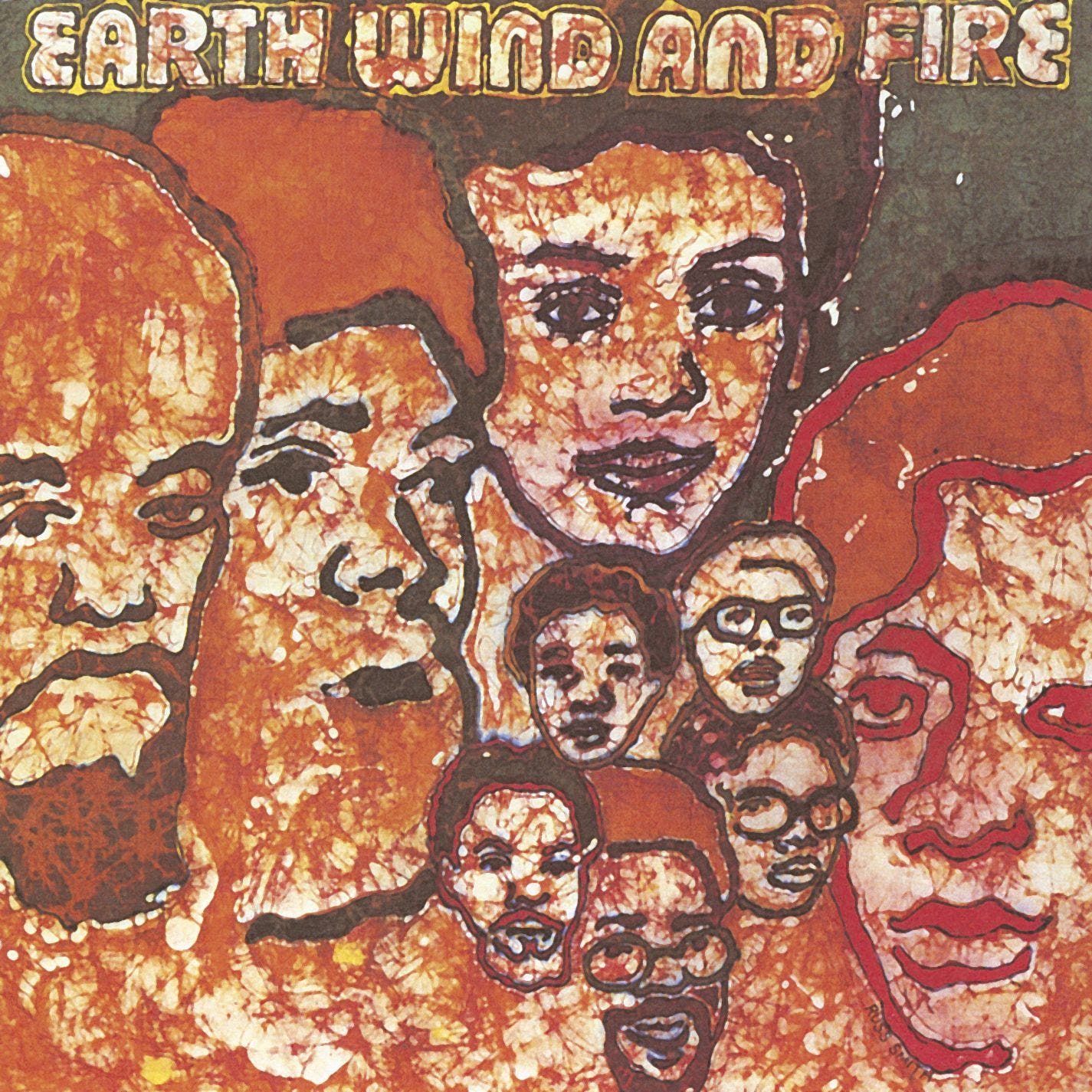
Black popular music in America was reckoning with a shift in temperature. The optimism woven through mid-‘60s soul had curdled. Sly Stone, who two years earlier packed Woodstock with utopian funk, was retreating into cocaine and paranoia, months away from releasing There’s a Riot Goin’ On, an album that would sound like a transmission from inside a sealed room. James Brown still commanded enormous stages, but “Say It Loud (I’m Black and I’m Proud)” was already three years old, and the party records were beginning to crowd out the protest ones. Marvin Gaye was fighting Berry Gordy for the right to release What’s Going On. The question for any new band walking into a studio that winter wasn’t just what to play; it was what to say and whether it would matter. In Los Angeles, a nine-member group called Earth, Wind & Fire, assembled by a former Chess Records session drummer named Maurice White, recorded their self-titled debut at Sunset Sound Studios with producer Joe Wissert. They had an answer. They wanted to talk about love, self-knowledge, and helping other people, and they intended to back it with horns sharp enough to cut glass.
White had already lived several musical lives before he ever formed this band. He grew up in South Memphis, a childhood friend of Booker T. Jones, and moved to Chicago as a teenager to study at the Conservatory of Music. By his early twenties he was playing drums at Chess Records on sessions for Etta James, Fontella Bass, and Billy Stewart. He joined the Ramsey Lewis Trio in 1966, made nine albums with them, and won a Grammy for “Hold It Right There.” While drumming with Lewis, he stumbled onto a kalimba in a Chicago drum shop. The African thumb piano would turn up on nearly every record he made afterward.
He first committed it to tape on Lewis’s 1969 album Another Voyage, on a track called “Uhuru.” The Swahili word means freedom, and White seemed to take the concept personally. He left Lewis, moved to Los Angeles, convinced his younger brother Verdine to come west and play bass, and recruited a group that included vocalist Sherry Scott, guitarist Michael Beal, keyboardists Don Whitehead and Wade Flemons, trumpeter Leslie Drayton, trombonist Alex Thomas, tenor saxophonist Chester Washington, and percussionist Yackov Ben Israel. The band’s name came from the elements in White’s astrological chart. The ambition was total, even if the budget was not.
Most Black bands recording in early 1971 had reasons to be angry, and the good ones were. Asking your audience to help somebody—just that, plainly, as a first statement—took a different kind of nerve. “Help Somebody” opens the record with Drayton’s trumpet and Thomas’s trombone fattening a shuffle groove, and the group singing, together, about the ordinary act of lifting someone else up. No revolution. No invocations. Just: do it, if you can. “Moment of Truth” goes further and turns the lens around. The real confrontation, White and the group argue, isn’t with the government or the police. It’s with yourself. What are you going to do with your life? Who do you intend to become? “I encouraged them to ask, What am I to do? Who am I to be? Where can I help?” White wrote decades later in his memoir. The interlocking group vocals and percussive guitar owe plenty to Sly Stone, but Sly by 1971 had already dropped this kind of open sincerity. White picked it up and ran.
The lead single, “Fan the Fire,” arrives on the album’s second side and pulls off the shrewdest trick on the record. The title sounds incendiary. In 1971, with the memory of Watts and Newark and Detroit still raw, with the Black Panthers under siege from COINTELPRO, fanning any fire carried a violent charge. White took that phrase and repurposed it. The fire he wanted fanned was spiritual. It was the fire of awareness, of collective purpose, of people treating each other with decency. The funk underneath is legitimately hard, driven by Verdine White’s bass and Beal’s wiry guitar figures, and Chester Washington’s saxophone cuts through the vocals like it’s arguing with them. The spoken passages near the end of the track have a preacher’s cadence, and they’re saying something specific about transformation, about refusing to destroy things when you can build them.
The harmonies on “Love Is Life” are packed tight enough that you can barely tell where one voice ends and another begins. That closeness is doing real work. The song says love is life, life is love, and losing one costs you the other, which sounds like a greeting card until you remember the bodies coming home from Vietnam, the assassinations still fresh, the heroin flooding Black neighborhoods in 1971. Declaring love as the essential force for survival, in that climate, wasn’t soft. It was obstinate, and the melody lodges in your head partly because the group commits to it with the fervor of people who know nobody’s asking for this kind of tenderness right now. Its companion, “C’mon Children,” takes the same stubbornness and aims it at a younger audience. White and the group address kids directly, pressing them toward education, asking them to see the world as it is and then choose to fix it.
Nobody sings on “Bad Tune.” For six tracks, the album has been making its case with words—help each other, know yourself, fan the right fire, love is life, come on children—and then the words stop. White’s kalimba enters alone, thumb-picking a high, ringing figure he’d first tried out during the Ramsey Lewis sessions. Washington’s saxophone slides in underneath, and then wordless humming, group breath turned to melody, fills the space where lyrics should be. The rest of the band stays behind White, not beside him. Verdine holds a bass line that gives the kalimba room rather than competing with it. The whole performance moves at a patient tempo, unusual for a debut where you’d expect nine people to crowd the mic. The group functions as a single breathing unit, which is the closest the album comes to living out the cooperative philosophy its other songs keep describing.
Something shifts in the rhythm section on “This World Today.” The beat locks and then loosens, locks and loosens, like the ground underfoot is unreliable. Verdine’s bass and the drums establish a groove that keeps threatening to turn into straight hard funk and then pulls back into something wobblier, jazzier. The instability is deliberate. Over that uncertain footing, the group sings about war, about suffering, about the willingness of people to look away from both. White didn’t name enemies on this track. No presidents, no institutions, no parties. He described a condition. And the condition, in 1971, was that the world was failing most of the people living in it, and that pretending otherwise required effort. Washington and Thomas get more room to play here than anywhere else on the album, and they use it.
While the debut was being mixed and pressed at Warner Bros., White and the group were simultaneously recording the soundtrack to Melvin Van Peebles’ Sweet Sweetback’s Baadasssss Song, a low-budget film that would become a sensation and a foundational document of Blaxploitation cinema. Van Peebles’ secretary had been dating someone connected to the band, and that’s how they got the gig. The sessions were chaotic. Van Peebles screened scenes on a giant screen while the band jammed for two days straight with no time for overdubs. “Melvin taught me about getting shit done,” White wrote in his autobiography, “even though the $500 check he wrote is still bouncing.”
The Sweetback soundtrack gave EWF early visibility, landing at number 13 on the R&B albums chart, and it exposed them to audiences who might never have encountered the self-titled debut, which peaked at a modest number 24 on the Top Soul Albums chart. The album doesn’t always cohere. The vocals, shared across multiple members without a clear lead, sometimes blur into each other when they should be distinct. The production by Wissert is clean but doesn’t entirely capture the size of a nine-piece band playing together in a room. And the record clocks in under 30 minutes, which isn’t a flaw, but it doesn’t leave much space for the ideas to breathe after being stated.
Those are real limitations. They’re also beside the larger point, which is that nine people walked into Sunset Sound and cut an album about helping others, about asking difficult personal questions, about fanning the right fires. Every song had a message, and those messages were specific without being preachy, hopeful without being vapid. Maurice White’s concept for the band was fully formed on day one even if the execution needed refining. He knew what he wanted to say. The albums that followed on Columbia—Head to the Sky, Open Our Eyes, That’s the Way of the World—would add Philip Bailey’s stratospheric falsetto, Charles Stepney’s arrangements, the Phenix Horns, the magic tricks, the costumes, the platinum sales.
But the core conviction, that music should challenge people to be better while making them feel good, never changed from this debut. White laid it out clearly in his memoir: “Our first album blended black power energy with a socially aware vibration, critiquing the political and social climate of the time. We also challenged our listeners to examine their inner life.” That’s exactly what the record does, on a Warner Bros. budget with borrowed time and a band that barely knew each other, that eventually made an underappreciated LP.
Standout (★★★★½)