

Milestones: Everybody Loves the Sunshine by Roy Ayers Ubiquity
The jazz-funk crossover album that jazz purists wanted to bury became the most sampled four minutes of the 1970s.
By the middle of the 1970s, a handful of jazz musicians had figured out that funk paid better and drew bigger crowds, and the jazz establishment hadn’t forgiven a single one of them. Herbie Hancock had already gone electric with Head Hunters. Donald Byrd was cutting dance records on Blue Note. The purists called it sellout music, crossover trash, whatever landed. Roy Ayers had been running that same hustle since 1970, when he left Atlantic Records for Polydor and started calling his band Ubiquity. (“Ubiquity means a state of being everywhere at the same time,” he said.) He meant it literally. Between 1971 and early 1976, he’d put out thirteen albums on the label, each one sliding further from post-bop and closer to the Isley Brothers. Everybody Loves the Sunshine, his fourteenth, was the album where nobody could pretend he was coming back.
The sessions happened at Jimi Hendrix’s Electric Lady Studios in New York and Larrabee Sound in Hollywood, spread across late 1975 and early 1976, typically after the band finished their live gigs for the night. Nobody brought written charts or scores. The players—Philip Woo on piano and ARP synthesizer (he was seventeen when Ayers recruited him out of a Seattle jazz club), Ronald “Head” Drayton on guitar, John Solomon on bass, Doug Rhodes on drums, Chano O’Ferral on congas, and Debbie Darby singing under the name Chicas—worked off riffs and hand signals. Ayers himself doubled on vibraphone, electric piano, ARP, and ARP String Ensemble across every track. Co-producer Maurice Green helped steer, but nobody was engineering these songs from the top down. The players knew each other well enough to start on a riff and keep adding until the track filled out.
“The Third Eye” is the longest song on the album and the one that sounds least like 1976. It’s slow, semi-cryptic, heavy on synth and vibraphone trading lines, and the lyrics deal in third-eye consciousness, seeing past what’s in front of you, knowing something you shouldn’t be able to know. The pacing, the way the instruments fold into each other—Jill Scott and D’Angelo were doing something very close to this twenty years later, whether they knew it or not. On “It Ain’t Your Sign It’s Your Mind,” Ayers ditches the mysticism for something closer to a P-Funk public service announcement: your horoscope doesn’t determine who you are, your brain does. Ronald Drayton’s guitar squalls underneath a half-time stomp while Ayers sloganeers his anti-superstition case with the confidence of someone who’d argue it at a barbecue. “Tongue Power,” one of two instrumentals here, is the meanest funk on the album—pumping synth-trumpet stabs over an electric piano loop so tight the whole band seems to be breathing in rhythm.
The title track was written on a hot day at Electric Lady, the phrase lodged in Ayers’ head as he started picturing “bees and things and flowers.” The band waited for sunset, then cut it. Ayers and Chicas split the vocal. Lyrically it’s about as thin as a song can get and still be a song: “My life, my life, my life, my life, in the sunshine/Everybody loves the sunshine/Folks get down in the sunshine/Just bees and things and flowers.” No verse-chorus architecture. No development. Vibraphone and piano ride one groove for four minutes while the synthesizer drifts underneath and the vocal repeats. Underneath those words, though—small shifts in the keyboard voicings, the congas drifting slightly ahead of the beat, the synthesizer adding a note here, dropping one there. The lyrics don’t need to carry weight. They’re not trying to. It’s a chant. Everything else is just the band talking.
Mary J. Blige sampled “Everybody Loves the Sunshine” for the title song on My Life in 1994. In her 2021 documentary, she said the original made her “forget that we lived where we lived.” She’d been attached to it since she was four years old, growing up in Yonkers housing projects. She took the warmest part of Ayers’ song and flipped it into one of the most desolate R&B albums of the decade. She turned the sunniest thing Ayers ever recorded into something bleak. Common went back twice, thirty years apart, “Book of Life” in 1994 and “When the Sun Shines” with Pete Rock in 2024. Dr. Dre, Tupac, Naughty by Nature, TLC, Joey Bada$$, Black Eyed Peas, Scarface. D’Angelo and Robert Glasper covered it outright. Erykah Badu, who dubbed Ayers “The Godfather of Neo-Soul,” brought him in for “Cleva” on Mama’s Gun. Tyler, the Creator sampled Ayers’ “Ooh” on Flower Boy and had him on “Find Your Wings” from Cherry Bomb. Close to 200 documented samples of the title track alone. People just kept going back to it. A piece of source material that musicians from entirely different genres and eras kept coming back to—the groove was simple enough to chop and warm enough to wear.
But the album isn’t one song. “The Golden Rod” runs a vibraphone melody over snug synth accents punching where horns would go and a brisk rhythm section, the closest thing to straight-ahead jazz on Side A. On “Keep On Walking,” a Gino Vannelli cover, Ayers and Chicas trade lines in a slow duet about persistence, patient, unshowy, phrased like a traditional soul ballad. “You and Me My Love” goes harder than anything else here, co-written with O’Ferral, heavy funk on the bottom end, the nearest Ayers got to the low-end thump of Parliament or the Ohio Players. Chicas takes the lead vocal on “People and the World,” a song about togetherness that tilts cosmic, the arrangement getting spacey toward the end. And then “Lonesome Cowboy” closes the whole thing with a joke: Ayers plays a goofy, lonely cowboy character over a loose funk shuffle, lighter in tone than everything before it. An album that started with a party invitation ends with a comedy bit, and somehow neither moment feels out of place.
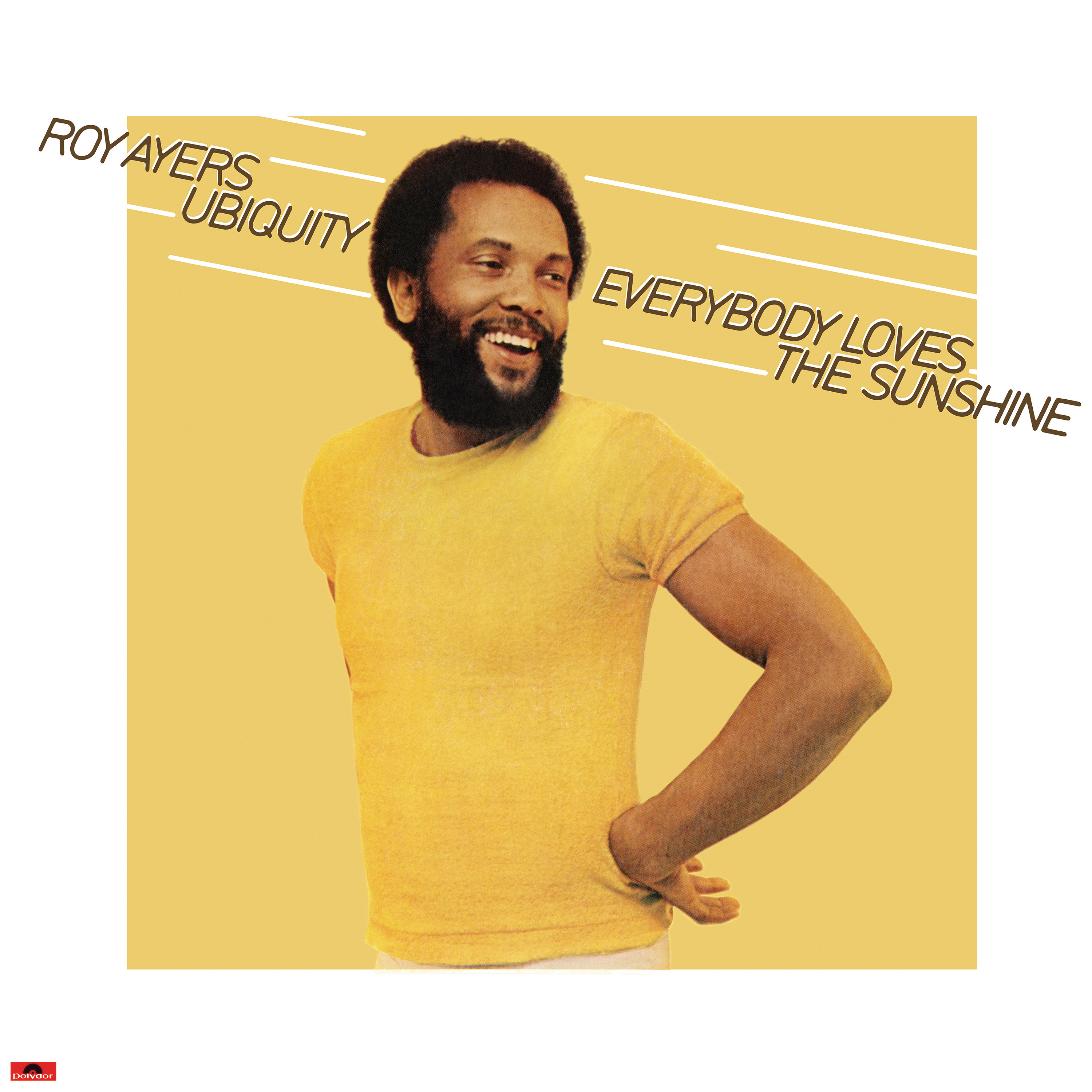
Ayers died on March 4, 2025, at 84. Over 40 albums across seven decades. Last live show in 2023. The album cover, all yellow, Ayers grinning in multiple shots against a sun-screened background, still looks exactly the way the music sounds: bright, unpretentious, a little goofy, and totally confident you’ll have a good time if you stick around. Everybody Loves the Sunshine isn’t his most ambitious album, and it wasn’t a stylistic leap from Mystic Voyage or A Tear to a Smile. It was the one where everything he’d been doing for five years locked into the right song at the right moment, and that song turned out to be indestructible.
Great (★★★★☆)