

Milestones: Forever My Lady by Jodeci
Four teenagers from North Carolina gospel families carried twenty-nine demos to New York, and in one afternoon rewrote the terms of what masculine R&B could confess.
Donald DeGrate Sr. founded Christ Tabernacle Pentecostal Church in Charlotte in 1974, an outpost in a city that would later host both Billy Graham and the Bakkers’ televangelist empire. Before that, he worked as a talent coordinator for Pat Robertson’s 700 Club, eventually hosting his own CBN program, Right On, aimed at Black audiences. In 1979, recording as the Don DeGrate Delegation, he landed a hit with the bouncy disco-gospel track “I Wanna Be Ready,” produced by the Nashville session architects Moses Dillard and Jesse Boyce. His sons, Donald Jr. and Dalvin, grew up playing keyboards in the family band, traveling the Southern gospel circuit from the time they could reach the keys. When Donald Jr. turned sixteen, he drove to Minneapolis with aspirations of auditioning for Prince at Paisley Park. He spent days pestering the receptionist, begging someone to listen to his tape. Nobody did. He returned to Charlotte, humiliated but sharpened.
An hour’s drive east, the Hailey family from Monroe also ran a gospel operation with sons Cedric and Joel, brothers, and their father, Cliff, a reverend. Signed when Cedric was just nine, the Hailey Singers’ three gospel records (they too were a family band) were released on indie labels from Mississippi and Atlanta. Their 1984 LP, Jesus Saves, landed at the top of the Billboard Gospel Albums chart. At barely fifteen years old, Cedric drew Michael Jackson comparisons for his range that still landed somewhere ecstatic. They’d eventually moved to Monroe. Through girlfriends and the gospel grapevine, Cedric and Dalvin bonded. But it was over girl problems. Both families were listening to little else than gospel, and when each sneaked a tape of Michael Jackson, a Prince record, or something else secular into the home, their parents would break the vinyl and leave it inside the cover as a warning.
Little Cedric and the Hailey Singers were auditioning musicians, and Donald Jr. (who went by DeVante Swing at the time) joined the group as a keyboard player in 1987. He was able to play anything they put in front of him. However, what stood out to the Hailey brothers was that he heard these arrangements in his head before his fingers could interpret them on the keys. Inverting chords, layering melodies, and stacking harmonies all came to him before hitting record. Realizing their combined potential, the brothers began writing music together, pivoting away from gospel music and heading towards the creation of something new. Though still featuring a lot of the phrasing and techniques used in gospel music, the music now targeted a different audience. Most of the early songs DeVante wrote were for Monica, his girlfriend at the time, who enlisted in the army and left him.
In 1989, the four friends piled into the DeGrate family Ford Escort with three hundred dollars and twenty-nine songs on three cassette tapes. They drove to New York twelve hours straight, no appointment, no contacts, no place to stay. Looked up the address in the phone book. Told to leave, refused to leave. A receptionist called a man in from A&R. He fell asleep. They woke him up and sang in his office. While they sang, a rapper passed in the hall (Heavy D, by the way), heard the voices, and went to get Andre Harrell. They sang “Come and Talk to Me” and “I’m Still Waiting” a cappella. They would soon sign a recording contract thereafter.
The first album they recorded together at Uptown was not enough. DeVante was still a teenager, as was Dalvin, but the other teens the label wanted him to compete with—Boyz II Men, for instance, who’d formed at a performing arts high school in Philadelphia—not only sang and wrote music, they had the sound most Americans were used to hearing on the radio. Suddenly DeVante found himself obliged to compete with Teddy Riley, whose innovations with Swingbeat and New Jack Swing had brought hip-hop beats and R&B melodies together in a way that was putting a percentage of traditional soul harmony groups with hard-shoe-trained childhoods out of business. Harrell brought in Al B. Sure!, who’d written and produced and sung his way into five hit songs of his own between 1988 and 1989. Al was an expert in keyboards. He coached DeVante in the engineering that was necessary to coax from machines the harmonies the fourteen-year-old’s group was already hearing in its collective head. They recorded the album they made three times.
Logus, the rock engineer Al B. Sure! brought in to mix the little one, listened in astonishment. They each sounded as if they’d been there long enough. K-Ci had this language and vocabulary that you’d expect all of them to have. Then JoJo’s voice was so bright it could be meshed into K-Ci’s grittiness. It showed how their lives are intertwined. They’ve harmonized and sung and prayed together for years. That’s what makes it great. They would playfully flank in and out around the mic. Close together, you anticipate where the other is going to go vocally. DeVante would play an inverted chord at the keyboard and go: “You’re going to sing this note.” Logus would stack the voices, adding effects after rotating them left or right. He wanted to blow up the two or three singers into a full choir, with each voice at a different distance from the mic, similar to how Quincy Jones did it.
They would never have met if the title track hadn’t come in right at the end of the process. DeVante wrote it several years earlier as an interlude, a fragment, a half song. Al B. Sure! happened to add the opening lyric: “So you’re having my baby.” That was the phrase the duo gave personal meaning. Al’s girlfriend, Kim Porter, was eight months pregnant with their son, Quincy. K-Ci was not a fan of the lyric. The single was concerned to seem old for their teenage audience: four kids who were barely high school graduates were intoning that they were going to be dads. The label was concerned, too. Representatives, including Harrell and other MCA executives, came into the studio and decided the song should be cut entirely. The message was irresponsible. That was why so many young Black men were celebrating ways other than marriage. The duo fought back. The lyric remained. It will be remembered as one of the most iconic openings in early 90s R&B.
What set Forever My Lady apart from the New Jack Swing outliers saturating 1991 was this: Jodeci was building a little slower. The up-tempo, high-spirited “Gotta Love” was their lead single, but it failed to make much impact. The album’s theme was found when Jodeci dropped the title track a couple of months later. The ballad unfurled more patiently, almost churchy, paced, in its build, so K-Ci could curl into that kind of pleading vocal shape which gospel had taught him to; his voice cracked and recovered, played into falsetto, then crawled back into chest, deep chest, bass-heavy tone that rumbled. JoJo’s harmony was there, too, lilting above, smoothing out edges. The Haileys sang in unison like ashamed men confessing something they had been forbidden to say out loud.
The lyrical content on the album was more emotionally evocative than that of their commercial rivals Boyz II Men. Jodeci did not present a perfect, wholesome image; their lyrics were much more raw and demanding. For example, the lyrics of “Come and Talk to Me” suggest that K-Ci is constantly begging to meet the woman while seducing. In “Stay,” the theme revolves threatening to leave, as K-Ci’s ad-libs escalate into panic-stricken gospel-style runs. Even the uptempo songs like “Play Thang” and “Gotta Love” exuded urgency and almost desperation, rather than feeling like celebratory songs. While Devante’s production was similar to Teddy Riley’s, including the use of synth washes and drum machines, the vocal arrangements were unique, drawing from older traditions such as the quartet tradition, gospel music, and Pentecostal call-and-response.
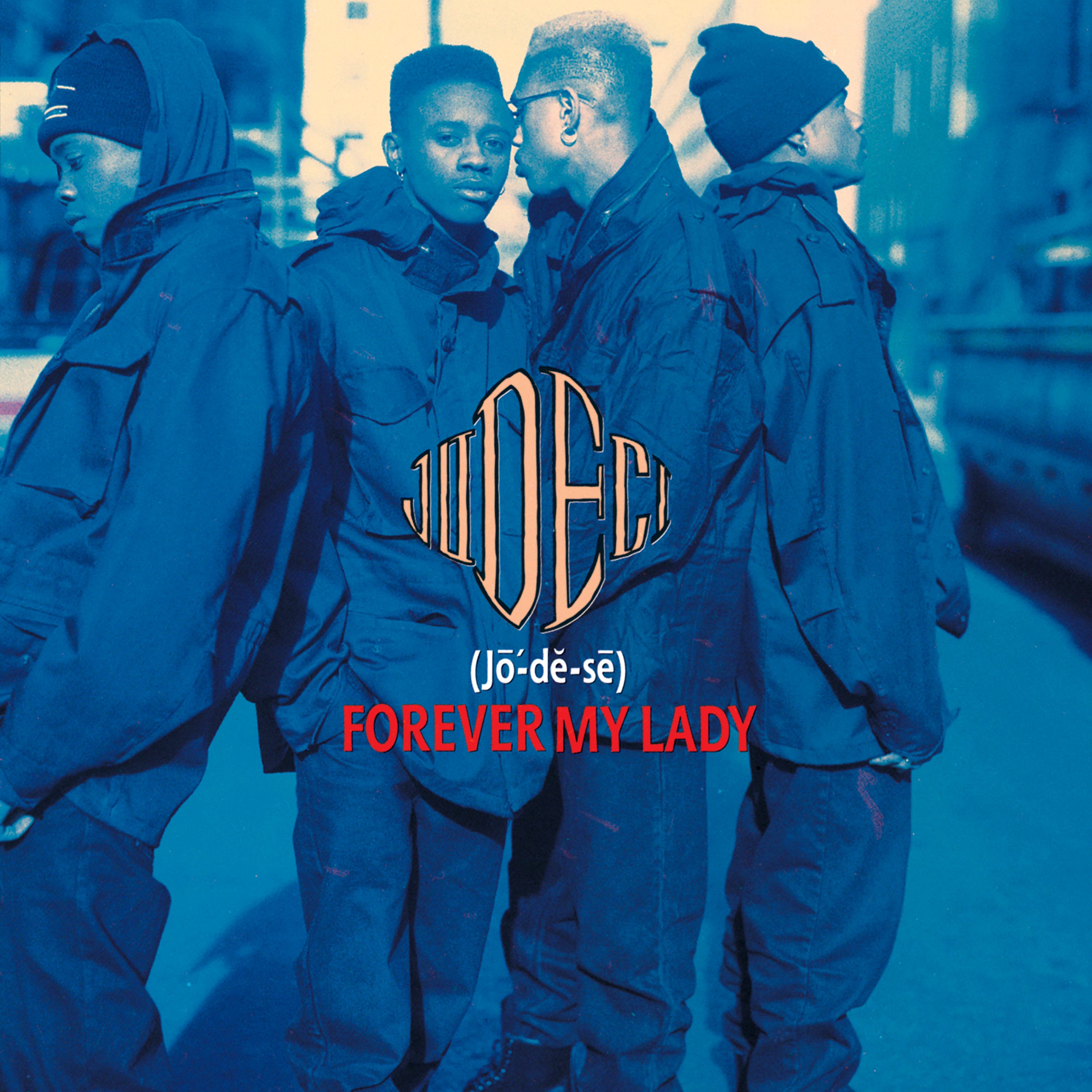
Sean Combs, an intern at Uptown at the time, was tasked with controlling the image of the group. He took a page from Guy’s book by having their backs turned to the camera for press photos and appearing mysterious; however, he went even further by incorporating hip-hop imagery. Baseball caps, Timberland boots, baggy jeans, leather jackets, Jodeci looked as though they had just stepped out of a rap cipher rather than a vocal display. The look was developed by Dalvin and Sean convinced Harrell that it would be successful. This was no coincidence as the styling was a sign to make it clear that they wanted a different fanbase. Jodeci wanted the R&B enthusiasts who bought ballads and those hip-hop listeners who held the notion that R&B was too soft. The music mirrored this intention: DeVante’s beats hit hard enough to appeal to rap fans while the gospel training in their harmonies was evident. They would rap here and there with Dalvin taking on most rap verses but the primary focus was always the singing. What set them apart was not their lyrics but their openness to vulnerability.
The album transitions between different styles seamlessly. For instance, “U and I” has a slower tempo compared to the title track, as it is constructed around a piano sequence that is almost like a hymn. In terms of vocals, harmonies are used abundantly and it feels like the entire congregation comes together with the multiplication of four voices into a full choir. On the other hand, in “I’m Still Waiting” you get an anxiety-inducing moment due to the synth line element while K-Ci’s voice tries to push against the increasingly impatient beat. “It’s Alright” has a hook that is outright groove-inducing, to the point that you might overlook the desperate lyrics wherein a man is trying to reassure himself that being abandoned won’t kill him. The album finally closes with “Cherish,” a ballad with a touch of gospel that harks right back to the roots of the church the group vowed never to leave. The track is a bit overearnest and too direct about its message, but the fact that it’s the album’s final moment is crucial. Having spent nearly an hour in state of desperation and fugue, Jodeci finally finds sanctuary.
The title track, “Stay,” and “Come and Talk to Me” all hit number one on the Billboard R&B chart, and the album debuted on top of the R&B albums chart and peaked at number eighteen on the Billboard 200. Forever My Lady sold three million copies in the United States by 1995, then more as Jodeci’s influence on younger artists emerged, their music played in the background on tape. Jodeci’s ages when they recorded Forever My Lady ranged from seventeen to nineteen. These were boys who had been forbidden “devil’s music” under their fathers’ roofs, sons of Pentecostal preachers who wanted them to carry on the family tradition. They had taken everything they knew from the ornate controlled shouting of gospel quartets and aimed it directly, full force, at the bedroom.
Logus, the engineer, was surprised to see that no legal guardian accompanied them to the sessions. They were, in the eyes of the law, children. But they did not sound like children. K-Ci’s voice bore the wounds of a life he had not yet lived; DeVante’s compositions revealed a preternatural talent that far exceeded his age. The Pentecostal upbringing had trained them to be technically proficient and precociously versatile. The gospel circuit had schooled them in performance and the rigors of the road. The pop records they had concealed under their beds—Prince, Michael Jackson, the pop stars their parents had banned them from listening to—had taught them the art of the radio hit. They arrived at the loud, expensive door of New York knowing exactly what they wanted to be. New York taught them how to do it.
The album’s tension exists between confession and a performance. It’s a struggle with real emotions that DeVante has put into songs for a girl who never returned, and an image of the Uptown calculated to sell those emotions. The phrase that opens the song title track, the contribution of Al B. Sure!, and the mention of a baby who’s on the way grounded the music in the biography of others in the same way that K-Ci sang as if it were his life. This slide defines the Jodeci project. They sang about desire as if they’d already been destroyed by it. They were dressed as a hip-hop copy, but their harmony was that of a chorus boy. They were teenagers who played adults, gospel children who played lovers, boys from Charlotte who played New Yorkers. The mask and the face combined. Maybe it always was the same.
Forever My Lady didn’t create the hybrid of hip-hop and R&B that came to define the 1990s. That was Guy; Teddy Riley was the architect. But what Jodeci brought to the table, that New Jack Swing pioneers didn’t prioritize, was an emotional rawness. Jodeci were down to sound desperate. They were down to beg. When every other male R&B group in the era was supposed to sound either All-American wholesome or too cool to care, Jodeci was there, sweating through their leather jackets (often with no shirt on). They brought the church to the club and the club to the bedroom. They made vulnerability sound like machismo. The rest of the groups dropped into the Billboard Hot 100; Jodeci landed in the bedroom. They made it sound like they were already there. The album dropped in May of 1991, a mere two and a half weeks after the debut of Boyz II Men. Boyz II Men also came from a gospel background, built their sound on tight four-part harmonies, and lyrics about love and romance. But where Boyz II Men sanded down every rough edge, Jodeci left theirs jagged. The roughness was the point. It was the only way to make the pleading sound like they meant it.
The songs DeVante gave to Monica—the same girl Dalvin had lost himself to, the same girl K-Ci couldn’t keep from dreaming of—became songs about the unattainable for everyone who experienced desire as a form of betrayal, a kind of sickness. The particular details of the girl who inspired them quickly got lost, and none of this would be known for years. But all of it was true. The privacy of obscurity. The pain of their pleasure. The way it would always be.
Masterpiece (★★★★★)
Growing up in the 90s absolutely fell in love with Jodeci! Forever My Lady is a classic.