

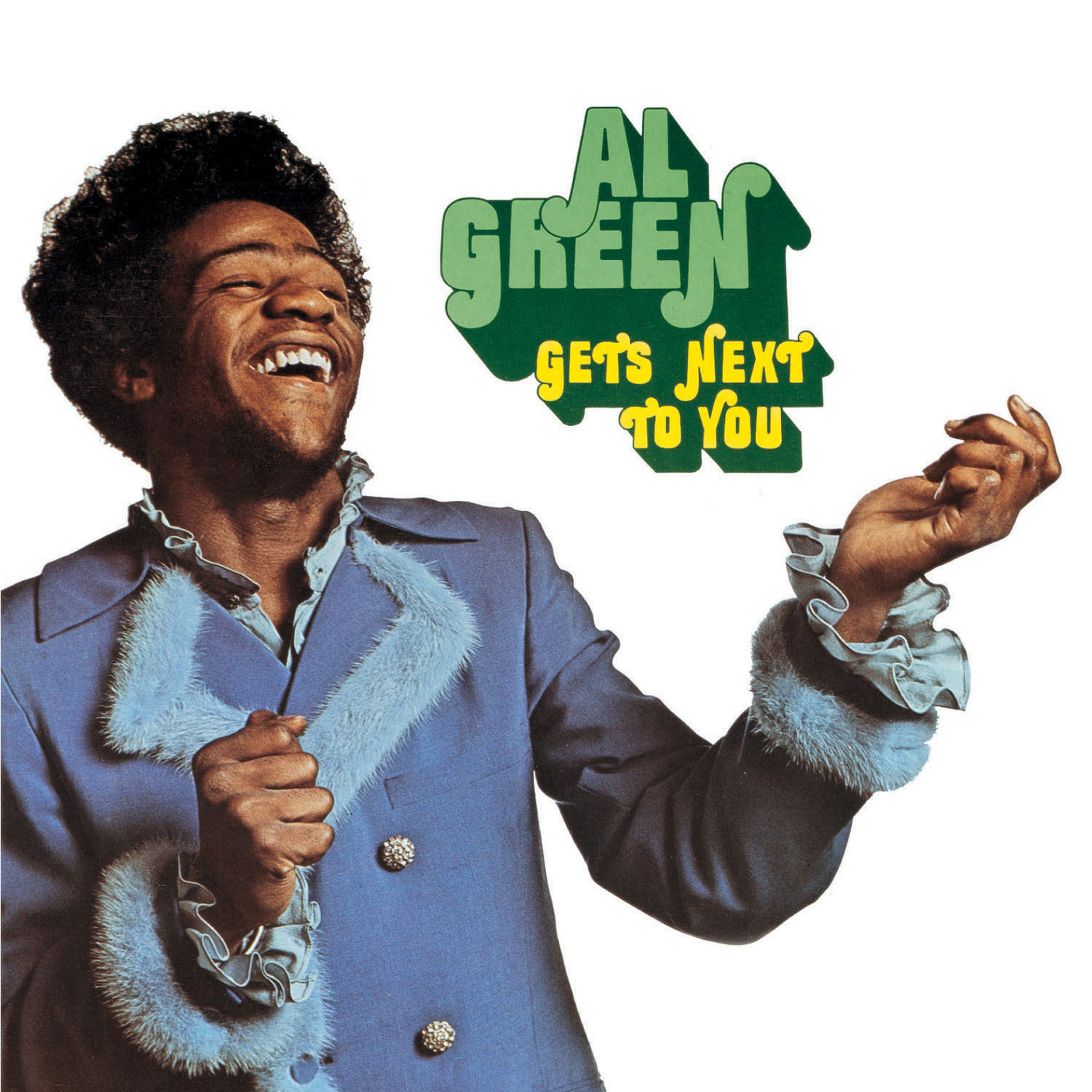
Milestones: Gets Next to You by Al Green
Before the classic run, Al Green and Willie Mitchell found each other’s frequency on a Memphis soul record that still rings.
The building at 1320 South Lauderdale Street in Memphis held a recording studio inside a former movie theater. The sloping floor gave the room its acoustics, and Willie Mitchell, a trumpeter who’d led jazz combos and cut instrumental sides for Hi Records since the early ‘60s, had learned how to use that slope. After Hi’s co-founder Joe Coughi died in 1969, Mitchell took over the label’s creative direction and started reshaping what Memphis soul could sound like. He slowed the tempo. He pushed the drums into a steady, deliberate 4/4 pocket instead of the loose, gritty syncopation that made Stax famous down the road.
He recruited the Hodges brothers (Teenie on guitar, Charles on organ, Leroy on bass), three siblings who’d grown up playing in their father’s band, the Germantown Blue Dots, and who could practically finish each other’s phrases without looking up. Mitchell paired them with drummer Howard Grimes and, on key sessions, Al Jackson Jr. from Booker T. & the M.G.’s. The first serious test of this reconfigured band came when Mitchell brought in a young singer he’d met at a Texas roadhouse, a kid from Forrest City, Arkansas, named Al Green, who’d had one regional hit and was broke. Their initial collaboration, 1969’s Green Is Blues, was mostly covers and mostly stiff. Green hadn’t found his own sound yet, and Mitchell hadn’t worked out how to frame him. Gets Next to You, released in 1971, is where they stopped guessing.
The shift between the two records came from a simple instruction. Green had been singing like he was trying to be Otis Redding or Wilson Pickett, shouting, pushing, muscling through songs the way deep Southern soul demanded. Mitchell told him to quit. In a 1991 interview with Terry Gross, Green recalled Mitchell’s coaching: “Don’t sing with the rough voice… Sing mellow. Don’t sing hard. Sing mellow.” Green, impatient and stubborn, thought this was ridiculous. According to biographer Jimmy McDonough, Green stormed out of the studio after one argument about vocal approach, peeled out of the parking lot, and came back ready to spite Mitchell by singing with as little force as he could manage. Mitchell heard it and said that was exactly the sound he wanted. No more takes. That decision produced a tenor that floated above the rhythm section instead of battling it, a voice that could slip into falsetto and back without announcing the transition, carrying both Sam Cooke’s smoothness and something entirely its own, a breathiness that made every romantic declaration sound like it was meant for one person in a quiet room.
The album opens with a cover of the Temptations’ “I Can’t Get Next to You,” and the rewrite is total. The Temptations’ 1969 original was a Motown production line at peak velocity, all five members trading verses over a Norman Whitfield production that banged and shouted. Dennis Edwards belted the chorus with the desperation of a man losing an argument. Green and Mitchell stripped all that velocity away. They dragged the tempo down, let Teenie Hodges lay a curling guitar figure over Leroy’s bass, and Green sang the same words from a completely different vantage. Where Edwards begged, Green testified. He didn’t plead to get next to his woman. He laid out his case like a man who’d walked to the front of a church and knew his congregation was already on his side. The horn section, arranged by Mitchell’s brother James, punched in short stabs rather than blaring continuously, and the organ sat underneath everything with a low warmth that pulled the song closer to church. The lyrics stayed the same. The emotional pitch reversed completely. It became, somehow, a song about earned confidence rather than frustrated desire, and it cracked the R&B top 20 as Green’s first real commercial single.
“Tired of Being Alone” is the more famous song on the record, and it almost didn’t make it here. Green wrote it in 1968, the morning after a show in Detroit, and spent days trying to convince Mitchell it was worth recording. Mitchell was busy cutting covers of other people’s hits. Green kept pestering. “I was toting my song around in my pocket for days on end,” he told Rolling Stone in 2004. They attempted a version during the Green Is Blues sessions, but technical problems shelved it. When they finally cut it for Gets Next to You, late at night, after a long day of recording, Mitchell told the band to go see what Green had. Mitchell sat down with a vodka. Green walked out and started singing the song he’d been carrying for three years. Through the control room glass, he watched the engineers jumping out of their seats.
The finished recording runs under three minutes, and every second of it aches. Green’s voice dips and curls around a plea so direct it barely needs to be a song at all—he’s tired, he’s alone, he wants somebody to show up. No metaphors, no clever construction. Just a man admitting a basic need with enough grace to make the admission itself feel generous rather than pitiful. The horn arrangement Mitchell wrote behind it used minor nines from his jazz background, chords that most pop producers wouldn’t touch. It hit number 11 on the Billboard Hot 100 and sold a million copies.
Between those two peaks, the album slips a gospel number onto Side A without making any fuss about it. “God Is Standing By” is a devotional, simple and unadorned, and hearing it wedged between “Are You Lonely for Me Baby” and “Tired of Being Alone” tells you something crucial about Green’s instincts in 1971 that most people didn’t fully understand until years later, when he became an ordained minister and left secular music behind. The line between Saturday night and Sunday morning was thin for him, and he refused to pretend otherwise. He sang about wanting a woman’s body in the same register, with the same tremble, that he used when he sang about wanting God’s presence. Neither felt like a performance.
For “I’m a Ram,” which closes Side A, pushes even further into that ambiguity—it’s a funk-edged strut where Green declares his persistence and physical confidence, his voice catching and releasing on the verses, and you can hear the church in every ad-lib even when the words are entirely carnal. Charles Hodges’s organ rolls underneath with a Sunday-morning sway that makes the double meaning impossible to ignore. Green never resolved this tension. He just lived inside it, and Gets Next to You is the first record where you can hear both halves pulling at equal strength.
Side B leans heavier on covers, and the results are less even. “Driving Wheel,” adapted from a Roosevelt Sykes blues, clips along with a sharp groove from Leroy Hodges, and Green handles the vocal with loose authority, tossing in asides that feel improvised. It works because it doesn’t try to be important. It’s a blues, and he sings it like somebody who grew up hearing blues in every living room on his block. The Doors’ “Light My Fire” is the weakest stretch. Green commits to it, and his phrasing is distinctly his own, but the song was never suited to this band’s strengths, and the backing splits the difference between rock and soul without landing firmly in either. “You Say It” deserves more attention than it typically gets; it’s a snappy two-and-a-half-minute cut where Green’s ad-libs pile up with real joy, the band locked into a tight groove behind him. “Right Now, Right Now” and “All Because” round out the album as functional closing tracks. Solid, pretty, unremarkable.
Gets Next to You‘s best songs belong to the decade’s finest music, while its “filler” stays comfortably anonymous. It launched everything that followed. Without “Tired of Being Alone” proving that Green could write his own hits, there’s no “Let’s Stay Together” six months later. Without the “I Can’t Get Next to You” cover proving that Mitchell’s slower, sparser production style could work on a pop-chart level, there’s no four consecutive gold albums between 1972 and 1974. And without tracks like “I’m a Ram” and “God Is Standing By” sitting together on the same album side, nobody would have seen Green’s eventual pivot to gospel coming as clearly. Several of the deep cuts do exactly what they need to do without doing anything memorable. That’s fine. The songs that hit on this album hit with enough force that the weaker material fades to background noise rather than dragging the whole thing down.