

Milestones: Harvest for the World by The Isley Brothers
The group’s fourteenth album asks who loves you better and whether it even matters when the world won't feed its own.
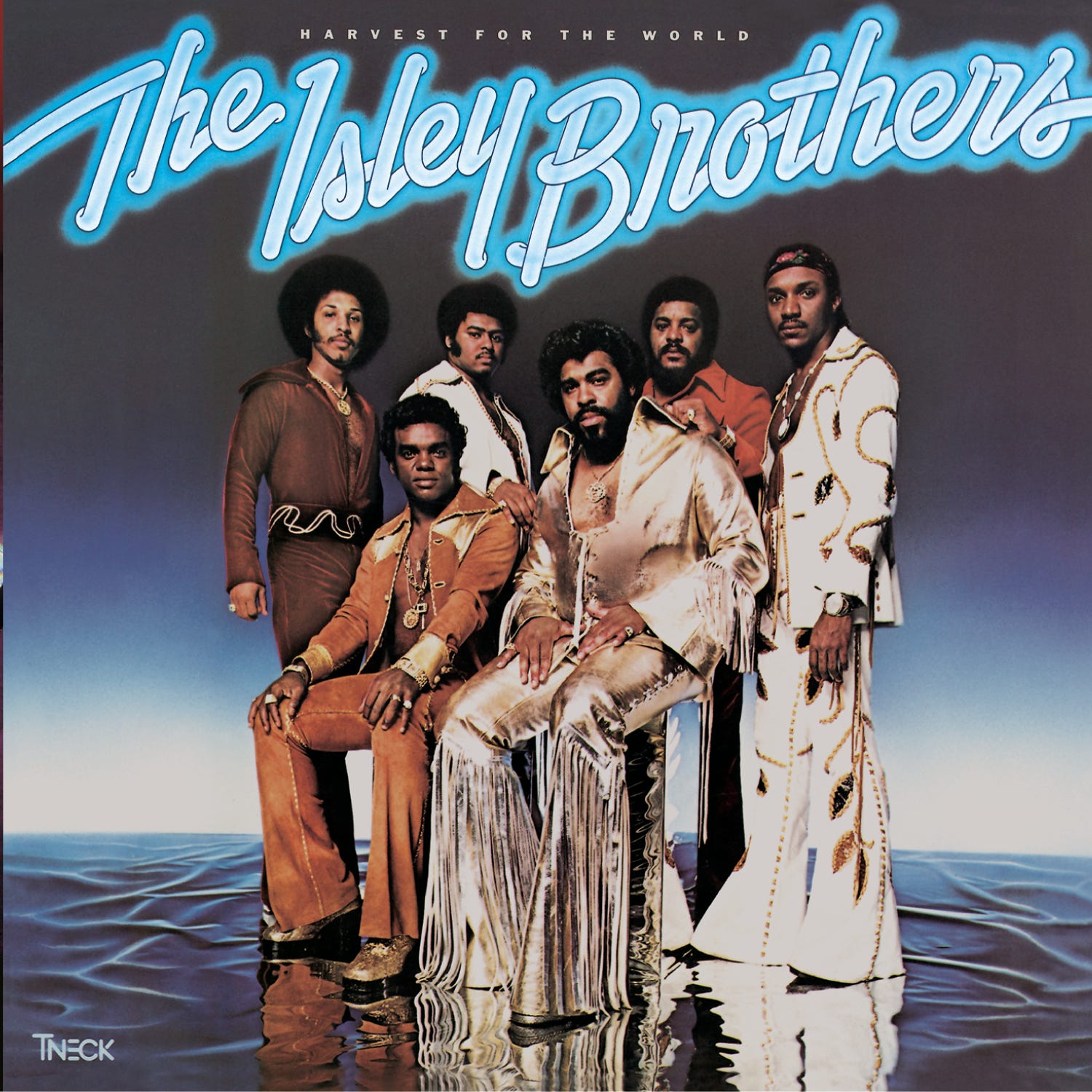
A song called “Harvest for the World” and a song called “Fight the Power” got written on the same day. The group voted, and “Fight the Power” became the single off The Heat Is On in 1975, went to #1 R&B, said “bullshit” on a major record, and became one of the biggest songs of the year. “Harvest for the World” went into a drawer. A year later, the Isley Brothers pulled it back out, recorded a two-minute piano-and-harmony prelude for it, and made it the opening statement of their fourteenth album. That album sold 500,000 copies in its first three weeks and went to #1 on the R&B chart for the third consecutive time. Three days after its release, the American Bicentennial summer kicked off. The Isleys opened their record wanting to know when nations would stop turning their people into beasts.
Ronald sings that line (“Dress me up for battle when all I want is peace”) over a mid-tempo groove with Ernie’s guitar sitting just underneath, not flashy, not doing the That Lady thing, just riding. The prelude is a hymn, close-voiced and careful, piano and nothing else, the six of them singing about all babies being seeds, half satisfied, half in need. Then the full-band version picks up the same question but turns it into a groove you could nod to at a cookout, which is a strange thing for a song about greed and starvation to accomplish. “People of Today” poses the same complaints with more frustration—“Dancing on the sands of time, climbing up and down your mind, wondering if it’s all for real”—and tucks those questions inside a groove so funky you could forget what the words actually said.
That forgetting was probably the point, or at least the risk. The album switches registers without warning. After two songs about the state of the planet, “Who Loves You Better” drops in and Ronald is asking a woman, directly and without softness, who knows her better than he does, who could possibly compete. “He can say sweet things to you and promise you security/I find strength in loving you, don’t fight my love, give in to me.” He’s telling her to stop resisting. Her friends are watching, judging, and he wants her to ignore them.
Then “(At Your Best) You Are Love” comes in and the confidence vanishes. Ernie wrote it for their mother, Sally, and it admits what the swagger songs never do: the speaker falls short. “When I feel what I feel, sometimes it’s hard to tell you so. You may not be in the mood to learn what you think you know.” At your best is the key phrase. It means not always. It says you are a positive force in my life, but only when conditions are right, and I know that I’m not always worth what I promise. Most people only remember the Aaliyah version, and that version sanded the doubt down into something prettier. Here it’s still got splinters.
“You Still Feel the Need” is the one nobody talks about, and it might be the saddest song on the record. Two people who did everything together now do the same things alone and none of it carries the weight it used to. They write letters they’ll never send. Pride won’t let them. The song doesn’t pick a side or assign blame; it just describes two stubborn people ruining something good and knowing it. “Let Me Down Easy” runs six and a half minutes on that same grief, except this time Ronald is the one exposed, asking someone to be careful with him when they leave, not if they leave but when. “For all I know is you,” he sings, and the band holds one groove the entire time, bass and keys and nothing rushing. The whole song is the wait itself.
Where the other ballads look inward, “So You Wanna Stay Down” looks across the room at someone else’s problem. A person who refuses to shake their own misery, who wants to go back on their word. The speaker tells them to get a little stronger, says their fears will go away, says people see them crawling but they’re getting closer. It’s encouragement, but guarded encouragement, like giving advice you’re not sure they’ll take.
Six people made this album. Ronald on lead vocals, O’Kelly and Rudolph on backgrounds, Ernie on guitar and drums, Marvin on bass, Chris Jasper on keyboards and ARP synthesizer and clavinet. Nobody from outside the family wrote a note or played one. They were a Black band on their own label hitting #1 on the pop albums chart, which in 1976 meant competing with Earth, Wind & Fire and the Ohio Players and almost nobody else who looked like them on that side of the chart. Ernie had learned guitar in a house where a young Jimi Hendrix was the touring guitarist for his older brothers. Jasper had studied at Juilliard. Malcolm Cecil, who’d engineered Stevie Wonder’s TONTO sessions, ran the board. The family kept everything close (publishing and production, all of it on their own label) and then made an album that spent half its time terrified of losing someone.
The record’s strangest afterlife belongs to “(At Your Best) You Are Love.” Ernie wrote it for his mother. It was never released as a single. Eighteen years later, a fifteen-year-old Aaliyah covered it on Age Ain’t Nothing but a Number, produced by THAT man, and took it to #6 on the Hot 100. Ernie later said he never expected the song to become a hit for anyone. Frank Ocean covered it on Tumblr in 2015 for Aaliyah’s birthday, then again on the opening of Endless in 2016 with synths by James Blake and strings by Jonny Greenwood. An album cut that a kid brother wrote for his mom became one of the most-covered soul songs of the past thirty years. O’Kelly Isley had a heart attack in 1986. Marvin Isley lost both legs to diabetes complications and died in 2010. Chris Jasper was diagnosed with cancer and died in February 2025. Half the band that made Harvest for the World is gone.
Two questions run through all eight songs and neither one gets answered: when will the world share what it has, and will the person I love still be here tomorrow. It doesn’t pretend to resolve either one. Ronald sounds like a man who knows the difference between what he wants and what he’ll get, and he keeps singing anyway, putting “who loves you better” in one breath and “let me down easy” in the next, totally aware that both might end the same way.
Standout (★★★★½)