

Milestones: House of Balloons by The Weeknd
Abel Tesfaye sang about getting high and getting laid like someone who hated both. Nobody in R&B had sounded this tired of pleasure.
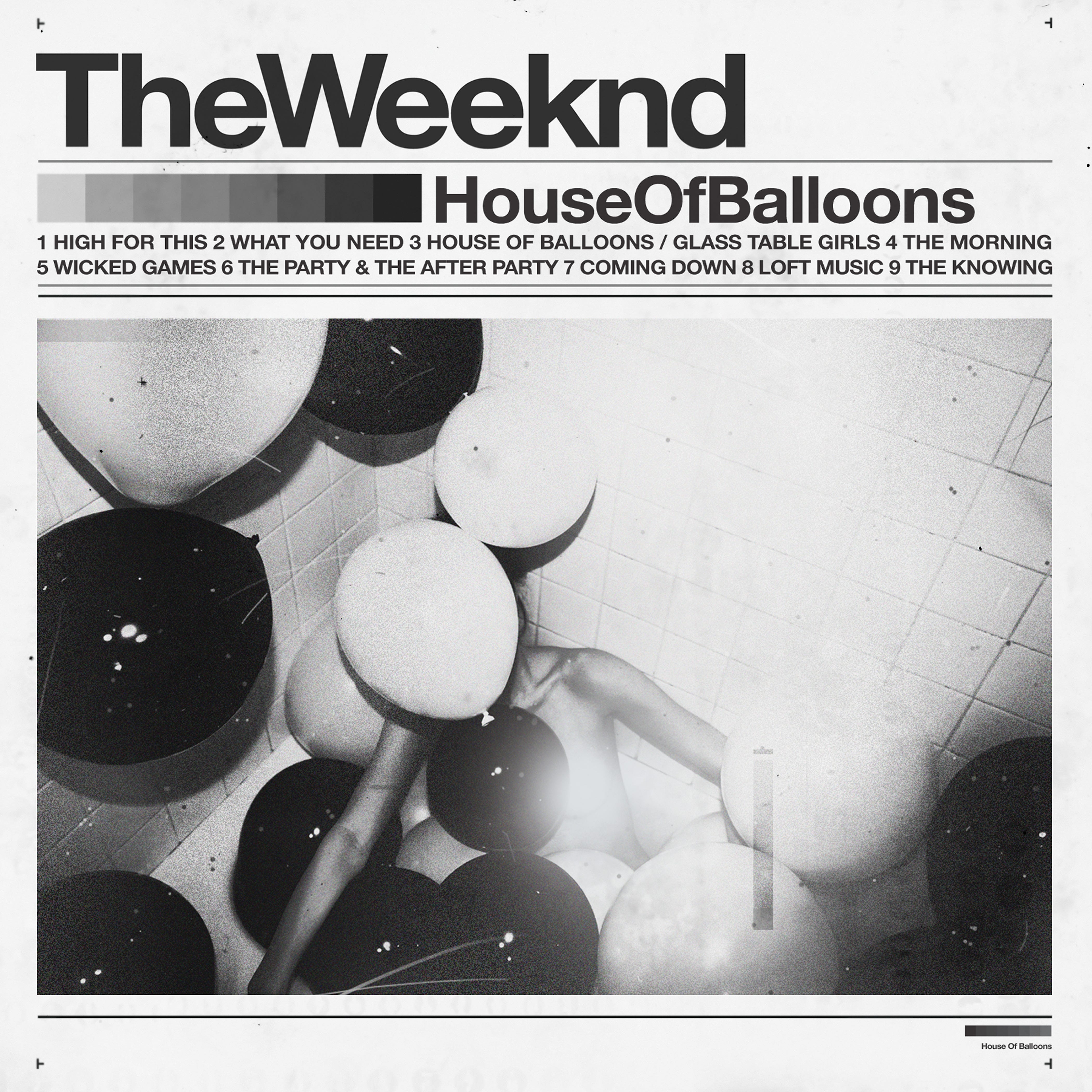
Mainstream R&B in 2011 had been stuck for a while. The dominant mode was still the Trey Songz and Jason Derulo lane, slick and upbeat and mostly concerned with convincing women to come home. Drake had muddied those waters with Thank Me Later the previous summer, letting emotional exposure and sadness into hip-hop at a commercial scale, but R&B proper hadn’t caught up. Meanwhile, a scattered network of music blogs and Tumblr accounts had started passing around tracks from artists who didn’t fit any obvious category. How to Dress Well was making washed-out bedroom R&B. James Blake was feeding dubstep through a singer-songwriter filter. Frank Ocean had just dropped nostalgia,ULTRA. through his Tumblr in February, uncleared samples and all.
Into that particular gap, three songs appeared on YouTube in late 2010 under the name The Weeknd: “What You Need,” “Loft Music,” and “The Morning.” Drake’s manager, Oliver El-Khatib, posted two of them to the OVO blog in December, and Drake himself shared “Wicked Games” in March. Nobody knew who was behind the music. The answer turned out to be Abel Tesfaye, a high school dropout from Scarborough, Ontario, who had left home at 17 and was crashing with friends in a Parkdale apartment they called the House of Balloons because they filled it with balloons to make it less depressing when girls came over to party. He’d linked up with producers Doc McKinney, a veteran guitarist who’d worked with Esthero, and Carlo “Illangelo” Montagnese, who at the time was considering going back into construction. The three of them recorded in whatever studio was available, sometimes McKinney’s private setup, sometimes Illangelo’s room at Dream House Studios, and finished the mixtape in roughly two months. On March 21, 2011, Tesfaye uploaded all nine tracks as a zip file on his website for free.
The samples hint at what Tesfaye and his producers were reaching for, even if they don’t tell the whole story. “House of Balloons” lifts Siouxsie and the Banshees’ “Happy House” and wraps it in rattling bass and falsetto. “The Party & the After Party” pulls from Beach House’s “Master of None.” “The Knowing” borrows from Cocteau Twins’ “Cherry-Coloured Funk.” These weren’t obscure choices for a certain kind of music listener in 2011, and Pitchfork’s audience in particular would have recognized all three. You could read the sampling as calculated credibility, a way for an unknown R&B singer to signal that he’d done his homework with the indie crowd. And there’s probably some truth to that. But on the actual songs, the samples aren’t winking at anybody. The Siouxsie loop on the title track works because it gives Tesfaye’s slurred falsetto a deceptive sweetness to push against. He’s singing “this is a happy house, we’re happy here” while everything around him—the bass, his delivery, the general drift of the lyrics—suggests the opposite. Cocteau Twins’ guitar shimmer on “The Knowing” pulls the same trick, making the track go weightless when the words are heavy. If the samples were just fashion accessories, the songs would collapse once the novelty wore off. They haven’t.
“High for This” opens the tape with Tesfaye half-whispering instructions to someone. He’s telling a woman to trust him. He’ll take care of her. She should let go. A bass synth throbs underneath. The commands are simple, almost gentle, but the context is a controlled substance: he’s coaching her through being high for what’s about to happen. It’s seductive in the way that a bad decision at 3 a.m. is seductive, and Tesfaye was 20 years old when he recorded it. He later told The Guardian that drugs were a crutch during this period—ketamine, cocaine, MDMA, mushrooms, cough syrup—and that songs on the first record ran seven minutes long because they were “whatever thoughts I was having when I was under the influence at the time.” That admission doesn’t excuse what the songs describe, but it does put them in a different light than deliberate provocation. “High for This” doesn’t play as a character performance. It has the texture of someone reporting from inside a situation he hasn’t thought through, and the eeriness comes from that lack of reflection.
“House of Balloons / Glass Table Girls” is the most ambitious track here, and the one that best shows what Tesfaye and his producers could do when they committed to an idea and let it mutate. The first half rides the Siouxsie sample, Tesfaye insisting everything is fine at his party, his falsetto layered and stacked on top of itself until it resembles a choir of one very unreliable narrator. Then the beat drops out and slams into a harder, uglier gear. “Glass Table Girls” is Tesfaye rapping—or something close to rapping—over industrial percussion, and the subject matter shifts to cocaine on glass tables and sleeping with other people’s girlfriends.
McKinney originally had a 25-minute version of “House of Balloons” and built the beat switch when Tesfaye said he wanted to rap. That impulsiveness shows. The second half turns dangerous in a way that most R&B, even dark R&B, doesn’t attempt, because it trades beauty for blunt aggression and doesn’t try to make the ugliness palatable. Then “The Morning” arrives, and everything loosens. Guitars whine and synths scatter light across the mix while Tesfaye’s voice drops to a murmur. The track carries the exhausted warmth of the first hour of daylight after a terrible night, and the relief is physical. If the rest of House of Balloons is the bender, “The Morning” is the moment you survive it and be briefly grateful just to be awake. It’s the closest thing to a conventional pop song on the tape, and it’s great because of where it sits, not just because of what it does musically.
“Wicked Games” is the strongest individual song. It strips the production down to a percussive guitar figure and a slow thud, and Tesfaye sings about wanting to be loved even though he knows he doesn’t deserve it and can’t reciprocate in any honest way. “I left my girl back home/I don’t love her no more,” he admits early. There’s no glamour in it. He’s aching for affection and sabotaging every chance he gets at it, and the vocal performance—raw, slightly strained, the falsetto cracking in places—matches the desperation of the words. “What You Need” carries a different energy, smooth and insistent, built on an Aaliyah sample in the original version, and Tesfaye’s pitch to another man’s girlfriend has the queasy confidence of someone who knows exactly how this will go. It works as a song you’d play in a dark room at 2 a.m. It also works as a portrait of someone who treats other people’s relationships as personal opportunities, and the two readings don’t cancel each other out.
On “Loft Music,” it takes longer to arrive at its point, a slow build with a woozy vocal and a synth bed that thickens over six and a half minutes, and here is where the tape does drag. The patience required pays off for listeners who want to sit inside a mood, but the back half of “Loft Music” repeats itself without advancing the story Tesfaye is telling, and “Coming Down” has a similar issue, stretching a decent idea past where its content can sustain it. Tesfaye admitted the songs ran long because he was high in the studio, and the excess shows. Not every ramble earned its runtime.
Where the tape slightly decline is in lyrical range. Tesfaye has a narrow set of concerns on House of Balloons: sex, drugs, using people, being used, and the morning after. Within that range, he’s specific enough to be convincing. He names the glass table. He references the Parkdale apartment. He knows what MDMA feels like and can describe the physical sensation of coming down from it without sounding like he’s reading a pamphlet. But outside of “Wicked Games” and the back half of “The Knowing,” where he confronts a partner’s infidelity with genuine hurt, there’s rarely a moment where Tesfaye seems to feel anything beyond a kind of stylish numbness. The drugs and the sex are presented as a closed loop: get high, have sex, feel empty, get high again. When he told Complex in 2013 that he’d avoided doing interviews because “I felt like I had nothing to say,” he may have been more right than he intended. The feelings are real, but the vocabulary for expressing them is limited.
None of that finally matters as much as what House of Balloons did to the ears of anyone who heard it at the time. The mixtape landed in a moment when R&B needed permission to be uncomfortable, to stop smiling, to let the production go cloudy and strange. Tesfaye, McKinney, and Illangelo gave it that permission, and an entire decade of popular music took the cue. Drake built Take Care around Tesfaye’s songwriting and aesthetic. The phrase “alternative R&B” got coined specifically to describe this sound and the artists—Frank Ocean, How to Dress Well, Kelela, PARTYNEXTDOOR—who followed in its wake. Radio R&B got darker, moodier, more willing to sit with bad feelings. Whether that shift was entirely a good thing depends on your tolerance for a genre rewarding the performance of damage over the articulation of insight.
Tesfaye was singing about being a bored, drugged-out 20-year-old treating people badly and pitying himself for it. The honesty of that limited confession carried real force. The question the songs actually raise, and the one Tesfaye never quite answers on this tape, is whether the party he’s describing is something he’s trapped in or something he’s selling. “The Knowing” closes the record with him confronting betrayal, and for the first time across nine tracks, the pain isn’t abstract or chemically blunted. He’s been cheated on, he knows it, and the Cocteau Twins sample gives his hurt a strange grandeur. It’s the one moment where the emotional stakes land as personal rather than performative, and it’s the right note to end on because it suggests Tesfaye had more to say than the persona he’d built could contain. He did. It just took him a few more years and several more albums to figure out how to say it.
Great (★★★★☆)