

Milestones: Ice Cream Man by Master P
The first album to prove that a New Orleans rapper could own his masters and still go platinum. Percy Miller bet on distribution, not bars.
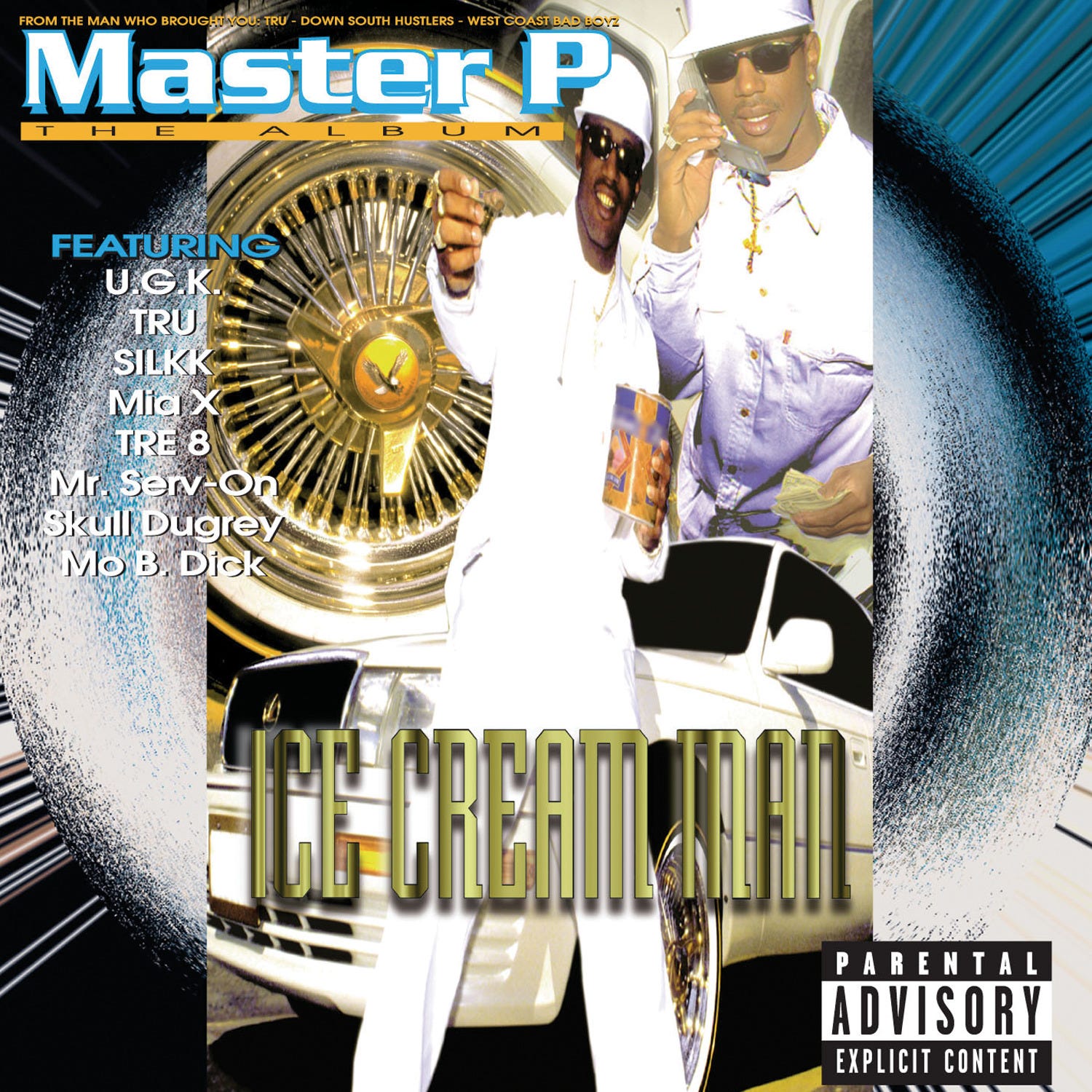
No independent rapper in America had a distribution deal as aggressive as the one signed with Priority Records out of a storefront label in New Orleans thirty years ago. The terms were 85/15—eighty-five percent of sales revenue stayed with the label, Priority got fifteen for pressing and shipping. Ownership of the master recordings never changed hands. The man behind it, Percy Miller, had been selling rap tapes regionally since 1991, maybe 250,000 copies across four albums, almost all of them through word of mouth and independent record shops between Richmond, California and the Third Ward. He inherited $10,000 from a malpractice settlement when his grandfather died and used it to open a record store. That store became No Limit Records. Ice Cream Man was the first full-length album released under the Priority arrangement, and it went platinum by August.
The whole thing was cut in about a week, partly in a bathroom in the Calliope Projects using four- or eight-track equipment. KLC, the in-house producer who’d already made the original “I’m Bout It, Bout It” for TRU, said it was tracked over a single weekend to meet a deadline Master P had promised Priority before a single song was mixed. K-Lou, a Bay Area beatmaker P had brought with him from Richmond, contributed to the title track and kicked off a working relationship with the New Orleans crew. Mo B. Dick and Craig B filled out the rest. Together they were Beats by the Pound, and the sound they built here is a strange meeting point. G-funk synths from California, the kind Dr. Dre and DJ Quik had been running for years, slowed down and thickened with bass patterns closer to what DJ Screw was doing in Houston. The drums on “Back Up Off Me” crack at a slower pace than anything on a Death Row record, and KLC leaves gaps in the arrangement where a West Coast producer would’ve stacked another layer. On “How G’s Ride,” Mo B. Dick’s keys drip over a tempo that barely moves. It’s heavier than G-funk and messier than bounce, and in 1996 nobody else was making it.
Master P sells drugs on this album the way a franchise owner talks about inventory. On “Mr. Ice Cream Man,” he gives pricing—2 for 3, 4 for 5—mentions a triple beam and a Lexus, describes hitting the block in white Girbauds while carrying a pistol because the nights make him paranoid. “Sellin’ Ice Cream” repeats the formula with fewer details and more boasting. “Time to Check My Crackhouse” is exactly what the title says: he’s counting cash, watching for police, monitoring product. The ice cream conceit isn’t clever or designed to be clever. It’s a thin coat of slang over plain commercial language. He says on the title track, “Before you jump in the game, let’s get one thing understood/If you sellin’ that ice cream ya got to make sure it’s good.” There’s no addiction story underneath, no moral reckoning, no victim. P talks about the drug trade the way most people in it talked about it—supply, price, territory, risk.
The album’s center of gravity and biggest single, no doubt, came from “Bout It, Bout It II.” KLC’s beat fuses post-“Funky Worm” West Coast synths with 3rd Ward bounce, and P opens it by calling it the national anthem. He names his neighborhoods—Third Ward, Uptown, Calliope—then spreads outward: Kansas City, St. Louis, Memphis, Houston, Dallas, L.A. The song is a geographic catalog more than a song with verses and a hook in the traditional sense, and that catalog is the reason it traveled. People in those cities heard their name and passed the tape. Mia X comes in hard, her voice percussive and doubled over itself, rapping about keeping a shank in her sock. She doesn’t soften anything. Her verse gave the song a second engine and proved that P’s instinct to share microphone time, even on his own album, paid off. The Diplomats would later sample the beat for their own “Bout It Bout It Part III,” proof that the song spread far past the wards P was shouting out.
Kevin Miller, P’s brother, was murdered in New Orleans. On “My Ghetto Heroes,” P says his name alongside Bizzy Bob, Sam Skutty, Big Dave, Dandon, Levi, Mr. C, Elbraud, and a longer list that stretches from the Calliope to California. He rejects Michael Jordan, Muhammad Ali, politicians. His heroes are the men from the block who hustled and died, and Skull Duggery’s verse defines heroism as willingness to join them. “No More Tears” says the same thing differently. Mo B. Dick interpolates The Dramatics’ “In the Rain” and P says he’s run out of tears—no eulogy, no reflection on what was lost, just the count. The album’s intro, a spoken monologue about Black solidarity and stopping the killing, promises something the next nineteen songs refuse to deliver. P never squares the two. He opens with a plea and fills the rest with the exact violence he’s asking to stop, and he doesn’t seem to notice or care that he’s doing it.
On “Break ‘Em Off Somethin’,” Pimp C produced the beat himself and brought Bun B along from Port Arthur. Pimp C’s track is funkier and sneakier than anything Beats by the Pound made on this album. It moves differently, with more swing in the drums, and you can hear the difference between a producer steeped in Houston soul and a crew still figuring out its identity. The song is about hustling and women, and UGK treat it like any other feature, which is to say they rap better than the host and don’t try to pretend otherwise. Silkk the Shocker, P’s younger brother, gets his most sustained time on “Bout That Drama,” where his sloppy, off-rhythm delivery wobbles across the beat in a way that shouldn’t hold together and barely does. Silkk’s chaos is real. He’s not affecting a style, he genuinely cannot stay on the pocket. Somehow that makes the track feel more dangerous than the tighter, more controlled songs around it.
Master P is not a good rapper. This has never been contested and the album doesn’t argue against it. His bars are simple, his rhyme schemes are couplets at best, and his cadence is a flat, declarative drawl that rarely shifts. Twenty songs over eighty minutes is too many by at least five. “Killer Pussy” and “Watch Dees Hoes” are ugly, the latter a straightforward exercise in misogyny split three ways with Mr. Serv-On and Tre-8. Several tracks in the middle stretch repeat ideas the album already stated more effectively.
Once you’ve heard the ice cream metaphor twice, a third pass adds nothing. And the spoken intro’s call for racial unity and peace sits awkwardly above an album that spends most of its time describing the sale and protection of cocaine. None of this prevented a million people from buying it. Ice Cream Man sold on the strength of an economic model, a regional network, and a group of producers who stumbled onto a sound that didn’t exist yet. P understood distribution better than any independent rapper alive in 1996, and he understood that the album didn’t need to be great—it needed to be present, in the store, in the city, in the car stereo, at a moment when New Orleans had nothing else on the shelf.
Above Average (★★★☆☆)
We like your writing! What's the best way to get in touch?