

Milestones: King’s Disease II by Nas
A Queensbridge rapper and a Fontana producer locked the door, kicked everyone out, and made one of the strongest Nas albums in his discography.
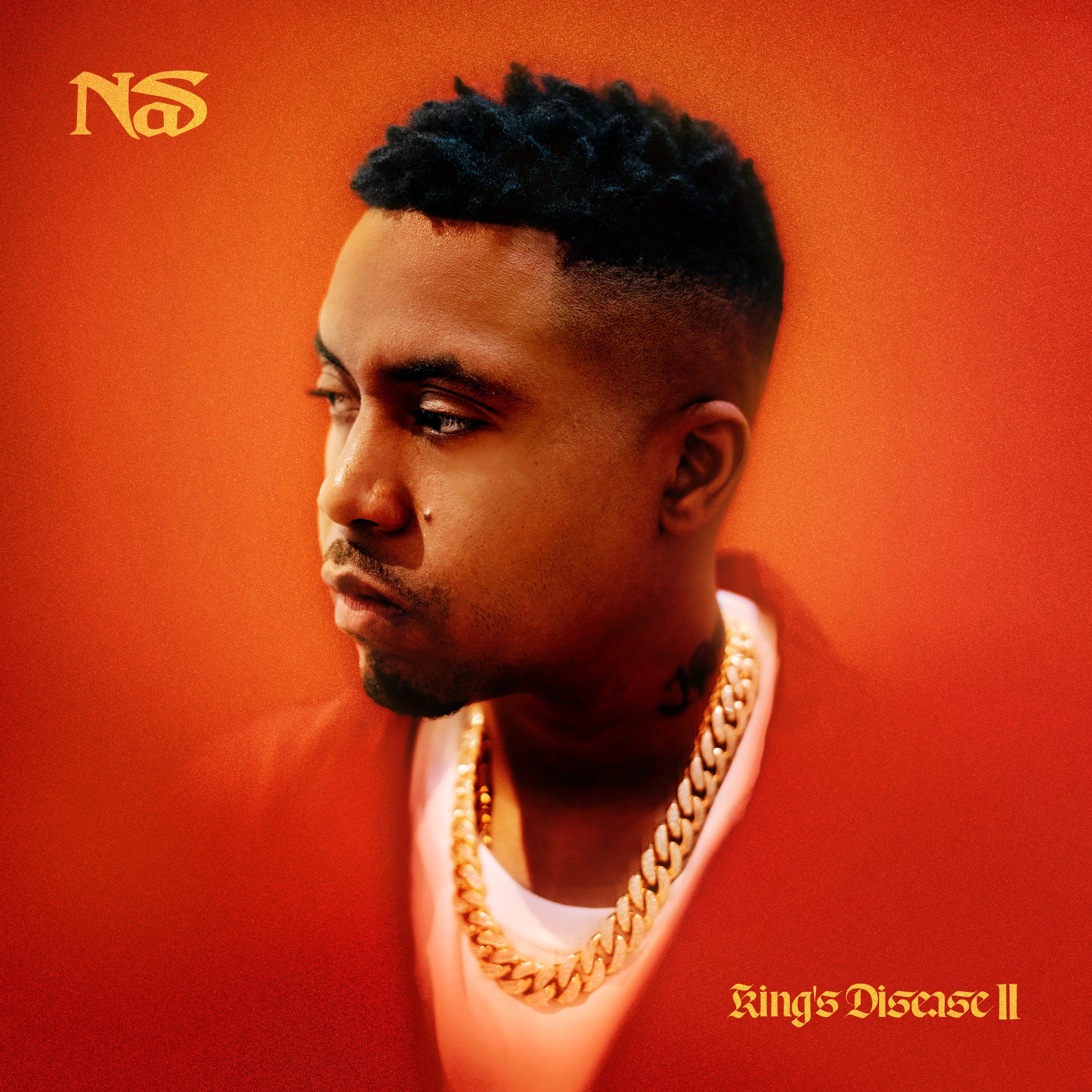
The vast majority of King’s Disease II was made by Chauncey Hollis Jr. and Nasir Jones without anybody else present. When Hit-Boy told Vibe, he engineered about fifty of the fifty-four songs they recorded throughout the entire run of King’s Disease, just sitting there and punching Nas in take after take. No A&R. No committee. Upon releasing the album, he appeared in front of a camera and said it out loud: “It’s not a hundred niggas producing the beat. It’s not a hundred niggas writing the rhymes. It’s two niggas in the studio.” Some people took it as his attempt to mock Ye, who was holding listening events in football stadiums in the very same August. Perhaps, it was. But it was also a simple statement about the room.
By the time of recording King’s Disease II, Nas had been known in the hip-hop industry for twenty-seven years and was respectable for about six of them. Illmatic released in 1994 marked the turning point, then It Was Written was double platinum; meanwhile, ten years between God’s Son and Life Is Good were spent on making either overworked (Street’s Disciple, a two-disc album nobody really wanted), undercooked (Nastradamus, hastily rushed to shelves after bootleggers have stripped the original track list), or albums with collaborators who did not need him as much as he needed them (Nasir, Ye’s seven-track afterthought from 2018). As Life Is Good was released in 2012, it became the artist’s best work of the decade, and yet, it was somehow a correction—a man who proved that he could still do the job rather than something new. When the pandemic started, he was forty-seven years old. King’s Disease came out in August 2020, won the rapper his first Grammy (for Best Rap Album, which took him twenty-seven years of his career to earn it), and was fine. Competent. Clearly a preparation for something even more impressive that would follow.
The bass in King’s Disease II is lower than on any other album by Nas. Hits’ beats come from Fontana, California, not Queensbridge, and it’s easy to tell it from it. The West Coast weight in the drums, funk undertone stolen from the G-funk tracks he used to study in the past, all of them played at slow tempos to allow him to breathe between bars. On “YKTV,” Nas raps together with A Boogie wit da Hoodie and YG and states his thesis clearly: “Imagine Lil Uzi on a Preemo beat/Imagine N-A-S on a Migos beat.” He tells people to stop categorizing him. And the funny thing is how naturally it sounds on production that would have been unthinkable on any Nas album before 2020—loose, unhurried, and his voice settled in the groove.
On “Death Row East” Nas raps about his meeting with Suge Knight in the mid-90s, about Death Row T-shirts appearing on people he knew in Queensbridge, about the beef that almost led him to death and definitely ended somebody else’s life. His brother Jungle and 2Pac’s crew almost got into a fight at the MTV Video Music Awards in 1996; Napoleon from the Outlawz recalled that entourages were ready to settle their scores, until Nas and 2Pac embraced each other and went different ways. At the end of the track, he speaks over a loop. He flew to Las Vegas to film the “Street Dreams” video and finally settle this beef in person. 2Pac was in the hospital already. “It rained that day in Vegas.” Then Ed Lover appears at Nas’s concert, announcing 2Pac’s death.
Ms. Lauryn Hill has not appeared on any of Nas’s songs in the past twenty-five years. Now, after a quarter-century break, she appears on “Nobody” and not only sings the hook but takes the third verse. She talks about her lateness (“My awareness like Keanu in The Matrix/I’m saving souls and y’all complaining about my lateness”) and her absence, which she perceives solely as her refusal. “All my time has been focused on my freedom now/Why would I join ‘em when I know that I can beat ‘em now?” Her voice sounds exactly as on her Miseducation album, but it’s 2021 and she was gone for so long that hearing her rapping at all produces such shock which you cannot separate from the verse. Nas spends his verses fantasizing about anonymity, sympathizes with Dave Chappelle’s years in Ghana, and passes Dre’s warning to stay away from palm trees.
For a forty-eight-year-old man who had released twelve studio albums and has one Grammy, a plea for flowers while he is still alive could appear as pathetic or desperate. On King’s Disease II, it looks justified, as Nas has the evidence to prove it, and he names them. He does not make a general case about his legacy. He talks about lighters he has started, after-hours clubs where he has been banned from, the fact that getting a Grammy was not his goal, yet he feels grateful to get it. The self-mythologizing on “Rare” and “Moments” would sound ridiculous if it were vague; it sounds convincing because he is rattling off the concrete facts he has done and people he has outlived, and contradicts himself mid-bar. “My whole career I steered away from features/But I figured it’s perfect timing to embrace the leaders.” This claim is not true in its entirety, but he knows it.
Nas tells men that their friends would betray them at the Judas level as soon as money is gone. He tells children to stay at school, to be aware that their jewelry could be cursed, that Satan recruits them early. He tells women that they have always been the rib, that a woman’s intuition is what a man is missing. Everything mentioned above is happening on “My Bible,” which features gospel-tinged production, and the advice itself is not new. Any barbershop uncle who has a Bible and a blunt has probably told him this, but Nas delivers it in such a flat and measured voice that the trap of sounding as a preacher is avoided. He says it all seriously. Whether you need to hear it from him or not is your problem, but he says it anyway.
The album’s dead weight becomes noticeable on “Brunch on Sundays.” Blxst sings a pretty hook, and Nas stuffs it with rhymes about wealth that he was rapping since 2008, and the whole song evaporates once you have stopped listening to it. But “No Phony Love” and “Count Me In” are somewhere around the opposite level that’s competent, smooth, and replayable.
In the summer when it was dropped, Ye floated above the replica of his childhood house inside a football stadium, and Tyler, the Creator, did the most maximalist thing of his career. Nas released fifteen songs with one producer, debuted at number three, and did not say much about it in public. His collaboration with Hit-Boy would continue (Magic, King’s Disease III, Magic 2, Magic 3), but this album is the moment when they stopped proving the concept and lived it. Nas does not want to prove anything to anybody on this record. He is a man who has been paying attention for three decades, and in his forty-eight years he decided that the stories he has collected were worth being told.
Standout (★★★★½)