

Milestones: Kollage by Bahamadia
A masterclass in cool from a rapper whose loyalty to the culture doubled as her artistic compass. The production pedigree alone would sell the record; Bahamadia’s presence is what makes it last.
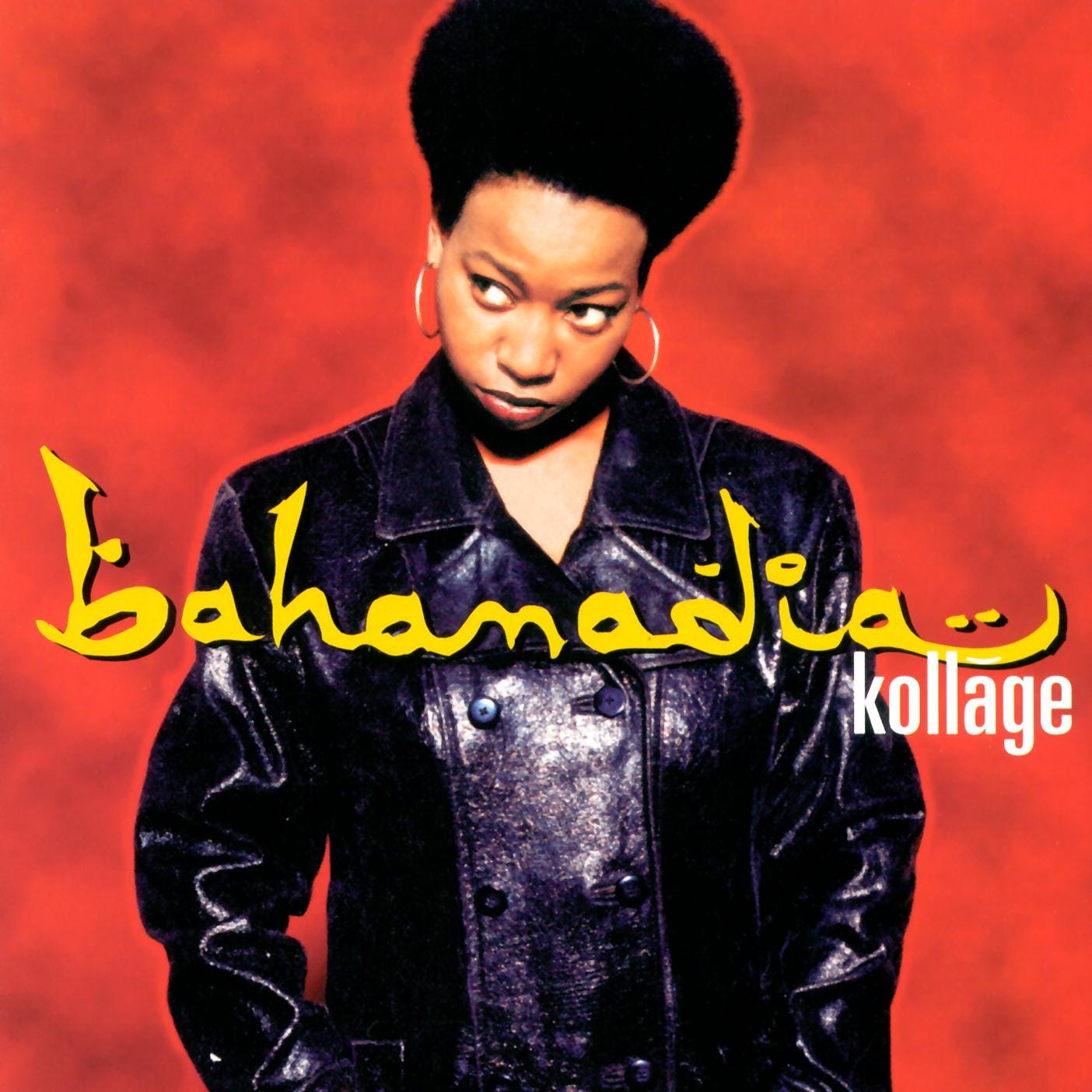
1996 is one of the most pivotal years in hip-hop history, and also one of the most final. 2Pac died. Biggie’s life was winding toward its end. New York and Los Angeles each delivered the closing statements of their second golden eras, while UGK and Outkast were pushing the South toward its own center of gravity. Boom bap still ruled, but something was shifting. If any album from that year captures where hip-hop was heading more clearly than the consensus classics, it might be Bahamadia’s Kollage.
Technically a debut, the album carries serious weight behind it. The Philadelphia rapper wasn’t just affiliated with the musicians featured here; she’d built a long résumé as a freestyler, enough to earn her a place in Gang Starr’s circle. The production reflects that lineage. DJ Premier crafts beats that are impossibly smooth and unmistakably New York, and they sit naturally alongside contributions from Guru and the Beatminerz.
What keeps Kollage from being another well-executed boom bap record is Bahamadia herself. Her flow is effortlessly cool, unhurried without ever sounding passive, and she paints a picture of hip-hop’s values that few rappers have rendered this naturally. On battle tracks like “Wordplay” and “3 Tha Hard Way,” she tosses off bars with the ease of someone who doesn’t need to prove she belongs. On narrative cuts like “True Honey Buns,” she builds vivid, lived-in scenes. She moves through every conventional technique of the spoken word while consistently sounding relaxed and warm.
Her approach across the album is relentlessly positive, and the most captivating dimension of that positivity is her role as a tastemaker. She’d worked as a DJ before picking up the mic, and you can feel that curatorial instinct throughout the record. She’s constantly shouting people out, building community in real time: name-checking Kool Keith and Ced Gee of the Ultramagnetic MCs alongside De La Soul on “Spontaneity,” or running through Philadelphia’s roster of famous and overlooked MCs on “Uknowhowwedo.”
“Giving respect” has always been one of those phrases that, in hip-hop’s intensely competitive ecosystem, tends to function more as abstract obligation than lived practice. Bahamadia doesn’t just revive the concept; she makes it an aesthetic. When she raps, you hear something close to pride in the genre itself, a loyalty that extends to everyone from legends to newcomers. She gives people their flowers with a conviction that never reads as performance.
That generosity isn’t reserved for her famous friends, either. She shows consistent love for the underground, and the results speak for themselves. On “3 Tha Hard Way,” she assembles two nearly unknown female rappers, Baltimore’s K-Swift and Philly’s Mecca Starr, over a Premo beat and delivers a posse cut that holds up against any of the decade’s more celebrated battle tracks. The beat is powerful but carries a lonely, melancholic edge, and the verses land with real bite and energy.
The most compelling thing about Kollage, though, is the sound itself. As she preaches on “Innovation,” Bahamadia has a weakness for the unusual, and she repeatedly experiments with psychedelic and idiosyncratic synthesizer textures as adventurous as anything A Tribe Called Quest, The Pharcyde, or the soon-to-evolve Outkast were attempting at the time. Tracks like “Spontaneity,” “Rugged Ruff,” “Innovation,” and the Roots collaboration “Da Jawn” crack open the ‘90s hip-hop aesthetic in genuinely exciting ways, further enriched by G-funk-tinged R&B sounds smooth enough for Adina Howard.
Kollage delivers the complete package. Retro production from absolute legends for the nostalgics. A rapper who brings immense charisma alongside genuinely outstanding lyricism and flow. And an ear for unusual samples and sonic textures that makes this one of the most diverse, vibrant albums the decade produced. It’s a formula that alternative hip-hop artists from Outkast to Def Jux to Stones Throw would continue to refine for years after.
Great (★★★★☆)