

Milestones: Lemonade by Beyoncé
The most public marriage in American pop became the occasion for the most complete album Beyoncé has ever made, one where private fury and Black grief speak in the same breath.
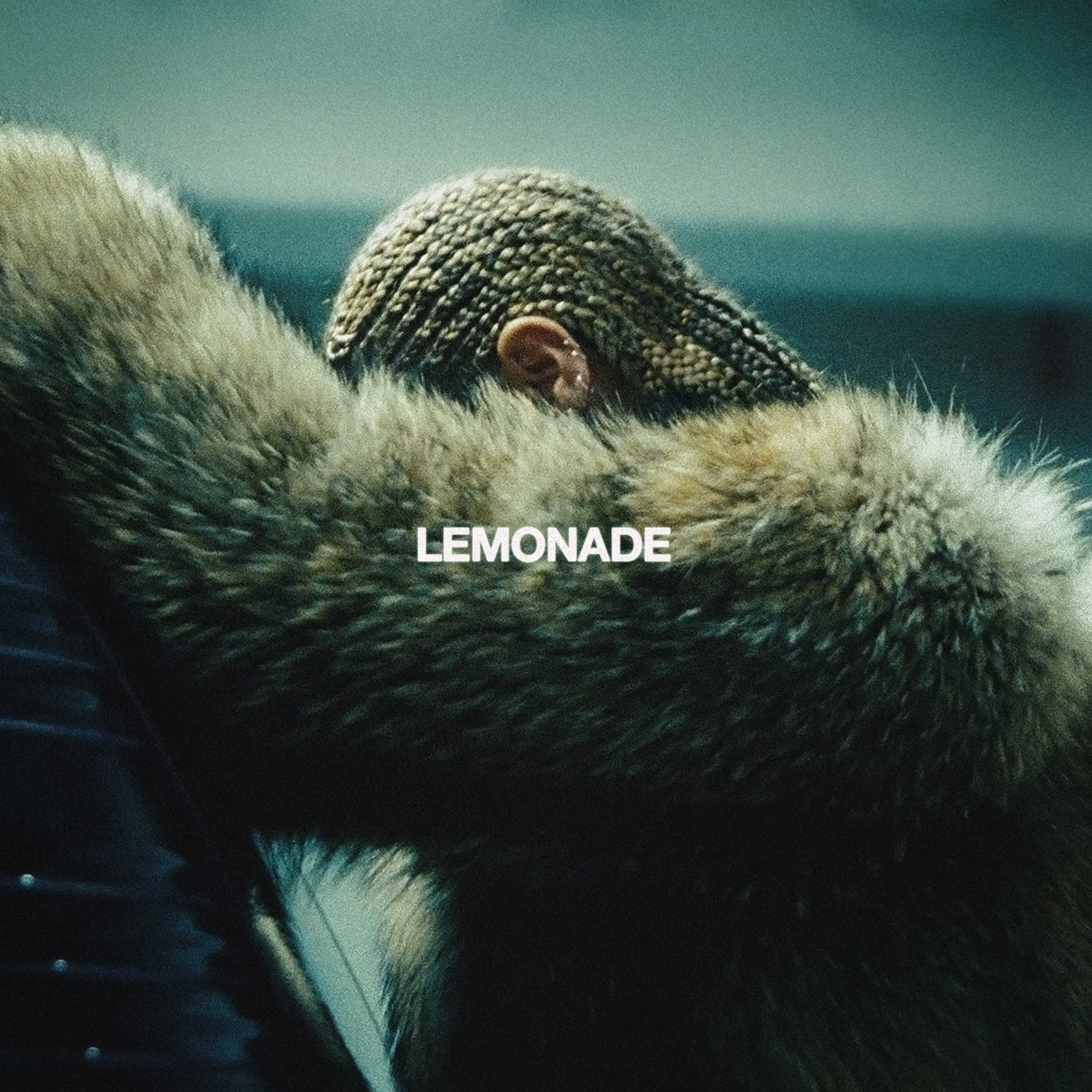
Two years before Lemonade, TMZ published security footage from the Standard Hotel in New York. Solange Knowles attacking JAŸ-Z in an elevator. Beyoncé standing to the side, watching. A joint family statement said they’d worked through it and moved forward. That footage sat in the public for 24 months with no answer. The answer was 65 minutes of film on HBO and 12 songs released simultaneously on Tidal. Beyoncé did not explain the elevator. She made an entire album that assumed you already understood what the problem was, and then she told you what she was going to do about it.
“Pray You Catch Me” says she can taste the dishonesty on his breath. She says she’s been walking with her head down trying to hide. She’s praying he catches her listening, because she already knows, and what she wants is for him to know she knows. James Blake co-wrote it, and the track has that caved-in quality his production carries, everything damped and muffled and close. The spoken-word poetry between the songs, Warsan Shire’s words adapted for the film, introduces the album’s second movement: “I don’t know when love became elusive. What I know is no one I know has it.” Then “Hold Up” kicks in, and the question flips from dread to provocation. She asks what’s worse, looking jealous or crazy. She says they don’t love him like she loves him. The Roberto Cavalli gown, the baseball bat, the car windows: that’s the film’s visual, but the song itself is built from Karen O, Ezra Koenig, Diplo, and Soulja Boy, and it grins through the wreckage.
The rage arrives with the Led Zeppelin guitar on “Don’t Hurt Yourself.” “Who the fuck do you think I is?” she says, and Jack White sings behind her while the whole thing rattles with the distortion of a speaker pushed past its limit. She tells him she’s not broken, she’s not crying, she’s not the one who needs to try harder. She tells him this is his final warning: if he tries it again, he’s going to lose his wife. She says when he hurts her, he hurts himself, because God made her in his image. That line is borrowed from Malcolm X’s “Who Taught You to Hate Yourself?” speech, and she drops it mid-song without citation or ceremony. “Sorry” shifts the ground entirely. Dancehall cadences, middle fingers up, “He better call Becky with the good hair.” She doesn’t care if he goes or stays; she’s going to dance with her friends. The identity of “Becky” was never confirmed. Rachel Roy posted “Good hair don’t care” on Instagram near the album’s release and then deleted it. Beyoncé’s mother said it could be about anyone’s marriage. None of that matters to “Sorry.” It’s the sound of a woman who has made up her mind, and the mind she’s made up is to go have fun.
Halfway through the album, the marriage disappears. “6 Inch” samples Isaac Hayes and features the Weeknd, and it has nothing to do with JAŸ-Z. It’s about a woman in six-inch heels who grinds from evening to morning, stacking her paper, pushing through the club with the lights behind her. The Weeknd sings about somebody who shows up at midnight and fades. Animal Collective and Burt Bacharach both appear in the credits, and it’s the darkest-sounding thing on the record, sealed off from the infidelity entirely. Then “Daddy Lessons” puts Beyoncé back in Houston. Her daddy made a soldier out of her. He liked his whiskey with his tea. He told her that when trouble comes to town and men like him come around, she should shoot. Blue Ivy’s voice at the end, saying “Good job, Bey.” “Daddy Lessons” binds the husband to the father: one kind of man, one kind of failure, one warning handed down from the place she grew up. Beyoncé performed it with the Dixie Chicks at the 2016 CMAs, and the racist backlash from conservative country fans was immediate. It didn’t flinch from either audience.
On “Love Drought,” the reconciliation begins. She says ten times out of nine she knows he’s lying, but nine times out of ten she knows he’s trying. That math is the whole argument of the second half of the album. She can hold both facts at once, the lying and the trying, and she doesn’t need them to cancel each other out. The songwriter Ingrid Burley later said those lyrics were actually inspired by being lied to by Parkwood Entertainment representatives, not by JAŸ-Z. Beyoncé apparently didn’t know. It doesn’t care about its origin; on this album, in this sequence, it says what it says. “Sandcastles” is the piano ballad, and it’s where the composure cracks. Dishes smashed on the counter. Pictures snatched out the frame. She scratched out his name and face. She asks what it is about him she can’t erase. The vocal is raw in a way that Beyoncé’s vocals rarely are, not technically flawed but unprotected, the kind of singing where you can tell the person in the booth was actually upset. “Forward,” at 79 seconds, is almost nothing. James Blake sings most of it. She sings one line: “Go back to sleep in your favorite spot just next to me.” She’s reopening the bed.
Alan Lomax field recordings from the 1940s and ‘50s open “Freedom,” chain gang songs sampled and rebuilt by Just Blaze into something enormous. Kendrick Lamar raps about being profiled and jailed: “Open correctional gates in higher desert/Yeah, open our mind as we cast away oppression.” The music video featured the mothers of Trayvon Martin and Michael Brown holding photographs of their sons. “Freedom” has nothing to do with the marriage. It has everything to do with the album. “All Night” is where she says she found the truth beneath his lies, that she still loves him, that she’ll give him time to prove she can trust him again. The home-video footage in the film, Blue Ivy, the family, the wedding, plays while she asks for continuation, not just forgiveness. André 3000, Sleepy Brown, Big Boi, Diplo, and Rock City all carry writing credits, and the track wears all of that without sounding crowded.
And then “Formation” appears, and it has nothing to do with any of this. Her daddy’s from Alabama, her momma’s from Louisiana. She likes her baby’s hair with baby hair and afros, her Negro nose with Jackson Five nostrils. Hot sauce in her bag, swag. Red Lobster after sex. Messy Mya, the New Orleans YouTube personality murdered in 2010, opens it by asking, “What happened after New Orleans?” Big Freedia announces: “I did not come to play with you hoes.” The music video features post-Katrina imagery, a boy in a hoodie dancing in front of police in riot gear, and graffiti reading “Stop shooting us.” The grief cycle ended on “All Night.” “Formation” stakes a different claim. The private reckoning and the public reckoning are not separate. The woman who almost lost her marriage is the woman whose city drowned, whose people get shot, whose daughter’s hair is political. Mike WiLL Made-It produced it; Swae Lee co-wrote it. The bounce in the production comes from New Orleans, and it refuses to let the album close as a love story.
Two weeks after the HBO premiere, bell hooks published “Moving Beyond Pain” through the bell hooks Institute at Berea College. She’d already called Beyoncé a “terrorist” for young women’s self-image in 2014, so the hostility wasn’t new. Her first reaction to the visual album was blunt: “This is the business of capitalist money making at its best.” She praised the film’s spotlighting of ordinary Black female bodies and the unnamed mothers of murdered Black sons, and she said that forcing white mainstream culture to see those women was no small thing. But she had three specific objections. The “Hold Up” sequence, Beyoncé in a Roberto Cavalli gown smashing car windows with a bat, was for hooks a fantasy that suggested women could find power through violent acts. She rejected it. She argued that the album stayed within conventional stereotypes of women as victims, that it moved through pain without calling for an end to patriarchal domination. And she said the album showed no accountability from men, that there was no hint of the inner transformation men would have to do for emotional violence against Black women to end.
The pushback was forceful. LaSha, writing in Salon, argued that hooks was boxing Black women’s feminism into a narrow container, that the “Hold Up” sequence was obviously fantasy and the real question was what it meant for a Black woman to imagine herself that free. Writers at Ebony pushed back on hooks reading Serena Williams twerking in the “Sorry” video as a covert sportswear advertisement, arguing hooks couldn’t see a Black woman enjoying her own body without reading it as commodification. Janet Mock responded in a series of tweets that “these hierarchies of respectability that generations of feminists have internalized will not save us from patriarchy.” The counter-argument came down to one point: hooks was demanding that a pop album do the complete work of a feminist scholar, and that demand was itself a kind of gatekeeping about who gets to be a feminist and how. Lemonade brought millions of people into a conversation about Black womanhood who had never encountered Julie Dash or Ntozake Shange or Warsan Shire, and dismissing it as capitalist product missed what it actually did.
Warsan Shire was 27 when Lemonade aired. She’d been London’s first Young Poet Laureate. Her poems, “For Women Who Are Difficult to Love,” “Nail Technician As Palm Reader,” “The unbearable weight of staying,” were adapted for the film’s chapter headings. “I tried to change. Closed my mouth more, tried to be softer, prettier, less awake.” Those words carry the album from one mood to the next when the songs themselves don’t provide the bridge. Between rage and grief, between grief and reckoning, between reckoning and the decision to stay. The poetry keeps the record together where the genre shifts, from garage rock to dancehall to country to piano ballad to bounce, might otherwise pull them apart.
The album was recorded across 11 studios between June 2014 and July 2015, with mood boards pinned to the walls for each chapter. JAŸ-Z and Beyoncé set up separate studios in a Paris hotel and recorded music in different rooms. JAŸ-Z later told the New York Times they were “using our art almost like a therapy session.” His confirmation of the infidelity wouldn’t come until 4:44 in June 2017, “You egged Solange on/Knowin’ all along, all you had to say you was wrong/You almost went Eric Benét,” which means Lemonade existed for over a year as a one-sided account with no rebuttal, and nobody needed one.
Masterpiece (★★★★★)