

Milestones: Mothership Connection by Parliament
Mothership Connection is an entry point into a sprawling universe of P-Funk mythology—one that continues to inspire artists to look toward the stars while keeping their feet on the one.
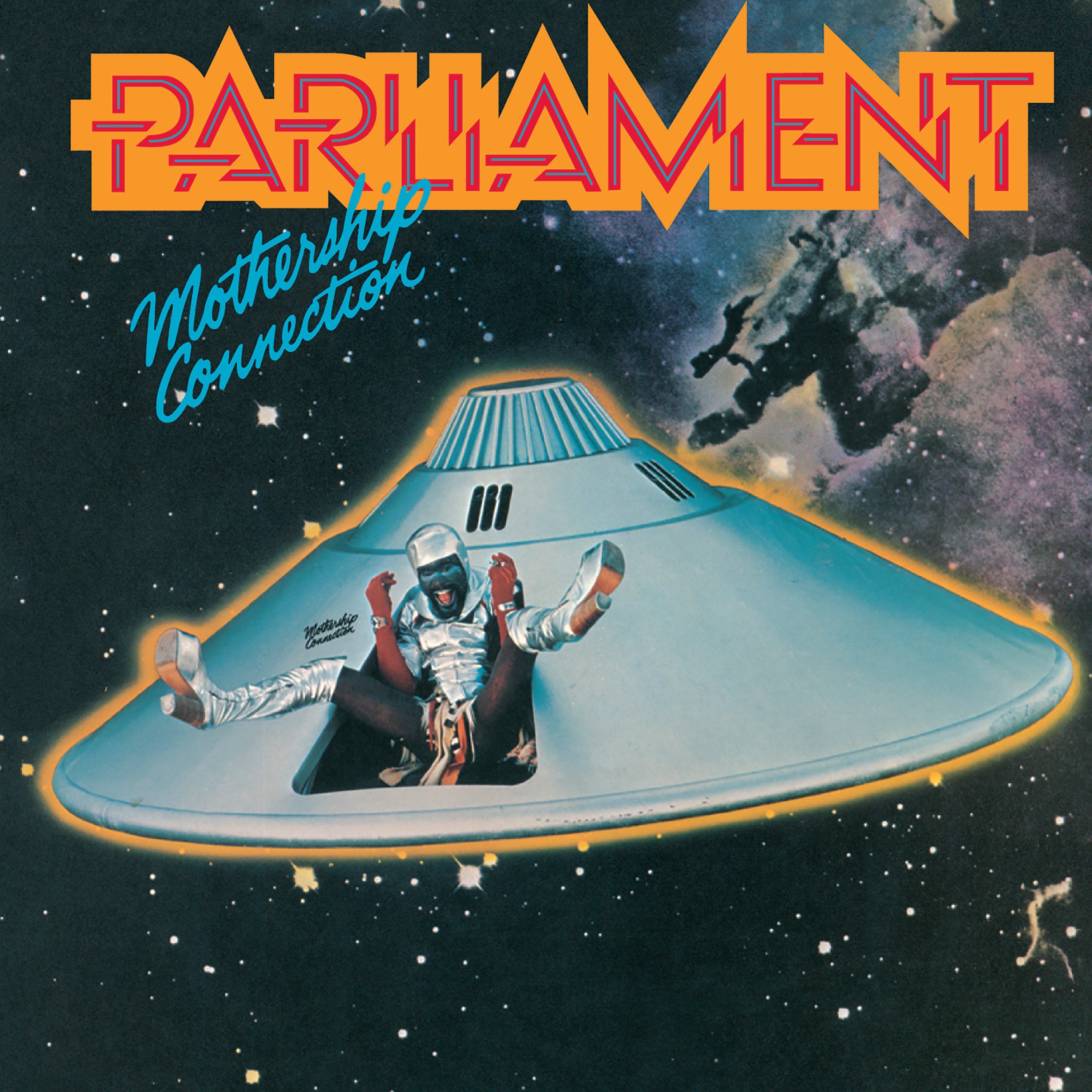
George Clinton’s universe took shape over decades. Born in 1941 in Kannapolis, North Carolina and raised in Plainfield, New Jersey, he came of age in segregated barber shops and doo-wop harmonies. As a teenager, he founded The Parliaments, a vocal group that scored a modest hit with “(I Wanna) Testify” in 1967. Legal issues over the name led him to create a psychedelic rock offshoot called Funkadelic and, later, a reorganized Parliament. Clinton’s genius lay less in instrumental virtuosity than in his ability to gather talent and conjure a world around them.
By the mid-1970s, his revolving family of musicians was coalescing into a singular organism—a “Parliafunkadelicment thang” that spliced doo-wop, psychedelic rock, avant-garde jazz, gospel, and raw funk. The moment of cohesion arrived on Mothership Connection, a concept album released by Casablanca Records. Where earlier projects often felt like experiments in two directions—Funkadelic’s guitar-driven cosmic blues and Parliament’s horns-and-vocals revue—Mothership Connection fused them. Clinton’s role was equal parts bandleader, DJ, storyteller and carnival barker, and his spaceship touched down right as funk became pop.
At the heart of the Mothership Connection sessions was a peerless lineup. Clinton’s knack for recruitment had already lured drummer Jerome “Big Foot” Brailey and bassist Cordell “Boogie” Mosson from soul groups in Detroit. It was the arrival of three core collaborators that transformed Parliament into a powerhouse. A Juilliard-trained prodigy, Bernie Worrell joined Clinton’s band after being coaxed out of a strict Episcopal household in Plainfield. Classical training gave him fluency in orchestral timbres; he wrote string and horn arrangements by hand and served as musical director. Worrell also embraced technology, coaxing otherworldly sounds out of Moogs, Arp keyboards and clavinets. Clinton praised him as “that boy’s got more music and more sound than all the instruments in the world,” while Worrell humbly called himself an architect who did whatever each song needed.
A Cincinnati-born bassist who had powered James Brown’s J.B.’s on hits like “Sex Machine,” Bootsy Collins left Brown in 1972 and soon fell under Clinton’s spell. When Clinton first spotted him playing with his brother, Phelps “Catfish” Collins, in a Cincinnati club, he knew Bootsy belonged on the Mothership. Bootsy’s rubbery bass lines, fuzzy lead guitar and extroverted persona (complete with star-shaped sunglasses and knee-high boots) gave the music both bottom and charisma. He would later become co-writer and co-producer on many Parliament projects. Trombonist Fred Wesley and saxophonist Maceo Parker were core architects of James Brown’s “hardest-working” horn section. In 1975, they traded Brown’s demanding bandstand for Clinton’s spacecraft. Their first assignment was Mothership Connection, where they joined an existing horn line anchored by jazz brothers Michael and Randy Brecker. On the opening track, they “twist and bubble” over Bootsy’s bass and even get solos as Bernie Worrell switches to acoustic piano. The horns would also dominate later tracks like “Handcuffs” and “Give Up the Funk (Tear the Roof Off the Sucker).”
Alongside these stars were guitarists Garry Shider, Michael “Kidd Funkadelic” Hampton and Glen Goins, who shared duties with Bootsy’s rhythm guitar. Shider, nicknamed “Diaper Man” for his on-stage attire, had sung doo-wop with Clinton since childhood. Worrell credits Shider and Bootsy with giving “Unfunky UFO” its church-funk feel. Glen Goins, a church-trained singer and guitarist, provided the gospel-infused vocal on “Handcuffs.” Hampton, at 17, took over lead guitar from Funkadelic legend Eddie Hazel; his soaring solos on “Give Up the Funk” and later tours earned him the nickname Kidd Funkadelic. Clinton could call on multiple drummers (Brailey, Tyrone “Tiki” Fulwood) and auxiliary horns (Joe Farrell, Sam Peakes, Larry Hatcher) to expand the palette.
Recording sessions for Mothership Connection took place between March and October 1975 in studios across Detroit, New Orleans and Hollywood. Clinton oversaw production, but he granted his officers autonomy. Worrell wrote horn charts and string parts, often using symphonic players from the Detroit Symphony. His classical sensibility explains the record’s lush voicings: horns attack on one beat and cradle vocals on the next. Bootsy’s bass, filtered through a Mu-Tron envelope, established a visceral groove; he also played guitar and drums and wrote lyrics. Drummer Jerome Brailey provided a funk-rock backbeat, while congas and percussion from Chaka Khan’s bandmate, Donnie Sterling, added Afro-Latin accents.
Clinton’s directive was simple: create a universe where anything is “funkable.” The band refused to play it straight, instead weaving cosmic jive and party chants under titles like “Supergroovalisticprosifunkstication,” “P-Funk (Wants to Get Funked Up)” and “Mothership Connection (Star Child).” Former James Brown sidemen Parker and Wesley bolstered the horn section alongside Joe Farrell and the Brecker Brothers. Clinton’s lyrics were often improvised in the studio; he used coded slang (“the one”), in-jokes and references to Black pop culture. Worrell described their working method succinctly: he played whatever the song needed, Bootsy provided the “bottom,” and Clinton orchestrated chaos.
After an AM-radio “prelude,” Sir Lollipop Man wants us to “get down in 3-D, light-year groove” over a rubbery bass figure on “P-Funk (Wants to Get Funked Up).” Bootsy enters with a running monologue, promising “the best of the best,” while horns riff around him. Wesley and Parker trade solos midway through, with Parker singing over Worrell’s acoustic piano and Wesley soloing atop sci-fi synths. The song is an “us-vs-them narrative,” where P-Funk is both a party and a call to arms. The track extends past seven minutes, layering voices chanting “Make my funk the P-Funk” and references to the “Funkadelic groove.” That extended vamp prefigured hip-hop’s cadence. “Mothership Connection” is effectively a rap song because Bootsy’s rhythmic patter and call-and-response anticipate emceeing. It is no surprise, then, that Dr. Dre sampled this track for the comedic skit “The Roach” on The Chronic (1992), while Del the Funky Homosapien and Eazy-E have mined its grooves for “Sunny Meadowz” and “Eazy-Duz-It.” “P-Funk (Wants to Get Funked Up)” is among the most-sampled Clinton songs.
Over Bootsy’s slow, throbbing bass and Worrell’s swirling synth pads, Clinton proclaims himself the Starchild on the title track, referencing the spiritual “Swing Down Sweet Chariot” as he sings, “Swing down, sweet chariot, stop and let me ride.” The track quotes the Golden Gate Quartet’s gospel hymn and uses rap-like cad, fusing sacred and secular. The horns of Parker and Wesley glide above the groove, while the Brecker Brothers punctuate the vamp with jazzy fills. Worrell’s clavinet and ARP bassoon add quirky textures that evoke spaceship sonics. Halfway through, the band slips into a chant (“We want the funk, give up the funk”), foreshadowing the next song. This became one of Parliament’s most sampled compositions. The song has been sampled about 28 times, including Warren G and Nate Dogg’s “Regulate,” Dre’s “Let Me Ride,” Ice Cube’s “Bop Gun (One Nation),” and even Kool & the Gang’s “Ladies’ Night” have borrowed its motifs. The call to “swing down” has thus moved from funk to G-funk to mainstream R&B, testifying to P-Funk’s intergenerational resonance.
Built around a simple, chant-like hook—“We want the funk, gotta have that funk”—“Give Up the Funk (Tear the Roof Off the Sucker)” became the album’s breakout hit. Its success owed much to the horns: horns figure prominently, particularly on this track and “Handcuffs.” A call-and-response between Bootsy’s bass and the horn section, anchored by Worrell’s clavinet, makes the groove irresistible. The song functions as a call to arms, where Clinton urges to tear the roof off a corrupt system. The track peaked at No. 5 on the R&B charts and crossed over to mainstream pop, helping funk reach rock listeners. It remains an anthem at sporting events and dance floors, and its chorus has been sampled by countless artists—Snoop Dogg’s “Who Am I (What’s My Name?)” references it in the bridge, and Grandmaster Flash flipped it for his 1987 single “Tear the Roof Off.”
While the album’s three hits dominate memory, the remaining tracks reinforce the narrative. “Unfunky UFO” pairs Shider’s wah-wah guitar with Bootsy’s bass in a stomping groove. It is “pure funk” with a combination of church and rock influences. The lyrics tell of an alien craft searching for beings who aren’t funky, urging them to “give the people what they need.” “Supergroovalisticprosifunkstication” plays like a kinetic interlude, built on an Arp bassoon line and playful call-and-response. It was classically influenced, with an R&B groove, and featured a Baby Grand piano. The track’s nonsense syllables (super-groova-listic-prosi-funk-stication) underline Clinton’s love of wordplay.
“Handcuffs” is one of the record’s most surprising songs. Over Bootsy’s popping bass and Worrell’s horn arrangement, Clinton and Glen Goins trade sly vocals about being handcuffed by lovers. Worrell wrote the horn parts after the rhythm section was finished and emphasized that Goins, drawing from church singing, influenced the vocal delivery. The horns by Wesley, Parker, and the Brecker Brothers not only provide riffs but also punctuate the jokes. “Night of the Thumpasorus Peoples” closes the album on a playful note, to a party thrown by an alien race known for its funky ways. Bootsy anchors the track with a deep bottom while the chord changes mix funk and classical R&B. Clinton improvises “ga ga goo ga,” bridging baby talk and cosmic funk. The loose structure lures jam-like interplay; Goins’ gospel shouting, Hampton’s guitar interjections and Worrell’s synth lines suggest that the Mothership is leaving Earth but intends to return.
Mothership Connection gave Black music a new mythos. Instead of situating the African diaspora solely in the past, Clinton projected it into the future, offering a cosmic Promised Land where “free your mind and your ass will follow.” The record’s outer-space narrative and Afrofuturist imagery provided a framework for unity and liberation. Its combination of gospel chants, jazz horns, rock guitars and synthesized sounds created a template for hybridization that would inform funk (or G-funk in the West Coast), boogie, hip-hop, electro and even techno. Modern artists such as Kendrick Lamar, Flying Lotus and Janelle Monáe draw directly from its palette.
The album also redefined live performance. The P-Funk Earth Tour, financed by Casablanca after Clinton convinced Neil Bogart that the record was already a hit, set a new standard for stage production with its spaceship and elaborate costumes. The tour’s success helped secure Parliament-Funkadelic a spot in the Rock & Roll Hall of Fame and inspired generations of Afrofuturist stagecraft, from Sun Ra’s costumed orchestras to Beyoncé’s Homecoming. As years go by, Mothership Connection still feels like a transmission from another world. It captures the moment when George Clinton’s disparate projects coalesced into a unified collective, when church hollers met synthesizer squiggles, when horn veterans traded riffs with teenage guitar heroes, and when a Black man in a silver spacesuit invited millions to imagine a freer future. More than a five-star classic, it is an entry point into a sprawling universe of P-Funk mythology—one that continues to inspire artists to look toward the stars while keeping their feet on the ground.
Masterpiece (★★★★★)