

Milestones: My Melody by Deniece Williams
Thom Bell’s last willing student brought her Pentecostal soprano to Sigma Sound and recorded an album that treats romantic self-deception as its own kind of faith.
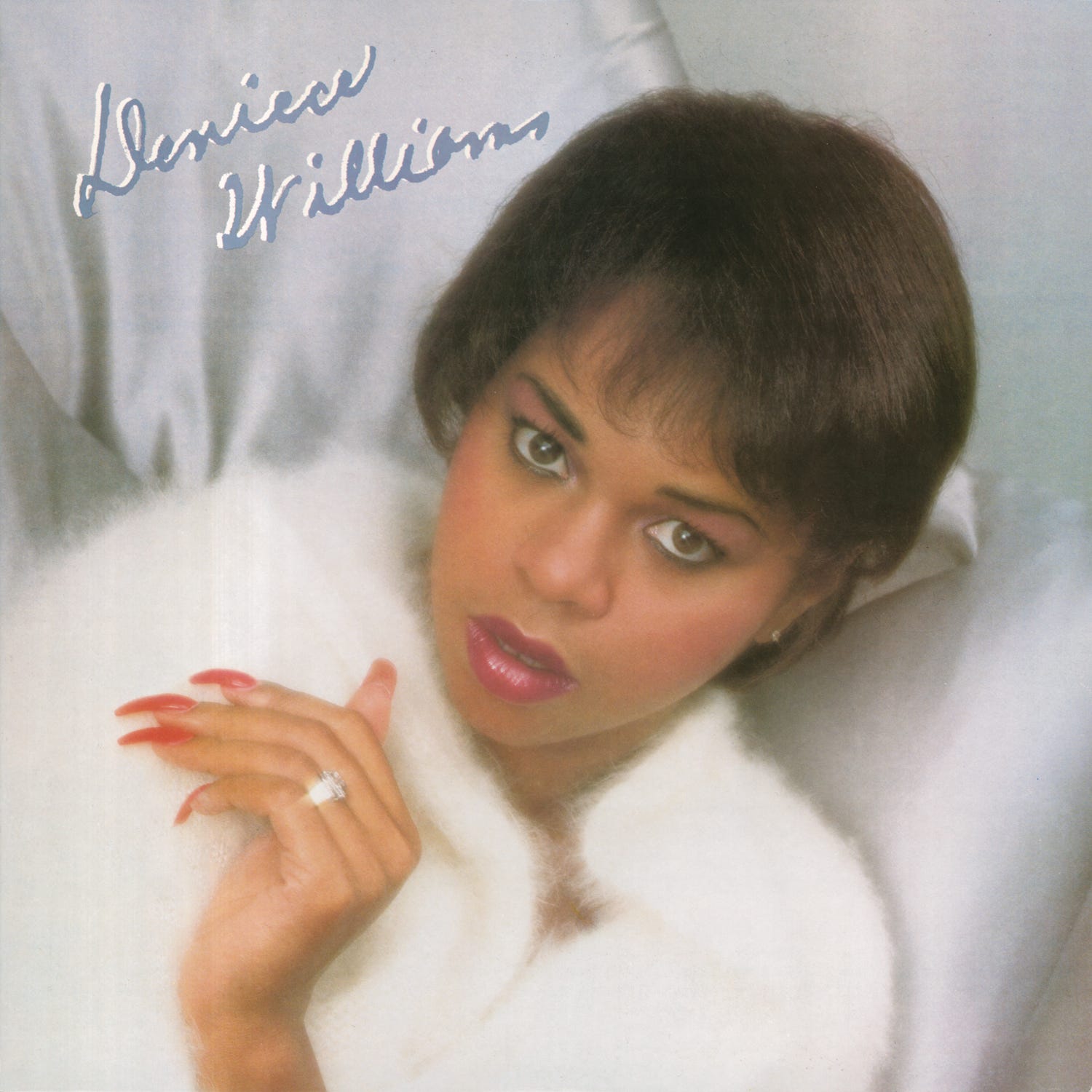
Thom Bell had mostly stopped returning phone calls. The producer who’d written every note for the Stylistics and the Spinners, who’d told his session musicians at Sigma Sound Studios in Philadelphia that they dare not deviate from the page, had watched the orchestral soul he’d perfected through the previous decade lose ground to drum machines and synthesizers. The Spinners’ chart placements were shrinking. Bell’s last big project, the Elton John sessions that yielded “Mama Can’t Buy You Love” in 1979, suggested a man casting around for new contexts for his old convictions. He still believed that French horns belonged in pop records, that a well-placed oboe could do more work than a dozen overdubs. He just needed someone who believed it too.
Deniece Williams had been looking for exactly this authority since leaving Stevie Wonder’s Wonderlove in the mid-1970s. Born June Deniece Chandler in Gary, Indiana, raised singing in a Church of God in Christ congregation that tolerated only gospel, she’d built a solo career through a series of producer relationships that never quite settled. Maurice White gave her This Is Niecy in 1976, a gold-certified debut anchored by “Free,” and then shaped its follow-up, Song Bird. David Foster proved a poor fit—“Our personalities were very, very different,” Williams later recalled with diplomatic understatement.
Ray Parker Jr. steered her briefly into disco with “I’ve Got the Next Dance,” a record that topped Billboard’s dance chart but sat uncomfortably on a singer whose instincts pointed at hymns and Minnie Riperton’s high lonesome attack. When Williams arrived at Sigma Sound to cut My Melody, she was thirty years old, co-producing an album for the first time, and collaborating with a man famous for treating every musician in the room, singer, trombonist, studio engineer, as an instrument in his personal orchestra. The Jamaican-born, classically trained Bell pulled from Ennio Morricone and big band records for his arrangements. Williams drew from a Pentecostal altar. They met somewhere around the string section.
The session band Bell assembled was a Philly soul reunion in miniature. Guitarist Bobby Eli had been arranging and producing since the mid-1960s. Bassist Bob Babbitt, formerly of Motown’s Funk Brothers, drove the low end. Don Renaldo, Bell’s trusted string and horn arranger, supplied the same sweeping orchestrations he’d layered under the Stylistics’ falsettos a decade earlier. But the songs Williams and Bell co-wrote didn’t simply revive the 1970s wholesale. On the title track, Bell thickened his midrange with doubled keyboards, his grand piano shadowed by electric piano, a production tactic he’d sharpened over years with the Spinners. Williams’s soprano floated over the ensemble at a deliberate remove, as if observing the prettiness from above instead of drowning in it. She co-wrote or co-authored all eight songs on the album, a first in her career, and the material she brought kept circling two subjects that had always competed for space in her life: God and men. Not necessarily in that order.
“Silly,” the album’s most durable song and its biggest single, earned its place on Quiet Storm radio for decades by letting Williams confess to stupidity in real time. The lyric is blunt about its situation. She loves a man who sees her as a casual conquest. She knows this—”you’re just a lover out to score”—and continues anyway, combing her hair for him, pouring wine for a dinner he won’t attend, bragging to friends about a relationship that doesn’t exist on his end. Written with Fritz Baskett and keyboardist Clarence McDonald, the song opens with Bell’s strings swelling into grandeur, then pulls back abruptly so Williams can enter nearly alone, her voice measured and careful over what sounds like a celeste.
The album’s other major single, “What Two Can Do,” works a different register. Bright, bell-driven, uptempo, it found Williams performing on American Bandstand with a confidence that suggested she understood its function as a palate cleanser. But the deeper songs on Side B pushed further into the frequencies where Williams felt most like herself. “You’re All That Matters,” co-written with Bell, Preston Glass, and Alan Glass, carries audible Stylistics DNA in its melodic bones. Bell had spent years building songs around Russell Thompkins Jr.’s delicate falsetto, and his arrangement here uses the same tools—sweeping strings, gently insistent percussion, a melody that rises in careful steps. Williams takes the architecture and changes what it holds.
Where Thompkins sang devotion as courtship, sweet, pleading, directed outward toward another person, Williams’s “you” keeps slipping its referent. The lyrics profess romantic dedication, but her phrasing bends the declarations past the earthly. She holds notes past their expected release points, lets vowels stretch until they start to resemble sustained prayer, not a love letter. Growing up in a church that forbade secular music, Williams had insisted on putting at least one gospel song on every solo album she’d released. On My Melody, she didn’t need a separate gospel track. The devotional impulse bled through the romantic material on its own, and “You’re All That Matters” is the clearest example—five minutes that could be addressed to a lover or to God, and Williams didn’t seem interested in resolving the ambiguity.
“Suspicious” is the outlier. Bell’s scoring leans hard into a syncopated, Caribbean-inflected rhythm that sticks out against the album’s prevailing smoothness. Bell, who was born in Kingston, Jamaica, and moved to Philadelphia as a child, rarely let his roots surface this directly in his production work. The percussion section, Ed Shea and Larry Washington, punches a jerky, offbeat pattern while horns punctuate the gaps, and Williams rides the groove with a clipped, skeptical phrasing she doesn’t use elsewhere on the record. The song puts suspicion to work as a bodily feeling, lodged in the hips and shoulders, not reasoned through. Williams doesn’t register as wounded here. She’s alert, watchful, her voice darting between phrases with a quickness that the album’s ballads never required. It’s the one moment where distrust gets its own physical language, and even if the track sits oddly against the surrounding ballads, it proves that Williams could recalibrate her entire vocal approach when the rhythmic ground shifted beneath her.
Bell’s classical training shows up most clearly on “Sweet Surrender,” the album’s closer, where he opens with harp and strings and no drums at all, letting the arrangement announce its intentions through chamber-music patience. When Williams enters, her soprano rides close to the top of her range, thinning out to a filament that barely separates from the violins. The lyric offers itself up. The title phrase operates as both romantic capitulation and quiet devotion, a willingness to stop fighting and be overtaken. Bell, who told the expanded edition’s liner notes that he always tried to include one track per album that leaned more heavily on his classical education, built “Sweet Surrender” to float Williams’s voice without anchoring it to a groove. The absence of drums removes the floor beneath the performance. She’s singing without a net, and the lack of rhythmic tether gives her delivery a searching, unresolved quality—each phrase reaching for a resolution it can’t quite close its hand around.
My Melody was certified Gold, reached No. 13 on the Top Soul LPs chart, and earned Williams her strongest critical notices in years. Robert Christgau, grading it a B+, praised Bell for “applying strings and woodwinds and amplifiers with a deft economy that textures rather than sweetens” and noted that Williams’s lyrics “become increasingly personal as her professional confidence grows—she’s wrinkling her brow more and her nose less.” The follow-up, Niecy, yielded an R&B No. 1 with “It’s Gonna Take a Miracle,” and by 1984 she had her biggest pop hit with “Let’s Hear It for the Boy.” Neither album asked as much of her as this one did.
Standout (★★★★½)