

Milestones: Parade by Prince & The Revolution
Prince’s post-Purple Rain restlessness yielded his most playful and peculiar funk record disguised as a film soundtrack. It also contains the saddest song he ever sung.
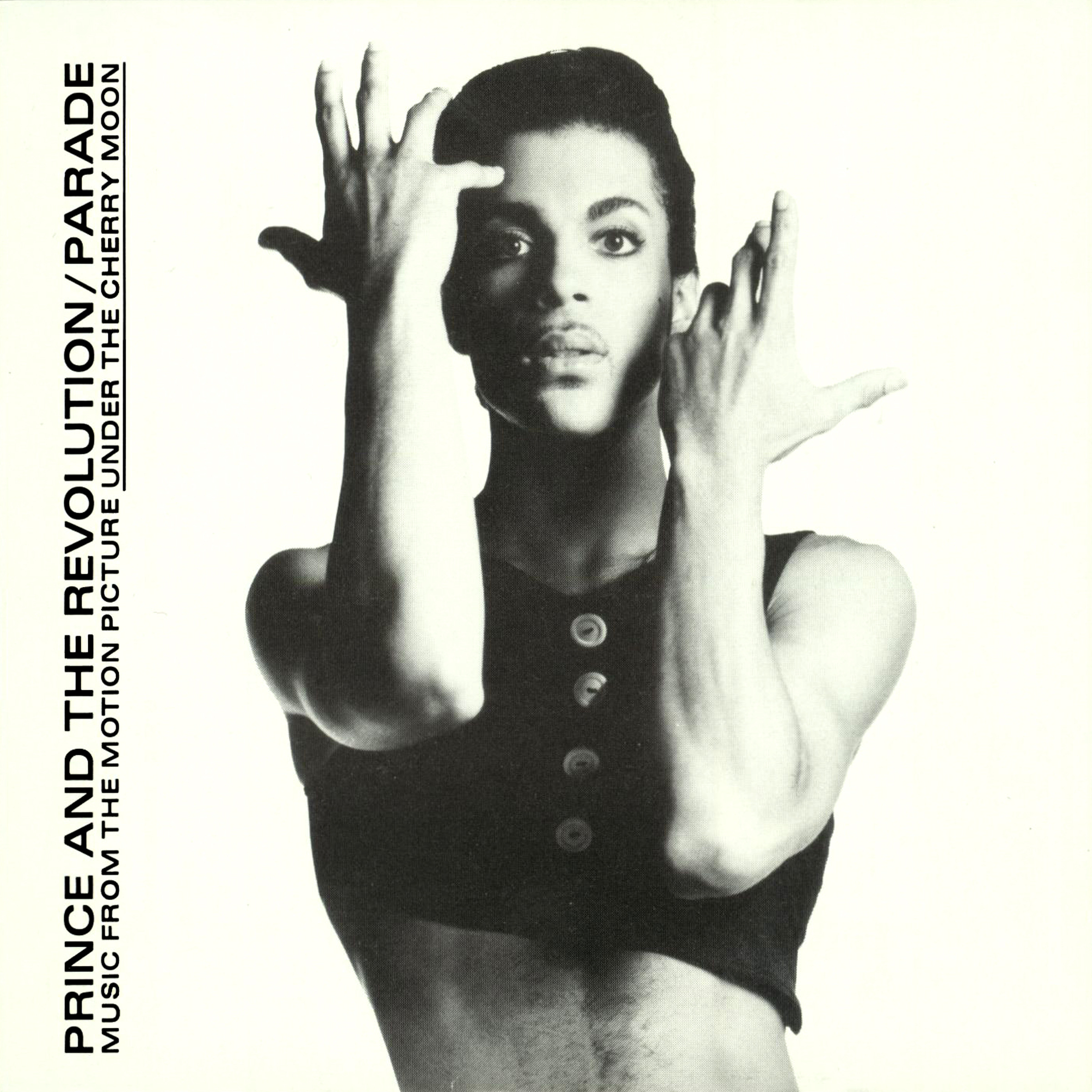
When you look at the spring of 1986, the pop charts had calcified around a handful of dominant modes. Whitney Houston and Phil Collins owned adult radio; Run-D.M.C. were dragging hip-hop into arenas; and the synth-heavy production that defined the mid-decade had started to curdle into formula. Around the World in a Day, released a year prior, had confused audiences who wanted another Purple Rain. It sold well enough on momentum alone, but left a particular chill in its wake, a sense that the most exciting musician in America might have burned through his commercial goodwill chasing sitars and paisley.
Prince Rogers Nelson, 27, apparently did not care. He had begun recording what would become Parade on April 17, 1985, five days before Around the World in a Day even hit stores. Ten days removed from the final Purple Rain tour date, he walked into Sunset Sound in Los Angeles, sat behind a drum kit, taped lyrics to a music stand, and told engineer Susan Rogers to keep the tape rolling even when he stopped playing. He then cut the drum tracks for four songs back to back without pausing. The album that emerged from those sessions, released March 31, 1986, was technically the soundtrack to his second film, Under the Cherry Moon, which flopped badly at the box office while the music thrived without it.
What made Parade unusual for Prince, and unusual for 1986 generally, was how much air it let in. Six of its twelve songs run under three minutes. There is no electric lead guitar anywhere on the record, a startling absence for the man who shredded through “Let’s Go Crazy” barely two years earlier. In its place, Prince recruited saxophonist Eric Leeds and trumpeter Atlanta Bliss, gave the Revolution’s Wendy Melvoin and Lisa Coleman broader harmonic responsibilities, and hired the orchestral arranger Clare Fischer to score seven tracks with a 67-piece ensemble. The partnership with Fischer was rooted in mutual respect and an odd boundary: the two men never met in person. Prince feared that meeting Fischer might contaminate the arranger’s instincts, so he sent tapes and received orchestrations by mail.
Fischer’s strings swirl through songs like “Christopher Tracy’s Parade” and “Venus de Milo” with a buoyancy that belongs to French cinema and old MGM musicals, and Prince trusted them completely. Rogers, in a 2021 interview with Wax Poetics, characterized Parade as “pretty much a solo expression for Prince.” Despite the Revolution billing, he wrote every song, with the exceptions of partial music credits shared with Wendy and Lisa on “Mountains” and “Sometimes It Snows in April.” He told them what to play. He sequenced the record himself. The orchestra answered to Fischer, who answered to Prince. On first pass, Parade registers as communal (horns, strings, backing vocals, French-language interludes), but closer attention reveals a single intelligence directing every flicker of movement.
And much of that movement concerns wanting. “Kiss” is about desire that refuses to dress up. Prince originally wrote it as a short acoustic blues sketch and gave it to Mazarati, a side project led by Revolution bassist BrownMark. Producer David Z reworked the demo into a spare, LinnDrum-driven groove, and when Prince heard the results he took the song back, telling the band it was too good for them. He stripped it further, pulling the bass guitar off entirely, filling the low end with a kick drum run through a reverb unit’s reverse tube program. Warner Bros. executives protested. It sounded like a demo, they said, no bass, no reverb. Prince forced them to release it. It went to number one, and it resembles almost nothing else from 1986 or any other year. The falsetto rides a beat that keeps threatening to collapse but never does, and the lyrics are funny, specific, blunt: don’t have to be rich, don’t have to be cool, act your age, not your shoe size.
With “Girls & Boys,” however, it moves differently, opening on a Roland guitar synth riff and saxophone figure before Marie-France Drouin, Prince’s costume designer for the film, delivers a flirtatious monologue in French. It plays like a party invitation sung from inside the party, and its lyric content is frankly silly (babies, touching, the declaration vous êtes très belle, mama), which is precisely where its appeal sits. Prince knew that wanting carries more conviction when it doesn’t pretend to be profound. “New Position” and “Anotherloverholenyohead” share that directness, one a two-minute funk jolt about sexual logistics, the other a frantic scramble through jealousy and need that collapses sentences into a single portmanteau title.
The album’s quieter songs occupy a different register, and they ask different questions. “Under the Cherry Moon,” co-credited to Prince’s father John L. Nelson, works as a slow, murmured seduction with acoustic guitar and what might be a music box. Its lyric talks about meeting someone under moonlight, sharing cherries, asking permission to proceed. There is a tenderness in it that Prince rarely allowed himself without irony, and the melody carries a waltz-time gravity that Fischer’s absent orchestration (Prince kept his own stripped version) would have only weighed down. “I Wonder U” barely exists as a finished composition. It drifts in on a bass pulse, a few sung syllables, some keyboard fog, and vanishes in under two minutes. It communicates longing by withholding almost everything. “Do U Lie?” applies a French café accordion to a soft-shoe shuffle and asks its central question with the goofy earnestness of a child confronting a parent.
“Mountains” provides the album’s one concession to big-statement rock. Wendy and Lisa wrote its music at Advision Studios in London while Prince was in France shooting the film, and he added lyrics on returning to Minneapolis. The horns punch through the mix with a soulful aggression that recalls the Isley Brothers at their most ornate, and the lyric reaches for a spiritual register that the rest of the album mostly avoids: love is a trip to nowhere, he sings, and the mountains are just the beginning. It is an effective anthem, and it served as the second single, but it sits slightly apart from Parade’s dominant personality, which favors suggestion over declaration.
And then the record ends with “Sometimes It Snows in April.” The song was recorded on April 21, 1985—exactly 31 years before the day Prince died. Lisa Coleman was on piano, Wendy Melvoin on guitar; Prince sang.Rogers has recalled that he wanted candles lit and the lights dimmed, an unusual request from a man who typically just sat down and played. When Rogers moved to replace Wendy’s creaky chair, Prince stopped her: he wanted it left in. The performance was captured live, and the squeak of fingers on strings and the groan of the bar stool made it onto the finished track. The lyric tells the story of mourning a friend named Christopher Tracy—Prince’s character in Under the Cherry Moon, who dies at the film’s end. The narrator remembers Tracy with a specificity that cuts past the film’s thin plot: he was the kind of car that doesn’t pass you every day.
Coleman recalled Prince giving her “the money sign” when she hit certain notes, his shorthand for approval. She told Ultimate Prince in 2017 that the song represented “the pinnacle of our relationship together” with Prince. “He could explore that side that is brokenhearted in a way that doesn’t have a pretense or fakery to it,” Melvoin said. It was written for a movie character, but its emotional weight exceeded the fiction it served. Prince’s manager had used the phrase “sometimes it snows in April” a year earlier, in a public statement announcing Prince’s retirement from live performance, and when pressed to explain, Prince responded with two cryptic sentences and nothing more. Thirty-one years later, on the anniversary of the song’s recording, he was found dead in an elevator at Paisley Park. D’Angelo performed it on The Tonight Show five days after, substituting Prince’s name for Tracy’s.
Does what these songs say matter? Parade is a record about pleasure and grief and the thin wall between them. The pleasure is specific, physical, often comic. Prince telling a lover to act her age, singing in falsetto over a beat with no bass, letting a French woman talk over his funk track because it felt right. The sorrow is concentrated in a single song at the end, where a man mourns a friend who died young, and it lands all the heavier because the album spent 35 minutes being exuberant and strange and light on its feet before arriving there. Prince was not building toward “Sometimes It Snows in April.” He stumbled into it, the way you stumble into real sadness, after a long stretch of feeling good. That collision between delight and sorrow gives Parade its particular sting. It is an album that insists on fun—silly fun, sexy fun, accordion-and-French-monologue fun—and then admits, in its final six minutes, that fun is temporary, that the people you love will leave, and that the weather will betray you when you least expect it.
Standout (★★★★½)