

Milestones: Part III by 112
A group in full possession of itself, seizing control of its own sound. The third album arrived not as refinement but as rupture—harder, stranger, and finally theirs.
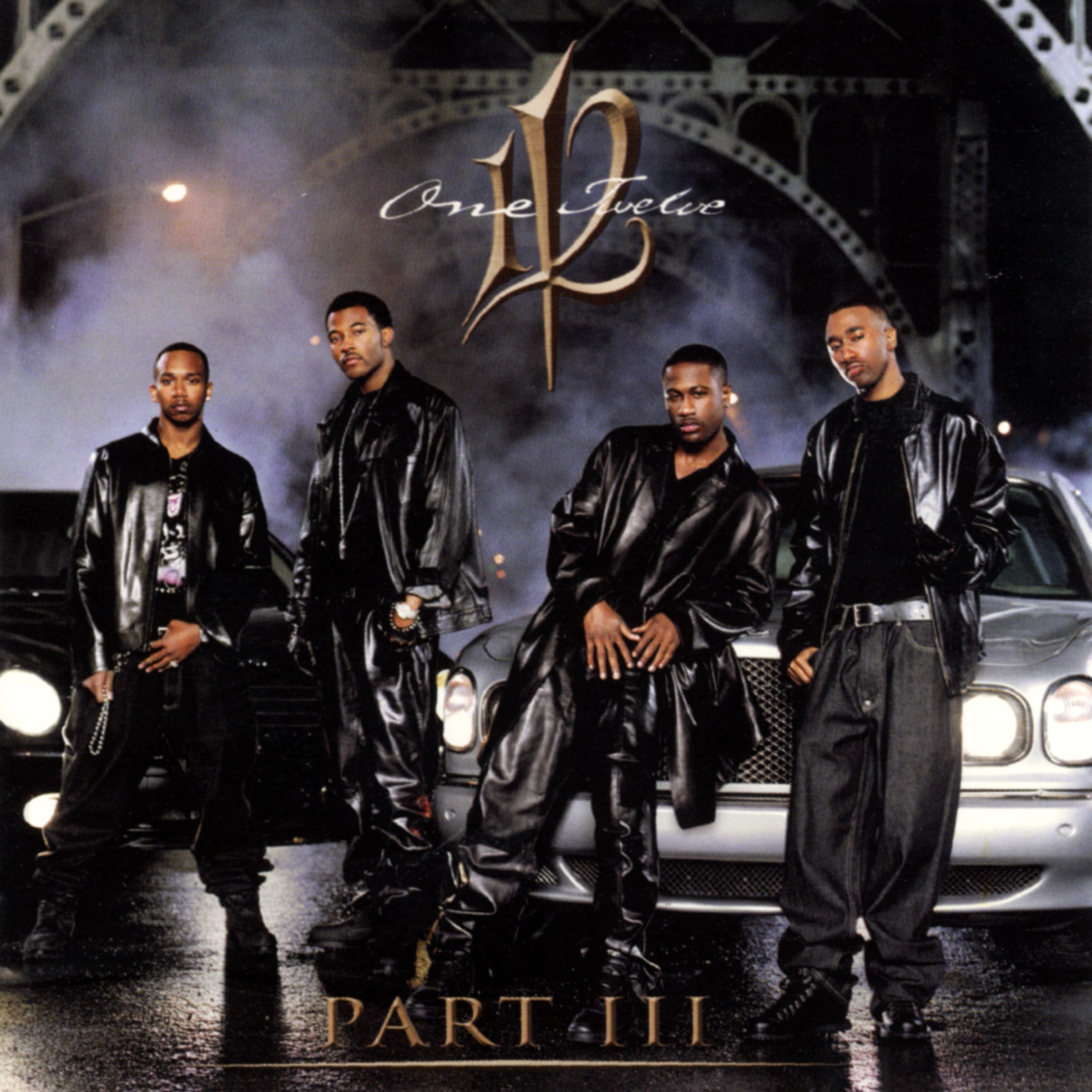
Daron Jones was twenty-three years old, had been singing professionally since seventeen, and was tired of waiting for permission. By the time 112 gathered to record their third album, Jones had spent years watching other producers shape the group’s identity—Tim & Bob on the debut, a rotating cast of hitmakers on Room 112. He had contributed beats and arrangements throughout, handled roughly eighty percent of the music as he later estimated, but Part III would be different. He would produce the majority of the record himself, playing every instrument on most of the tracks he helmed, with the other three members serving as co-executive producers alongside him. Bad Boy’s signature—Sean Combs and his stable of producers, the label’s insistence on threading Notorious B.I.G. throughout its catalog—would still mark the album. But the center of gravity had shifted.
The four singers from Atlanta had auditioned for Combs outside Club 112 in Buckhead in 1995, a group of high school chorus kids calling themselves Forte, their harmonies tight enough to earn a callback to Daddy’s House studios in New York. Chucky Thompson, Faith Evans, and Usher watched them sing. The co-sign came quickly. Within a year they had renamed themselves after the club where Combs first heard them, and their debut went double platinum. Room 112 followed in 1998, another platinum certification, but the commercial success obscured a creative stall. The second album, despite generating hits, offered little evidence that 112 possessed ambitions beyond replicating the formula that had launched them.
Part III announced its intentions immediately. The album opens with samples from both the Notorious B.I.G. and the Beastie Boys, a collision of Bad Boy orthodoxy and something wilder, before “Dance With Me” kicks in with a beat that jitters and pulses like nothing the group had attempted. The production shimmers with synth rattles and electronic textures alien to their earlier work. Jones had absorbed the techno-influenced R&B that producers like Rodney Jerkins were pioneering, and he reconfigured it for a quartet whose primary instrument remained the human voice. The record refuses to choose between its appetite for the dancefloor and its commitment to vocal craft; it wants both, and mostly it takes both.
The lead single, “It’s Over Now,” built its foundation on an interpolation of the bass line from Grandmaster Flash & The Furious Five’s “White Lines (Don’t Don’t Do It)”—the same interpolation Mobb Deep had ridden to one of their biggest hits with “Quiet Storm” just a year earlier (which did spawned a remix with Prodigy). But where Mobb Deep’s version cloaked the sample in menace, 112’s treatment wrings devastation from it. Slim and Daron split lead vocals, trading phrases about a relationship crumbling beyond repair, their tenors stacked against a haunting arrangement of strings, guitar, and jittery percussion. The song topped the R&B charts for two weeks, the group’s first number-one single. It functioned as a statement of purpose: 112 could absorb hip-hop’s hardest textures without abandoning the melodic density that distinguished them from their peers.
The four voices remain the record’s constant. Slim’s falsetto, celebrated by the group’s own members as the most identifiable element of their sound, threads through every arrangement. He described himself as possessing a “very distinctive voice,” the quality that made it “very easy to distinguish 112 from any other group in the world.” Slim sang lead on the debut single “Only You,” on “Cupid,” on the records that established the group’s commercial identity. But Part III distributed the spotlight more evenly. Q Parker, credited elsewhere with the mellow vocals that anchored the 112 signature sound, grounds songs with his baritone warmth. Mike Keith and Daron Jones fill the spaces between, their contributions less about individual moments than about the architecture they construct together. When the group harmonizes, the blend carries the specificity of musicians who had been singing together since middle school—a precision born of repetition and proximity, not studio trickery.
“Peaches & Cream” became the album’s commercial peak, climbing to number four on the Hot 100 and earning a Grammy nomination for Best R&B Performance by a Duo or Group with Vocal. Mario Winans and Combs produced the track, its synths grinding beneath the vocal performances, its lyrical content explicit enough that the Bad Boy YouTube page still censors one of Mike’s lines more than two decades later. The song operated as both throwback and provocation—a cunnilingus metaphor wrapped in boy-band packaging, the quartet old enough by 2001 to stake a claim on adult material. “We’re older now, so we can talk about subjects of this nature,” Mike explained during the album’s promotional cycle. “Basically, ‘Peaches and Cream’ talks about pleasing your woman, but you have to use your imagination.” The candor registered as evolution. 112 had spent their first two albums positioning themselves as romantic idealists; Part III permitted them carnality.
The ballads scattered through the record’s middle section carry less urgency. “Player” and “I Think” drift toward the sentimentality that had weighed down Room 112, songs that could be excised without altering the album’s fundamental shape. But even these tracks benefit from the production clarity Jones brought to the project. The arrangements breathe. Instruments occupy distinct frequencies rather than competing for the same sonic territory. When the group recorded at Daddy’s House in New York, at Doppler Studios in Atlanta, at Sound Stage in Nashville, at Rock Land in Chicago with Chocolate Factory Man producing “Do What You Gotta Do,” they carried with them a coherent vision that transcended geography. The album sounds like a document of intention rather than a compilation of sessions.
Chocolate Factory Man’s sole contribution, that breakup joint “Do What You Gotta Do,” slots into the album as a reminder of the ecosystem 112 inhabited. The man had defined a strain of male R&B throughout the nineties—confessional, ornate, unafraid of melodrama. His production for 112 extends that lineage without overwhelming the group’s identity. The song functions as a point of contrast: here is what the record sounds like when someone outside the quartet steers, and here is how the quartet metabolizes external influence without losing itself. Twista appears on “Don’t Hate Me,” the album’s lone guest verse, his rapid-fire delivery colliding with Anthony Dent’s production. These moments of outside collaboration punctuate rather than define the record.
Part III debuted at number two on the Billboard 200, selling 182,300 copies in its first week, blocked from the top spot by Shaggy’s Hot Shot. It reached number one on the R&B chart. Platinum certification arrived within two months. The group’s commercial standing had reached its apex even as the industry around them shifted. Male R&B vocal groups, the formation that had dominated the preceding decade through New Edition and Boyz II Men and Jodeci, were ceding ground to solo artists and production-driven acts. 112’s success arrived at the tail end of a wave, and Part III can be heard as both culmination and elegy—a record that perfected a form just as that form began its long recession from the cultural center.
The album marked the group’s final release with Arista Records, the parent company of Bad Boy. Legal battles with Combs followed. The four members signed with Def Jam in 2002, claiming their Bad Boy contract had expired; Combs filed an injunction, insisting they remained bound to his label. The dispute consumed years, and when 112 finally returned with Hot & Wet in 2003, the momentum had dissipated. Part III stands as the last record made before the fractures—financial, legal, interpersonal—that would eventually scatter the quartet into solo projects and intermittent reunions.
Q Parker later articulated what he believed made the group function: “We all have specific roles that we play that become a main ingredient to the success of the group.” The observation applied most visibly to Part III, where the division of labor sharpened into purpose. Jones produced and played instruments. Slim fronted the arrangements with his unmistakable tenor. Q and Mike filled the harmonic and textural roles that gave the group its body. The record captured a unit operating at full capacity, each member aware of his position and committed to the collective architecture. “The foundation of 112 is always going to be a lyrical angle,” Q explained in a 2017 interview, “how melodic we are, how we’re able to interchange the different lead vocalists as well as the harmony with our background.” Part III embedded that foundation in a production style aggressive enough to matter beyond the ballad circuit.
The Notorious B.I.G. haunts the album as he haunted all Bad Boy releases of the era. The intro samples his voice; “Dance with Me” interpolates a vocal snippet from “Who Shot Ya.” Mike acknowledged the deliberate invocation: “We try to keep Big alive as much as we can. Every album we do, we try to put Big on there and keep him alive. He put our names on the map with that phrase ‘Room 112, where the players dwell.’” The tribute functioned as both homage and branding, a way of locating 112 within a lineage that transcended their specific lane. Big had given them their name, in a sense—his reference on the 1994 track with Total became the phrase that christened their second album. The connection persisted as obligation.
Jones would later cite “I’m a Playa” from Part III as one of his favorite songs he ever wrote and produced. The track exemplifies his approach on the record: syncopated drums, layered keyboards, vocal arrangements that spotlight each singer without cluttering the mix. He discussed his method as connecting the material to the performers’ actual experiences. “When I was writing for 112 in the group, I think a lot of things were happening to me too. But a lot of stuff I was singing about was happening to us collectively.” The songs on Part III register as communal documents—not confessions from a single songwriter but negotiations among four men navigating desire, loss, and the performance of masculinity that R&B demanded of them.
The group redefined what a player meant to them on this record. “A lot of times, people think of a player, they think of somebody that might have 50 girls,” Daron explained, “but to 112, a player is someone who just plays the game correctly. Being honest basically. It’s not about having one woman, and then having five girls on the side, but having six women and letting them all know that you’re not ready to settle down.” Part III threaded that philosophy through its love songs and its club tracks alike—a record about adult negotiations, about the space between desire and commitment, about honesty as a form of respect even when the honesty stings.
The choreographers, Jones recalled, treated them like real dancers on the third album, not singers who could move. The distinction mattered. 112 had always performed; Part III demanded they perform differently, with the physicality to match the production’s aggression. “The third album the choreographers took a different approach, treating us like this time like real dancers who just know how to sing,” Jones told The Source. “As they started doing that and the dancing got more complex, I started to see it as art.” The videos reflected the shift. The record asked its audience to see the group anew, and the visual presentation reinforced the request.
What remains is a record made by a group in full possession of itself, operating within an industry framework that constrained as much as it enabled. Combs’s name appears throughout the credits. Bad Boy’s aesthetic—the Biggie samples, the label’s signature blend of hip-hop and R&B—marks every track. But Part III belongs to the four singers who wrestled creative control from their circumstances. Jones produced. The group wrote. The harmonies they had been building since high school reached their most sophisticated expression. That the album arrived at the end of their imperial phase, just before the legal battles and the commercial decline, lends it the quality of a final statement, even if no one involved understood it as such at the time. The record captures 112 at the moment they became most fully themselves, which is also the moment just before they began to disperse.
Standout (★★★★½)